To start with desktop CNC machining, choose the right bits like flat end mills and ball nose tools based on your project. Make certain to set proper feeds and speeds tailored to your material—testing first on scrap helps prevent issues. Begin with simple projects like coasters or keychains to build confidence. Always prioritize safety and machine maintenance. Keep exploring these essentials to ensure smoother cuts and better results as you progress in your CNC journey.
Key Takeaways
- Select beginner-friendly bits like flat end mills and ball nose bits, considering material compatibility and tool durability.
- Adjust feeds and speeds based on material properties, always testing on scrap before final cuts.
- Use proper tool maintenance and inspection to ensure sharpness, safety, and optimal cutting performance.
- Start with simple projects such as coasters, keychains, or nameplates using softwood or MDF to build confidence.
- Follow safety guidelines: wear protective gear, keep the workspace clean, and double-check machine settings before operation.
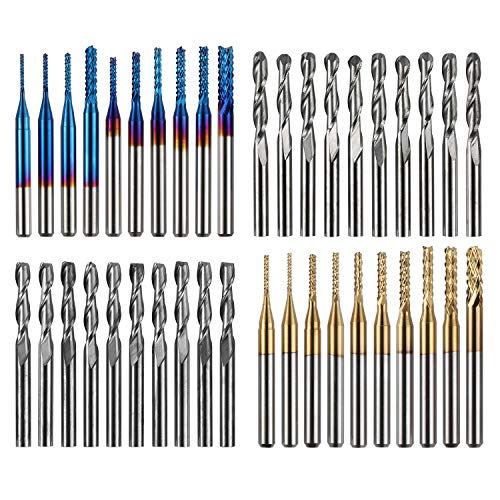
Genmitsu 40pcs End Mills CNC Router Bits, 1/8" Shank CNC Cutter Milling Carving Bit Set Including 2-Flute Flat Nose & Ball Nose, Nano Blue Coat & Titanium Coat, MC40A
High Quality: The Genmitsu end mills are made of ultra-fine 0.2μm tungsten carbide steel alloy that can keep…
As an affiliate, we earn on qualifying purchases.
As an affiliate, we earn on qualifying purchases.
Getting Started With Desktop CNC Machining: The Basics You Need to Know
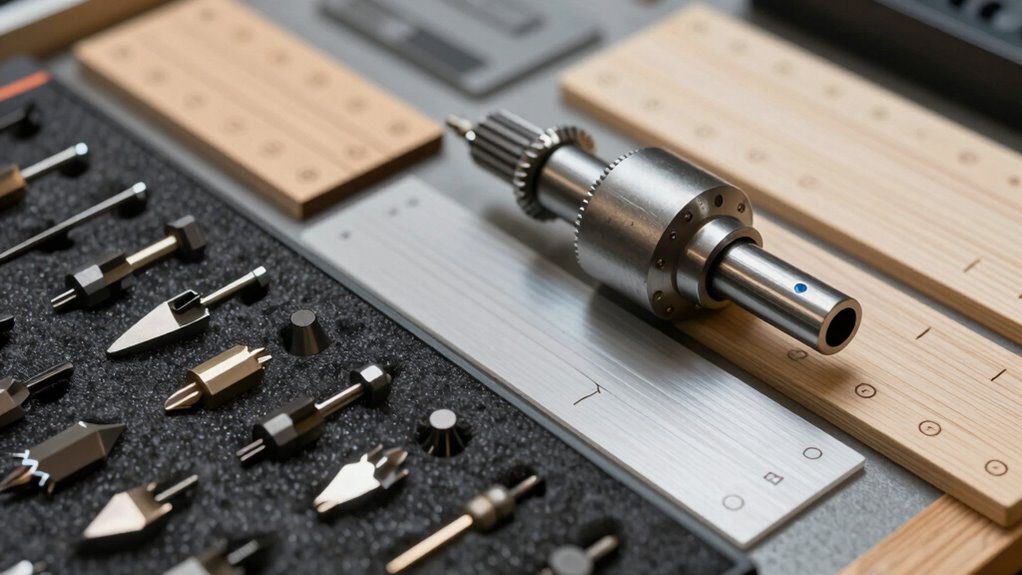
Getting started with desktop CNC machining can seem overwhelming at first, but understanding the fundamentals makes it much more manageable. One key aspect is material selection—you want to choose the right material for your project, such as wood, plastic, or aluminum, based on strength and machinability. Proper tool maintenance is equally important; keeping your bits sharp and clean ensures smooth cuts and prolongs their lifespan. Always inspect your tools before starting, and replace worn bits promptly. Familiarize yourself with your machine’s capabilities and limitations to prevent mishaps. Additionally, understanding how different materials respond to CNC machining helps you set appropriate feed rates and speeds. Developing a good understanding of cutting parameters will help optimize your machining process for better results. Exploring material properties can further enhance your ability to select the best materials for specific projects. Moreover, considering the contrast ratio of your equipment can improve your visibility of the workspace, making precise adjustments easier during setup.
Genmitsu 40pcs End Mills CNC Router Bits, 1/8" Shank CNC Cutter Milling Carving Bit Set Including 2-Flute Flat Nose & Ball Nose, Nano Blue Coat & Titanium Coat, MC40A
High Quality: The Genmitsu end mills are made of ultra-fine 0.2μm tungsten carbide steel alloy that can keep…
As an affiliate, we earn on qualifying purchases.
As an affiliate, we earn on qualifying purchases.
How to Choose the Right CNC Bits for Beginners
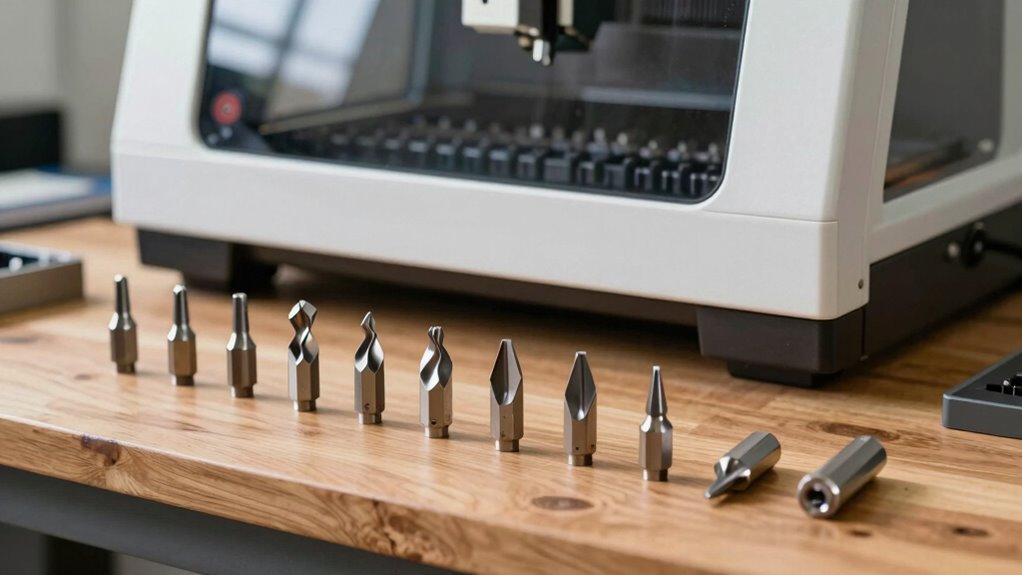
Choosing the right CNC bits is a vital step in ensuring your projects turn out accurate and clean. Start by considering the bit material; high-speed steel (HSS) is versatile for softer materials, while carbide bits excel for harder surfaces and long-term use. Next, examine the bit shape—flat end mills are great for surface finishes and detailed work, whereas ball nose bits are ideal for 3D contours and smooth curves. For beginners, a set that includes a variety of shapes and sizes offers flexibility as you learn. Avoid overly complex bits initially; focus on standard flat and ball nose bits to master basic cuts. Selecting the appropriate bit material and shape lays the foundation for quality results and helps prevent damage to your machine or workpiece. Additionally, understanding horsepower of electric dirt bikes can help you better appreciate the power capabilities of related motorized equipment, which may influence your choice of tools and safety considerations. Moreover, familiarizing yourself with CNC machine components will aid in troubleshooting and maintenance, ensuring smoother operation as you progress. Developing a basic knowledge of bit maintenance and sharpening techniques can also extend the lifespan of your tools and improve cutting performance. Gaining insight into correct feed rates and speeds is equally important for optimizing your cutting process and avoiding tool wear or breakage. Furthermore, understanding bit material properties can help you select the most durable and effective tools for specific projects, contributing to better results and efficiency.

2 PCS Ball Nose Set CNC Router bits Carbide Ball Nose End Mill with Nano Blue Coating for Side Milling. End Milling. Finish Machining. (2 PSC Ball Nose Set)
Specifications: 1 pcs 1/4" Shank Diameter 1/8" Cutting Diamete 2" Overall Length Ball Nose.1 pcs 1/4" Shank Diameter…
As an affiliate, we earn on qualifying purchases.
As an affiliate, we earn on qualifying purchases.
How to Set Feeds and Speeds for Perfect Cuts
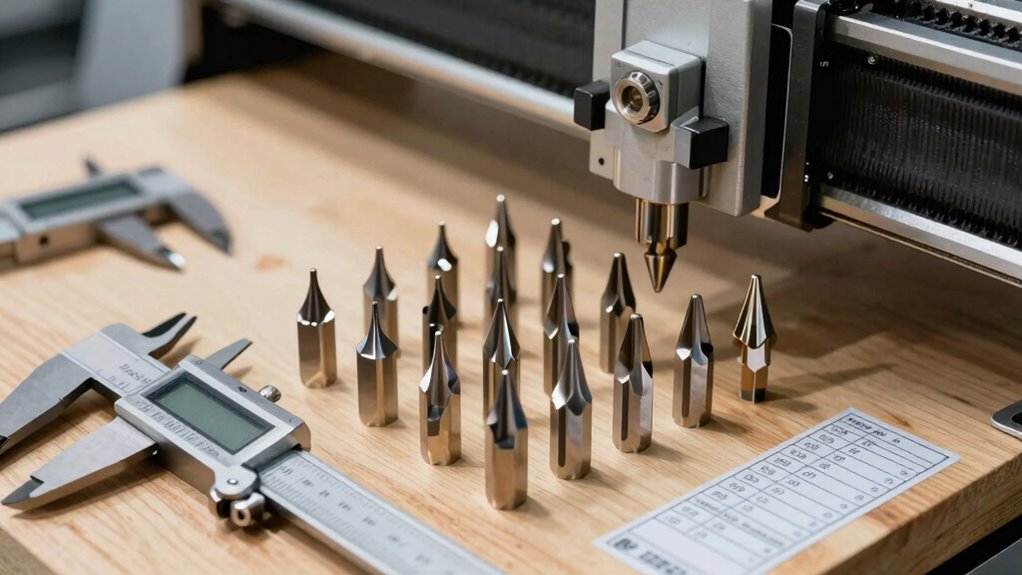
Setting the correct feeds and speeds is vital for achieving clean, precise cuts with your CNC machine. Start by considering your material selection—different materials require different cutting parameters. Softer woods need slower speeds, while harder materials demand careful adjustments to prevent tool damage. Proper tool calibration is essential; ensure your bits are sharp and aligned correctly to avoid uneven cuts. Use manufacturer recommendations as a starting point, then fine-tune based on your results. Always test on scrap material first to refine your settings. Monitoring feed rate and spindle speed closely helps prevent burning, chipping, or tool wear. Understanding cutting parameters and how they influence your results is crucial for success. Consistent adjustments based on material properties and accurate tool calibration will give you smooth, professional-quality cuts every time.

CNC Feeds and Speeds Logbook: Feed Rate and Spindle Speed Tracker for CNC Machinists, Tooling Tests, Material Data, and Machining Optimization
As an affiliate, we earn on qualifying purchases.
As an affiliate, we earn on qualifying purchases.
Easy First Projects to Kick Off Your CNC Journey
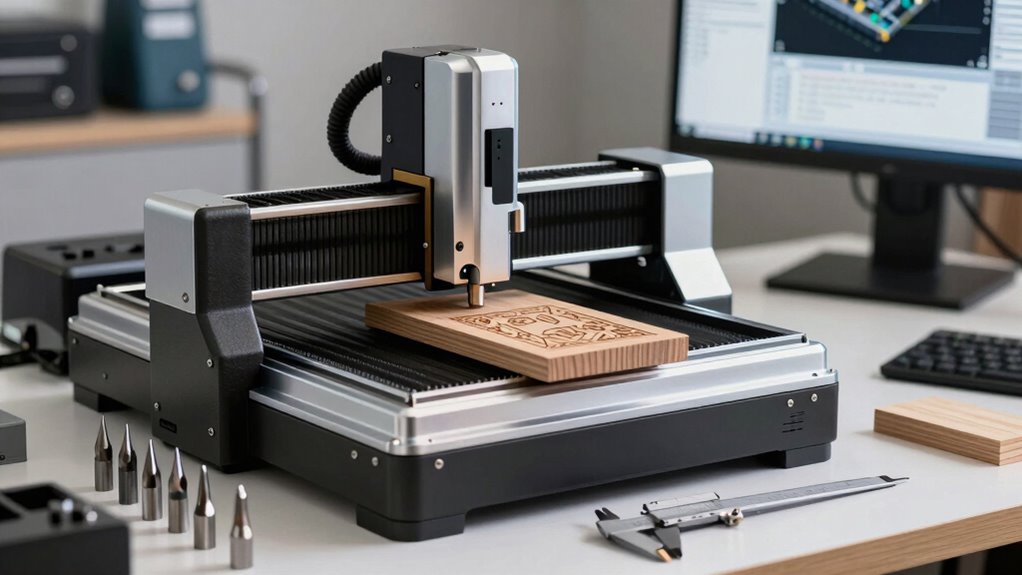
Starting with simple projects is the best way to build your confidence and develop your skills on your CNC machine. Focus on easy-to-make items like custom coasters, keychains, or nameplates, which are perfect for practicing your technique. Use beginner friendly materials such as plywood, MDF, or softwood, as they cut smoothly and reduce the risk of mistakes. These projects allow you to experiment with different bit types and finishing techniques without feeling overwhelmed. Incorporate simple design ideas like geometric patterns, initials, or basic shapes to keep things manageable. Completing these beginner projects helps you understand tool paths, learn to troubleshoot, and gain a sense of accomplishment early on. Once comfortable, you can move on to more complex designs.
CNC Safety Tips and Common Mistakes to Avoid
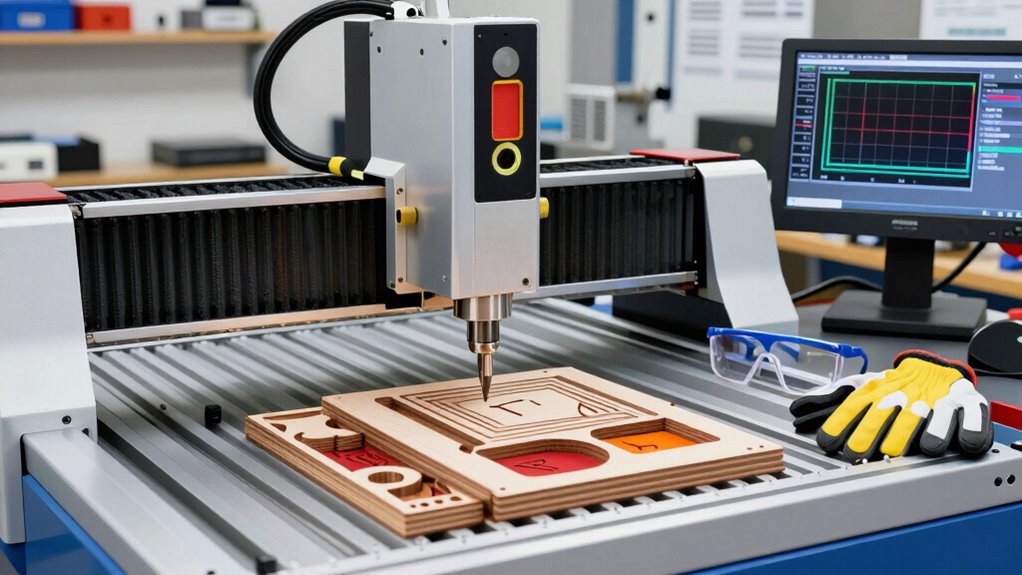
Ever wonder why safety should always come first when working with a CNC machine? Proper safety gear and awareness help prevent accidents and injuries. Common mistakes can lead to serious issues if you’re not careful. Always wear safety glasses, hearing protection, and gloves when operating your CNC. Keep your workspace clean and free of clutter to avoid mishaps. Double-check your machine settings before starting to prevent tool crashes. Never reach into the machine while it’s running. Regularly inspect your bits and components for wear or damage. Being aware of caregiver emotional health can also help you stay focused and alert during your projects. Additionally, understanding bit selection and maintenance ensures optimal performance and safety. Proper machine calibration is essential for accurate cuts and reducing the risk of mishaps. Ensuring your workpiece stability can prevent shifting during operations, which is crucial for safety. Pay attention to proper feed rates as they directly impact cut quality and safety. Here are some key safety tips:
Always wear safety gear, stay alert, and keep your workspace tidy for safe CNC operation.
- Wear appropriate safety gear at all times
- Never bypass safety features or guards
- Secure your workpiece firmly before cutting
- Stay alert and avoid distractions
- Turn off and unplug your CNC during maintenance
Following these practices helps guarantee a safe, smooth CNC experience.
Frequently Asked Questions
What Software Is Best for Beginner CNC Programming?
You should start with user-friendly CAD software like Fusion 360 or SketchUp, which are great for beginners. Pair them with easy-to-use CAM programs like Easel or Carbide Create to simplify CNC programming. These tools offer intuitive interfaces and tutorials, helping you learn quickly. As you gain experience, you can explore more advanced software, but for now, these options make your first projects smooth and enjoyable.
How Do I Troubleshoot Common CNC Machine Errors?
When troubleshooting common CNC machine errors, start by checking calibration issues, ensuring your machine is properly aligned and zeroed. If you encounter spindle errors, inspect the spindle for debris or overheating, and verify it’s running at the correct speed. Also, review your tool paths for any conflicts or miscommunications. Regular maintenance and calibration can prevent many issues, so stay proactive to keep your CNC running smoothly and efficiently.
Can I Use Recycled or Non-Traditional Materials With My CNC?
Yes, you can definitely use recycled and non-traditional materials with your CNC machine, much like Da Vinci’s inventive spirit. Think recycled plastics, wood, or even composite materials; just guarantee your bits are compatible and adjust your feeds accordingly. Always test on scraps first to avoid surprises. By experimenting with these materials, you open creative possibilities, turning everyday waste into stunning, custom projects.
What Maintenance Routines Are Recommended for Desktop CNC Machines?
You should regularly perform machine calibration to guarantee precision and check that your CNC is aligned correctly. Keep the spindle clean by wiping it down after each use to prevent debris buildup, which can affect performance. Additionally, inspect and lubricate moving parts periodically to reduce wear and tear. These routines help maintain your CNC’s accuracy and extend its lifespan, ensuring smooth operation for all your projects.
How Can I Improve the Precision of My CNC Cuts?
Ever notice how a tiny misalignment can throw off your cuts? To improve precision, you should focus on calibration techniques like double-checking your machine’s axes and ensuring the bed is level. Adjust your cutting parameters—such as feed rate and spindle speed—based on material and bit type. These small tweaks help maintain accuracy, giving you cleaner, more precise cuts every time.
Conclusion
Now that you know the essentials, are you ready to start creating your own projects? With the right bits, proper feeds and speeds, and a focus on safety, you’re well on your way. Don’t let fear hold you back—every expert was once a beginner. So go ahead, plunge into your first CNC project, experiment, and enjoy the learning process. After all, isn’t the best way to learn just to start making?