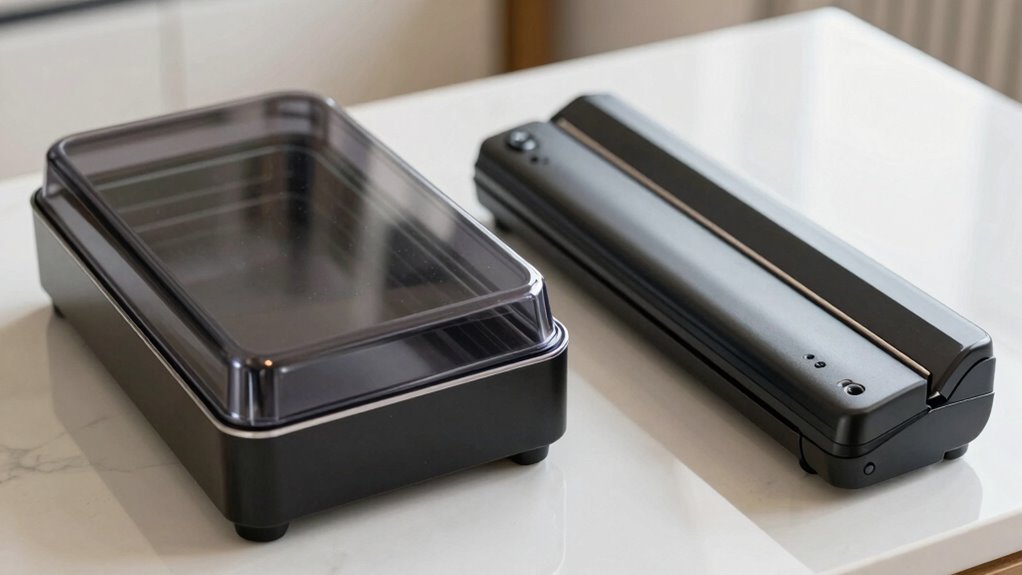
When choosing between chamber and edge sealers, it’s important to know their main differences. Chamber sealers remove air from the entire chamber, making them ideal for liquids and large quantities, and they provide stronger, more consistent seals. Edge sealers are compact, quick, and great for small batches at home, but may struggle with liquids and offer less vacuum power. To discover which option suits your needs best, keep exploring the details ahead.
Key Takeaways
- Chamber sealers vacuum the entire bag inside a sealed chamber, ideal for liquids and bulk commercial use.
- Edge sealers vacuum and seal bags from the outside, best suited for quick home or small-scale sealing tasks.
- Chamber sealers provide stronger, more consistent seals and handle liquids effectively; edge sealers are more portable and budget-friendly.
- Chamber sealers are larger, more expensive, and better for high-volume, professional applications; edge sealers are compact and easier to operate.
- Proper maintenance and understanding of each type’s capabilities ensure optimal sealing performance and longevity.
chamber vacuum sealer for commercial use
As an affiliate, we earn on qualifying purchases.
As an affiliate, we earn on qualifying purchases.
What Are Chamber and Edge Sealers? An Overview of Vacuum Sealing Types
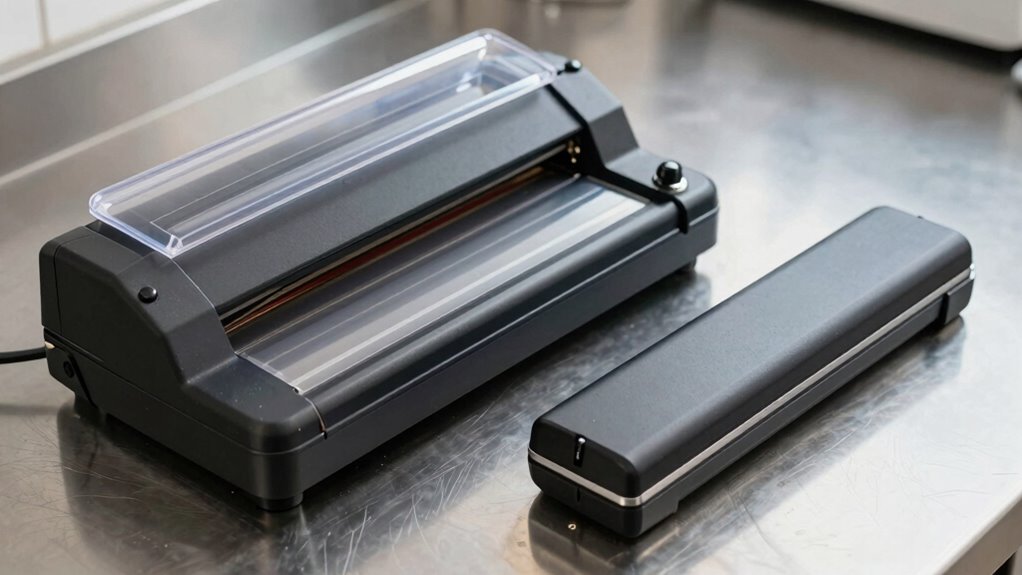
When choosing a vacuum sealer, understanding the differences between chamber and edge sealers is essential. Chamber sealers are designed mainly for commercial packaging, offering superior food preservation by vacuum-sealing multiple bags at once within a sealed chamber. They work by placing the entire bag inside the chamber, removing the air, and then sealing it, which helps preserve freshness and extend shelf life. Edge sealers, on the other hand, are more common for home use. They vacuum and seal bags through a heat-sealing strip along the edge, making them convenient for smaller quantities or occasional use. While edge sealers are versatile and affordable, chamber sealers excel in commercial settings where large-scale food preservation is required. Your choice depends on your needs for food preservation and packaging volume. Additionally, the vacuum pump in chamber sealers plays a crucial role in achieving consistent and powerful air removal for optimal preservation.
How Do Chamber and Edge Sealers Work? Key Mechanisms Explained
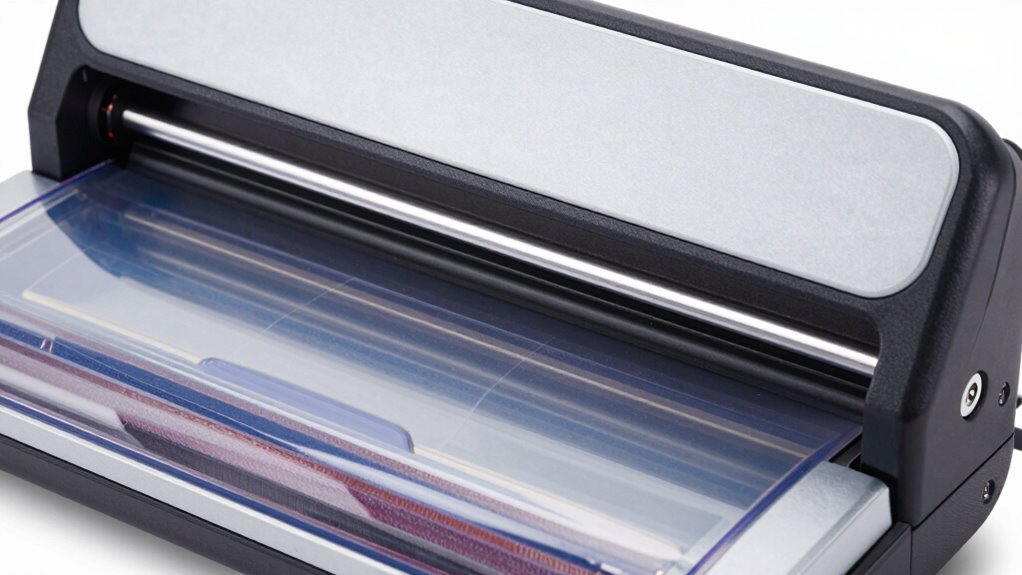
Have you ever wondered how vacuum sealers create an airtight seal? In a chamber vacuum sealer, the process begins by placing your bag inside the vacuum chamber. When you activate it, the chamber’s sealing mechanism removes air from inside, creating a vacuum environment. The entire bag is exposed to this low-pressure environment, ensuring all air is extracted evenly. Once the air is removed, the chamber’s heat bar seals the bag’s open end, locking out air and preserving freshness. In contrast, edge sealers vacuum only the bag’s opening, then heat-seal it outside the machine. Both rely on their sealing mechanisms to create an airtight barrier, but the chamber design allows for more consistent and thorough air removal, making it ideal for preserving food longer. Understanding the fundamental mechanisms helps in choosing the right vacuum sealer for your needs.
What Are the Pros and Cons of Chamber Sealers for Food Storage?
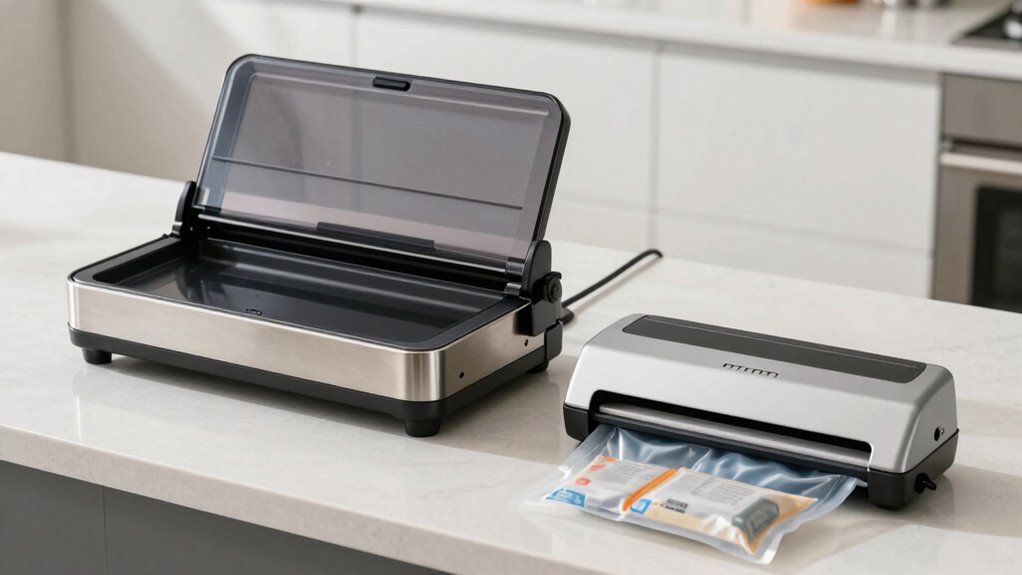
Chamber sealers offer significant advantages for food storage, especially if you want to maximize freshness and shelf life. Their design allows for airtight sealing of multiple items at once, making them ideal for food preservation and commercial applications. They handle liquids well, preventing leaks and spoilage. However, chamber sealers tend to be more expensive and bulkier, limiting portability. They also require a dedicated space for operation. Here’s a quick comparison:
| Feature | Pros | Cons |
|---|---|---|
| Food preservation | Longer shelf life | Higher cost |
| Commercial use | Efficient for bulk sealing | Larger size |
| Liquids handling | Prevents leaks | Less portable |
What Are the Advantages and Disadvantages of Edge Sealers for Home and Commercial Use?
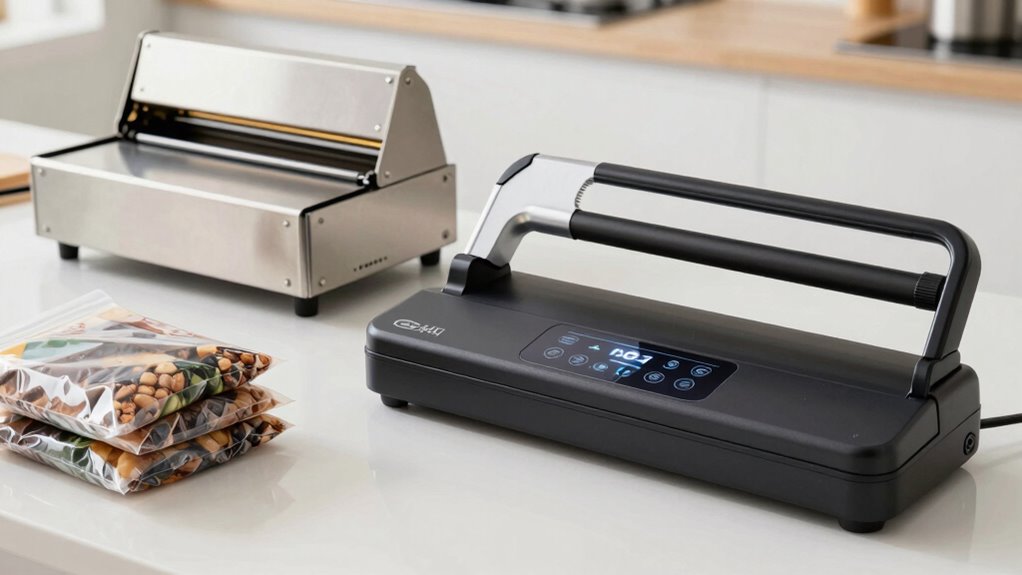
Edge sealers are popular choices for both home and commercial food preservation because they offer quick, efficient sealing without the need for bulky equipment. Their compact design makes them easy to use, saving time with simple sealing techniques. However, they may have limited vacuum strength compared to chamber sealers, which can affect long-term preservation. Edge sealers are ideal for sealing smaller batches and softer foods but might struggle with liquids or moist items, risking leaks. For home use, they are affordable and convenient, but for commercial settings, their lower capacity could be a drawback. Overall, edge sealers excel in speed and ease of use, making them suitable for many food preservation tasks, but they may fall short when dealing with heavy-duty sealing needs. Additionally, the horsepower of electric dirt bikes indicates that some models can produce enough power to handle demanding sealing tasks efficiently, if adapted appropriately. Understanding vacuum strength is essential when selecting the right sealer for specific preservation requirements, especially considering the difference between chamber and edge sealers. Proper maintenance and cleaning also play a vital role in ensuring optimal sealing performance and longevity of the equipment.
Which Vacuum Sealer Is Best for Commercial Food Storage? A Comparison of Options
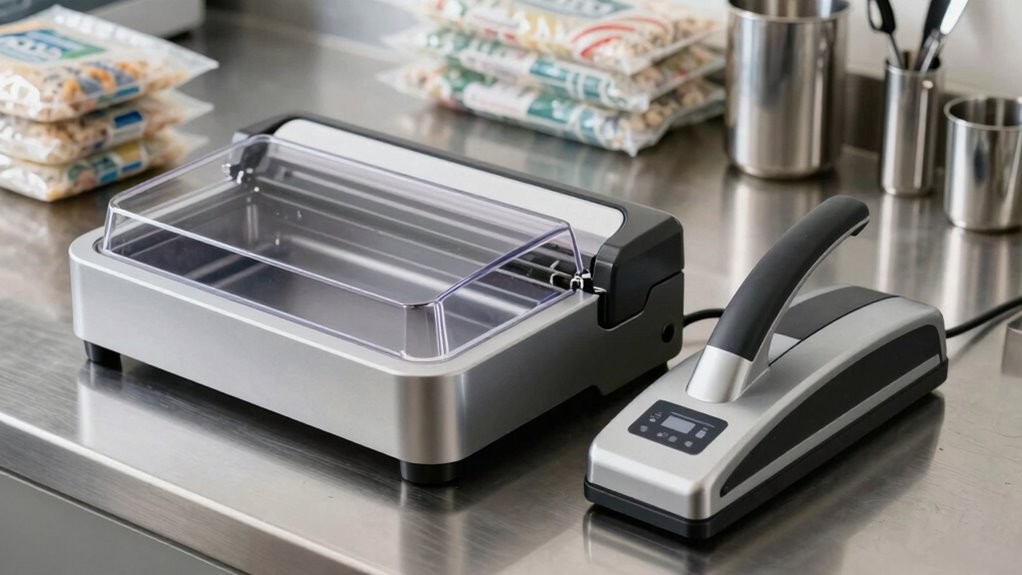
When selecting a commercial vacuum sealer, you need to take into account sealer type compatibility to match your storage needs. Focus on seal quality and strength to guarantee your food stays fresh and secure over time. Also, compare price and operational costs to find a solution that fits your budget and long-term usage. For optimal results, consider how accessibility features can streamline operation and maintenance tasks.
Sealer Type Compatibility
Choosing the right vacuum sealer for commercial food storage depends on understanding the different sealer types and their compatibility with your needs. Sealer type is vital because it affects how effectively you can vacuum seal various food items. Chamber sealers are ideal for high-volume operations, as they handle larger bags and multiple seals quickly. Edge sealers are more compact and suitable for lower volumes, offering ease of use and portability. When selecting a sealer type, consider your storage demands and the types of foods you’ll vacuum seal regularly. Proper matching of your needs with a compatible vacuum sealing machine ensures efficiency and maintains food freshness. Understanding sealer type compatibility helps you make an informed decision, optimizing your commercial food storage process.
Seal Quality and Strength
The seal quality and strength of a vacuum sealer directly impact how well your food stays fresh and preserved over time. High sealing efficiency ensures that bags are airtight, preventing leaks and spoilage. Vacuum strength plays a vital role in achieving this, as stronger vacuum pressure removes more air from the bag, creating a tighter seal. A superior vacuum sealer maintains consistent sealing performance, reducing the risk of compromised seals that could lead to spoilage or freezer burn. For commercial food storage, this means fewer re-seals and longer-lasting freshness. When comparing options, pay close attention to the sealer’s ability to deliver consistent vacuum strength and reliable seals, as these factors directly influence the durability and effectiveness of your preservation process.
Price and Operational Cost
Since operational costs can markedly impact your long-term expenses, evaluating the price and efficiency of a vacuum sealer is essential for commercial food storage. Your choice depends on factors like pricing strategies and maintenance costs. Cheaper models may save upfront, but higher-quality units often reduce ongoing expenses. Consider the initial investment versus long-term savings. Chamber sealers typically have higher upfront costs but lower maintenance and energy use, making them cost-effective over time. Edge sealers are more affordable initially but may have higher maintenance costs and less durability. Keep in mind:
- Pricing strategies vary based on features and capacity
- Maintenance costs can considerably influence total expenses
- Investing in a durable, high-quality machine might save money long-term
- Free Floating in design helps integrate these machines seamlessly into your workspace and optimize efficiency
Choose wisely to optimize both your budget and operational efficiency.
Are Chamber or Edge Sealers Easier for Beginners? Tips to Get Started
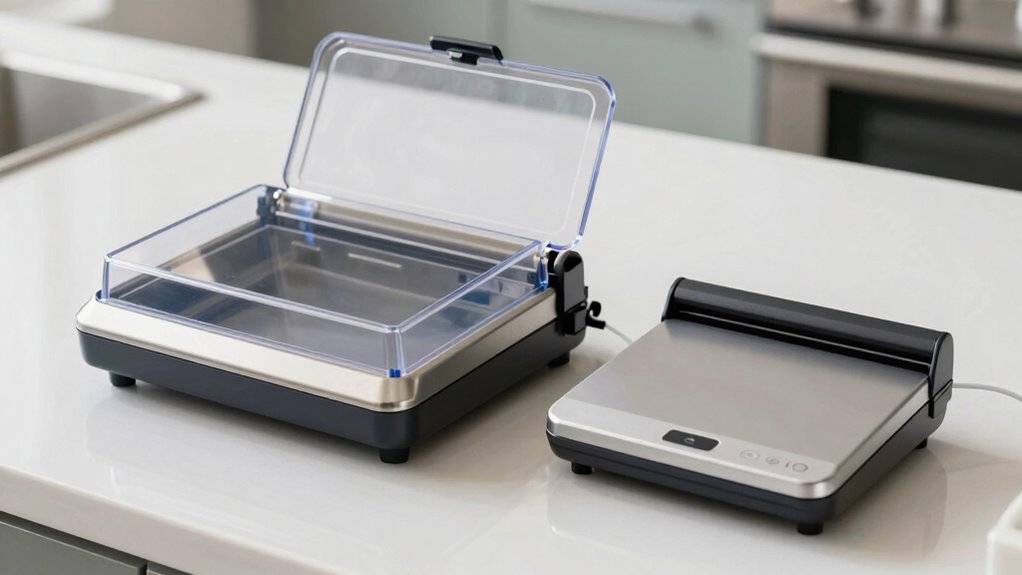
If you’re new to vacuum sealing, choosing between chamber and edge sealers can feel overwhelming, but knowing some basic tips helps. You’ll want to focus on user-friendly operation, gather the essential equipment, and watch out for common beginner mistakes. With a little guidance, you’ll be sealing like a pro in no time. Additionally, understanding the essential oils for respiratory health can inspire you to create personalized, aromatic vacuum-sealed storage for herbal remedies and wellness products. Proper piercing care and hygiene ensures your stored items remain safe and free from contamination, which is especially important when using natural remedies. Considering dog health and wellness tips can also help you maintain the freshness and safety of your stored items, ensuring optimal quality. By selecting the right sealing method and maintaining proper food storage practices, you’ll maximize the shelf life and freshness of your products. Being aware of vacuum sealing safety guidelines can further help prevent accidents and ensure effective preservation.
User-Friendly Operation Tips
Choosing the right vacuum sealer can feel overwhelming for beginners, but understanding the differences between chamber and edge sealers makes the process easier. To start, focus on simple vacuum sealing techniques to build confidence. Keep your sealing machine well-maintained to ensure consistent performance and avoid failures. Here are some user-friendly tips:
- Always read the user manual thoroughly before operation
- Keep the sealing surfaces clean and free of debris
- Practice sealing different bag types to find what works best
These steps help you operate your vacuum sealer efficiently and reduce frustration. Regular maintenance, like cleaning seals and replacing worn parts, extends your machine’s lifespan. With patience and practice, you’ll master vacuum sealing techniques and keep your equipment in top shape for reliable results.
Essential Equipment Needs
When starting out with vacuum sealing, selecting the right equipment can make a big difference in how easy the process feels. Both chamber and edge sealers require proper maintenance to ensure seal integrity over time. For beginners, an edge sealer might be simpler to operate and maintain, often needing less frequent cleaning and fewer adjustments. Chamber sealers, while offering stronger seals, can be more complex and require more diligent equipment upkeep. Consider your volume needs and comfort level with upkeep when choosing your machine. Regularly cleaning the sealing bars and vacuum chambers helps prevent malfunctions and preserves seal quality. Additionally, understanding the sound healing science behind certain techniques can help users optimize their equipment for better results. Ultimately, choosing equipment that fits your skill level and maintenance capacity will make sealing easier and more reliable.
Common Beginner Mistakes
Beginners often make mistakes when starting with vacuum sealing, especially if they’re unsure whether to choose chamber or edge sealers. One common error is neglecting proper vacuum seal maintenance, which can compromise seals and spoil food. Proper maintenance includes regular cleaning of the sealing elements and gaskets to prevent leaks and extend your machine’s lifespan. Another is improper sealing technique tips, like overfilling bags or not removing enough air, leading to failed seals. Additionally, beginners might struggle with choosing the right settings or sealing times, resulting in weak seals or damaged bags. To avoid these pitfalls, start with clear instructions, practice sealing techniques on spare bags, and regularly clean and sustain your equipment. Focusing on these basics helps ensure effective sealing and prolongs your machine’s lifespan. Whether you choose a chamber or edge sealer, mastering these tips makes a big difference. Supporting Caregivers’ Emotional Well-Being by managing stress and staying organized can also help improve your overall sealing experience. Paying attention to vacuum sealing techniques and practicing patience can significantly reduce errors and improve results. Moreover, understanding the importance of content quality and authority can help you make better decisions about equipment and techniques, leading to more successful sealing outcomes. Developing a good understanding of machine maintenance can also prevent costly repairs and downtime. Incorporating regular filter checks and following manufacturer guidelines can further enhance the performance and longevity of your vacuum sealer.
Chamber vs. Edge Sealers: Cost Comparison and Which Fits Your Budget
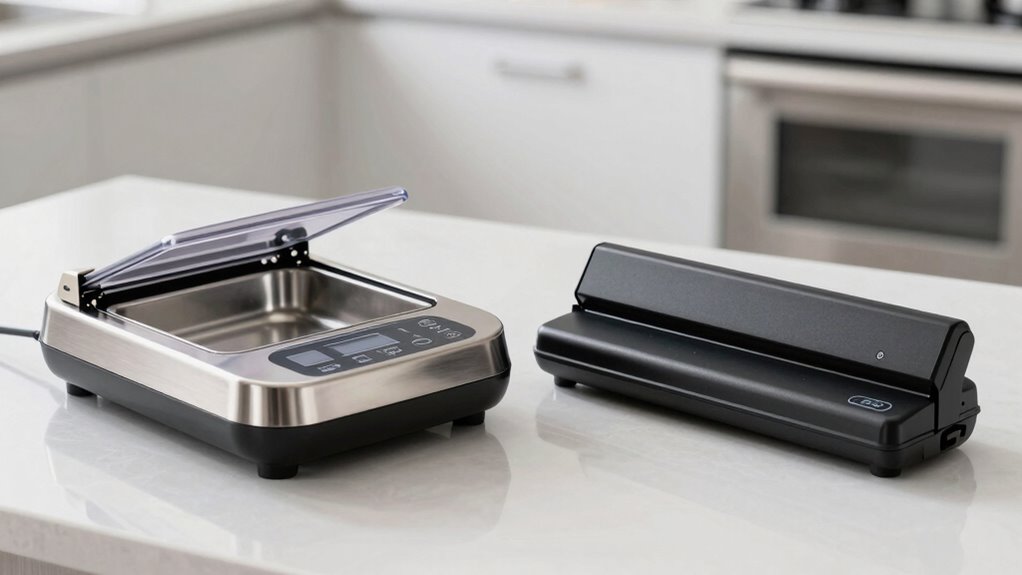
Understanding the cost differences between chamber and edge sealers is essential for making an informed investment. Chamber sealers typically have a higher upfront price due to their advanced technology, but their durability and efficiency can justify the cost over time. Their technology often results in faster sealing times and improved consistency, which can be beneficial for high-volume use. Additionally, the long-term performance of chamber sealers can lead to savings by reducing the need for frequent repairs or replacements. Chamber sealers also tend to have better sealing quality, ensuring a more secure vacuum that preserves food longer. Edge sealers are more affordable initially, making them a popular choice for small businesses or home use. When evaluating pricing strategies, consider not only the purchase price but also product warranties, which can save you money on repairs and replacements. Additionally, product longevity is an important factor to consider, as it impacts long-term value and overall cost-effectiveness. Longer-lasting equipment can reduce the need for frequent replacements, contributing to better cost efficiency. Ultimately, your budget and specific needs will determine which type offers the best value, balancing initial investment with long-term reliability.
How to Choose the Right Vacuum Sealer for Your Needs and Budget
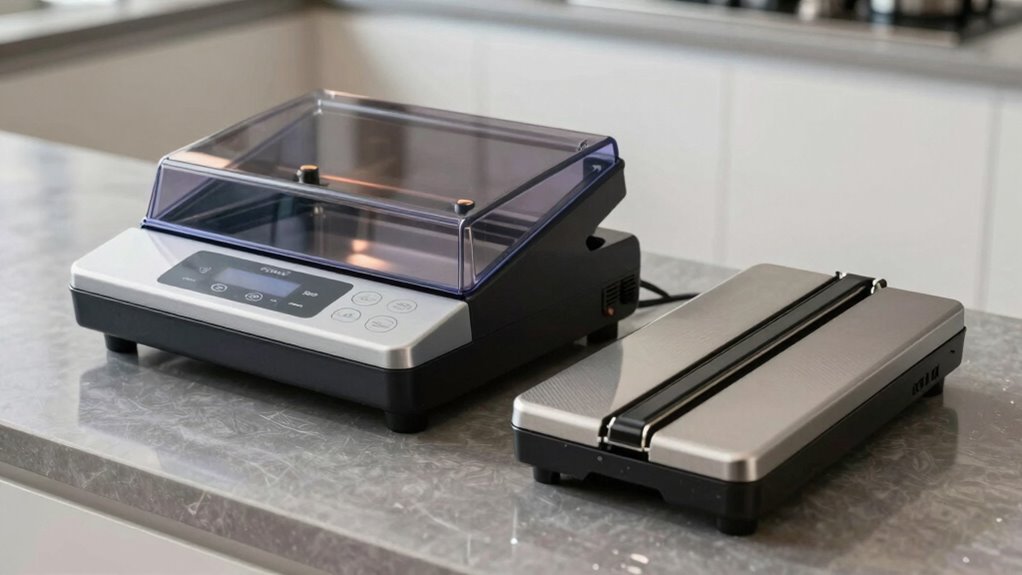
Choosing the right vacuum sealer depends on your specific needs and budget. To make an informed decision, consider how often you’ll seal food, the types of items you’ll preserve, and your available space. Look for models that align with your usage patterns and financial plans. Keep in mind vacuum sealing best practices, like proper bag placement and avoiding overfilling, to guarantee ideal results. Additionally, select a sealer that’s easy to maintain—regular cleaning and replacing seals can extend its lifespan.
Choosing the right vacuum sealer involves assessing your needs, budget, and maintenance preferences for optimal results.
- Determine if you need an entry-level or high-end model based on your sealing frequency
- Check for features like adjustable vacuum levels or built-in cutters
- Remember to follow maintenance tips to keep your sealer performing at its best
Troubleshooting Your Chamber or Edge Sealer: Common Issues and Fixes
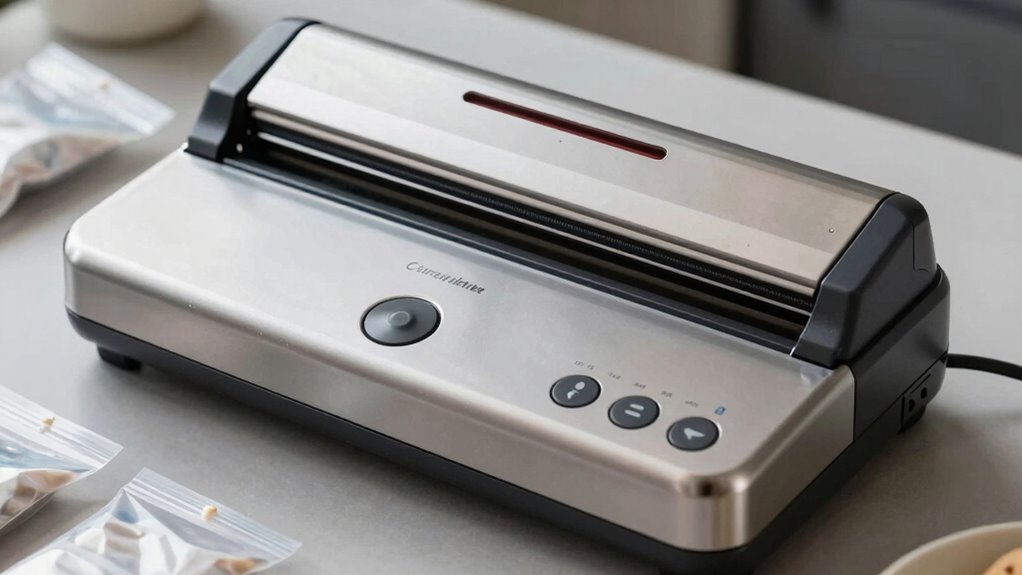
Are you experiencing issues with your chamber or edge sealer? Common problems include poor seals, error messages, or uneven vacuuming. To fix these, start with basic maintenance tips like cleaning the seal bar and ensuring the gasket is intact. For more complex issues, seal repair might be necessary. Here’s a quick troubleshooting guide:
| Issue | Possible Cause | Fix |
|---|---|---|
| Poor seal | Dirty or damaged seal bar | Clean or replace the seal bar |
| Incomplete vacuum | Leaks in gasket or bag | Check gasket, replace if needed |
| Error messages | Overheating or sensor issues | Allow cooling, inspect sensors |
| Bag not sealing properly | Incorrect bag placement | Ensure proper bag positioning |
| Vacuum pump failure | Mechanical malfunction | Schedule professional repair or seal replacement |
Frequently Asked Questions
Can Chamber and Edge Sealers Be Used for Sous Vide Cooking?
Yes, both chamber and edge sealers can be used for sous vide cooking, but your choice depends on vacuum bag compatibility and sealer portability. Chamber sealers handle larger bags and maintain a consistent vacuum, making them ideal for sous vide. Edge sealers are portable and suitable for smaller bags, but verify they can create a strong seal for immersion. Choose based on your bag sizes and convenience needs.
What Maintenance Is Required for Chamber Versus Edge Sealers?
Oh, the joy of maintenance! For chamber sealers, you’ll need regular cleaning routines to prevent seal failures and occasional replacement parts like gaskets or seals. Edge sealers demand less fuss, mainly requiring cleaning routines to keep the sealing area spotless. Both need attention to guarantee longevity, but chamber models might test your patience more with their complex parts. Keep up with maintenance, and your sealer will serve you well, hassle-free.
Are There Size Limitations for Vacuum Sealing With Each Type?
You’ll find that sealing capacity and size constraints vary between chamber and edge sealers. Chamber sealers typically handle larger bags and have greater sealing capacity, making them ideal for bulk packaging. Edge sealers are more compact with size constraints, suited for smaller bags and lighter tasks. Consider your volume and bag size needs to choose the right sealer, ensuring it meets your sealing capacity requirements without exceeding size limitations.
How Energy-Efficient Are Chamber Compared to Edge Sealers?
Ever wondered which sealer saves more energy? Chamber sealers are generally more power-efficient because they use less energy during operation, thanks to their design that seals multiple bags simultaneously. Edge sealers, on the other hand, tend to consume more energy per sealing cycle. If you’re looking to cut down on energy consumption and boost power efficiency, a chamber sealer is the smarter choice for frequent use.
Can Both Sealer Types Handle Liquids and Moist Foods Effectively?
Yes, both chamber and edge sealers can handle liquids and moist foods effectively. Chamber sealers excel at liquid handling because their design prevents spills during the sealing process, making them ideal for soups or marinated items. Edge sealers also work well with moist food, but you need to be careful to avoid leaks. Properly sealing and removing excess liquid helps guarantee a tight seal regardless of the sealer type.
Conclusion
Choosing between chamber and edge sealers depends on your needs and budget. While both have their charms, understanding their subtle differences can help you make a more confident choice. With a little guidance, you’ll find the perfect fit to preserve your food efficiently. Remember, the right vacuum sealer can be a quiet hero in your kitchen or business, quietly working behind the scenes to keep your supplies fresh and ready for whenever you need them most.