An under-sink water filtration system with UV can pair ultraviolet treatment with reverse osmosis or ultrafiltration, but those technologies address different needs. My best overall pick is the iSpring RO5004F, which combines tankless reverse osmosis with UV; the SimPure T2-600T stands out for its built-in tank, while the JOREVS is a simpler UV purifier for buyers who do not need reverse osmosis. The main tradeoffs are filtration scope, installation space, water production, upkeep, and whether you want mineral or alkaline stages. UV treatment is not a substitute for a filter that reduces sediment or dissolved contaminants, so match the system to your water report. Read on for the full comparison and guidance on choosing the right setup.

Get the latest gadgets delivered free with Prime
- Fast, free delivery on millions of items
- Prime Video, Amazon Music and more included
- Member-only deals all year
Complete the kit



Key Takeaways
- The iSpring RO5004F leads the roundup for buyers seeking a tankless reverse-osmosis system that also includes UV treatment.
- UV does not replace reverse osmosis. The JOREVS is a UV-focused purifier, while RO models add a membrane stage aimed at dissolved substances.
- Tank and tankless designs solve different space and supply needs. The SimPure T2-600T has a built-in tank; the iSpring RO5004F and SimPure T1-400 are tankless options.
- Alkaline stages are a preference, not a universal upgrade. Several models add them, but buyers should weigh the extra stage against simpler maintenance and their taste goals.
- Not every system in the list includes UV. The Express Water ROALK10D, SimPure T1-400ALK, and Waterdrop TSU are alternatives for buyers prioritizing other filtration features.
| iSpring RO5004F Tankless Reverse Osmosis Water Filter with UV |  | Best Overall Tankless RO + UV | Filtration method: Reverse osmosis and ultraviolet | Filtration stages: 6 | Daily capacity: 500 gallons | VIEW ON AMAZON | See Our Full Breakdown |
| Express Water 11-Stage Reverse Osmosis Water Filter System with Alkaline and UV | 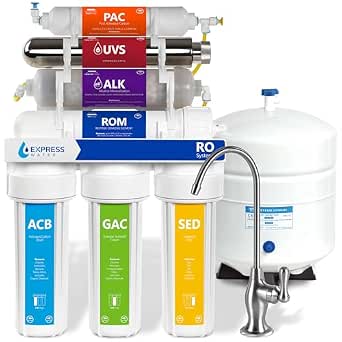 | Best for Mineralized RO Water | Filtration stages: 11 | Purification methods: Reverse osmosis and ultraviolet | Alkaline mineralization: Adds minerals including calcium, potassium, and magnesium | VIEW ON AMAZON | See Our Full Breakdown |
| iSpring RO5004F-AK UV Alkaline Reverse Osmosis Water Filter | 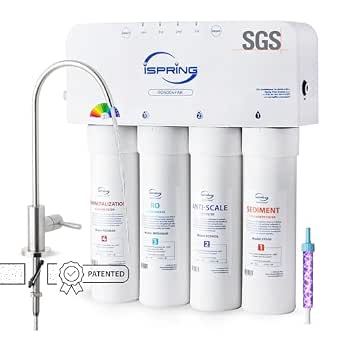 | Best Tankless Pick with Remineralization | Purification method: Reverse osmosis and ultraviolet | Alkaline stage: Adds minerals back to filtered water | Daily capacity: 500 gallons | VIEW ON AMAZON | See Our Full Breakdown |
| Express Water ROALK10D 10-Stage Alkaline Under-Sink Reverse Osmosis System, 100 GPD |  | Best Value Alkaline RO Setup | Filtration stages: 10 | Purification method: Reverse osmosis | Alkaline mineralization: Adds calcium, potassium, and magnesium | VIEW ON AMAZON | See Our Full Breakdown |
| JOREVS Under-Sink UV Water Purifier, 1 GPM |  | Best UV Add-On for Existing RO | Purification method: Ultraviolet UVC-LED | UV wavelength: 270–280 nm | Maximum flow rate: 1 gpm | VIEW ON AMAZON | See Our Full Breakdown |
| SimPure T2-600T UV Reverse Osmosis Water Filter, 600 GPD, Built-In Tank | 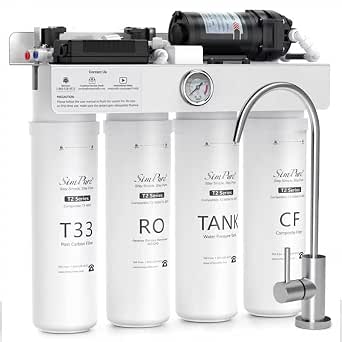 | Best for High Output with a Built-In Tank | Purification method: Reverse osmosis and ultraviolet | Filtration stages: 8 | Maximum production: 600 gallons per day | VIEW ON AMAZON | See Our Full Breakdown |
| APEC Water ROES-PHUV75, 7-Stage Under Sink RO System, Alkaline & UV, 75 GPD |  | Best for Mineral-Added RO Water | Purification method: Reverse osmosis and ultraviolet | Stages: 7 | Membrane capacity: 75 gallons per day | VIEW ON AMAZON | See Our Full Breakdown |
| iSpring RCC7AK-UV 7-Stage Under-Sink Reverse Osmosis Water Filter System with Alkaline and LED UV Filters |  | Best for a Tank-Based Alkaline Setup | Filtration stages: 7 | Purification methods: Reverse osmosis, alkaline, activated carbon, carbon block, and ultraviolet | RO membrane capacity: 75 gallons per day | VIEW ON AMAZON | See Our Full Breakdown |
| SimPure T1-400 Tankless UV Reverse Osmosis Water Filter System, 400 GPD |  | Best Tankless UV Reverse Osmosis Pick | Purification method: Reverse osmosis with UV treatment | Design: Tankless | Filtration stages: 8 | VIEW ON AMAZON | See Our Full Breakdown |
| LCF 0.01 μm Under-Sink Ultra-Filtration Water Filter System with UV-C |  | Best for Keeping Minerals and Avoiding RO Wastewater | Filtration stages: 3 | Faucet UV: Flow-activated LED UV-C | UV bacteria reduction claim: Up to 99.9% at flow rates under 2 L/min | VIEW ON AMAZON | See Our Full Breakdown |
| SimPure T1-400ALK Tankless Alkaline Reverse Osmosis Water Filter, 400 GPD |  | Best Tankless RO Pick for Remineralized Water | Purification method: Reverse osmosis | Design and installation: Tankless; under sink | Daily capacity: 400 gallons per day | VIEW ON AMAZON | See Our Full Breakdown |
| Waterdrop TSU 3-Stage Ultra Filtration Under-Sink Water Filter System | 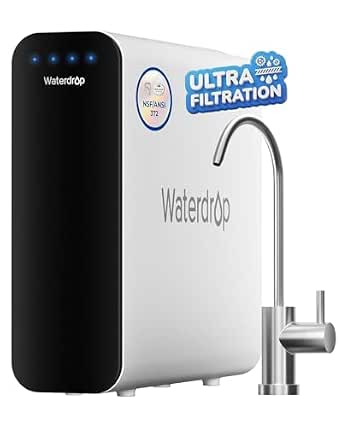 | Best No-Waste, Mineral-Retaining Alternative | Purification method: Ultrafiltration, activated carbon, and carbon block | Stages: 3 | Maximum flow rate: 1.05 GPM | VIEW ON AMAZON | See Our Full Breakdown |
| under sink water filtration uv system | Maximum flow rate | Purification method | Filtration stages | Dimensions |
|---|---|---|---|---|
| iSpring RO5004F Tankless Rever | 0.35 gpm | — | 6 | 15.2 × 6.1 × 16.6 in |
| Express Water 11-Stage Reverse | 0.8 gpm | — | 11 | — |
| iSpring RO5004F-AK UV Alkaline | — | Reverse osmosis and ultraviolet | — | 15.2 × 6.1 × 16.6 in |
| Express Water ROALK10D 10-Stag | 0.8 gpm | Reverse osmosis | 10 | — |
| JOREVS Under-Sink UV Water Pur | 1 gpm | Ultraviolet UVC-LED | — | 9.92 × 1.65 × 1.65 in |
| SimPure T2-600T UV Reverse Osm | 0.42 GPM | Reverse osmosis and ultraviolet | 8 | 15.5 × 5.3 × 16.3 inches |
| APEC Water ROES-PHUV75 | 0.07 gpm | Reverse osmosis and ultraviolet | — | — |
| iSpring RCC7AK-UV 7-Stage Unde | — | — | 7 | 15 × 8 × 18 inches |
| SimPure T1-400 Tankless UV Rev | 0.4 gpm | Reverse osmosis with UV treatment | 8 | 15.6 × 5.3 × 15.7 inches |
| LCF 0.01 μm Under-Sink Ultra-F | — | — | 3 | — |
| SimPure T1-400ALK Tankless Alk | — | Reverse osmosis | — | 15.6 × 5.3 × 15.7 inches |
| Waterdrop TSU 3-Stage Ultra Fi | 1.05 GPM | Ultrafiltration, activated carbon, and carbon block | — | — |
More Details on Our Top Picks
iSpring RO5004F Tankless Reverse Osmosis Water Filter with UV
For buyers who want reverse osmosis and UV in one under-sink unit, the RO5004F is the strongest all-around fit in this group. Its six stages include a 0.0001-micron RO membrane, while a built-in pump supports a listed capacity of 500 gallons per day. That combination favors households seeking high output without a storage tank taking up cabinet space. Compared with the iSpring RO5004F-AK, this model skips alkaline remineralization, so it is the simpler choice if mineral addition is not a priority. Its monitor and automatic leak shutoff add practical maintenance and spill safeguards. The tradeoff is that a tankless RO system still needs a dedicated under-sink installation, and its replacement filters require ongoing purchases.
Pros:- Six filtration stages combine reverse osmosis and UV treatment
- 500-gallon-per-day listed capacity with a built-in pump
- Tankless design leaves more cabinet room than systems with storage tanks
- Filter-life monitor and automatic leak shutoff support upkeep and spill protection
Cons:- Requires under-sink plumbing and installation
- Replacement filters require periodic maintenance and purchases
- Does not include an alkaline remineralization stage
Best for: Households seeking high-capacity RO and UV treatment in a tankless under-sink system, especially those who do not need alkaline remineralization.
Not ideal for: Renters or buyers who cannot modify under-sink plumbing, and shoppers who want minerals added back to RO water.
- Filtration method:Reverse osmosis and ultraviolet
- Filtration stages:6
- Daily capacity:500 gallons
- Maximum flow rate:0.35 gpm
- Pure-to-drain ratio:2:1
- Design:Tankless, under-sink
- Dimensions:15.2 × 6.1 × 16.6 in
Our verdict“Choose this iSpring if you want tankless, high-capacity RO with UV and do not need remineralization.”
Express Water 11-Stage Reverse Osmosis Water Filter System with Alkaline and UV
This Express Water system is the pick for buyers who want UV treatment plus alkaline mineralization and prefer a conventional tank-based setup. Its 11 stages combine RO, UV sterilization, and mineral addition, while the included tank, chrome faucet, and leak detector make it a more complete package than the add-on JOREVS Under-Sink UV Water Purifier, which is designed to pair with a separate system. The alkaline stage is the key distinction: it adds minerals such as calcium, potassium, and magnesium after RO filtration. The included storage tank takes more cabinet space than the tankless iSpring RO5004F, and the listed capacity is lower at 100 gallons. Buyers should also plan for a powered UV bulb and periodic filter upkeep.
Pros:- Combines reverse osmosis, UV sterilization, and alkaline mineralization
- Includes a storage tank, chrome faucet, UV bulb, and installation parts
- Leak detector can shut off water flow
- Designed for DIY installation
Cons:- Storage tank and system require more cabinet space than tankless options
- Listed capacity is 100 gallons, below the 500-gallon-per-day iSpring systems
- UV bulb requires power and its warning light may signal reduced performance
Best for: Households that want an all-in-one under-sink RO, UV, and alkaline system with a supplied faucet and storage tank.
Not ideal for: Buyers with limited cabinet space, or those seeking tankless high-output filtration like the iSpring RO5004F.
- Filtration stages:11
- Purification methods:Reverse osmosis and ultraviolet
- Alkaline mineralization:Adds minerals including calcium, potassium, and magnesium
- Maximum flow rate:0.8 gpm
- Capacity:100 gallons
- Installation:Under sink
- Included components:UV sterilizer, UV bulb, tank, faucet, filters, and parts
- Warranty:1 year
Our verdict“Pick this Express Water model if mineralized RO water and an included tank-and-faucet setup matter more than saving cabinet space.”
iSpring RO5004F-AK UV Alkaline Reverse Osmosis Water Filter
The RO5004F-AK keeps the tankless, 500-gallon-per-day format of the RO5004F while adding an alkaline stage to return minerals to filtered water. That makes it a better fit for buyers who want UV and RO but prefer remineralized water; the standard iSpring RO5004F is the more straightforward choice if that extra stage is unnecessary. A built-in pump supports output and low-pressure use, and the filter-life monitor offers reminders for ongoing maintenance. SGS testing for PFAS and TDS reduction gives buyers specific testing information, though it does not make the system a substitute for checking local water conditions. The cabinet footprint matches the non-alkaline model, and the tradeoff is continued filter replacement after installation.
Pros:- Tankless design pairs UV and RO with alkaline remineralization
- Listed capacity of 500 gallons per day and a built-in pump
- Filter-life monitoring and reminders support routine upkeep
- SGS testing is listed for PFAS and TDS reduction
Cons:- Requires under-sink installation
- Replacement filters require ongoing maintenance
- Uses the same cabinet dimensions as the non-alkaline RO5004F while adding a stage some buyers may not need
Best for: Buyers who want tankless RO and UV with a mineral-addition stage, high listed daily capacity, and filter-life reminders.
Not ideal for: Shoppers who want the simplest or least-maintenance setup, or who do not want to pay for and maintain an alkaline stage.
- Purification method:Reverse osmosis and ultraviolet
- Alkaline stage:Adds minerals back to filtered water
- Daily capacity:500 gallons
- Pure-to-drain ratio:2:1
- Design:Tankless, under-sink
- UV light lifespan:Up to 8,000 hours
- Dimensions:15.2 × 6.1 × 16.6 in
- Included components:System, filters, and user manual
Our verdict“Choose the RO5004F-AK over the standard RO5004F if you want tankless RO and UV with minerals added back.”
Express Water ROALK10D 10-Stage Alkaline Under-Sink Reverse Osmosis System, 100 GPD
The ROALK10D is the alkaline RO option without UV, so it suits buyers who want mineralized reverse-osmosis water but do not need an ultraviolet stage. It includes a storage tank, chrome faucet, and leak detector, making it a more ready-to-install package than the JOREVS UVC-LED purifier, which requires an existing filtration setup such as RO. Compared with the UV-equipped Express Water 11-Stage RO system, this model has one fewer listed stage and omits UV while retaining alkaline mineralization. Its 100-gallon capacity and tank-based design are less compelling for households prioritizing high output or compact storage. Treat it as a value-oriented alternative only if UV disinfection is not a requirement for your under-sink system.
Pros:- Ten-stage RO filtration includes alkaline mineral addition
- Comes with a storage tank, chrome faucet, filters, and parts
- Leak detector is included
- BPA-free construction and a 1-year warranty are listed
Cons:- Does not include UV treatment, unlike the other integrated RO options in this batch
- Storage tank takes more cabinet space than tankless systems
- Listed capacity is 100 gallons, below the iSpring systems’ 500 gallons per day
Best for: Buyers who want an included tank, faucet, leak detector, and alkaline RO filtration but do not require UV treatment.
Not ideal for: Anyone specifically shopping for an under-sink UV filtration system, or households needing tankless design and high daily capacity.
- Filtration stages:10
- Purification method:Reverse osmosis
- Alkaline mineralization:Adds calcium, potassium, and magnesium
- Maximum flow rate:0.8 gpm
- Capacity:100 gallons
- Maximum supported water TDS:1,000 ppm
- Included components:System, faucet, tank, filters, and parts
- Warranty:1 year
Our verdict“Choose this model only if alkaline RO and an included tank-and-faucet package matter more than UV disinfection.”
JOREVS Under-Sink UV Water Purifier, 1 GPM
Unlike the iSpring and Express Water systems, the JOREVS is not a complete RO filter; it is a compact UV purifier intended to work with an existing reverse-osmosis setup. That distinction makes it the most targeted choice here for buyers who already have filtration and want to add UVC disinfection without replacing the whole system. Its flow sensor switches treatment on when water runs, and the unit is rated for 1 gpm, higher than the listed flow of the tankless iSpring RO5004F. The UVC-LED is rated for up to 10 years, reducing the need for routine bulb changes compared with a conventional bulb-based setup. It does not remove contaminants through RO or provide a standalone multi-stage filtration system, so it is a poor fit as a single purchase for untreated water.
Pros:- Designed to integrate with existing reverse-osmosis systems
- Flow sensor activates UVC treatment when water runs
- 1 gpm maximum flow rate
- UVC-LED is rated for up to 10 years of use
Cons:- Does not provide reverse osmosis or multi-stage contaminant filtration on its own
- Not suitable for whole-house water filtration systems
- Requires corded electrical power
Best for: Homeowners with an existing under-sink RO system who want a compact, flow-activated UVC add-on.
Not ideal for: Buyers seeking a complete filtration system, whole-house treatment, or a standalone replacement for reverse osmosis.
- Purification method:Ultraviolet UVC-LED
- UV wavelength:270–280 nm
- Maximum flow rate:1 gpm
- Installation:Under sink
- UVC-LED lifespan:Up to 10 years
- Maximum supported water TDS:1,000 ppm
- Temperature range:4–60 °C
- Dimensions:9.92 × 1.65 × 1.65 in
Our verdict“Add the JOREVS to an existing under-sink RO setup if you need UV treatment without buying a full replacement system.”
SimPure T2-600T UV Reverse Osmosis Water Filter, 600 GPD, Built-In Tank
The SimPure T2-600T pairs UV treatment with an eight-stage RO process and a built-in pressure tank, a useful combination for households that want a stored supply and brisk dispensing without a separate tank taking up space. Its stated 600 GPD capacity is higher than the 400 GPD SimPure T1-400, while its 2:1 filtered-to-drain ratio is also more water-efficient than the T1-400’s 1.5:1 ratio. Twist-off filters make routine changes simpler, though the under-sink installation still calls for space, plumbing access, and a power connection for UV operation. Like other RO systems here, it reduces TDS but removes minerals too; buyers who want mineral content retained may prefer the LCF ultra-filtration system, which does not lower TDS. The T2-600T’s strongest case is high output with tank-backed dispensing, not mineral-rich water.
Pros:- Built-in pressure tank supports steady dispensing
- Combines UV treatment with eight-stage reverse osmosis
- Twist-off filters allow tool-free replacement
- Claimed 2:1 filtered-to-drain ratio is better than the SimPure T1-400’s 1.5:1
Cons:- Requires under-sink plumbing installation and space
- RO produces mineral-free water, which may not suit buyers who prefer minerals
- Maximum supported TDS is 500 ppm
Best for: Households seeking high RO output, UV treatment, and a built-in tank for regular drinking and cooking water use.
Not ideal for: Buyers who want mineral-rich water, a countertop-free installation, or a system that avoids RO wastewater.
- Purification method:Reverse osmosis and ultraviolet
- Filtration stages:8
- Maximum production:600 gallons per day
- Maximum flow rate:0.42 GPM
- Filtered-to-drain ratio:2:1
- Maximum supported TDS:500 ppm
- Dimensions:15.5 × 5.3 × 16.3 inches
- NSF/ANSI standard:58
Our verdict“Choose the T2-600T if you want a high-capacity UV-plus-RO system with a built-in tank and can accept mineral removal.”
APEC Water ROES-PHUV75, 7-Stage Under Sink RO System, Alkaline & UV, 75 GPD
The APEC ROES-PHUV75 is a traditional tank-based RO choice for buyers who want UV treatment and a calcium stage that adds minerals back after filtration. That sets it apart from the SimPure T2-600T, which has much greater stated production capacity but does not include an alkaline mineral stage. APEC lists a 75 GPD membrane and a maximum flow rate of 0.07 gpm, so this is better suited to steady household use than fast, high-volume dispensing. The product information describes reduction of a broad range of impurities and includes lead-free faucet components, but it does not provide the same detailed system dimensions and stage-by-stage data as some alternatives here. DIY instructions and installation videos may help capable homeowners, yet the system still needs under-sink space and an electrical connection for UV. Pick it for its mineral-adding approach, not for speed.
Pros:- Combines reverse osmosis and UV treatment
- Calcium stage adds minerals after RO filtration
- Includes a lead-free designer faucet and food-grade tubing
- DIY instructions and installation videos are available
Cons:- 75 GPD capacity and 0.07 gpm maximum flow are modest beside high-output systems
- Requires under-sink installation and electrical power for UV
- Provided product details omit several useful system specifications
Best for: RO buyers who want UV treatment plus a calcium remineralization stage and are comfortable with a slower, tank-based system.
Not ideal for: Households that need fast dispensing or high daily output, or renters who cannot install an under-sink system and dedicated faucet.
- Purification method:Reverse osmosis and ultraviolet
- Stages:7
- Membrane capacity:75 gallons per day
- Maximum flow rate:0.07 gpm
- Installation:Under sink
- Operating pressure:40–85 psi
- Operating temperature:40–100°F
- TDS reduction:Yes
Our verdict“Choose the APEC if you value calcium remineralization after RO more than high dispensing speed or compact installation.”
iSpring RCC7AK-UV 7-Stage Under-Sink Reverse Osmosis Water Filter System with Alkaline and LED UV Filters
The iSpring RCC7AK-UV combines a 75 GPD RO membrane, alkaline remineralization, and an 11 W LED UV lamp with a 3.2-gallon tank. That tank and mineral stage make it a more conventional fit for households seeking stored RO water with added minerals than the SimPure T1-400, which is tankless and aimed at higher production. A top-mounted faucet fastener can make the faucet portion of installation easier, while the transparent first-stage housing lets owners see sediment buildup. Those conveniences do not remove the need for under-sink space or a nearby electrical connection, and feed pressure must reach at least 40 psi. The listed three-year filter life cycle is an advantage on paper, but the product still has multiple stages to maintain. I’d choose it for a tank-and-alkaline preference, not for a minimal-footprint setup.
Pros:- Pairs reverse osmosis with alkaline, carbon, and UV stages
- 3.2-gallon tank stores treated water for dispensing
- Top-mounted faucet fastener can simplify faucet installation
- Transparent first-stage housing makes visible sediment buildup easier to spot
Cons:- Needs an electrical connection to operate the UV lamp
- Requires feed pressure of at least 40 psi
- Tank and multi-stage assembly take under-sink space
Best for: Households that want a conventional RO tank, alkaline mineral addition, UV treatment, and a faucet installation aid.
Not ideal for: Buyers with limited cabinet space, feed pressure below 40 psi, or no practical electrical outlet near the sink.
- Filtration stages:7
- Purification methods:Reverse osmosis, alkaline, activated carbon, carbon block, and ultraviolet
- RO membrane capacity:75 gallons per day
- Tank capacity:3.2 gallons
- Feed water pressure:40–95 psi
- Maximum feed water TDS:2000 ppm
- UV lamp:11 W
- Dimensions:15 × 8 × 18 inches
Our verdict“Choose the RCC7AK-UV if you want tank-backed RO water with UV and added minerals and have the pressure and cabinet space it requires.”
SimPure T1-400 Tankless UV Reverse Osmosis Water Filter System, 400 GPD
The SimPure T1-400 is the tankless choice for buyers who want UV and RO without reserving cabinet room for a storage tank. Its eight-stage system and stated 400 GPD capacity suit households that use treated water often, while the 1.5:1 pure-to-drain ratio gives it a more efficient listed ratio than many conventional RO setups. Compared with the tank-equipped SimPure T2-600T, this model has lower stated production and lacks a built-in pressure tank, but its tankless layout can free cabinet space. Twist-change filters rated for up to 1,057 gallons make replacement straightforward, though filter costs and maintenance remain part of ownership. The product data also contains conflicting TDS-reduction figures, so buyers should verify performance claims for their water conditions rather than relying on a single advertised number.
Pros:- Tankless design frees cabinet space compared with the SimPure T2-600T
- Combines UV treatment with an eight-stage RO process
- Stated capacity reaches 400 gallons per day
- Twist-change filters are rated for up to 1,057 gallons
Cons:- No storage tank for a reserve of treated water
- Product description gives conflicting TDS-reduction figures
- Filters need periodic replacement
Best for: Households that want an under-sink tankless RO system with UV treatment and are willing to monitor filter changes and verify water-performance claims.
Not ideal for: Buyers who prefer stored water for immediate dispensing, need a built-in tank, or require clear and consistent TDS-reduction specifications.
- Purification method:Reverse osmosis with UV treatment
- Design:Tankless
- Filtration stages:8
- Maximum capacity:400 gallons per day
- Pure-to-drain ratio:1.5:1
- Maximum supported water TDS:500 ppm
- Maximum flow rate:0.4 gpm
- Dimensions:15.6 × 5.3 × 15.7 inches
Our verdict“Choose the T1-400 if saving cabinet space matters more than having a built-in water tank.”
LCF 0.01 μm Under-Sink Ultra-Filtration Water Filter System with UV-C
The LCF ultra-filtration system takes a different route from the RO-and-UV options: its 0.01 μm membrane and flow-activated UV-C faucet are designed for filtration without lowering TDS. That means it retains dissolved minerals, unlike the iSpring RCC7AK-UV, which uses RO and then adds minerals back through an alkaline stage. LCF also produces no wastewater and requires no drain line, which can simplify installation for kitchens where an RO drain connection is inconvenient. The tradeoff is that this is not a TDS-reducing RO system, so it is a poor match for buyers focused on dissolved solids. Its stated UV bacteria-reduction claim applies only below 2 L/min, making dispensing speed relevant to the protection claim. Quick twist-and-lock filters and a reminder help with upkeep, but replacements are still required.
Pros:- 0.01 μm ultra-filtration with a flow-activated LED UV-C faucet
- Does not lower TDS, retaining dissolved minerals
- Generates no wastewater and needs no drain pipe
- Filter-life reminder and twist-and-lock replacements simplify upkeep
Cons:- Does not reduce TDS like the RO systems in this roundup
- Claimed UV bacteria reduction applies only below 2 L/min
- Filters still require periodic replacement
Best for: Buyers who want UV-C treatment, mineral retention, and no RO wastewater or drain connection, with water conditions suited to ultra-filtration.
Not ideal for: Households seeking TDS reduction or RO-level treatment of dissolved solids, or users who regularly dispense above the stated UV flow threshold.
- Filtration stages:3
- Faucet UV:Flow-activated LED UV-C
- UV bacteria reduction claim:Up to 99.9% at flow rates under 2 L/min
- TDS reduction:Does not lower TDS
- Wastewater:None generated
- Compatible sink pipes:1/2-inch and 3/8-inch
- Filter replacement:Quick twist-and-lock design
Our verdict“Choose the LCF if mineral retention and avoiding RO wastewater matter more to you than lowering TDS.”
SimPure T1-400ALK Tankless Alkaline Reverse Osmosis Water Filter, 400 GPD
For buyers who want UV treatment and reverse osmosis without a storage tank, the T1-400ALK pairs both with an alkaline stage that adds calcium, magnesium, and potassium. Its stated 400 GPD capacity and 1.5:1 filtered-water-to-drain ratio make it a more space-conscious, lower-waste choice than traditional tank-based options such as the APEC Water ROES-PHUV75. The built-in booster pump supports the filtration system, while the compact footprint leaves more room beneath the sink than a tank setup.
The tradeoff is that remineralization adds minerals back, so this is not a fit for buyers seeking near-zero TDS. Its listed temperature range also appears inconsistent, making that specification worth confirming before purchase. Compared with the non-alkaline SimPure T1-400, this model suits buyers who prefer remineralized taste over the lowest possible dissolved-solids reading.
Pros:- Tankless design keeps the under-sink footprint compact
- Combines reverse osmosis with UV purification
- Alkaline stage adds calcium, magnesium, and potassium
- Stated 400 GPD capacity and 1.5:1 filtered-water-to-wastewater ratio
Cons:- Remineralization means the product is not intended to deliver 0 ppm TDS
- The listed water temperature range appears inconsistent and needs clarification
Best for: Households seeking a tankless under-sink RO system with UV purification and mineral-enhanced water, especially where cabinet space is limited.
Not ideal for: Buyers who want near-zero TDS water, or anyone who needs a clearly specified operating temperature range before choosing a system.
- Purification method:Reverse osmosis
- Design and installation:Tankless; under sink
- Daily capacity:400 gallons per day
- Pure-to-drain ratio:1.5:1
- Special features:UV purification, alkaline remineralization, built-in booster pump
- Filter life and capacity:6 months; 1,057 gallons
- Dimensions:15.6 × 5.3 × 15.7 inches
- Maximum supported water TDS:500 ppm
Our verdict“Choose the T1-400ALK if you want compact RO filtration with UV and added minerals, but skip it if your priority is the lowest possible TDS.”
Waterdrop TSU 3-Stage Ultra Filtration Under-Sink Water Filter System
The Waterdrop TSU is the clearest alternative here for buyers who want under-sink filtration without reverse osmosis. Its three stages use 0.01-micron ultrafiltration and activated carbon to reduce listed concerns such as chlorine, PFAS, taste, odor, and heavy metals while retaining minerals. It runs without power and produces no wastewater, unlike the RO-and-UV systems in this roundup, including the SimPure T1-400ALK. A stated flow rate of up to 1.05 GPM also favors quick everyday dispensing, and filter-life reminders help track replacements.
This is not a UV system, and it does not reduce TDS, so it is a poor match for anyone specifically seeking UV disinfection or dissolved-solids reduction. It is designed for municipal cold water, not well water or hot water, and the included separate faucet requires countertop drilling. Choose it for simpler, no-waste filtration—not as an RO/UV substitute.
Pros:- Produces no wastewater and requires no power
- Retains essential minerals and does not reduce TDS
- Up to 1.05 GPM flow rate for quick dispensing
- Slim under-sink unit includes a filter-life reminder panel
Cons:- Does not include UV purification or reduce TDS
- Separate faucet installation requires countertop drilling
- Not suitable for well water or hot water
Best for: Households on municipal cold water that want fast, no-waste filtration, retained minerals, and a dedicated faucet without adding a powered RO system.
Not ideal for: Well-water users, buyers who need UV treatment or TDS reduction, and renters who cannot drill a countertop for the included faucet.
- Purification method:Ultrafiltration, activated carbon, and carbon block
- Stages:3
- Maximum flow rate:1.05 GPM
- Filter capacity:2,200 gallons
- Filter lifespans:PP: 6 months; CT: 12 months; UF: 24 months
- Dimensions and weight:14.81 × 4.68 × 13.97 inches; 14 pounds
- Maximum supported TDS:700 ppm; does not reduce TDS
- Water compatibility:Municipal cold water; not suitable for well water or hot water
- Installation:Under sink; countertop drilling required for included faucet
Our verdict“Pick the TSU for quick, no-waste municipal-water filtration with minerals retained, but choose an RO/UV system if UV treatment or TDS reduction is a requirement.”

How We Picked
I compared the 12 listed systems by how well their filtration approach matches the specific needs implied by an under-sink UV search: whether UV is included, whether the system also uses reverse osmosis or ultrafiltration, and what kind of household each configuration could suit. I gave greater priority to options that combine clearly described filtration stages with practical use features, such as tankless designs, stated production capacity, or an included tank. I also treated UV-only and non-UV models as distinct alternatives rather than assuming they deliver the same kind of filtration.
The order reflects fit for the central request, then differences in convenience, stated capacity, added alkaline treatment, and simplicity. Reverse-osmosis systems with UV rank ahead for buyers seeking both approaches in one under-sink setup; dedicated UV and ultrafiltration models serve narrower needs, while non-UV systems are included as useful comparisons rather than direct matches. Product descriptions alone cannot establish contaminant-reduction performance for a particular home, so buyers should confirm certifications, replacement-filter availability, and compatibility with their water conditions before choosing.
| under sink water filtration uv system | Purification method |
|---|---|
| iSpring RO5004F Tankless Rever | — |
| Express Water 11-Stage Reverse | — |
| iSpring RO5004F-AK UV Alkaline | Reverse osmosis and ultraviolet |
| Express Water ROALK10D 10-Stag | Reverse osmosis |
| JOREVS Under-Sink UV Water Pur | Ultraviolet UVC-LED |
| SimPure T2-600T UV Reverse Osm | Reverse osmosis and ultraviolet |
| APEC Water ROES-PHUV75 | Reverse osmosis and ultraviolet |
| iSpring RCC7AK-UV 7-Stage Unde | — |
| SimPure T1-400 Tankless UV Rev | Reverse osmosis with UV treatment |
| LCF 0.01 μm Under-Sink Ultra-F | — |
| SimPure T1-400ALK Tankless Alk | Reverse osmosis |
| Waterdrop TSU 3-Stage Ultra Fi | Ultrafiltration, activated carbon, and carbon block |
Factors to Consider When Choosing Under Sink Water Filtration Uv System
Before choosing a system, separate the job you want UV to do from the job you want the other filters to do. The right configuration depends on what is in your water, how much filtered water your household uses, and what you can fit and maintain under the sink.
Match the Filtration Method to Your Water
UV treatment and filtration media address different concerns, so do not shop by the word “UV” alone. Reverse osmosis uses a membrane and is often chosen when buyers want broad reduction of dissolved substances, while ultrafiltration is a different approach that does not provide the same dissolved-contaminant treatment. A UV stage is intended to treat microorganisms, but it does not remove sediment or dissolved chemicals by itself. Start with a municipal water report or a certified lab test for a private well, then identify the contaminants you want reduced. A common mistake is buying a multi-stage system without checking whether its stated reductions match those results. If a specific contaminant is your priority, verify the exact model’s independent certification and performance documentation rather than relying on a general stage count.
Check Whether UV Is a Must-Have or a Backup
Some buyers search for UV because they use well water or want an added microbial-treatment step, while others may be responding to taste or sediment that UV cannot address. For a home with a known microbiological concern, consult local water guidance and choose a system supported for that use; an under-sink unit may not treat water throughout the house. UV performance can depend on correct installation, power, maintenance, and water clarity, so upstream filtration and the unit’s operating requirements matter. If your water is municipally treated and your main complaint is taste, a UV stage may add complexity without addressing the cause. Do not treat a UV label as proof that water is safe under every condition. Confirm the product’s stated use and upkeep needs before making it your sole safeguard.
Choose Tank, Tankless, or a Simpler Filter
A tankless RO unit can free cabinet space, but the system still needs room for its filters, plumbing, power supply, and any accessories. A built-in tank can provide stored water, which may suit households that want a ready supply, though the tank itself occupies space and has parts that need cleaning or replacement according to the maker’s instructions. A direct-flow system’s stated gallons-per-day figure is not the same as a promise of instant output at the faucet; feed pressure and water conditions can affect performance. Non-RO ultrafiltration or UV-focused systems may be simpler choices when their treatment scope fits the water problem. Measure cabinet height, width, and usable access before ordering. Also check whether your sink has a spare faucet hole or whether you are comfortable drilling one.
Account for Filter Changes and Running Requirements
Maintenance is part of the purchase, not an afterthought. Count the replaceable cartridges, note each recommended service interval, and check whether replacement parts are easy to identify for the exact model. UV systems may need a powered lamp or UV component, so confirm how it is replaced and whether the unit signals a service need. RO systems also send reject water to the drain, and their operating requirements can vary; review the manufacturer’s details if water use is a concern. A system with more stages may offer a tailored combination, but it can also mean more consumables and more steps during maintenance. Choose a setup you can realistically keep on schedule, because neglected filters can undermine the purpose of installing the system.
Decide Whether Alkaline Treatment Adds Value for You
Alkaline or remineralization stages appeal to buyers who prefer a particular taste after reverse osmosis, but they are not required for every household. Their presence does not automatically mean a system removes more unwanted contaminants than a comparable model without that stage. Compare the added cartridge, replacement schedule, and manufacturer’s claims with your actual preference for water taste. Buyers who value a simpler maintenance routine may favor a model without an extra post-filter. If you are choosing between otherwise similar systems, look for clear documentation about what the alkaline stage changes and avoid treating “more stages” as a quality score. The options in this roundup include both alkaline and non-alkaline configurations, making that tradeoff a useful point of comparison.
Verify Fit, Certification, and Service Before Buying
Under-sink systems vary in faucet style, tubing connections, electrical needs, and installation steps, so compatibility can matter as much as filtration claims. Check whether the package includes a dedicated faucet and whether your existing sink or countertop can accommodate it. For UV models, confirm access to an outlet and a route for the lamp’s power connection. Look for certification to the relevant standards for the specific reduction claims you care about; a general certification statement may not cover every contaminant or every stage. Review warranty terms and replacement-part support, especially for systems with specialized UV components or integrated tanks. If installation requires plumbing changes you are not comfortable making, include a qualified installer in your decision.
Frequently Asked Questions
Do I need reverse osmosis as well as UV under my sink?
Not every household needs both, because the technologies have different jobs. UV is intended to treat microorganisms, while reverse osmosis uses a membrane to reduce many dissolved substances when the system is designed and certified for those claims. If your main concern is a private well or a documented microbial issue, ask a water professional whether UV is appropriate and whether other treatment is needed upstream. If your concern is a specific dissolved contaminant, check whether the RO model is certified for that exact reduction. Use a water test or local water report to choose the treatment rather than assuming a combined system is always better.
Can an under-sink UV system make untreated well water safe to drink?
You should not assume that any single under-sink unit makes untreated well water safe. UV treatment depends on suitable operating conditions, including clear water and proper maintenance, and it does not remove chemical contaminants or sediment on its own. Have private-well water tested for both microbiological and chemical concerns, then follow local health guidance on treatment. Confirm the exact unit is intended and certified for the contaminants you need to address. A household may also need prefiltration or whole-house treatment, which an under-sink drinking-water system does not provide.
Is a tankless RO system always better for a small cabinet?
No. Tankless designs can avoid a separate storage tank, but the filtration assembly still needs clearance for cartridges, tubing, and service access. Some units may also require an electrical connection, which can complicate a tight cabinet. A built-in-tank system takes a different shape and may be easier to fit if the cabinet layout suits it. Measure the available area, including the space needed to remove filters, instead of comparing only the advertised system footprint. Check installation diagrams before deciding, since the faucet and drain connections add to the space requirements.
Should I choose an alkaline model after reverse osmosis?
Choose an alkaline stage mainly if you prefer its intended taste or want the specific post-treatment described by the manufacturer. It is not a universal requirement for RO water, and it should not be treated as proof of better contaminant removal. The added stage can mean another cartridge to replace and another detail to track during maintenance. Compare the alkaline and non-alkaline versions for their certified reduction claims, not just their stage counts. If taste is your only reason, check the replacement schedule and consider whether you are comfortable maintaining the extra filter over time.
What should I verify before buying a system that advertises UV?
Check what the UV component is designed to treat, which performance claims are independently certified, and whether those claims apply to the exact model you plan to buy. Find out whether the unit needs power, how the UV component is serviced, and whether the system signals when maintenance is due. Confirm that any prefilters protect the UV stage from particles that could interfere with treatment. Also make sure the system’s other filtration stages address your actual water concerns; UV alone does not cover every contaminant. For a private well or an urgent safety concern, use current test results and qualified local advice rather than relying on product marketing.
Conclusion
For a single under-sink system that pairs UV with reverse osmosis, my best overall recommendation is the iSpring RO5004F. Buyers prioritizing a built-in tank and high stated capacity should compare the SimPure T2-600T as the premium-style alternative, while the SimPure T1-400 is a tankless UV-and-RO option to examine for a more compact setup. For a simpler UV-focused choice without RO, the JOREVS is the best fit only when its treatment scope matches your water needs. There is no direct best-value claim based on price in this comparison; shoppers seeking fewer treatment stages can compare the Waterdrop TSU or the UV-focused options, while recognizing that they are not equivalent to UV-plus-RO systems. For beginners, start with a water test, confirm installation requirements, and select the least complex certified system that addresses the results. The Express Water ROALK10D and SimPure T1-400ALK are non-UV alternatives, so skip them if UV treatment is a firm requirement.