
Minimalist footwear supports your move toward the barefoot philosophy by encouraging natural gait, foot strength, and better biomechanics. These lightweight shoes mimic barefoot movement while offering protection, helping you land with a midfoot or forefoot strike. They promote a more efficient stride and improve balance, posture, and foot awareness. By choosing minimalist shoes, you’re aligning your activity with eco-friendly principles and enhancing your overall movement. Keep exploring to discover how this shift can transform your activity and well-being.
Key Takeaways
- Minimalist footwear promotes natural gait and foot biomechanics, aligning with the barefoot movement’s emphasis on reconnecting with natural foot function.
- Designed with eco-friendly materials, these shoes reduce environmental impact while supporting sustainable and ethical manufacturing practices.
- They enhance foot strength, proprioception, and balance, potentially reducing injury risk and improving overall movement efficiency.
- By encouraging barefoot-like movement, minimalist footwear improves posture, ground feedback, and promotes a more efficient, comfortable stride.
- The barefoot movement advocates for natural movement patterns, and minimalist shoes serve as a bridge to achieving these benefits in modern activity.
Minimalist footwear has gained popularity among those seeking a more natural walking or running experience. These shoes are designed to mimic barefoot movement while offering protection and comfort. One of the key reasons people are drawn to minimalist footwear is its use of eco friendly materials. Manufacturers often craft these shoes from sustainable fabrics and natural rubber, reducing environmental impact and supporting eco-conscious choices. When you choose minimalist shoes made from eco friendly materials, you’re not only improving your movement but also contributing to a healthier planet. This aligns perfectly with the barefoot movement’s philosophy, which encourages reconnecting with the natural state of your feet and body.
Wearing minimalist footwear can *disclose* a range of barefoot running benefits that many traditional running shoes simply can’t provide. For starters, these shoes promote a more natural gait. Without thick cushioning or elevated heels, you’re encouraged to land on the midfoot or forefoot, which helps distribute impact forces more evenly and reduces strain on your joints. This can lead to fewer injuries and overall better biomechanics. As you *shift* to barefoot running benefits, you’ll notice improved foot strength and increased proprioception. Your feet become more active, engaging muscles that tend to weaken in heavily cushioned shoes, which enhances balance and stability.
Another advantage of minimalist footwear is that it encourages a more efficient stride. When your feet are free to move naturally, you tend to take shorter, quicker steps that improve your running economy. This means less energy expenditure and potentially longer, more comfortable runs. You may also find that your posture improves since minimalist shoes promote a more upright alignment, reducing fatigue and discomfort over time. The connection to the ground becomes more direct, giving you better feedback and awareness of your movement, which can translate into better performance and reduced injury risk.
Additionally, these shoes often come with a lightweight design, allowing you to feel less weighed down during your runs or walks. This enhances your overall experience and makes it easier to stay active. By choosing minimalist footwear with eco friendly materials, you’re aligning your physical activity with your environmental values. You’re supporting sustainable manufacturing practices while enjoying the physical and mental benefits of barefoot running. As more runners and walkers embrace this movement, it’s clear that minimalist footwear offers a compelling way to reconnect with natural movement, reduce environmental impact, and improve your overall health and performance.

Barefoot Shoes Men Women Minimalist Shoes Zero Drop Workout Cross-Trainer Hiking Water Wide Toe Box Grounded Footwear Weightlifting Walking Black
Wide Toe Box:Minimalist shoes feature a wide toe box that allows your toes to spread naturally, freeing up…
As an affiliate, we earn on qualifying purchases.
As an affiliate, we earn on qualifying purchases.
Frequently Asked Questions
How Do Minimalist Shoes Improve Running Performance?
Wearing minimalist shoes can boost your running performance by encouraging a natural foot strike, often shifting you from a heel to a midfoot or forefoot strike. This change helps improve your running cadence, making your strides more efficient and reducing impact stress. As a result, you may experience better propulsion, less fatigue, and a smoother running experience overall. Just remember to shift gradually to avoid injury.
Are Minimalist Shoes Suitable for All Foot Types?
Minimalist shoes aren’t suitable for all foot types. You need to consider your foot arch compatibility and shoe fit considerations before switching. If you have high arches or flat feet, minimalist footwear might cause discomfort or injury without proper adaptation. It’s essential to try different styles and consult a specialist to ensure the shoes support your foot shape, providing comfort and reducing injury risk.
What Are the Common Risks of Switching to Barefoot Footwear?
Switching to barefoot footwear isn’t risk-free; ironically, it can lead to foot deformities like bunions or plantar fasciitis, especially if your feet aren’t prepared. You might also develop footwear allergies if your skin reacts poorly to the new materials. Without proper progression, you risk overstretching tendons or ignoring pain signals, which could make your feet worse instead of better. Be cautious—your feet deserve a gentle approach.
How Do Minimalist Shoes Affect Foot Muscle Strength?
Switching to minimalist shoes can strengthen your foot muscles, especially your arch muscles. Without thick arch support, your foot’s natural arch has to work harder, which can improve overall foot strength. As you wear minimalist shoes, your foot muscles become more active, helping to stabilize your arch and enhance your foot’s natural mechanics. Over time, this can lead to a stronger, more resilient foot arch.
When Is the Best Time to Transition to Barefoot Footwear?
You should shift to barefoot footwear during milder seasons like spring or early fall when temperatures are moderate. Research shows gradual transitions reduce injury risk by 50%. Start with a transition duration of at least 4 to 6 weeks, allowing your feet to adapt comfortably. Avoid winter or peak summer, as extreme weather and terrain can hinder a smooth transition. Pay attention to your body’s signals throughout this process.
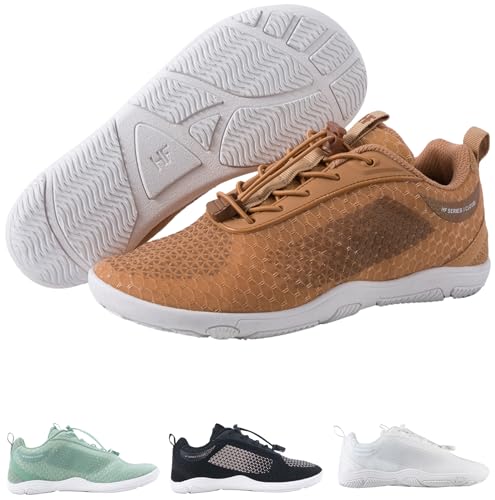
Hike Footwear HF Flow Barefoot Shoes for Women & Men – Minimalist Shoes with Arch-Support, Breathable Splash-Proof & Versatile Boot, Ergonomic Pain-Relief Posture Improvement Hiking Boots
✔ Get One Size Bigger: For optimal comfort and fit, we recommend ordering one size up from your…
As an affiliate, we earn on qualifying purchases.
As an affiliate, we earn on qualifying purchases.
Conclusion
As you slip into minimalist footwear, feel the cool breeze brush against your skin and the textured ground beneath your feet. With each step, you reconnect with nature’s rhythm, experiencing the world in its purest form. Your feet become wild explorers, unshackled and free, as you embrace the barefoot movement. Let this simple shift transform your walk into a dance with the earth, grounding you in a way you never thought possible.

EWUHA Barefoot Shoes Womens Mens Footwear for Walking Hiking with Wide Toe Box,Healthy & Non-Slip,Breathable Barefoot Vitality Water Shoes for Beach Pool Swim Outdoor (Unisex) Black
【Wide toe box】: These EWUHA barefoot shoes womens footwear mens barefoot shoes for walking provides your toes the…
As an affiliate, we earn on qualifying purchases.
As an affiliate, we earn on qualifying purchases.

SKASO Minimalist Barefoot Sock Shoes for Women Men Wide Toe Box Zero Drop Slip On Walking Hiking Water Grounded Footwear (Black, 39)
Comfortable & Breathable: This walking shoes crafted from breathable, stretchy fabric that conforms to your feet. The lightweight…
As an affiliate, we earn on qualifying purchases.
As an affiliate, we earn on qualifying purchases.