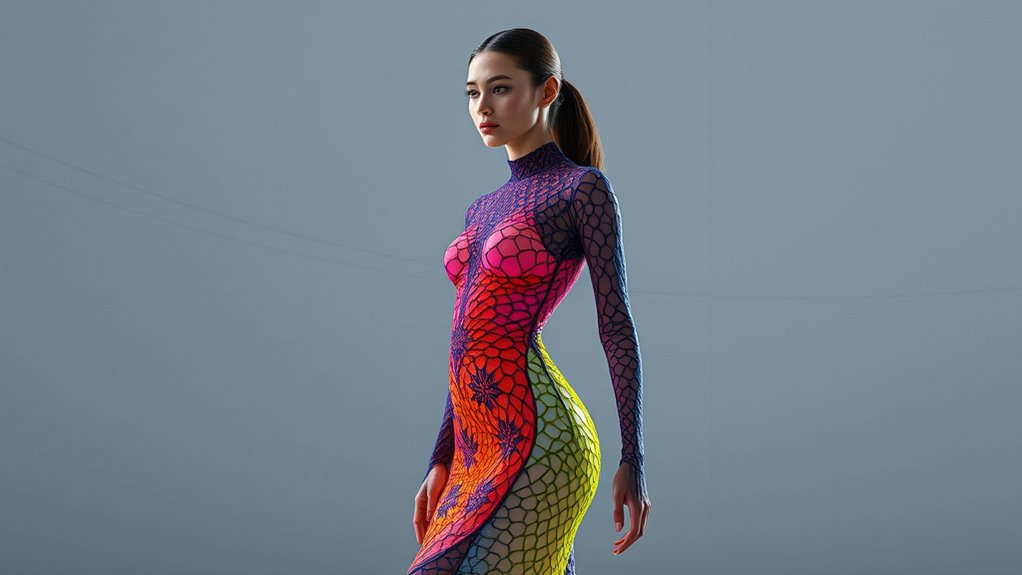

3D-printed clothing is revolutionizing fashion by allowing you to customize garments to your exact preferences, from fit to design and color. It supports sustainable practices by reducing waste and promoting eco-friendly, on-demand production. This technology opens new creative opportunities for designers and consumers alike, making fashion more innovative and inclusive. As more brands adopt 3D printing, you’ll see a shift toward environmentally responsible options and unique styles designed just for you—discover how this trends continues to evolve.
Key Takeaways
- 3D printing enables highly personalized, customizable clothing tailored to individual preferences and body measurements.
- It promotes sustainable fashion by reducing waste and supporting on-demand, eco-friendly manufacturing practices.
- Designers can create complex, innovative patterns and prototypes more efficiently, expanding creative possibilities.
- Localized 3D printing minimizes shipping emissions and energy use, advancing environmentally responsible production.
- Consumer involvement in design processes fosters inclusivity, customization, and a shift towards sustainable fashion choices.

3D-printed clothing is revolutionizing the fashion industry by making customization and sustainability more accessible. As you explore this innovative approach, you’ll see how it enables you to create unique garments tailored precisely to your preferences while reducing environmental impact. Unlike traditional manufacturing methods that often generate excess waste and rely on large-scale production, 3D printing supports sustainable manufacturing practices. It allows designers to produce clothing on demand, minimizing material waste and energy consumption. This shift not only benefits the planet but also means you can access eco-friendly fashion options that are both stylish and responsibly made.
One of the most exciting aspects of 3D-printed clothing is the incredible customization options it offers. You aren’t limited to mass-produced sizes or generic styles anymore. Instead, you can customize every aspect of your garment—from fit and design to color and texture—ensuring it aligns perfectly with your personal taste. This level of customization is made possible by digital design files that can be easily modified, giving you the power to craft clothes that truly reflect your individuality. Whether you’re seeking a statement piece or a comfortable everyday outfit, 3D printing lets you bring your vision to life with precision and ease.
Moreover, this technology opens up new avenues for creativity in fashion design. As a consumer, you can participate directly in the creation process, collaborating with designers to develop one-of-a-kind pieces that fit your body perfectly. For designers, 3D printing streamlines prototyping and reduces the need for expensive samples, making the design process more efficient and flexible. This democratization of fashion design means you can have more say in what you wear, and designers can experiment with complex, intricate patterns that would be difficult or impossible to produce through traditional means.
In addition, 3D-printed clothing encourages a shift toward localized manufacturing. Instead of relying on overseas factories that contribute to carbon emissions, garments can be produced closer to where you live. This reduces shipping distances and energy use, further supporting sustainable manufacturing initiatives. As you embrace this technology, you’re not just adopting a new style; you’re participating in a movement that values environmental responsibility, innovation, and personal expression. With 3D printing, the future of fashion becomes more inclusive, customizable, and eco-conscious, making it a compelling choice for conscious consumers like you seeking both style and sustainability. This technology supports sustainable manufacturing practices
As an affiliate, we earn on qualifying purchases.
Frequently Asked Questions
How Durable Is 3d-Printed Clothing Compared to Traditional Fabrics?
You’ll find that 3D-printed clothing offers good material strength, but its wear resistance can vary depending on the filament used. While some designs are quite durable and comparable to traditional fabrics, others may be more prone to wear and tear over time. Overall, it’s a promising technology, but the durability depends on the specific materials and printing techniques, so you might need to handle 3D-printed garments with a bit more care.
Can 3d-Printed Garments Be Recycled or Reused Effectively?
Think of 3D-printed garments as a canvas ready for renewal. Yes, they can be recycled or reused effectively through specialized recycling processes that break down materials for reuse. This promotes sustainable material reuse, reducing waste and environmental impact. While technology advances, your role is to support brands adopting these eco-friendly practices, ensuring your wardrobe stays stylish while contributing to a greener planet.
What Are the Environmental Impacts of 3D Printing in Fashion?
You might wonder about the environmental impacts of 3D printing in fashion. While it can reduce waste with precise material use, it also consumes significant energy, especially if not powered by renewable sources. Using sustainable materials helps lessen its footprint, but high energy consumption remains a concern. Overall, adopting eco-friendly materials and energy-efficient technologies can make 3D printing a greener option for fashion.
How Comfortable Are 3d-Printed Clothes for Everyday Wear?
Imagine slipping into a suit of plastic armor—comfort isn’t exactly the vibe. 3D-printed clothes often lack fabric flexibility, making them stiff and awkward for everyday wear. While tech advances improve comfort levels, they still can’t match the softness of traditional fabrics. So, unless you enjoy feeling like a futuristic statue, 3D-printed attire might not be your go-to choice for daily comfort.
Will 3D Printing Replace Mass Production in Fashion Industry?
Yes, 3D printing could replace mass production by offering mass customization and design flexibility. You’ll find that this technology allows for personalized clothing tailored to your exact preferences, reducing waste and inventory. As it becomes more efficient and affordable, designers and manufacturers will adopt 3D printing to create unique pieces quickly. This shift means you’ll enjoy more innovative, customized fashion options, transforming how clothes are made and consumed.
Conclusion
As you explore the potential of 3D-printed clothing, it’s clear this technology could redefine fashion’s future. Will you embrace this innovative approach that allows for limitless creativity and customization? With sustainability and personalization at its core, 3D printing invites you to rethink traditional design boundaries. The question is, are you ready to wear the future today and make a bold statement in the ever-evolving world of fashion?