An integrated tube amplifier combines a preamp and power amp, often with digital inputs or Bluetooth, in one component. My best overall pick is the Willsenton R8 for its flexible tube options and headphone output, while the Dayton Audio HTA200 suits listeners who want hybrid tube character with substantial output, and the Fosi Audio MC331 is a compact choice with broad connectivity. The main tradeoffs are tube character versus output power, single-ended versus push-pull design, and how much source flexibility you need. I compare those differences alongside practical considerations such as speaker matching and tube upkeep. Continue reading for the full breakdown and help choosing the right model for your system.

Get the latest gadgets delivered free with Prime
- Fast, free delivery on millions of items
- Prime Video, Amazon Music and more included
- Member-only deals all year
Complete the kit



Key Takeaways
- The Willsenton R8 stands out for flexibility: it is listed in both silver and black, and its tube options and headphone output make it a broader-use pick than the simpler integrated models.
- Hybrid designs prioritize convenience and output: the Dayton HTA200 and Juson JTA100 are aimed at listeners who want tube presence without choosing an all-tube power stage.
- Connectivity separates compact options: the Fosi MC331 includes DAC inputs, Bluetooth, and a headphone connection, making it better suited to varied sources than more traditional designs.
- Single-ended models trade power for a particular design approach: the CrBoke CR888, Oldchen EL34, and Reisong A10 call for careful speaker matching rather than a power-first purchase.
- Many products overlap, but their use cases do not: the two R8 listings differ by finish, while models such as the HTA100, HTA200, and Juson JTA100 separate more clearly by output and system goals.
| Dayton Audio HTA200 200W Integrated Stereo Hybrid Tube Amplifier |  | Best Overall Hybrid for Flexible Systems | Amplifier design: Hybrid tube preamp with Class A/B amplifier | Power output: 100 watts per channel RMS at 4 ohms | Bluetooth: 5.0 | VIEW ON AMAZON | See Our Full Breakdown |
| Fosi Audio MC331 Tube Integrated Amplifier with DAC, 2-Channel Home Audio Stereo Power Amp for HiFi Bookshelf Speakers and 3.5mm Headphones, Vintage VU Meter Preamp with Bluetooth, USB, Optical, Coaxial, RCA | 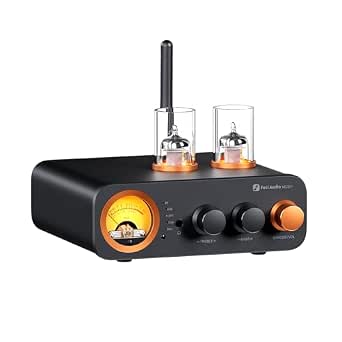 | Best Compact All-in-One | Power output: 105 W x 2 at 4 ohms | Amplifier configuration: Tube preamp, DAC, headphone amp, and stereo power amplifier | Inputs: Bluetooth, USB, coaxial, optical, RCA | VIEW ON AMAZON | See Our Full Breakdown |
| Juson Audio PA2 EL34 Tube Amplifier – Push‑Pull Integrated, Triode & Ultralinear Modes with Vacuum Tube Headphone Output |  | Best for Tube-Forward Listening | Amplifier type: Push-pull Class AB tube amplifier | Output power: 18 watts | Power tubes: Four EL34 tubes | VIEW ON AMAZON | See Our Full Breakdown |
| Oilily A88MK KT88X4 Vacuum Tube Amplifier, 45W+45W Class AB, Silver |  | Best for Triode/Ultralinear Power Choices | Amplifier type: Class AB vacuum tube amplifier | Output power: 22 W in triode mode; 45 W in ultralinear mode | Tube configuration: Four matched KT88 tubes | VIEW ON AMAZON | See Our Full Breakdown |
| Willsenton R8 KT88 Tube Amplifier with Headphone Output, Silver |  | Best Premium Flexible Tube Platform | Amplifier type: Tube amplifier | Output wattage: 45 watts | Compatible tubes: KT88, EL34, 6550 | VIEW ON AMAZON | See Our Full Breakdown |
| CrBoke CR333 Bluetooth 5.0 Tube Amplifier |  | Best for Flexible Connections | Amplifier type: Stereo Class A/B tube amplifier | Maximum output: 100W total (50W + 50W) | Bluetooth: 5.0 | VIEW ON AMAZON | See Our Full Breakdown |
| Juson Audio JTA50 2-Channel Tube Amplifier with Bluetooth 5.0 |  | Best for Turntable-and-Headphone Setups | Amplifier type: Class AB tube amplifier | Output power: 50W × 2 | Channels: 2 | VIEW ON AMAZON | See Our Full Breakdown |
| Juson Audio JTA100 200W Hybrid Vacuum Tube Amplifier |  | Best for Adjustable, Higher-Output Hybrid Sound | Model: JTA100-N | Power output: 200W RMS | Amplifier type: Hybrid vacuum tube preamp and transistor power amplifier | VIEW ON AMAZON | See Our Full Breakdown |
| CrBoke CR888 KT88 Class A Single-Ended Tube Amplifier with Bluetooth and Subwoofer Output | 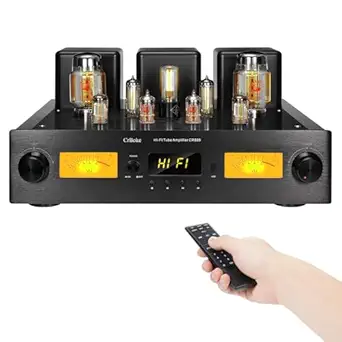 | Best for a KT88 Single-Ended System | Amplifier type: Class A single-ended integrated tube amplifier | Listed output power: 480 watts | Tubes: 9 vacuum tubes, including KT88 | VIEW ON AMAZON | See Our Full Breakdown |
| Willsenton R8 KT88 Tube Amplifier with Headphone Output, Black |  | Best for Tube Rolling and Multiple Listening Modes | Model: R8 | Output wattage: 45 watts | Output channels: 2 | VIEW ON AMAZON | See Our Full Breakdown |
| Oldchen EL34 Class A Single-Ended Tube Integrated Amplifier |  | Best for Hand-Wired Class A Simplicity | Amplifier type: Single-ended Class A integrated tube amplifier | Power output: 10W × 2 RMS at 8Ω | Frequency response: 20Hz–25kHz (-1dB) | VIEW ON AMAZON | See Our Full Breakdown |
| Dayton Audio HTA100 100W Integrated Stereo Hybrid Tube Amp with Bluetooth |  | Best for Modern Connectivity and Speaker Flexibility | Amplifier type: Hybrid tube preamp and Class A/B solid-state amplifier | Power output: 50W per channel RMS at 4Ω | Bluetooth: Version 5.0 | VIEW ON AMAZON | See Our Full Breakdown |
| MUZISHARE X7 KT88 Tube Integrated Amplifier |  | Best for Adjustable Tube Operation | Channels: 2 | FTC output power: 18W per channel in triode; 23W per channel in ultralinear | Other stated output power: 25W per channel in triode; 45W per channel in ultralinear | VIEW ON AMAZON | See Our Full Breakdown |
| Reisong A10 EL34 Hi-Fi Stereo Tube Amplifier – Single-Ended Class A | 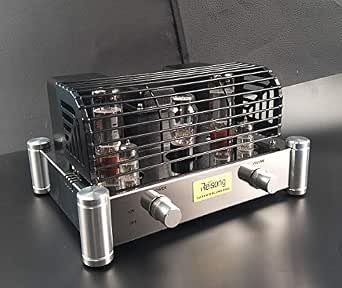 | Best Compact Pick for Efficient Bookshelf Speakers | Amplifier type: Single-ended Class A tube amplifier | Output power: 12W | Channels: 2 | VIEW ON AMAZON | See Our Full Breakdown |
| tube amplifier integrated | Weight | Amplifier type | Dimensions | Inputs |
|---|---|---|---|---|
| Dayton Audio HTA200 200W Integ | 3.6 pounds | — | 15.91 x 15.51 x 9.61 inches | USB DAC, phono, AUX, optical, coaxial |
| Fosi Audio MC331 Tube Integrat | 1.4 pounds | — | — | Bluetooth, USB, coaxial, optical, RCA |
| Juson Audio PA2 EL34 Tube Ampl | 9.5 kg | Push-pull Class AB tube amplifier | — | Three RCA line-level inputs |
| Oilily A88MK KT88X4 Vacuum Tub | 61.7 pounds | Class AB vacuum tube amplifier | — | — |
| Willsenton R8 KT88 Tube Amplif | 26 kg | Tube amplifier | 11.81 x 19.69 x 20.08 inches (D x W x H) | — |
| CrBoke CR333 Bluetooth 5.0 Tub | 14 pounds | Stereo Class A/B tube amplifier | 13 × 12.6 × 8.3 inches | — |
| Juson Audio JTA50 2-Channel Tu | 6.08 kg | Class AB tube amplifier | — | USB, coaxial, AUX, optical, RCA |
| Juson Audio JTA100 200W Hybrid | 16.28 pounds | Hybrid vacuum tube preamp and transistor power amplifier | 12.99 × 12.44 × 6.65 inches | AUX, coaxial, phono, optical, Bluetooth |
| CrBoke CR888 KT88 Class A Sing | 35 pounds | Class A single-ended integrated tube amplifier | 16 × 15 × 8 inches | RCA, optical, coaxial, USB |
| Willsenton R8 KT88 Tube Amplif | 26 kg | — | 15.35 × 15.75 × 7.87 inches | — |
| Oldchen EL34 Class A Single-En | — | Single-ended Class A integrated tube amplifier | 370 × 210 × 230mm | — |
| Dayton Audio HTA100 100W Integ | 3.6 pounds | Hybrid tube preamp and Class A/B solid-state amplifier | 6.5 × 11 × 8.5 inches | USB DAC, phono, AUX, optical, coaxial, RCA |
| MUZISHARE X7 KT88 Tube Integra | — | — | — | — |
| Reisong A10 EL34 Hi-Fi Stereo | 12kg | Single-ended Class A tube amplifier | 12.2 × 10.55 × 6.5 inches | — |
More Details on Our Top Picks
Dayton Audio HTA200 200W Integrated Stereo Hybrid Tube Amplifier
The Dayton Audio HTA200 is the strongest all-round choice here for listeners who want tube character without giving up modern connectivity or speaker-driving headroom. Its hybrid tube preamp and Class A/B power stage deliver 100 watts per channel at 4 ohms, while USB, optical, coaxial, Bluetooth, and a dedicated phono input cover varied sources. That makes it more adaptable than the Juson Audio PA2, which favors analog sources and lower-power tube operation. The Dayton also adds a headphone output, bass and treble controls, and a powered-subwoofer connection, so it can anchor a practical living-room setup. The tradeoff is that it is not an all-tube power design, and its large chassis needs space. Passive speakers are required for speaker output, too.
Pros:- 100 watts per channel at 4 ohms suits a broad range of passive-speaker systems.
- USB DAC, optical, coaxial, Bluetooth, AUX, and phono inputs support varied sources.
- Headphone output and powered-subwoofer connection add useful system flexibility.
- Bass and treble controls, VU meters, and a wireless remote make day-to-day adjustment convenient.
Cons:- The Class A/B power section is hybrid rather than a fully tube-amplified output stage.
- Its large listed dimensions call for more shelf space than compact options such as the Fosi Audio MC331.
- Speaker outputs require passive speakers; powered speakers cannot connect there.
Best for: Listeners building a mixed-source system around passive speakers who want digital inputs, vinyl support, a subwoofer connection, and substantial output.
Not ideal for: Buyers seeking an all-tube output stage, a compact desktop amplifier, or a system that does not use passive speakers.
- Amplifier design:Hybrid tube preamp with Class A/B amplifier
- Power output:100 watts per channel RMS at 4 ohms
- Bluetooth:5.0
- Inputs:USB DAC, phono, AUX, optical, coaxial
- Outputs:Speaker outputs, full-range preamp output, headphone output
- Dimensions:15.91 x 15.51 x 9.61 inches
- Weight:3.6 pounds
- Model:HTA200
Our verdict“Choose the HTA200 for a flexible, higher-output hybrid system with both digital and vinyl sources.”
Fosi Audio MC331 Tube Integrated Amplifier with DAC, 2-Channel Home Audio Stereo Power Amp for HiFi Bookshelf Speakers and 3.5mm Headphones, Vintage VU Meter Preamp with Bluetooth, USB, Optical, Coaxial, RCA
The Fosi Audio MC331 suits a desk or small listening room where a single compact unit needs to handle digital sources, headphones, and passive speakers. Its built-in DAC, tube preamp, headphone amp, and power amp reduce the number of separate components, while Bluetooth, USB, optical, coaxial, and RCA cover common connections. Compared with the larger Dayton Audio HTA200, the Fosi is a more space-conscious integrated setup, though its listed 105 watts per channel at 4 ohms should not be read as a guarantee of effortless control over demanding floor-standing speakers. Replaceable tubes allow some personalization, but they bring upkeep that a hybrid option may avoid. The MC331 also lacks the Dayton’s stated phono input, so vinyl listeners will need a separate phono stage.
Pros:- Combines DAC, tube preamp, stereo power amp, and headphone amp in one unit.
- Bluetooth, USB, coaxial, optical, and RCA inputs accommodate several source types.
- Replaceable tubes let owners change tubes rather than treating them as fixed components.
- Remote control and bass and treble adjustment simplify listening from a seat.
Cons:- No dedicated phono input is listed, unlike the Dayton Audio HTA200.
- Its compact format is less suited to large rooms or demanding speakers than higher-powered full-size systems.
- Replaceable tubes require ongoing maintenance and eventual replacement.
Best for: Desktop and bookshelf-speaker listeners who want DAC, Bluetooth, headphone output, and speaker amplification in one small unit.
Not ideal for: Vinyl-first listeners without an external phono stage, or owners of large, power-hungry speakers seeking a full-size amplifier.
- Power output:105 W x 2 at 4 ohms
- Amplifier configuration:Tube preamp, DAC, headphone amp, and stereo power amplifier
- Inputs:Bluetooth, USB, coaxial, optical, RCA
- Outputs:Pre-out, 3.5 mm headphone jack
- Tube count:Two replaceable vacuum tubes
- Power adapter:24 V, 4.5 A
- Weight:1.4 pounds
- Model:MC331
Our verdict“Pick the MC331 for a compact, source-flexible system with headphones and bookshelf speakers at its center.”
Juson Audio PA2 EL34 Tube Amplifier – Push‑Pull Integrated, Triode & Ultralinear Modes with Vacuum Tube Headphone Output
The Juson Audio PA2 is the most tube-focused choice in this group: its push-pull Class AB circuit uses four EL34 power tubes, and its triode and ultralinear modes give listeners two operating styles to explore. A dedicated vacuum-tube headphone output also makes it more appealing to headphone owners than the Dayton Audio HTA200, which takes a hybrid approach and emphasizes broad connectivity. Here, the priority is a tube-centered listening chain, not a one-box digital hub: the PA2 lists three RCA line-level inputs but no Bluetooth or digital inputs. Its 18-watt output makes speaker matching more important than with the Fosi Audio MC331 or Dayton. Buyers with efficient speakers and high-impedance headphones may value that focused design; owners of inefficient speakers or digital-only sources should look elsewhere.
Pros:- Four EL34 power tubes and push-pull Class AB operation provide a dedicated tube output design.
- Triode and ultralinear modes offer distinct operating choices.
- Dedicated vacuum-tube headphone output is a useful feature for high-impedance headphone owners.
- Three RCA line-level inputs allow several analog sources to remain connected.
Cons:- 18 watts can limit pairing with inefficient speakers or larger listening spaces.
- No digital inputs or Bluetooth are listed, unlike the Fosi Audio MC331 and Dayton Audio HTA200.
- At 9.5 kg, it is a substantial unit to move or reposition.
Best for: Listeners with efficient passive speakers, analog RCA sources, and high-impedance headphones who want selectable tube operating modes.
Not ideal for: Digital-source users who need built-in DAC or Bluetooth, and listeners whose speakers need more than 18 watts to play comfortably.
- Amplifier type:Push-pull Class AB tube amplifier
- Output power:18 watts
- Power tubes:Four EL34 tubes
- Additional tubes:4JD6 and 4BE7
- Operating modes:Triode and ultralinear
- Inputs:Three RCA line-level inputs
- Headphone output:Vacuum-tube headphone output
- Weight:9.5 kg
Our verdict“Choose the PA2 if tube-driven listening and headphone use matter more than digital convenience or high speaker power.”
Oilily A88MK KT88X4 Vacuum Tube Amplifier, 45W+45W Class AB, Silver
The Oilily A88MK is a substantial integrated tube amplifier for listeners who want to choose between lower-power triode operation and higher-output ultralinear mode. With four matched KT88 tubes, it supplies 22 watts in triode mode or 45 watts in ultralinear mode, giving it more speaker headroom than the 18-watt Juson Audio PA2 while retaining a tube output stage. Its integrated or power-amplifier use also makes it more adaptable when a system changes. The tradeoff is practical: at 61.7 pounds, it needs a stable, roomy setup, and the supplied package details do not list digital connectivity or a headphone output. Other tube types are supported only with separately purchased tubes. This pick fits a dedicated listening system better than a compact desk arrangement such as the Fosi Audio MC331.
Pros:- Selectable triode and ultralinear modes provide two power and operating options.
- Four matched KT88 tubes are included.
- Can serve as an integrated amplifier or power amplifier.
- Remote control and tube protector are included.
Cons:- The listed 61.7-pound weight makes placement and relocation difficult.
- No digital inputs or headphone output are specified in the supplied product details.
- EL34 or 6550 tubes for alternative configurations must be purchased separately.
Best for: Listeners with space for a heavy tube amplifier who want KT88 power and a choice of triode or ultralinear operation.
Not ideal for: Apartment or desktop setups with limited shelf capacity, and buyers who need built-in digital inputs or headphone listening.
- Amplifier type:Class AB vacuum tube amplifier
- Output power:22 W in triode mode; 45 W in ultralinear mode
- Tube configuration:Four matched KT88 tubes
- Compatible tube types:EL34, KT88, or 6550
- Functions:Integrated amplifier or power amplifier
- Weight:61.7 pounds
- Package dimensions:22.5 x 21 x 16 inches
- Included accessories:Remote control, tube protector, fuse, English manual
Our verdict“Choose the A88MK for a room-based tube system where KT88 operation and selectable output modes outweigh size and weight.”
Willsenton R8 KT88 Tube Amplifier with Headphone Output, Silver
The Willsenton R8 is the most configurable tube platform in this group. It can serve as an integrated, power, or headphone amplifier, supports KT88, EL34, and 6550 tubes, and offers triode and ultralinear modes. That range gives it more room to adapt than the Oilily A88MK, whose supplied configuration centers on matched KT88 tubes, and it goes beyond the simpler hybrid approach of the Dayton Audio HTA200. The flexibility comes with real commitments: the R8 weighs 26 kg, additional tube sets are separate, and the manufacturer recommends a 100–300-hour run-in period. Its listing also names headphone jacks but does not detail digital inputs, so buyers seeking Bluetooth or built-in DAC functionality should compare it with the Fosi Audio MC331. This is a considered choice for a dedicated system, not a plug-and-play compact amp.
Pros:- Supports KT88, EL34, and 6550 tube types, with KT88 tubes included by default.
- Can operate as an integrated, power, or headphone amplifier.
- Triode and ultralinear modes add operating flexibility.
- Hand-built construction and included remote and tube protective cover suit a dedicated system.
Cons:- At 26 kg, it is heavy and needs a sturdy, carefully chosen location.
- Alternative tube sets require separate purchases.
- The recommended 100–300-hour run-in period asks for patience before settling into regular use.
Best for: Tube enthusiasts who want one amplifier to cover speaker, power-amp, and headphone duties, with options to change tube types and operating modes.
Not ideal for: Buyers wanting a lightweight, low-maintenance system or built-in Bluetooth and digital inputs without adding separate components.
- Amplifier type:Tube amplifier
- Output wattage:45 watts
- Compatible tubes:KT88, EL34, 6550
- Default tubes:KT88
- Operating modes:Integrated, power, headphone
- Sound modes:Triode, ultralinear
- Connectors:3.5 mm or 6.35 mm jack
- Dimensions:11.81 x 19.69 x 20.08 inches (D x W x H)
- Weight:26 kg
Our verdict“Choose the R8 if you want a substantial, adaptable tube platform and are prepared for its weight and setup commitment.”
CrBoke CR333 Bluetooth 5.0 Tube Amplifier
I’d shortlist the CR333 if you want one integrated tube amplifier to handle several digital sources as well as analog gear. Its five inputs—Bluetooth, USB, coaxial, optical, and RCA—give it broader connection coverage than the Willsenton R8, whose listed connectivity is RCA. A subwoofer output and 3.5 mm headphone jack also make it easier to build a mixed speaker-and-headphone system without adding another component.
The tradeoff is that the stated 100W is 50W per channel, not 100W to each speaker, and the product details don’t spell out compatibility for every source. Its hybrid Class A/B design pairs tubes with transistor amplification, so buyers seeking a fully tube-powered signal path should look elsewhere. At 14 pounds and 13 inches wide, it also needs more shelf space than a compact desktop amp.
Pros:- Five input types cover common digital and analog sources
- Bluetooth 5.0 supports wireless playback
- Includes speaker, subwoofer, and 3.5 mm headphone outputs
- Combines tube stages with transistor amplification in an aluminum alloy body
Cons:- The 100W maximum is split into 50W per channel
- Source-device compatibility details are not specified for every input
- Its 13 × 12.6 × 8.3-inch body takes substantial shelf space
Best for: Listeners who want Bluetooth, several digital inputs, RCA, and both headphone and subwoofer connections in one stereo component.
Not ideal for: Buyers who require clearly documented source compatibility, a fully tube-powered amplifier, or a compact unit for a crowded desk.
- Amplifier type:Stereo Class A/B tube amplifier
- Maximum output:100W total (50W + 50W)
- Bluetooth:5.0
- Audio inputs:Bluetooth, USB, coaxial, optical, RCA
- Audio outputs:Speaker, subwoofer, 3.5 mm headphone
- Voltage amplifier tubes:6F1 × 2
- Dimensions:13 × 12.6 × 8.3 inches
- Weight:14 pounds
Our verdict“Choose the CR333 if connection flexibility matters more than a fully tube-powered design or a compact footprint.”
Juson Audio JTA50 2-Channel Tube Amplifier with Bluetooth 5.0
The JTA50 is a practical fit for a small system built around a turntable and headphones. Its built-in phono preamp saves you from buying a separate phono stage, while selectable high and low headphone gain gives you more flexibility across the listed 16–600-ohm range. Bluetooth 5.0 and USB, coaxial, AUX, and optical inputs add options without making the unit’s role complicated.
Compared with the CrBoke CR333, the JTA50’s clearest advantage is phono input support; the CR333 instead lists a 3.5 mm headphone connection and likewise offers a broad mix of sources. The JTA50’s listed outputs are headphone and subwoofer, so confirm your speaker connection needs before buying. Its Class AB design also isn’t an all-tube power stage, and the remote batteries and PC-USB cable are not included.
Pros:- Built-in phono preamp allows direct turntable connection
- Bluetooth 5.0 plus USB, coaxial, AUX, optical, and RCA inputs
- Headphone output has selectable gain and supports 16–600-ohm headphones
- Remote control is included
Cons:- Remote batteries and PC-USB cable are not included
- The listed outputs do not explicitly include a speaker output
- Class AB tube amplification may not suit buyers seeking an all-tube power stage
Best for: Turntable owners building a two-channel system who also want flexible headphone listening and wireless playback.
Not ideal for: Buyers who need a clearly listed speaker output, an all-tube power stage, or a setup that must include its remote batteries and PC-USB cable.
- Amplifier type:Class AB tube amplifier
- Output power:50W × 2
- Channels:2
- Bluetooth:5.0
- Inputs:USB, coaxial, AUX, optical, RCA
- Outputs:Headphone, subwoofer
- Headphone impedance:16–600 ohms
- Weight:6.08 kg
Our verdict“Pick the JTA50 for a turntable-centered system with adaptable headphone listening, after confirming the speaker connections you need.”
Juson Audio JTA100 200W Hybrid Vacuum Tube Amplifier
Among these five, the JTA100 is the higher-output hybrid option: its listed 200W RMS and 2.1-channel setup suit listeners who want speaker power, a subwoofer connection, and tone controls in one component. Separate treble and bass adjustment lets you shape the presentation around your room or speakers, while the VU meter and remote add hands-on convenience. Phono, optical, coaxial, AUX, and Bluetooth inputs cover both analog and digital sources.
Unlike the Willsenton R8, which offers tube-swapping compatibility and triode or ultra-linear modes, the JTA100 emphasizes flexible connections and user-adjustable tone rather than tube configuration. Its design uses a tube preamp with transistor power amplification, so it is not an all-tube amplifier. The 16.28-pound chassis is also a substantial component, and the supplied details don’t specify speaker output connections or tube types.
Pros:- Hybrid tube preamp and transistor power stage with 200W RMS listed
- Phono and Bluetooth inputs sit alongside optical, coaxial, and AUX
- Separate treble and bass controls allow sound adjustment
- Includes a remote, VU meter, headphone output, and subwoofer output
Cons:- Transistor power amplification is not an all-tube signal path
- The provided specifications do not list speaker output connections or tube types
- At 16.28 pounds, it is less suited to a lightweight desktop setup
Best for: Listeners who want a hybrid integrated amp with listed 200W RMS output, a phono input, tone controls, and subwoofer support.
Not ideal for: Tube enthusiasts seeking an all-tube power stage, switchable tube types, or detailed specifications for speaker connections and installed tubes.
- Model:JTA100-N
- Power output:200W RMS
- Amplifier type:Hybrid vacuum tube preamp and transistor power amplifier
- Channels:2.1
- Bluetooth:5.0
- Inputs:AUX, coaxial, phono, optical, Bluetooth
- Outputs:Headphone, subwoofer
- Dimensions:12.99 × 12.44 × 6.65 inches
- Weight:16.28 pounds
Our verdict“Choose the JTA100 if output, tone controls, and broad source support matter more than an all-tube power stage or tube-rolling options.”
CrBoke CR888 KT88 Class A Single-Ended Tube Amplifier with Bluetooth and Subwoofer Output
The CR888 stands apart from the other CrBoke here: instead of the CR333’s Class A/B hybrid design, it is a Class A single-ended integrated tube amplifier built around a nine-tube complement that includes KT88s. Its aptX HD Bluetooth, USB, optical, coaxial, and RCA inputs make that tube-focused approach easier to fit into a modern system, and the active subwoofer output supports a fuller speaker setup. Hand-wired construction and a remote add practical appeal.
This is the pick for buyers who value its single-ended topology and tube complement over convenience alone. The Willsenton R8 offers a more explicit tube-swapping path across KT88, EL34, and 6550 types, while the CR888’s listing gives less detail about replacement-tube compatibility. At 35 pounds and 16 inches wide, it needs a sturdy, roomy surface. The stated 480W output should also be treated cautiously, since the supplied data does not explain its measurement basis.
Pros:- Class A single-ended design with nine tubes, including KT88
- Bluetooth aptX HD and four wired input types
- Active subwoofer output supports a 2.1-style system
- Hand-wired construction and remote control are listed
Cons:- At 35 pounds, it requires a sturdy and spacious installation
- The listed 480W output has no measurement basis explained in the supplied details
- Replacement-tube compatibility is not specified, and remote batteries are not included
Best for: Tube enthusiasts seeking a KT88-based, single-ended Class A integrated amp with modern digital inputs and an active subwoofer connection.
Not ideal for: Buyers who need a compact or lightweight amplifier, clearly documented power ratings, or detailed replacement-tube compatibility.
- Amplifier type:Class A single-ended integrated tube amplifier
- Listed output power:480 watts
- Tubes:9 vacuum tubes, including KT88
- Bluetooth:Qualcomm QCC module with aptX HD
- Inputs:RCA, optical, coaxial, USB
- Output:Active subwoofer output
- Voltage:110 V AC
- Dimensions:16 × 15 × 8 inches
- Weight:35 pounds
Our verdict“Choose the CR888 for its KT88 single-ended Class A design and aptX HD connectivity if its size and unclear power-rating basis are acceptable.”
Willsenton R8 KT88 Tube Amplifier with Headphone Output, Black
The Willsenton R8 is the most configurable choice in this group for buyers who want to shape the amplifier around their preferred tubes and listening style. It comes set up for KT88 tubes and supports EL34 or 6550 through a rear switch; triode and ultra-linear modes provide another way to tailor operation. Its ability to serve as an integrated, power, or headphone amplifier gives it broader system roles than the more connection-focused CrBoke CR333.
That flexibility comes with limits. The listed connectivity is RCA, with no Bluetooth or digital inputs specified, so listeners connecting a computer or streaming device may need an external source component. The 45W output also differs from the JTA100’s listed 200W RMS, making speaker matching important. At 26 kg, it is heavy to place or move, and additional tube sets are sold separately; the stated warranty is one year.
Pros:- Compatible with KT88, EL34, and 6550 tubes
- Can function as an integrated, power, or headphone amplifier
- Triode and ultra-linear modes offer different operating options
- Remote control is included
Cons:- Only RCA connectivity is listed; Bluetooth and digital inputs are not specified
- Additional tube sets must be purchased separately
- Its 26 kg weight makes placement and repositioning difficult
Best for: Experienced stereo listeners who want to experiment with KT88, EL34, or 6550 tubes and switch between integrated, power, and headphone use.
Not ideal for: Buyers seeking built-in Bluetooth or digital inputs, a lightweight chassis, or higher listed output for speakers that need more power.
- Model:R8
- Output wattage:45 watts
- Output channels:2
- Connector type:RCA
- Compatible tubes:KT88, EL34, 6550
- Operating modes:Triode and ultra-linear
- Dimensions:15.35 × 15.75 × 7.87 inches
- Weight:26 kg
- Warranty:One year
Our verdict“Pick the R8 if tube choice and operating modes are your priority and you can supply the source connectivity and speaker matching it requires.”
Oldchen EL34 Class A Single-Ended Tube Integrated Amplifier
The Oldchen is the pick for listeners who want a single-ended Class A circuit and straightforward speaker connections rather than a long list of modern features. Its 10W-per-channel rating suits efficient speakers and modest listening levels; compared with the Reisong A10, it gives up 2W per channel but specifies both 4Ω and 8Ω outputs. Hand-wired circuitry, custom transformers, and a 5 Henry CLC filter define its build approach, while the EL34C output tubes and 6SN7GT preamp tubes keep the design firmly in traditional tube territory. That simplicity has limits: it lacks the MUZISHARE X7’s triode and ultralinear modes, and its low power can be a poor match for insensitive speakers or larger rooms. Its stated 110V supply also needs to match the buyer’s electrical system.
Pros:- Hand-wired point-to-point circuitry with custom-wound transformers
- Single-ended Class A operation at 10W per channel
- Provides separate 4Ω and 8Ω speaker outputs
- Uses a 5 Henry CLC filter and a specified PSVANE tube complement
Cons:- 10W per channel can limit speaker choice and volume headroom
- Specified for 110V power, which may not suit other electrical systems
- No listed Bluetooth, digital inputs, or operating-mode selection
Best for: Listeners with efficient 4Ω or 8Ω speakers who want a hand-wired, single-ended Class A integrated amp without extra digital features.
Not ideal for: Owners of low-sensitivity speakers, people who need high listening levels in a large room, or buyers whose local mains voltage is not 110V.
- Amplifier type:Single-ended Class A integrated tube amplifier
- Power output:10W × 2 RMS at 8Ω
- Frequency response:20Hz–25kHz (-1dB)
- Total harmonic distortion:<1% at 1kHz
- Signal-to-noise ratio:>88dB
- Output impedance:4Ω, 8Ω
- Tube complement:1 × PSVANE 5U4G, 2 × PSVANE EL34C, 2 × PSVANE 6SN7GT
- Dimensions:370 × 210 × 230mm
- Voltage:110V
Our verdict“Choose the Oldchen if your speakers are efficient and you value a hand-wired Class A design more than power or connectivity.”
Dayton Audio HTA100 100W Integrated Stereo Hybrid Tube Amp with Bluetooth
The HTA100 takes a different route from the Oldchen and Reisong: its tubes sit in the preamp stage, while a Class A/B solid-state section supplies the power. That hybrid layout gives it 50W per channel into 4Ω, making it a more practical match for a wider range of everyday speakers than either low-powered single-ended model. Its Bluetooth 5.0, USB DAC, phono input, optical, coaxial, and RCA connections also reduce the need for separate source components. This is the most convenience-focused choice in this group, not the most traditional all-tube design. The stated full-power figure is for 4Ω loads, and there is no Wi-Fi or network streaming. Buyers seeking tube power-stage operation should look instead at the MUZISHARE X7, though that model offers less connectivity detail here and is much heavier.
Pros:- 50W per channel RMS into 4Ω from a hybrid tube and solid-state design
- Bluetooth 5.0 plus USB DAC, phono, optical, coaxial, AUX, and RCA inputs
- Subwoofer pre-out and headphone jack add system flexibility
- Bass and treble controls and front-panel VU meters
Cons:- Tubes are in the preamp stage rather than the power output stage
- Full stated power is specified at 4Ω, limiting direct comparison with 8Ω ratings
- No built-in Wi-Fi or network streaming
Best for: Listeners who want tube coloration with practical power, Bluetooth, a built-in phono stage, and support for several digital and analog sources.
Not ideal for: Tube purists who specifically want an all-tube power stage, or buyers who need Wi-Fi and network streaming built in.
- Amplifier type:Hybrid tube preamp and Class A/B solid-state amplifier
- Power output:50W per channel RMS at 4Ω
- Bluetooth:Version 5.0
- Inputs:USB DAC, phono, AUX, optical, coaxial, RCA
- Outputs:Speaker terminals, subwoofer pre-out, headphone jack
- Dimensions:6.5 × 11 × 8.5 inches
- Weight:3.6 pounds
- Model number:HTA100
Our verdict“Pick the HTA100 if you want tube character and broad source connectivity with more power than the Oldchen or Reisong.”
MUZISHARE X7 KT88 Tube Integrated Amplifier
The MUZISHARE X7 stands apart from the Oldchen and Reisong by letting you choose between triode and ultralinear modes, trading output for a different operating configuration rather than locking you into one approach. Its FTC ratings are 18W per channel in triode and 23W in ultralinear, so it still calls for speaker matching, but offers more flexibility than those 10W and 12W single-ended options. The X7 also combines integrated, headphone, and phono amplification functions, with 4Ω and 8Ω outputs and broad voltage support. It is a substantial piece of equipment at 22.5kg, and its size and setup demands make it less convenient than the compact Dayton HTA100. The product description calls for about 100 hours of run-in; buyers should also distinguish its FTC figures from the higher, separately stated output claims.
Pros:- Selectable triode and ultralinear operating modes
- FTC-rated 18W per channel in triode and 23W in ultralinear
- Includes integrated, headphone, and phono amplification functions
- Supports 4Ω and 8Ω outputs and 100–120V or 220–240V power
Cons:- Net weight of 22.5kg makes placement and moving more demanding
- FTC and other stated output figures differ, so buyers must compare ratings carefully
- Product description recommends about 100 hours of run-in
Best for: Tube enthusiasts with suitable speakers who want selectable triode and ultralinear operation, phono and headphone functions, and support for multiple mains-voltage ranges.
Not ideal for: Buyers seeking a lightweight, simple plug-in system, or anyone who wants high output without checking the different power ratings and speaker match.
- Channels:2
- FTC output power:18W per channel in triode; 23W per channel in ultralinear
- Other stated output power:25W per channel in triode; 45W per channel in ultralinear
- Tube complement:1 × 12AX7, 2 × 12AU7, 4 × KT88, 1 × 5AR4
- Frequency response:14Hz–20kHz (-1dB)
- Signal-to-noise ratio:92dB (A-weighted)
- Output impedance:4Ω, 8Ω
- Power supply:100–120V or 220–240V, 50/60Hz
- Net weight:22.5kg
Our verdict“Choose the X7 if selectable tube modes and built-in phono and headphone functions matter more to you than a lighter, simpler amplifier.”
Reisong A10 EL34 Hi-Fi Stereo Tube Amplifier – Single-Ended Class A
The Reisong A10 is a straightforward choice for a small system built around efficient bookshelf speakers. Its 12W-per-channel single-ended Class A design has a modest power ceiling, but the stated recommendation of speakers rated at least 89dB sensitivity gives buyers a useful starting point for matching. Against the Oldchen, the A10 offers 2W more per channel, while the Oldchen explicitly lists both 4Ω and 8Ω speaker outputs; the A10’s supplied data does not specify output taps. Point-to-point construction and an EL34-based tube set suit buyers drawn to a traditional tube integrated, and the protective tube cover is a practical inclusion. There are no listed digital inputs or streaming features, and the limited power is a poor fit for low-sensitivity speakers, large rooms, or loud playback.
Pros:- 12W-per-channel single-ended Class A output
- Hand-welded point-to-point construction
- EL34, 6N2J, and 5Z4PJ tube complement
- Includes a protective tube cover and circuit diagram
Cons:- Low output can limit playback level with less-sensitive speakers
- Product guidance favors speakers rated at least 89dB sensitivity
- No digital inputs or wireless streaming are listed
Best for: Listeners building a modest-room system around sensitive bookshelf speakers who prefer a simple EL34 single-ended Class A amplifier.
Not ideal for: Owners of low-sensitivity or power-hungry floorstanding speakers, or buyers who need broad connectivity and stronger volume headroom.
- Amplifier type:Single-ended Class A tube amplifier
- Output power:12W
- Channels:2
- Tubes:2 × EL34, 2 × 6N2J, 1 × 5Z4PJ
- Voltage:110–120V AC
- Dimensions:12.2 × 10.55 × 6.5 inches
- Weight:12kg
- Material:Stainless steel, aluminum
Our verdict“Choose the Reisong A10 for an uncomplicated Class A tube system with sensitive bookshelf speakers, not for a large or power-hungry setup.”

How We Picked
I compared the 14 listings around the decisions that matter when buying an integrated tube amplifier: amplifier design, stated output, input options, headphone support, and likely ease of fitting into a home system. I gave weight to features that change day-to-day use, such as built-in DAC connections or Bluetooth, rather than treating tube type or power figures as a complete measure of sound quality. I also considered the practical implications of tube operation, including maintenance and the need to match an amplifier to speakers.
The order favors versatility and clear buyer fit over any single headline specification. The Willsenton R8 leads because its tube flexibility and headphone output give it more scope than a narrowly equipped model; the Dayton and Fosi options rank strongly for distinct hybrid and connectivity needs. Specialized single-ended designs remain relevant, but their narrower system fit keeps them below more adaptable picks. The two R8 finishes are treated as one underlying option, with the finish difference noted rather than presented as separate performance tiers.
Factors to Consider When Choosing Tube Amplifier Integrated
Choosing an integrated tube amp is less about finding the biggest wattage or most tubes and more about fitting the amplifier to your speakers, sources, and appetite for upkeep. These broader checks can prevent a mismatch that a feature list alone will not reveal.
Match amplifier design to your speakers
Start with your speakers’ sensitivity and impedance, then check the amplifier’s power and supported load rather than assuming any tube amp will drive them well. Low-sensitivity speakers and large rooms can call for more output headroom, while efficient speakers may work comfortably with a lower-powered design. Single-ended Class A and push-pull designs have different operating approaches, but neither label alone guarantees a match. A common mistake is choosing by wattage without checking the speaker’s real-world demands. If the speaker maker provides impedance curves or amplifier guidance, use those details alongside the amp’s specifications. When the match is uncertain, prioritize a model with an appropriate load rating and enough power reserve for your listening habits.
Decide how much tube character you want in the signal path
Not every product described as a tube amplifier uses tubes in the same part of the amplification chain. Hybrid models pair tubes with solid-state amplification, which can combine tube circuitry with higher stated output or a more convenient format. All-tube designs may better suit buyers specifically seeking a tube-based power stage, but they can impose tighter limits on power and speaker choice. Do not treat “hybrid,” “Class A,” or “push-pull” as automatic sound-quality rankings. Ask what listening and system problem each design solves for you. If your priority is easier integration and power, a hybrid may make more sense; if amplifier topology is central to your purchase, compare the stated circuit design closely.
Choose inputs around the sources you already own
Make a list of every source you expect to connect: a turntable, television, computer, streamer, phone, or disc player. Digital inputs and Bluetooth can reduce extra boxes, but they do not replace a phono input if you use a turntable without its own phono stage. Check which digital connections are actually listed and whether you need a separate DAC or wireless receiver. A frequent buying mistake is counting input names without checking the signal type or the equipment needed between source and amplifier. Also plan for future sources, since an integrated amplifier can become the system’s central hub. Choose the connection set that removes real friction, not the one with the longest feature list.
Treat headphone and subwoofer connections as separate needs
A headphone output can make an integrated amp more useful after hours, but its presence does not tell you how it will pair with every headphone. Check headphone compatibility and connection details before relying on it as your only listening option. A subwoofer output can simplify adding bass support, yet buyers should confirm how the signal is handled and whether their subwoofer accepts the connection. Do not assume that a headphone jack or subwoofer output makes the amplifier a full substitute for a dedicated headphone amp or a modern bass-management system. Consider where the extra connection sits in your listening routine. If you rarely use headphones or a subwoofer, those features should not outweigh speaker matching or source needs.
Plan for tube replacement, heat, and placement
Tube equipment asks for more care than a typical compact solid-state amplifier. Allow room for ventilation, keep the unit away from objects that could be damaged by heat, and avoid placing it inside a tightly enclosed cabinet. Tube replacement is part of ownership, and some designs may require setup or bias adjustment; check the maker’s instructions before purchase rather than assuming all models are equally simple to maintain. Spare tubes and service access can matter more over time than cosmetic details. A crowded shelf, frequent moving, or a strict low-maintenance preference may point toward a hybrid or a different amplifier type. Budget time and space for ownership, not only room in the audio rack.
Pay for useful flexibility, not specifications you will not use
Extra operating modes, tube choices, and connections are valuable only when they solve a real system need. Flexibility has practical value if you expect to change speakers, use headphones, or connect several source types; otherwise, a simpler model may be easier to live with. Compare the complete signal path, since a built-in DAC may remove a separate component while a missing phono stage may add one. Avoid choosing a premium or high-output model solely because its specification sheet looks more ambitious. The better purchase is the one that fits your speakers and sources without redundant features. Write down your must-haves before comparing models to keep optional extras from driving the decision.
Frequently Asked Questions
Should I choose a hybrid tube amp or an all-tube integrated amplifier?
Choose based on what you want the tube circuitry to do, not on the word “tube” alone. A hybrid design may be appealing if you want tube circuitry alongside a solid-state power section and higher stated output. An all-tube model may fit better if the power stage itself is part of the appeal and your speakers suit its output. Check the circuit description, speaker requirements, and input features before comparing sound claims. If you are uncertain, favor the design that fits your existing system and leaves fewer gaps in connectivity.
Can a lower-powered tube amplifier drive my speakers?
It depends on speaker sensitivity, impedance, room size, and how loudly you listen. Wattage alone cannot settle the question; a speaker with demanding impedance or low sensitivity can need more amplifier headroom than its nominal rating suggests. Look for the speaker maker’s guidance and compare it with the amplifier’s output and supported load. If you listen in a large room or want strong peaks, leave more headroom instead of buying right at the minimum. When the speaker match is unclear, ask the manufacturer or a qualified audio retailer before committing.
Do I need an integrated tube amplifier with a built-in DAC?
You need one only if it simplifies a source setup you actually use. A built-in DAC can reduce extra components when connecting a computer, television, or digital player, but input formats and connection types still need to match your devices. If you already own a DAC you prefer, built-in conversion may add little value. Also, a DAC does not provide a phono stage for a turntable unless that feature is specifically listed. Map your sources first, then decide whether integrated digital inputs are worth prioritizing.
How much ongoing maintenance should I expect from a tube integrated amp?
Plan for heat, ventilation, and eventual tube replacement; the exact service needs vary by amplifier design and manufacturer instructions. Some models may require bias checks, while other maintenance details depend on the circuit and user guidance. Keep the amplifier accessible so tubes can be inspected or replaced safely, and avoid enclosing it without adequate airflow. Before buying, check whether tubes are supplied, how replacements are identified, and what setup procedure the maker specifies. If you want an amp that can be left in a closed cabinet with minimal attention, a tube design may not suit your routine.
Is a headphone output on a tube integrated amp enough to replace a dedicated headphone amplifier?
Not automatically. A built-in headphone output is convenient for occasional listening, but compatibility depends on the output circuit and your headphones’ impedance and sensitivity. Check whether the manufacturer gives headphone specifications or pairing guidance, especially if you own demanding headphones. A separate headphone amplifier may provide more control or a better match for specialized listening needs. Treat the integrated jack as a useful feature, then verify it against your headphones rather than assuming it will serve every pair equally well.
Conclusion
For the broadest feature mix, I recommend the Willsenton R8 as best overall, with the silver and black listings treated as finish choices rather than separate performance picks. The Dayton Audio HTA100 is my best-value direction for a buyer who wants a more straightforward hybrid setup, while the HTA200 or Juson JTA100 better fit those prioritizing more stated output. The Fosi Audio MC331 is my best pick for beginners who want compact dimensions and several source connections in one unit. For premium-minded buyers drawn to tube flexibility, the R8 is the clearest fit in this lineup; for specific needs, consider the MC331 for digital sources and headphones or a single-ended model only when its design and power suit your speakers. Match the amp to your speaker load and daily sources first, then choose the tube format and extras that genuinely matter to you.