TL;DR
This article explores the technical challenges of rendering Arabic typography on digital platforms, highlighting historical practices and current limitations. It discusses the ongoing technical debt and why addressing it is crucial for accurate web representation.
A developer identified a rendering issue with Arabic text on a customer-facing dashboard, where justified text appeared ragged on the left, contrary to design specifications. This problem highlights longstanding technical and historical challenges in rendering Arabic typography accurately on the web.
The issue was reported after the Arabic block displayed uneven margins despite the use of CSS text-align: justify. The problem persisted across multiple browsers and was traced back to fundamental differences in Arabic typography rendering, which differ significantly from Latin scripts. The root cause lies in the complex history of Arabic script engineering, which involves intricate shaping and justification techniques developed over centuries.
Historically, Arabic typography relies on the use of kashida, a technique where letterforms are extended to achieve justification without spacing between words, contrasting with Latin practices. This method was codified by Ibn Muqla in the 10th century, establishing a system that persisted for centuries. Modern digital rendering struggles to replicate this system accurately, leading to visual inconsistencies and technical debt in current web fonts and rendering engines.
The developer’s investigation revealed that current web font technologies and CSS properties do not fully support the nuanced shaping required for proper Arabic justification, resulting in ragged edges and uneven alignment. This is compounded by the fact that many web fonts and rendering engines are optimized primarily for Latin scripts, leaving Arabic typography with unresolved technical gaps.
Implications of Historical and Technical Debt in Arabic Web Typography
This challenge matters because it affects the accuracy and aesthetic quality of Arabic digital content, impacting user experience and cultural representation. Inadequate rendering can distort meaning, reduce readability, and diminish trust in digital platforms. Addressing this technical debt is essential for inclusive web design and for honoring the rich typographic traditions of Arabic script.

Alif Baa with Website: Introduction to Arabic Letters and Sounds
Four-color design throughout the book with over 100 illustrations and photographs|Gives learners and instructors color-coded options for the…
As an affiliate, we earn on qualifying purchases.
As an affiliate, we earn on qualifying purchases.
Historical Roots of Arabic Typography and Modern Digital Challenges
Arabic typography has a long history rooted in manuscript traditions that employed techniques like taṭwīl and kashida for justified text, ensuring lines land flush without stretching spaces. These practices were formalized by Ibn Muqla and others, creating a system that prioritized the extension of letterforms over spacing. With the advent of digital typesetting, these principles have been difficult to replicate due to limitations in font technology and rendering engines, leading to a significant technical debt that persists today.
Recent incidents, including the developer’s report, underscore the gap between traditional practices and current web standards, revealing that many digital fonts and browsers lack the necessary shaping capabilities to accurately reproduce classical Arabic justification methods.
“The problem was not a bug in our stylesheet but the state of Arabic typography on the web.”
— Developer involved in the issue

2PCS Arabic Keyboard Stickers, Arabic-English Keyboard Letters Replacement Stickers Black Background with White Font for Computer Laptop Notebook Desktop, Matte Keyboard Alphabet Stickers
【DESIGN FOR】The Arabic-english keyboard stickers are suitable for a variety of keyboards for Desktops, Laptops and Computer. The…
As an affiliate, we earn on qualifying purchases.
As an affiliate, we earn on qualifying purchases.
Unresolved Technical Gaps in Arabic Font Rendering
It remains unclear how quickly current browser engines and font technologies will adopt or adapt to support the nuanced shaping required for authentic Arabic justification. The extent to which existing font formats can be upgraded or whether new standards are needed is still under discussion. Additionally, the impact of these limitations on large-scale web content remains to be fully assessed.
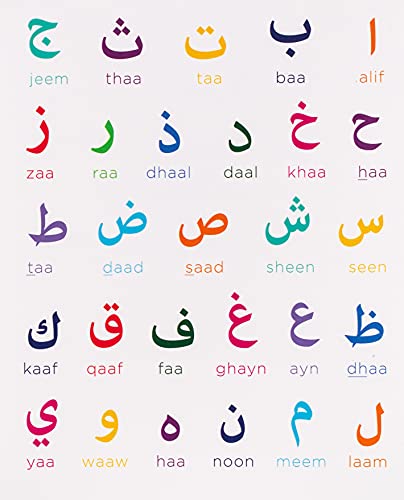
Arabic Alphabet Notebook: Wide-Ruled, 75 Sheets/150 Pages, 8 x 10 inches
As an affiliate, we earn on qualifying purchases.
As an affiliate, we earn on qualifying purchases.
Steps Toward Improved Arabic Typography Support on the Web
Developers and standards bodies are expected to prioritize enhancing font shaping capabilities and CSS support for Arabic scripts. Efforts may include developing new font formats, refining shaping engines, and creating best practices for digital Arabic typography. The next milestones include integrating these improvements into major browsers and font libraries, aiming for more faithful digital representations of classical Arabic typesetting.
Arabic font rendering engine
As an affiliate, we earn on qualifying purchases.
As an affiliate, we earn on qualifying purchases.
Key Questions
Why is Arabic typography more complex to render digitally than Latin?
Arabic typography relies on complex shaping and justification techniques, such as extending letterforms (kashida), which require advanced shaping engines and font support that are not as mature or widespread as those for Latin scripts.
What is the historical basis for these typography challenges?
Historically, Arabic script justification was achieved through manual extension of letterforms, a system formalized by Ibn Muqla. Modern digital systems have difficulty replicating this nuanced process, leading to technical gaps.
Are current web fonts capable of properly displaying justified Arabic text?
Most web fonts and browsers do not fully support the complex shaping and justification required, resulting in imperfect rendering, such as ragged edges or uneven margins.
What are the implications for digital content in Arabic?
Inadequate rendering can distort text, reduce readability, and undermine cultural authenticity, emphasizing the need for improved support in web standards and font technology.
What steps are being taken to address these issues?
Standards organizations, font developers, and browser vendors are working on enhancing shaping engines, developing new font formats, and establishing best practices to improve Arabic typography rendering on the web.
Source: Hacker News