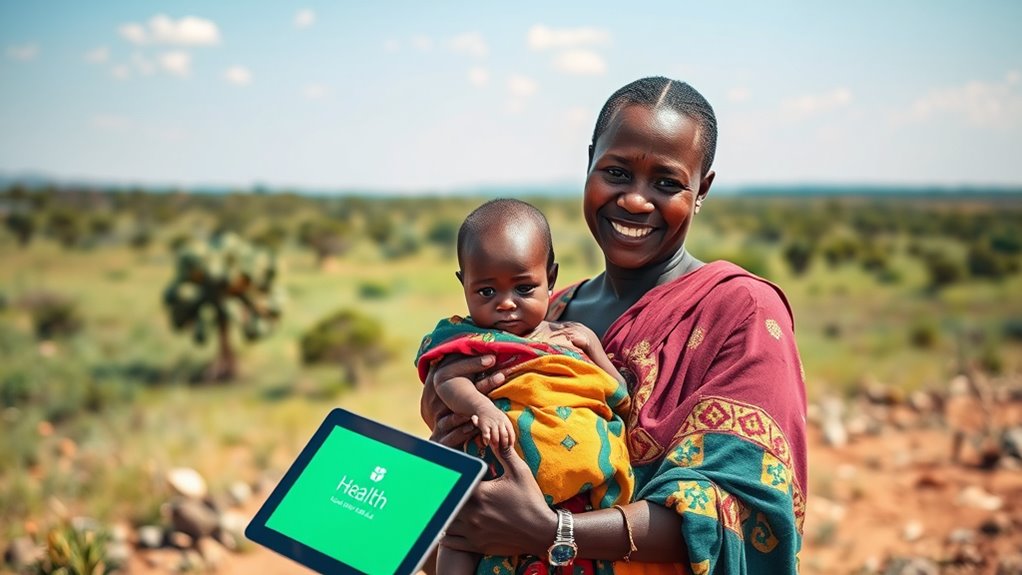

Machine-made messages, powered by AI, are beginning to transform maternal care in Africa. These tools analyze health records and surveys to identify women at risk of missing postpartum visits or delivering at home. By sending targeted, culturally sensitive messages, they encourage facility-based births and follow-up care, especially in rural areas. If you’re curious about how these innovations can shape better outcomes and address barriers, there’s much more to explore ahead.
Key Takeaways
- AI-driven messaging and virtual assistants are being used to improve maternal health communication in Africa.
- Early results show increased engagement and awareness through tailored, machine-made messages for pregnant women.
- AI tools facilitate real-time data sharing, enabling personalized support and reminders for postpartum care.
- Culturally sensitive AI messaging helps address barriers and enhances maternal care in underserved communities.
- Challenges include infrastructure gaps and data quality, but collaborative efforts aim to make AI messages more effective.

In many parts of Africa, maternal health faces persistent challenges, but advances in artificial intelligence are beginning to transform how we deliver care. You might not realize it, but AI-powered tools are now helping healthcare providers identify women at risk of missing postnatal check-ups, especially during the critical first six weeks after childbirth. These predictive models analyze data from surveys and health records to highlight who is most likely to skip postpartum visits, enabling targeted interventions. For instance, machine learning algorithms applied to Ethiopian health data achieved remarkable accuracy, with F1 scores around 0.95 and AUC close to 0.99. This means that healthcare workers can now better predict which women need extra support, reducing the chances of postpartum complications and neonatal deaths. Postnatal care utilization rates remain low in many regions, emphasizing the need for innovative solutions. You should know that key factors influencing postpartum care utilization include where you live—urban or rural areas—your education level, religion, wealth, health insurance, and where you gave birth. If you reside in a rural region with limited access to healthcare facilities, the models identify you as more likely to miss postpartum visits. Dream symbols can also reflect the emotional states of new mothers, providing insights into their mental health needs. Addressing these disparities requires not only predictive analytics but also tailored strategies to reach women in underserved communities. Additionally, tools like Synthetic Minority Oversampling Technique (SMOTE) help improve the reliability of these models by balancing the data, ensuring that predictions aren’t skewed by fewer cases from marginalized groups. This makes it easier for health systems to allocate resources effectively.
AI models improve postpartum care by predicting women at risk of missing check-ups, reducing complications in Africa.
AI’s potential extends beyond predictions. Virtual assistants, wearable devices, and real-time data access are already enhancing antenatal and postnatal monitoring. These innovations support women with disabilities, overcoming socio-economic and physical barriers that often prevent equitable care. However, implementing AI in Africa faces hurdles such as infrastructure gaps, data quality issues, and ethical concerns. To succeed, collaborations among governments, healthcare providers, and AI developers are essential. They need to foster culturally sensitive, accessible solutions that serve all women, regardless of their background or abilities. Training healthcare workers in AI literacy and disability awareness ensures these tools are used ethically and effectively.
Despite these advancements, home births remain common in East Africa, with higher perinatal mortality rates. Machine learning models, particularly random forests, outperform other classifiers in predicting which women are likely to deliver at home after antenatal visits. Factors like low household income, rural residence, husband’s education, and difficulty accessing health facilities play significant roles. Women in urban areas with better transportation and higher income are less likely to deliver at home, highlighting inequalities in access. These predictive insights allow health systems to target women at higher risk, encouraging facility-based births and reducing preventable deaths.
AI-powered maternal health messaging device
As an affiliate, we earn on qualifying purchases.
As an affiliate, we earn on qualifying purchases.
Frequently Asked Questions
How Do Machine-Made Messages Improve Maternal Health Outcomes?
Machine-made messages improve maternal health outcomes by providing timely, personalized information that encourages facility-based deliveries and adherence to antenatal care. When you receive targeted messages, you’re more likely to attend check-ups, seek help early, and follow health advice. This proactive communication helps address barriers like misinformation or cultural concerns, ultimately reducing risks during pregnancy, increasing safe deliveries, and lowering maternal and neonatal complications.
What Challenges Exist in Implementing These Messaging Systems?
You might wonder what’s holding back these messaging systems. Infrastructure gaps, unreliable networks, and limited healthcare resources create huge hurdles. Language barriers, low digital literacy, and trust issues also make it tough to engage mothers effectively. Additionally, systemic challenges like lack of policy support and fragmented health systems threaten sustainability. These obstacles can feel overwhelming, but recognizing them is the first step toward developing solutions that truly save lives.
Are There Cultural Barriers to Adopting Machine-Made Messages?
Yes, there are cultural barriers to adopting machine-made messages. You might find that traditional beliefs and local customs influence how women and families perceive these messages, leading to mistrust or reluctance. Gender dynamics and decision-making norms can also restrict women’s ability to act on the advice. To overcome this, you need to involve local communities, respect cultural norms, and build trust, ensuring messages resonate with their values.
How Cost-Effective Are These Interventions in Rural Areas?
You’ll find that AI interventions in rural areas can be quite cost-effective when integrated properly. They optimize resource use by focusing on high-risk groups, reducing unnecessary visits, and improving health outcomes. Combining AI tools with healthcare provider support boosts attendance and adherence, making investments pay off in better maternal and neonatal health. Although initial setup costs are high, long-term savings and improved outcomes justify the expense, especially when infrastructure challenges are addressed.
What Are the Long-Term Impacts on Maternal Care Practices?
You’ll see long-term impacts as maternal care practices become more proactive and personalized. With AI, you can expect increased early risk detection, encouraging women to seek facility-based deliveries and follow recommended care. Over time, this shifts behaviors toward safer practices, reduces complications, and improves maternal and fetal outcomes. Continuous data monitoring also helps you refine policies, ensuring sustainable improvements and greater equity in maternal healthcare access.
Conclusion
So, here you are, relying on a machine to guide you through one of life’s most natural moments. Ironically, as technology steps in to save lives, it’s easy to forget that sometimes, the simplest advice from a caring hand or a kind word can be the most powerful. Maybe the real miracle isn’t the machine’s message, but the hope it sparks—and the reminder that, in the end, human touch still matters most.