TL;DR

Get the latest gadgets delivered free with Prime
- Fast, free delivery on millions of items
- Prime Video, Amazon Music and more included
- Member-only deals all year
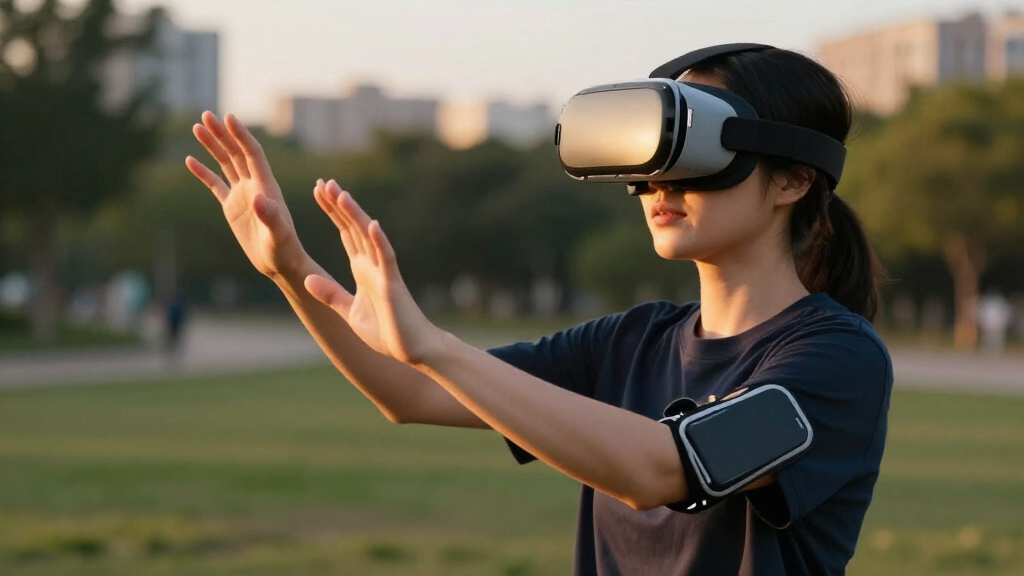
Arm has been granted a patent for a head-mounted device that uses ultrasound to stimulate the vestibular system, aiming to reduce VR motion sickness. The technology could enable more comfortable extended reality experiences.
Arm, a subsidiary of SoftBank, has been granted a patent for a head-mounted system designed to reduce motion sickness in virtual reality (VR) and extended reality (XR) devices. The patent describes a method that analyzes visual motion in the displayed images and sends control signals to ultrasonic transducers to stimulate the wearer’s vestibular system, potentially aligning perceived movement with visual cues. This development could significantly improve comfort and usability for VR users, especially during prolonged sessions.
The patent, titled “Method for minimising motion sickness for head-mountable extended reality,” was filed in the US on July 24, 2023, and granted on June 16, 2026. It details a head-mounted device that compares visual motion against a threshold and, when necessary, activates ultrasonic transducers to stimulate the inner ear’s vestibular system. The goal is to counteract the sensory mismatch that often causes dizziness, nausea, and discomfort during VR use.
The system leverages low-intensity focused ultrasound (LiFU) and ultrasonic transducers, which can be arranged in arrays targeting each ear. These arrays may use beamforming techniques to precisely stimulate specific parts of the inner ear, thereby providing physical cues that match visual motion. The patent also suggests alternative responses, such as reducing visual motion, fading images, or adjusting the displayed content to improve comfort. It emphasizes an adaptive approach, dynamically recalibrating based on the user’s pose, motion, and preferences, and based on sensor data indicating misalignment between visual and physical sensations.
While the patent details a promising approach, it remains unclear whether this ultrasonic vestibular stimulation system will be integrated into commercial XR headsets. The technology is still in the conceptual and patent stage, with no confirmed plans for product development or deployment at this time.
Potential Impact on VR User Comfort
This patent signals a possible breakthrough in addressing one of the most persistent barriers to widespread VR adoption: motion sickness. By directly stimulating the vestibular system to match visual cues, this technology could enable longer, more comfortable VR sessions, expanding its use in gaming, training, and professional applications. If successfully developed, it might set a new standard for user experience in XR devices, reducing the need for software-based motion smoothing or visual adjustments alone.
VR motion sickness reduction devices
As an affiliate, we earn on qualifying purchases.
As an affiliate, we earn on qualifying purchases.
Background on Vestibular Stimulation in VR
Motion sickness has long been a challenge in VR, caused by a mismatch between visual motion and the inner ear’s sense of balance. Various approaches have been explored, including software solutions like reducing motion speed or adding vignettes, but none have fully eliminated discomfort. Vestibular stimulation, which involves physically influencing the balance system, has been proposed as a more direct solution. Prior research has considered electrical stimulation methods, but no commercial VR device has yet incorporated such techniques.
Arm’s recent patent indicates a shift toward integrating physical sensory feedback with visual content, leveraging ultrasound technology. While ultrasound has been used in medical applications for precise tissue stimulation, its application in VR for vestibular control remains experimental and unproven at a commercial scale.
“The use of ultrasonic stimulation to align the vestibular system with visual cues could revolutionize comfort in extended VR use.”
— an anonymous researcher
Unanswered Questions About Practical Implementation
It is not yet clear whether ultrasonic vestibular stimulation can be delivered with sufficient precision and comfort in real-world VR headsets. The effectiveness across diverse users, the safety of prolonged stimulation, and integration with existing hardware remain untested. Additionally, regulatory approval and user acceptance are still unknowns.
Next Steps Toward Commercial VR Integration
Further research and development are needed to validate the technology’s safety and efficacy. Industry players may conduct prototype testing, user trials, and safety assessments in the coming months. If successful, we could see early experimental devices or partnerships aiming to incorporate ultrasonic vestibular stimulation into next-generation VR headsets within the next few years.
Key Questions
Could this ultrasonic system completely eliminate VR motion sickness?
While it has the potential to significantly reduce discomfort, it is too early to say whether it can fully eliminate motion sickness. Further testing is needed to determine its effectiveness across different users and scenarios.
Is this technology safe for prolonged use?
The safety of long-term ultrasonic vestibular stimulation has not yet been established. Regulatory approval and comprehensive safety studies will be required before commercial deployment.
When might we see this technology in consumer VR headsets?
If development progresses successfully, prototypes could emerge within the next few years, with potential commercial products several years away, depending on testing and regulatory processes.
Will this require new hardware components in VR headsets?
Yes, integrating ultrasonic transducers and related control systems would likely necessitate hardware modifications, increasing complexity and cost.
Could this technology be used for other applications besides VR?
Potentially, yes. Precise vestibular stimulation could have applications in medical treatments, balance therapy, or other immersive experiences requiring physical feedback.
Source: Road to VR
Columbus Day / Indigenous Peoples' Day Picks
long weekend sales
As an affiliate, we earn on qualifying purchases.