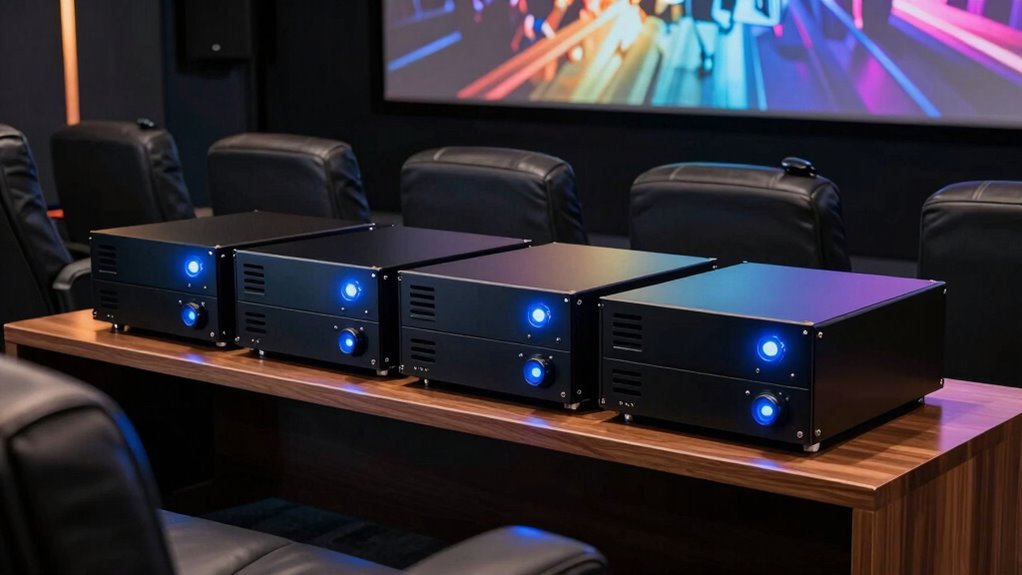

A home theater power amplifier with five channels can drive a surround speaker system, but the right choice depends on your speakers, source equipment, and need for everyday conveniences. My best overall pick is the Outlaw Model 5000x for buyers seeking a purpose-built multichannel power amp, while the Marantz MM7055 stands out as a premium alternative and the OSD Audio Nero HTA5200 offers another dedicated home theater option. The lower-cost Bluetooth and karaoke-style models in this roundup add convenient features, but they are not interchangeable with dedicated power amplifiers. The main tradeoffs are clean amplification and system integration versus built-in sources, simpler setup, and fewer specialist features. Read on for the full breakdown and guidance on matching an amplifier to your system.

Get the latest gadgets delivered free with Prime
- Fast, free delivery on millions of items
- Prime Video, Amazon Music and more included
- Member-only deals all year
Complete the kit



Key Takeaways
Dedicated power amplification leads this comparison. The Outlaw Model 5000x, Marantz MM7055, and OSD Audio Nero HTA5200 are the clearest fits for buyers building around separate surround processing.
Premium and overall picks serve different priorities. Outlaw is the leading all-around dedicated choice, while Marantz is the premium option for buyers who want a higher-end brand and a focused five-channel component.
Bluetooth is not a substitute for AV system integration. Several Pyle, Viprh, Nobsound, and Donner models emphasize wireless playback or extra inputs, but buyers should verify how they connect to their specific surround processor and speakers.
Feature-rich compact receivers and power amps are not the same product class. Models with karaoke inputs, Bluetooth, or receiver-style controls may suit casual rooms, yet they may not replace a dedicated amplifier in a component-based theater.
Channel count alone does not confirm system compatibility. Matching output capability, speaker impedance, input type, and the processor’s outputs matters more than a five-channel label when choosing among these 11 models.
| Outlaw Model 5000x 5-Channel Power Amplifier |  | Best for Hum-Prone Systems | Channels: 5 | Continuous output: 5 × 120 watts | Maximum output power: 180 watts | VIEW ON AMAZON | See Our Full Breakdown |
| OSD Audio Nero HTA5200 5-Channel Home Theater Amplifier |  | Best for High Output Across Five Channels | Channels: 5 | Amplifier class: Class AB | Power output at 4 ohms: 210 watts per channel, all channels driven | VIEW ON AMAZON | See Our Full Breakdown |
| Pyle PDA7BU.5 Bluetooth Rack-Mount Amplifier Receiver |  | Best for Local Media and Rack-Mount Flexibility | Listed channel information: 2.1-channel design; product information also lists 5-channel output | RMS power output: 100 watts × 2 at 8 ohms | Maximum power output: 200 watts at 4 ohms | VIEW ON AMAZON | See Our Full Breakdown |
| Viprh 5.1-Channel Home Audio Amplifier with Subwoofer Output and Karaoke Inputs |  | Best for Karaoke and Active-Speaker Setups | Channels: 5.1 | Listed output wattage: 1500 watts | Connectivity: USB | VIEW ON AMAZON | See Our Full Breakdown |
| Pyle PT875BT 5.2-Channel Bluetooth Home Theater Amplifier |  | Best for Modern Source Connectivity | Channels: 5.2 | Peak power: 240 watts | Bluetooth: Version 5.0 | VIEW ON AMAZON | See Our Full Breakdown |
| Marantz MM7055 5-Channel Power Amplifier |  | Best for High-Headroom Separates | Channels: 5 | Power output: 140 watts per channel into 8 ohms | Inputs: Balanced XLR and unbalanced RCA | VIEW ON AMAZON | See Our Full Breakdown |
| Nobsound M5.1 HiFi 5.1-Channel Bluetooth Amplifier |  | Best for Flexible Compact Setups | Model: DZ086-NEW | Supported configurations: 2.0, 2.1, 2.2, 5.1, and 5.2 | Bluetooth: Version 5.0 | VIEW ON AMAZON | See Our Full Breakdown |
| Donner MAMP4 5.1-Channel Stereo Receiver with Bluetooth 5.3 |  | Best for Karaoke and Mixed-Use Rooms | Channels: 5.1 | RMS output: 60 W left/right; 25 W each for center and surround | Connectivity: Bluetooth 5.3, USB, RCA, AC-3, AUX, optical, coaxial, and FM | VIEW ON AMAZON | See Our Full Breakdown |
| Viprh 5.1-Channel AV Power Amplifier with Subwoofer Output |  | Best for Karaoke-Focused 5.1 Features | Channels: 5.1 | Peak power: 3600W | Listed power per channel: 300W + 300W + 200W + 150W + 150W + 100W | VIEW ON AMAZON | See Our Full Breakdown |
| Pyle PFA540BT.6 5-Channel Bluetooth Home Theater Amplifier |  | Best Compact HDMI-Equipped Pick | Channels: 5-channel / 5.1-channel | Power output: 100 watts maximum (5 × 20 W) | Bluetooth: Version 4.0; AVRCP 1.4 | VIEW ON AMAZON | See Our Full Breakdown |
| Pyle PDA7BU 5-Channel Bluetooth Home Theater Amplifier |  | Best for Karaoke and Multi-Source Listening | Brand: Pyle | Model: PDA7BU | Listed power output: 200 watts | VIEW ON AMAZON | See Our Full Breakdown |
| home theater power amplifier 5 channel | Channels | Inputs |
|---|---|---|
| Outlaw Model 5000x 5-Channel P | 5 | Balanced XLR and RCA |
| OSD Audio Nero HTA5200 5-Chann | 5 | Balanced XLR and RCA |
| Pyle PDA7BU.5 Bluetooth Rack-M | — | USB, SD, 3.5 mm auxiliary, RCA, and two 1/4-inch microphone inputs |
| Viprh 5.1-Channel Home Audio A | 5.1 | — |
| Pyle PT875BT 5.2-Channel Bluet | 5.2 | HDMI ARC, optical, coaxial, RCA, and USB Type-A |
| Marantz MM7055 5-Channel Power | 5 | Balanced XLR and unbalanced RCA |
| Nobsound M5.1 HiFi 5.1-Channel | — | Bluetooth, coaxial, optical, USB, 2.0-channel RCA, and 5.1-channel RCA |
| Donner MAMP4 5.1-Channel Stere | 5.1 | — |
| Viprh 5.1-Channel AV Power Amp | 5.1 | Optical, coaxial, USB, SD card, and 3 microphone inputs |
| Pyle PFA540BT.6 5-Channel Blue | 5-channel / 5.1-channel | — |
| Pyle PDA7BU 5-Channel Bluetoot | 5; listed surround configuration: 5.1 | — |
More Details on Our Top Picks
Outlaw Model 5000x 5-Channel Power Amplifier
I’d put the Outlaw Model 5000x near the top for a five-channel system where clean integration matters more than extra features. Its balanced XLR and hum-rejecting RCA inputs give buyers two practical ways to connect a processor, while independent power supplies and output protection relays keep each channel’s circuitry separate. Compared with the OSD Audio Nero HTA5200, the Outlaw offers less stated output per channel but weighs 13 pounds less and has a longer, clearly specified parts-and-labor warranty. The tradeoff is a straightforward power amp rather than an all-in-one receiver: there’s no Bluetooth or HDMI connectivity listed, and you’ll need to supply an IEC C13 power cord. At 50 pounds, it still calls for a sturdy shelf and careful placement.
Pros:- Balanced XLR and differential-sensing RCA inputs support flexible system connections.
- Independent power supply rectification for each channel separates channel circuitry.
- Separate output protection relays are provided for all five channels.
- Five-year parts-and-labor warranty.
Cons:- At 50 pounds, it is heavy to lift and place.
- IEC C13 power cord is not included, according to the supplied product information.
- No streaming or HDMI inputs are listed.
Best for: Home theater owners with a separate preamp or processor who want five amplified channels, flexible balanced connections, and circuit separation.
Not ideal for: Buyers seeking an all-in-one receiver with HDMI, wireless streaming, or a lighter unit that is easy to move.
- Channels:5
- Continuous output:5 × 120 watts
- Maximum output power:180 watts
- Inputs:Balanced XLR and RCA
- Dimensions:16.75 × 17 × 5.83 inches
- Weight:50 pounds
- Power cord compatibility:IEC C13
- Warranty:5 years; parts and labor
Our verdict“Choose the Outlaw if your processor has the connections you need and you value channel separation and hum-resistant inputs over higher stated output or receiver features.”
OSD Audio Nero HTA5200 5-Channel Home Theater Amplifier
The OSD Audio Nero HTA5200 is the strongest fit here for buyers who want substantial stated output from all five channels, not just a big headline figure for one channel. Its Class AB design is rated at 145 watts per channel into 8 ohms or 210 watts into 4 ohms with all channels driven, giving it a clear power advantage on paper over the Outlaw Model 5000x’s 120 watts per channel continuous rating. Balanced XLR and RCA inputs make it suitable for a dedicated processor-based setup, and the 12V trigger can let compatible gear switch it on with the rest of the system. Channel-status LEDs help identify operating or protection modes. The cost of that output is physical heft: at 63 pounds, it is heavier than the Outlaw and far less convenient to reposition. It also lacks listed HDMI or streaming inputs.
Pros:- Rated for 145 watts per channel at 8 ohms with all five channels driven.
- Balanced XLR and RCA inputs support different processor setups.
- 12V trigger supports coordinated power control with compatible equipment.
- Channel-status LEDs show operating and protection modes.
Cons:- At 63 pounds, installation and repositioning are demanding.
- No HDMI or wireless streaming inputs are listed.
- The supplied data does not state a continuous output rating beyond the specified all-channels-driven figures.
Best for: Dedicated theater owners with a compatible preamp or processor who want high stated output across five channels and use a 12V trigger.
Not ideal for: Buyers who need a lightweight amplifier, built-in streaming, or direct HDMI connections for source devices.
- Channels:5
- Amplifier class:Class AB
- Power output at 4 ohms:210 watts per channel, all channels driven
- Power output at 8 ohms:145 watts per channel, all channels driven
- Signal-to-noise ratio:110 dB at full power; 105 dB at 1 watt
- Inputs:Balanced XLR and RCA
- Trigger:12V
- Dimensions and weight:17.1 × 16.57 × 6.3 inches; 63 pounds
- Warranty:5 years
Our verdict“Pick the Nero HTA5200 if high stated five-channel output is your priority and your rack can handle its 63-pound weight.”
Pyle PDA7BU.5 Bluetooth Rack-Mount Amplifier Receiver
The Pyle PDA7BU.5 is a different kind of pick from the Outlaw Model 5000x: it prioritizes playback convenience and rack-mount accessories over a clearly specified five-channel theater power stage. Bluetooth, USB, SD, FM, auxiliary, and RCA inputs make it handy for a media room or mixed-use audio setup, and the included rack brackets, remote, and antenna reduce the number of extras to source. But the supplied specifications describe a 2.1-channel design with 100 watts RMS × 2 at 8 ohms, even though product information also lists five-channel output. That ambiguity makes it a poor substitute for a conventional five-channel amplifier when matching all surround speakers matters. Bluetooth 2.1 and a 32 GB USB/SD limit also make its media features less current and flexible than the Pyle PT875BT’s Bluetooth 5.0 and HDMI ARC.
Pros:- Supports Bluetooth, USB, SD, FM, auxiliary, and RCA playback or connections.
- Includes detachable rack-mount brackets, a remote control, and an FM antenna.
- Lists a subwoofer output and a broad 20 Hz–20 kHz frequency response.
Cons:- Specifications identify a 2.1-channel design and two-channel RMS output, creating uncertainty for five-channel use.
- Bluetooth 2.1 is older than the Bluetooth 5.0 listed for the Pyle PT875BT.
- USB and SD playback is limited to 32 GB.
Best for: Buyers assembling a compact rack-based media or karaoke setup who value local USB/SD playback and varied inputs more than confirmed five-channel amplification.
Not ideal for: Home theater buyers who need unambiguous, independently powered amplification for five surround channels or modern Bluetooth and HDMI ARC.
- Listed channel information:2.1-channel design; product information also lists 5-channel output
- RMS power output:100 watts × 2 at 8 ohms
- Maximum power output:200 watts at 4 ohms
- Bluetooth:Version 2.1; range listed as 30+ feet
- Inputs:USB, SD, 3.5 mm auxiliary, RCA, and two 1/4-inch microphone inputs
- Supported audio formats:MP3 and WAV
- Maximum USB/SD capacity:32 GB
- Dimensions:19 × 9.8 × 2.2 inches
- Included accessories:Remote control, detachable rack mounts, and FM antenna
Our verdict“Choose the PDA7BU.5 for flexible local playback and rack mounting, but skip it if your theater requires reliably specified five-channel power.”
Viprh 5.1-Channel Home Audio Amplifier with Subwoofer Output and Karaoke Inputs
The Viprh 5.1-Channel Home Audio Amplifier is aimed at a media room that doubles as a karaoke space, rather than at buyers seeking a conventional power amp for passive theater speakers. Its three microphone inputs with adjustable mixing give it a practical role the Outlaw Model 5000x does not try to fill, while USB/SD playback and a remote add everyday convenience. The key limitation is in the output path: the supplied data says the subwoofer and speaker outputs are designed for active units only. That rules it out as a straightforward match for passive speakers, despite the 5.1-channel label. Its listed 1500-watt output also lacks channel-by-channel or impedance details here, so I would not compare that figure directly with the OSD Nero HTA5200’s explicit all-channels-driven ratings. At 8.6 pounds, it is easier to place than either dedicated power amp.
Pros:- Three microphone inputs with adjustable mixing support group karaoke use.
- Supports USB/SD playback and includes a remote control.
- Listed 5.1-channel format suits active-speaker media setups.
- At 8.6 pounds, it is much lighter than the Outlaw Model 5000x and OSD Nero HTA5200.
Cons:- Speaker and subwoofer outputs are designed for active units only.
- The 1500-watt figure is not broken down by channel or speaker impedance in the supplied data.
- Listed connectivity is limited to RCA and USB, with no HDMI or balanced XLR specified.
Best for: Karaoke-focused households or media rooms using compatible active speakers and an active subwoofer.
Not ideal for: Buyers with passive surround speakers who need defined per-channel power ratings and conventional speaker terminals.
- Channels:5.1
- Listed output wattage:1500 watts
- Connectivity:USB
- Connectors:RCA and USB
- Microphone inputs:3
- Audio output:RCA
- Speaker and subwoofer compatibility:Designed for active units
- Dimensions:9.06 × 14.96 × 9.06 inches
- Weight:8.6 pounds
Our verdict“Choose the Viprh for karaoke and active-speaker convenience, not as a known-output replacement for a five-channel passive-speaker power amplifier.”
Pyle PT875BT 5.2-Channel Bluetooth Home Theater Amplifier
The Pyle PT875BT is the most connection-ready option in this group for buyers who want an integrated amplifier rather than a dedicated five-channel power amp. Its HDMI ARC, optical, coaxial, RCA, USB, and Bluetooth 5.0 inputs offer more ways to connect a TV and everyday sources than the Outlaw Model 5000x, which is built around XLR and RCA feeds from a separate processor. Two microphone inputs with echo also suit casual karaoke, and the protection features address short circuits, over-current, and over-voltage. The tradeoff is that the stated 240 watts is peak power, not a per-channel continuous rating comparable to the Outlaw’s 5 × 120 watts or the Nero’s all-channels-driven figures. Its single HDMI port and one-year warranty also limit its appeal to buyers building a long-term processor-and-amplifier stack.
Pros:- HDMI ARC, optical, coaxial, RCA, and USB support a range of source connections.
- Bluetooth 5.0 offers newer wireless connectivity than the Pyle PDA7BU.5’s Bluetooth 2.1.
- Two microphone inputs with echo support karaoke use.
- Protection is specified for short circuits, over-current, and over-voltage.
Cons:- The 240-watt figure is peak power, with no per-channel continuous rating supplied.
- Only one HDMI port is listed.
- One-year warranty is shorter than the five-year warranties listed for the Outlaw and OSD amplifiers.
Best for: TV-centered setups needing HDMI ARC and several digital inputs, plus Bluetooth and occasional karaoke.
Not ideal for: Buyers seeking a dedicated power amp with clearly stated continuous output per channel, multiple HDMI inputs, or a longer warranty.
- Channels:5.2
- Peak power:240 watts
- Bluetooth:Version 5.0
- Inputs:HDMI ARC, optical, coaxial, RCA, and USB Type-A
- USB audio formats:MP3 and WAV
- Microphone inputs:Two 1/4-inch inputs
- Speaker compatibility:4–8 ohms
- Item weight:3.49 kg
- Warranty:1 year
Our verdict“Pick the PT875BT if TV connectivity and Bluetooth matter more than a clearly specified continuous power rating for each theater channel.”
Marantz MM7055 5-Channel Power Amplifier
The Marantz MM7055 is the clearest choice here for buyers building a separates-based theater around five passive speakers. Its 140 watts per channel into 8 ohms gives it a stronger stated per-channel rating than the compact Nobsound M5.1, while balanced XLR and RCA inputs make it easier to pair with a range of preamps and processors. Gold-plated binding posts provide solid speaker connections, and the aluminum thermal tunnel is designed to move heat away while keeping operation quiet. This is a dedicated power amplifier, not an all-in-one receiver: you’ll need a separate processor or preamp, and its five channels won’t cover a seven- or nine-channel layout alone. It also needs room for cooling, so it suits a ventilated equipment rack better than a cramped shelf.
Pros:- 140 watts per channel into 8-ohm speakers
- Balanced XLR and unbalanced RCA inputs for every channel
- Gold-plated 4-way binding posts
- Aluminum thermal tunnel is designed for heat dissipation and quiet operation
Cons:- Requires a separate preamp or AV processor
- Needs adequate ventilation to manage heat
- Five channels alone do not support 7.1 or 9.1 speaker layouts
Best for: Home theater owners with a separate processor who want five channels of amplification and balanced XLR connectivity.
Not ideal for: Buyers seeking an all-in-one receiver, a compact low-heat unit, or enough built-in channels for a 7.1 or 9.1 system.
- Channels:5
- Power output:140 watts per channel into 8 ohms
- Inputs:Balanced XLR and unbalanced RCA
- Speaker terminals:Gold-plated 4-way binding posts
- Cooling:Aluminum thermal tunnel
- Item weight:15,200 g
- Warranty:3 years
Our verdict“Choose the MM7055 if you already have a processor and want a dedicated five-channel amp with balanced inputs and a substantial per-channel rating.”
Nobsound M5.1 HiFi 5.1-Channel Bluetooth Amplifier
The Nobsound M5.1 makes the most sense when a small system needs more input choices and channel flexibility than a traditional power amp provides. It supports configurations from stereo through 5.2, with Bluetooth 5.0, optical, coaxial, USB, and RCA connections; the Marantz MM7055, by contrast, is a dedicated five-channel amplifier that depends on an external processor. Separate front, surround, center, and bass controls let owners adjust levels without adding another control device. Its listed output is 50 watts for each front, surround, center, and subwoofer channel, which is a more modest proposition than the Marantz’s 140 watts per channel into 8 ohms. The listing does not specify supported speaker impedance or total power consumption, so I’d avoid pairing it with demanding speakers until those requirements are confirmed.
Pros:- Supports 2.0, 2.1, 2.2, 5.1, and 5.2 configurations
- Bluetooth 5.0 plus optical, coaxial, USB, and RCA inputs
- Independent front, surround, center, and bass controls
- Compact aluminum-alloy construction
Cons:- Listed channel output is modest compared with the Marantz MM7055
- Supported speaker impedance is not specified
- A complete system still requires separate speakers and a subwoofer
Best for: Apartment and secondary-room listeners who want Bluetooth, several digital inputs, and adjustable 5.1 channel levels in a compact amplifier.
Not ideal for: Buyers with power-hungry speakers, a need for clearly specified speaker-impedance compatibility, or a preference for the higher stated per-channel output of the Marantz MM7055.
- Model:DZ086-NEW
- Supported configurations:2.0, 2.1, 2.2, 5.1, and 5.2
- Bluetooth:Version 5.0
- Inputs:Bluetooth, coaxial, optical, USB, 2.0-channel RCA, and 5.1-channel RCA
- Output power:Front and surround: 50W + 50W; center: 50W; subwoofer: 50W
- Amplifier chips:3 TPA3116 chips
- Controls:Main volume, treble, bass, and separate front, surround, center, and bass controls
- Material:Aluminum alloy
Our verdict“Pick the M5.1 for flexible inputs and channel controls in a compact setup, but favor the Marantz MM7055 when higher stated per-channel output matters more.”
Donner MAMP4 5.1-Channel Stereo Receiver with Bluetooth 5.3
The Donner MAMP4 is a receiver-style pick for a room that needs both surround playback and microphone features. Two 1/4-inch microphone inputs, plus echo and Talkover controls, give it a distinct use that the dedicated Marantz MM7055 does not address. It also accepts Bluetooth 5.3, USB, RCA, optical, coaxial, AUX, AC-3, and FM inputs, making it more of a flexible entertainment hub than a bare power amplifier. Its output is uneven across the channels: 60 watts RMS for left and right, and 25 watts RMS for the center and surrounds. That makes it less suited to buyers seeking closely matched output across five speakers. The absence of HDMI and support for PCM decoding only also limits its fit with modern home theater sources; check source compatibility before choosing it.
Pros:- Two microphone inputs with echo and Talkover controls
- Bluetooth 5.3, optical, coaxial, USB, RCA, AUX, AC-3, and FM connectivity
- Supports five speakers and a subwoofer
- Remote control adjusts tone and microphone-related settings
Cons:- No HDMI input
- PCM-only decoding excludes Dolby and DTS decoding
- Center and surround channels are rated at 25W RMS each, below the 60W left and right channels
Best for: Buyers setting up a den or party room for karaoke, music, and basic 5.1 playback who can connect sources without HDMI.
Not ideal for: Home theater owners who need HDMI or Dolby/DTS decoding, or who want similar stated RMS output across all five speakers.
- Channels:5.1
- RMS output:60 W left/right; 25 W each for center and surround
- Connectivity:Bluetooth 5.3, USB, RCA, AC-3, AUX, optical, coaxial, and FM
- Microphone inputs:2 × 1/4-inch
- Supported decoding:PCM only
- USB capacity:Up to 64 GB
- Controls:Buttons and remote
Our verdict“Choose the MAMP4 for karaoke-friendly, mixed-use rooms with compatible non-HDMI sources, not for a modern HDMI-centered theater.”
Viprh 5.1-Channel AV Power Amplifier with Subwoofer Output
The Viprh 5.1-Channel AV Power Amplifier combines a dedicated subwoofer channel with three microphone inputs, USB and SD playback, and optical and coaxial connections. That mix makes it more oriented toward karaoke and casual group use than the Marantz MM7055, which is a more conventional five-channel power amp with balanced inputs. Viprh lists output figures of 300W, 300W, 200W, 150W, 150W, and 100W across its channels, alongside a 3600W peak-power figure; the listing also warns against exceeding 1800W. Those different figures call for caution rather than treating the peak claim as continuous output. It supports 4–16-ohm speakers and lists protection against overheating, overload, and short circuits, but buyers should confirm the power requirements and channel ratings for their intended system before connecting it.
Pros:- Independent subwoofer channel for a 5.1 setup
- Three microphone inputs for karaoke and group use
- Optical, coaxial, USB, and SD card playback
- Listed protection against overheating, overload, and short circuits
Cons:- Power figures need careful interpretation: the listing gives 3600W peak power and warns against exceeding 1800W
- AC 110V specification limits suitability where local mains power differs
- No balanced XLR inputs are listed
Best for: Karaoke users and small-group hosts who want three microphone inputs, local USB or SD playback, and a subwoofer channel in one unit.
Not ideal for: Buyers who need verified continuous output figures, balanced XLR connections, or a conventional processor-and-power-amp arrangement like the Marantz MM7055.
- Channels:5.1
- Peak power:3600W
- Listed power per channel:300W + 300W + 200W + 150W + 150W + 100W
- Voltage:AC 110V, 50/60Hz
- Frequency response:20Hz–20kHz (±3dB)
- Signal-to-noise ratio:≥90dB
- Total harmonic distortion:≤0.5%
- Speaker impedance:4–16Ω
- Inputs:Optical, coaxial, USB, SD card, and 3 microphone inputs
Our verdict“The Viprh suits karaoke-led rooms needing multiple mic inputs, but buyers prioritizing clearly specified theater amplification should choose a more conventional amp.”
Pyle PFA540BT.6 5-Channel Bluetooth Home Theater Amplifier
The Pyle PFA540BT.6 is the smallest listed option here, measuring 8 × 5.8 × 2 inches, and it includes two HDMI inputs plus one output supporting 2160p. That connection set can suit a compact entertainment setup more directly than the Nobsound M5.1, which offers more flexible channel configurations but no HDMI listed. The tradeoff is output: Pyle specifies 100 watts maximum, or 5 × 20W, rather than the Marantz MM7055’s 140 watts per channel into 8 ohms. The maximum-power figure is not a like-for-like continuous rating, so I’d treat this as a modest system amplifier rather than a choice for demanding speakers or a large room. Bluetooth 4.0, FM radio, a subwoofer output, and a remote add convenience, but spring-loaded terminals are less substantial than binding posts.
Pros:- Compact 8 × 5.8 × 2-inch dimensions
- Two HDMI inputs and one HDMI output supporting 2160p
- Bluetooth 4.0, FM antenna input, AUX RCA, and subwoofer output
- Remote control and 12V power adapter are included
Cons:- 100W is specified as maximum power, with 5 × 20W listed, rather than a higher per-channel rating like the Marantz MM7055
- Spring-loaded speaker terminals are less robust than binding posts
- Bluetooth 4.0 is an older version than the Bluetooth 5.0 and 5.3 offered by the Nobsound and Donner
Best for: Small-room buyers who need a compact five-channel amplifier with HDMI connections, Bluetooth, FM radio, and a subwoofer output.
Not ideal for: Owners of demanding speakers or large theaters who need stronger, clearly specified per-channel output or more substantial speaker terminals.
- Channels:5-channel / 5.1-channel
- Power output:100 watts maximum (5 × 20 W)
- Bluetooth:Version 4.0; AVRCP 1.4
- HDMI:2 inputs and 1 output; supports 2160p
- Other inputs and outputs:AUX RCA inputs, RCA subwoofer output, and FM antenna input
- Dimensions:8 × 5.8 × 2 inches
- Construction:Metal and aluminum alloy
- Included accessories:Remote control and 12V power adapter
Our verdict“Pick the PFA540BT.6 for a small room where compact size and HDMI connections matter more than high speaker output.”
Pyle PDA7BU 5-Channel Bluetooth Home Theater Amplifier
The PDA7BU suits a mixed-use room where music, radio, and karaoke matter as much as movie playback. Its five-channel layout and subwoofer output give it a home-theater role, while Bluetooth, USB, SD, RCA, and auxiliary inputs make it easy to play audio from several sources without adding separate components. The two microphone inputs with adjustable echo and volume set it apart from the more theater-focused Outlaw Model 5000x, which is better suited to buyers prioritizing amplification over party features.
There are meaningful limits: the listed 200-watt figure does not specify power per channel, and the product information also lists stereo output mode despite its 5.1 configuration. I would choose it for flexible casual listening, not as a clearly specified route to discrete surround performance. Its 19-inch width also calls for rack or shelf space.
Pros:- Five-channel configuration includes a subwoofer output for a home-theater setup.
- Bluetooth, USB, SD, RCA, and 3.5 mm auxiliary inputs accommodate varied audio sources.
- Two microphone inputs with adjustable echo and volume support karaoke without a separate mixer.
- Includes a remote control, rack mounts, and FM antenna.
Cons:- The 200-watt output is not broken down by channel, making power matching difficult.
- The listed stereo output mode leaves the stated 5.1-channel configuration unclear.
- Its 19-inch width may be awkward for compact shelves or small entertainment centers.
Best for: Buyers setting up a multipurpose media room who want Bluetooth playback, several physical audio inputs, FM radio, and two microphones for karaoke.
Not ideal for: Home-theater buyers who need clearly stated per-channel power or documented discrete 5.1 output, and anyone without room for a 19-inch-wide chassis.
- Brand:Pyle
- Model:PDA7BU
- Listed power output:200 watts
- Channels:5; listed surround configuration: 5.1
- Connectivity:Bluetooth, USB-A, SD card, 3.5 mm auxiliary, RCA
- Microphone inputs:2 × 6.35 mm
- Special features:Subwoofer output, FM tuner, adjustable microphone echo and volume
- Dimensions and weight:9.8 × 19 × 2.2 in; 7.4 lbs
- Included accessories and warranty:Remote control, rack mounts, FM antenna; 1 year
Our verdict“Choose the PDA7BU for a flexible five-channel system that doubles as a karaoke and multi-source music hub, but skip it if specified surround output and per-channel power are priorities.”
How We Picked
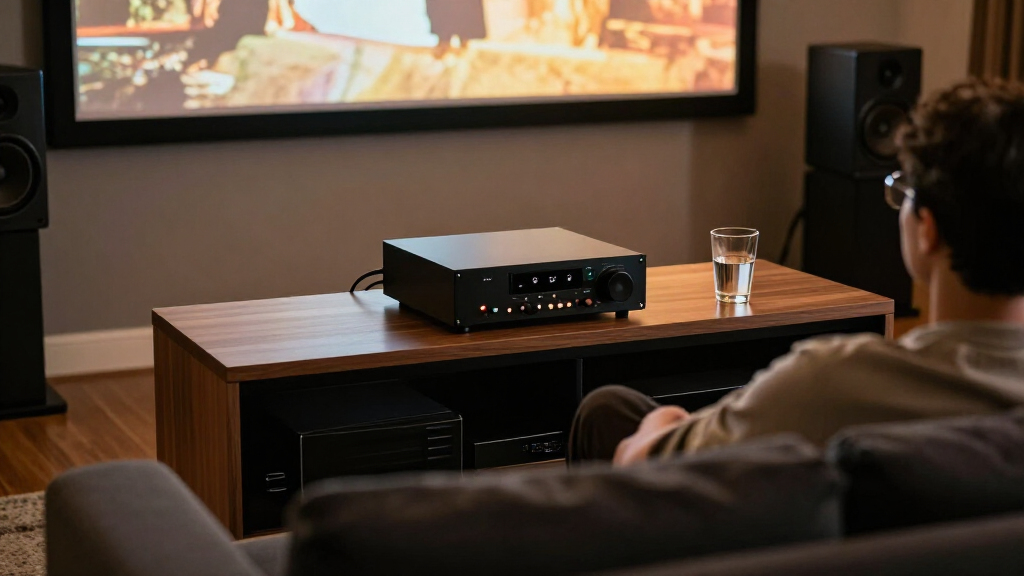
I ranked these models by how directly they fit the stated job: amplifying five channels in a home theater system. I gave the strongest consideration to their role as dedicated multichannel power amplifiers, their suitability for pairing with separate AV processing, and the clarity of their intended use. The Outlaw Model 5000x leads as the most direct all-around match; the Marantz MM7055 earns the premium position, and the OSD Audio Nero HTA5200 is another focused theater-oriented option.
I placed Bluetooth and receiver-style products lower when their extra convenience features may come with a less straightforward fit for a component-based theater. That does not make them poor choices: they can suit simpler rooms, casual listening, or users who want built-in playback or karaoke connections. I also considered usability, flexibility, and the buyer’s likelihood of needing external processing. Since the product names alone do not establish full electrical or connection specifications, I avoid treating channel count or branding as proof of compatibility; buyers should confirm those details before purchase.
| home theater power amplifier 5 channel | Inputs |
|---|---|
| Outlaw Model 5000x 5-Channel P | Balanced XLR and RCA |
| OSD Audio Nero HTA5200 5-Chann | Balanced XLR and RCA |
| Pyle PDA7BU.5 Bluetooth Rack-M | USB, SD, 3.5 mm auxiliary, RCA, and two 1/4-inch microphone inputs |
| Viprh 5.1-Channel Home Audio A | — |
| Pyle PT875BT 5.2-Channel Bluet | HDMI ARC, optical, coaxial, RCA, and USB Type-A |
| Marantz MM7055 5-Channel Power | Balanced XLR and unbalanced RCA |
| Nobsound M5.1 HiFi 5.1-Channel | Bluetooth, coaxial, optical, USB, 2.0-channel RCA, and 5.1-channel RCA |
| Donner MAMP4 5.1-Channel Stere | — |
| Viprh 5.1-Channel AV Power Amp | Optical, coaxial, USB, SD card, and 3 microphone inputs |
| Pyle PFA540BT.6 5-Channel Blue | — |
| Pyle PDA7BU 5-Channel Bluetoot | — |
Factors to Consider When Choosing Home Theater Power Amplifier 5 Channel
Choosing a five-channel amplifier is less about finding a model with the right number in its name and more about making every part of the signal path work together. I would settle the questions below before comparing convenience features, since a mismatch in inputs or speaker requirements can matter more than added Bluetooth.
Match the amplifier to your AV processor
Start by checking what your AV receiver or preamp actually sends to an external amplifier. A dedicated power amp generally expects suitable preamp-level outputs, while a receiver-style product may be designed around a different signal path. Do not assume that an HDMI input, Bluetooth label, or surround-channel description means a unit can connect directly to your existing processor. Check the connector types and the number of outputs before ordering, then confirm whether you still need a separate device for decoding and volume control. The Outlaw, Marantz, and OSD picks make the most sense to buyers already planning a component-based system. If your setup has no compatible preamp outputs, a receiver with the required processing may be a more practical purchase than a power amp alone.
Check speaker load and real-world power needs
Five channels describe how many speakers an amplifier can serve, not how much power each speaker will receive in your room. Look up your speakers’ impedance and sensitivity alongside the amplifier’s published specifications, and check how power is stated across channels. A large room, low-sensitivity speakers, or long listening distances can call for more headroom than a small secondary room. Avoid comparing power figures that use different measurement conditions as if they were directly equivalent. Running every channel hard can also change the practical headroom available, so focus on the conditions most like your system. If the published information is unclear, ask the manufacturer to confirm compatibility rather than guessing from the model name.
Separate a power amplifier from an all-in-one unit
A dedicated amplifier focuses on increasing signal power; an all-in-one receiver or compact unit may also offer Bluetooth, source inputs, tone controls, or karaoke functions. Those extras can simplify a casual setup, but they do not necessarily provide the surround decoding, room correction, or system control expected in a full theater. Decide which component will handle source selection, decoding, and master volume before choosing. Buyers who already own an AV processor may have little use for duplicate controls, while a beginner building a simple listening room may value built-in playback. A common mistake is buying on the strength of feature count, then discovering the unit does not accept the signal or perform the processing the system needs. Compare product roles first and convenience features second.
Treat subwoofer connections carefully
A product title mentioning a subwoofer output does not automatically mean the amplifier handles bass management for a surround system. In many theater setups, the AV processor sends a dedicated subwoofer signal and manages crossover settings, while the five-channel amplifier drives the main speakers. Confirm whether a listed subwoofer connection is an output, what signal it carries, and whether it is intended for a powered subwoofer. Do not connect a passive subwoofer to a line-level output without the required amplification. If you already have an AV receiver or preamp managing bass, extra subwoofer features may add little value. Buyers assembling a system from separate components should map every channel and connection before purchasing.
Choose convenience features only when they solve a real need
Bluetooth can be useful for quick music playback, but it may not be the right route for movie sound or multichannel signals. Karaoke inputs, USB playback, and front-panel controls can make a secondary room easier to use, though they may matter less in a dedicated theater controlled by an AV processor. Think about who will operate the system and what sources they use most often. If guests or family members need a simple way to play music, wireless input can be a genuine benefit. If your sources already connect to a central processor, duplicate wireless features may go unused. Paying for features that suit the room is sensible; treating them as a replacement for required theater connections is not.
Plan for installation, ventilation, and future expansion
Before buying, check the amplifier’s dimensions, mounting style, weight, and ventilation needs against your cabinet or rack. Power amplifiers can generate heat, so leaving open space around the unit is part of a reliable installation rather than a cosmetic preference. Also consider cable routing: five speaker runs and several source connections can crowd a shallow shelf quickly. Think about whether you may add more channels later, since a five-channel amplifier will not directly power a larger speaker layout on its own. A compact, feature-heavy model may be easier to place, while a dedicated component may better suit a rack-based system. Allow room for service access and cable bends instead of choosing a location by faceplate size alone.
Frequently Asked Questions
Can I connect a five-channel power amplifier to any AV receiver?
No. Your receiver needs compatible preamp outputs for the channels you want the external amplifier to drive. Speaker outputs are not a substitute for preamp outputs, and adapters do not automatically make the signal path appropriate. Check the receiver’s manual and the amplifier’s input requirements, then confirm whether the receiver’s volume control continues to govern the amplified channels. If your receiver lacks the required outputs, a standalone power amplifier may not fit without changing the system’s processing component.
Should I choose a dedicated amplifier or a Bluetooth home theater model?
Choose based on what your system needs the unit to do. A dedicated model such as the Outlaw, Marantz, or OSD is a more direct match when a separate AV processor supplies the signal and handles surround functions. Bluetooth-focused models may suit a simpler room where quick wireless playback and built-in controls matter more than component integration. Bluetooth by itself does not provide surround decoding or guarantee compatibility with your processor. Before deciding, list the sources, speakers, and control functions that must connect to the unit.
Do I need a separate AV processor if I buy one of these amplifiers?
For a typical component-based home theater, a power amplifier needs another device to select sources, decode surround sound, manage volume, and often handle speaker distances and bass management. Some products in this roundup are receiver-style or include additional inputs, so their functions can differ from a dedicated power amp. Read the exact model documentation rather than assuming every five-channel unit performs the same role. If you want a one-box theater system, confirm that the model provides the processing and connections your sources require. If you already own an AV receiver with suitable preamp outputs, a dedicated amp can serve as the separate amplification stage.
Will a five-channel amplifier work with my four speakers and subwoofer?
It can, but the channel count alone does not answer how the subwoofer is supported. Many systems use five amplifier channels for five passive speakers and send a separate signal to a powered subwoofer through the AV processor. If you have four speakers, an unused amplifier channel may simply remain unconnected, subject to the manufacturer’s instructions. Check whether your subwoofer is powered and which component provides the subwoofer output and crossover management. Do not assume that a product listing’s subwoofer wording means it can power a passive subwoofer or manage surround bass on its own.
Is the Marantz MM7055 worth choosing over the Outlaw Model 5000x?
That depends on what you mean by worth it, since both are positioned as dedicated five-channel power amplifiers rather than Bluetooth-first convenience units. I rank the Outlaw Model 5000x as the overall pick for a broad, component-based theater match, while the Marantz MM7055 is my premium recommendation for buyers drawn to that focused higher-end option. Compare their published power specifications, physical fit, connection details, and support terms against your speakers and processor before deciding. Avoid choosing by brand name alone: an amplifier that better matches your room and system is the more useful purchase. If those details do not justify the Marantz for your setup, the Outlaw is the clearer starting point in this roundup.
Conclusion
For a component-based five-channel theater, I recommend the Outlaw Model 5000x as best overall, with the OSD Audio Nero HTA5200 as a strong alternative for buyers seeking another dedicated theater-focused option. My best premium pick is the Marantz MM7055. For a simpler room where built-in wireless playback or added inputs matter more than dedicated system integration, compare the Pyle, Viprh, Nobsound, and Donner models carefully against your source and speaker needs; those convenience-oriented choices are my best-for-beginners and specific-use candidates only when their connections fit the setup. The best value is the dedicated model that meets your power and connection requirements without paying for unused extras, so verify specifications before deciding. If you already own a suitable AV processor, start with Outlaw, Marantz, or OSD; if you need an all-in-one approach, choose only after confirming that the selected unit covers processing as well as amplification.
Columbus Day / Indigenous Peoples' Day Picks
long weekend sales
As an affiliate, we earn on qualifying purchases.