
Wi-Fi 6E offers faster speeds and less interference by using the 6 GHz band, making your online experience smoother in busy environments. Wi-Fi 7 takes this further with even higher data rates, lower latency, and better multi-device performance, ideal for gaming, streaming, and smart homes. Compatibility depends on your devices and upgrades needed, but if you want the latest, you’ll need new hardware. To discover how these changes can impact your daily use, keep exploring.

Get the latest gadgets delivered free with Prime
- Fast, free delivery on millions of items
- Prime Video, Amazon Music and more included
- Member-only deals all year
Key Takeaways
- Wi-Fi 6E offers faster speeds and less interference by expanding into the 6 GHz band, improving real-life network performance.
- Wi-Fi 7 delivers even higher data rates with wider channels and advanced multi-link features for seamless multi-device use.
- Upgrading to Wi-Fi 7 requires compatible hardware and infrastructure, impacting immediate real-life benefits.
- Both standards reduce latency and congestion, enhancing activities like gaming, streaming, and video conferencing.
- Future device compatibility and infrastructure upgrades will determine the full real-world impact of Wi-Fi 7 adoption.
As an affiliate, we earn on qualifying purchases.
What Are Wi-Fi 6E and Wi-Fi 7: and Why Do They Matter?
Wi-Fi 6E and Wi-Fi 7 are the latest advancements in wireless technology, designed to deliver faster speeds, lower latency, and more reliable connections. Their development reflects ongoing device adoption and the push to establish new industry standards. Wi-Fi 6E expands Wi-Fi 6’s capabilities by utilizing the 6 GHz band, reducing interference and congestion. Wi-Fi 7 aims to push speeds even higher and improve efficiency across multiple devices simultaneously. These standards are essential because they set the framework for future devices, ensuring compatibility and performance improvements. As more devices adopt these standards, you’ll notice smoother streaming, quicker downloads, and more stable connections, making them indispensable for both consumer and industry growth. This evolution keeps wireless technology aligned with increasing data demands and the importance of high refresh rates, which are crucial for real-time data processing and advanced multimedia experiences.
Are Your Devices Ready for Wi-Fi 6E and Wi-Fi 7? (Compatibility Insights)
To use Wi-Fi 6E or Wi-Fi 7, your devices need to meet certain compatibility requirements, including updated firmware and software. You’ll also want to check if your hardware supports these new standards, as not all devices are ready out of the box. Ensuring your equipment is compatible now can save you from future upgrades and connectivity issues.
Device Compatibility Requirements
Ensuring your devices are compatible with Wi‑Fi 6E and Wi‑Fi 7 is essential before upgrading your network. Without proper compatibility, a device upgrade might not deliver the expected performance, leading to compatibility challenges. Check if your current devices support the new standards; if not, consider upgrading them. Compatibility depends on hardware support and the latest network standards. Here’s a quick overview:
| Device Type | Compatibility Requirement | Typical Devices |
|---|---|---|
| Smartphones | Wi‑Fi 6E or Wi‑Fi 7 support | Newer flagship models |
| Laptops | Compatible Wi‑Fi card or chipset | Recent laptops |
| Routers | Built-in Wi‑Fi 6E/7 modules | New routers |
| IoT Devices | Updated firmware and hardware support | Smart home gadgets |
| Network Adapters | Support for latest standards | External adapters |
Ensuring device compatibility avoids compatibility challenges during your upgrade.
Firmware and Software Updates
Before upgrading to Wi-Fi 6E or Wi-Fi 7, it’s crucial to verify that your devices have the latest firmware and software updates. Firmware updates ensure your hardware can support new standards and fix security vulnerabilities. Software patches improve compatibility, stability, and performance with the latest network protocols. Outdated firmware or software may cause connectivity issues, reduced speeds, or security risks. Check manufacturer websites or device settings for available updates, and install them before making the switch. Keeping your firmware and software current guarantees your devices are prepared for the advanced features of Wi-Fi 6E and Wi-Fi 7. Staying up-to-date is essential for seamless performance and maximum security as you move to these new, faster wireless standards. Additionally, understanding Free Floating concepts can help optimize your home network setup to fully leverage these technologies.
Supporting Hardware Limitations
Upgrading to Wi-Fi 6E or Wi-Fi 7 requires more than just compatible internet service; your devices must also support the new standards. Hardware limitations can prevent your current devices from utilizing the full potential of these advanced Wi-Fi versions. To ensure compatibility, check if your devices have the necessary chipsets and Wi-Fi radios. Some older devices may lack the hardware updates needed for Wi-Fi 6E or Wi-Fi 7 support. Keep in mind: hardware compatibility can vary significantly across device manufacturers and models, making it essential to verify specifications before upgrading. Without compatible hardware, you won’t experience the improved speeds and lower latency promised by Wi-Fi 6E and Wi-Fi 7. Assess your device lineup before upgrading to avoid surprises and maximize your network’s capabilities. Hardware limitations can be a significant barrier to fully benefiting from these new Wi-Fi standards.
How Do Wi-Fi 6E and Wi-Fi 7 Differ in Speed and Performance?
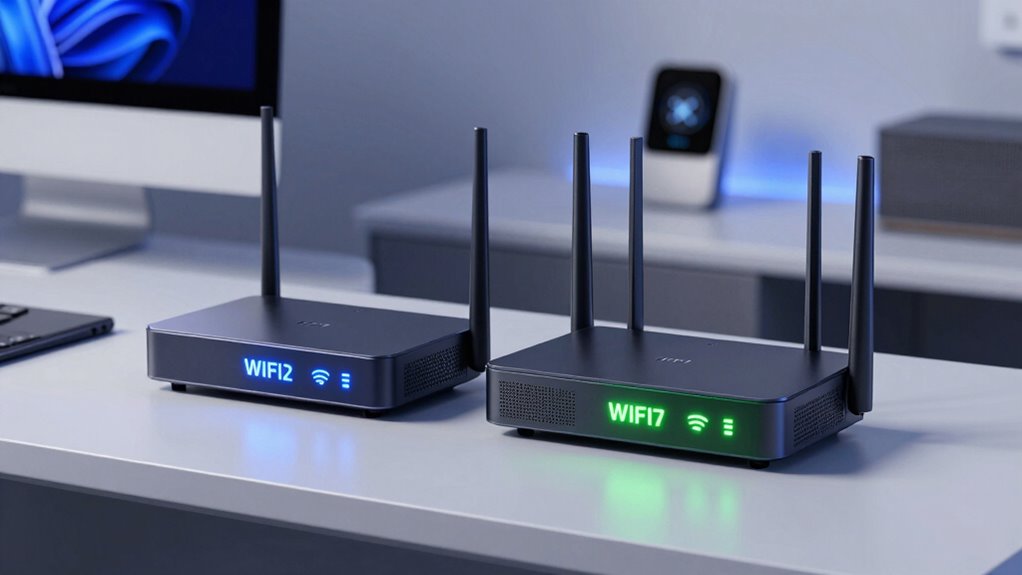
Wi-Fi 6E and Wi-Fi 7 offer significant improvements in speed and overall performance, but how they achieve these differ. You’ll notice enhancements in bandwidth, better congestion management, and lower latency with Wi-Fi 7. Understanding these differences helps you choose the right technology for your needs. Additionally, Wi-Fi 7 introduces advanced security protocols to enhance data protection in your wireless networks.
Speed Enhancements and Gains
While Wi-Fi 6E introduces significant speed improvements by expanding into the 6 GHz band, Wi-Fi 7 pushes performance even further with higher data rates and more advanced technologies. You’ll notice faster downloads, smoother streaming, and lower latency. Wi-Fi 7 employs techniques like 320 MHz channel widths, 4096-QAM modulation, and multi-link operation to boost speed. These enhancements allow you to transfer large files quickly and enjoy seamless gaming. However, increased speed can impact device energy consumption and signal interference. To optimize performance:
- Devices may use more energy during rapid data transfers
- Signal interference could become more challenging in crowded environments
- Advanced technologies help mitigate interference, maintaining speed and stability
Bandwidth and Congestion Management
As wireless networks become more crowded, effective bandwidth and congestion management are essential for maintaining fast, reliable connections. Wi-Fi 6E and Wi-Fi 7 improve this through advanced features like channel bonding, which combines multiple channels to increase throughput and reduce bottlenecks. Wi-Fi 7 further enhances this with smarter interference mitigation techniques, helping your devices avoid signal disruptions caused by overlapping networks. These improvements allow you to enjoy steadier speeds even in busy environments. Wi-Fi 6E’s use of additional spectrum in the 6 GHz band offers more room for channel bonding, while Wi-Fi 7’s innovations minimize interference more effectively. Together, these enhancements guarantee your network stays responsive and efficient, even as device density and data demands grow.
Latency and Response Times
Advancements in Wi-Fi technology have considerably reduced latency and improved response times, making your online experiences smoother and more immediate. Wi-Fi 7 offers lower latency than Wi-Fi 6E, resulting in quicker data exchanges and less lag during gaming or video calls. It also enhances signal stability, minimizing disruptions caused by device interference. Additionally, these improvements help reduce microplastics in dust and other indoor air pollutants by enabling more efficient device operation and better integration with smart air quality monitoring systems. Key improvements include: – Reduced interference thanks to wider channels and smarter spectrum management – Faster response times with more efficient data processing – Better handling of multiple devices simultaneously, maintaining consistent speed
These enhancements ensure your devices communicate more swiftly and reliably, even in crowded environments. As a result, Wi-Fi 7 provides a more seamless experience, especially for latency-sensitive tasks like streaming, gaming, or real-time collaboration.
What Are the Main Benefits of Wi-Fi 6E for Home and Office?
Are you wondering how Wi-Fi 6E can improve your home or office internet experience? It offers faster speeds, lower latency, and better performance in crowded environments. This means smoother video calls, quicker downloads, and more reliable connections for your smart home and IoT devices. With the expanded 6 GHz band, interference decreases, ensuring stable connectivity. Here’s a quick look at its benefits:
| Benefit | Description | Impact |
|---|---|---|
| Enhanced Speed | Supports higher data rates | Faster streaming and downloads |
| Reduced Congestion | Less interference with other networks | More reliable connections |
| Better IoT Integration | Handles multiple devices efficiently | Smarter home and office setups |
The increased bandwidth also supports cutting-edge technology advancements, making your network future-proof.
Wi-Fi 6E creates a seamless, responsive environment for your connected devices.
How Will Wi-Fi 7 Improve Gaming and Streaming?
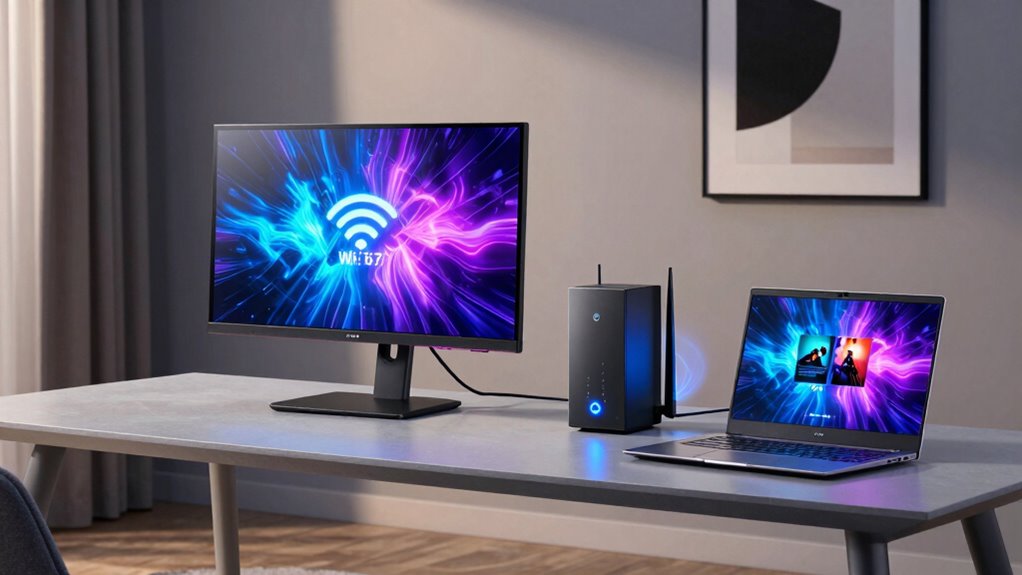
Wi-Fi 7 offers considerably higher bandwidth and faster speeds, making your gaming and streaming experiences smoother and more responsive. With lower latency, you’ll notice less lag and more immediate reactions, giving you an edge in competitive play. These improvements mean you can enjoy high-quality content without interruptions or delays. Additionally, capacity and bandwidth are key factors that enable Wi-Fi 7 to support multiple devices simultaneously with consistent performance. Enhanced network efficiency further reduces congestion, ensuring seamless connectivity even in busy smart home environments. Improved spectrum utilization plays a crucial role in maximizing network performance under high demand, ensuring your devices operate at optimal speeds and reliability. As a result, security protocols are also enhanced to protect your data during high-speed transfers, maintaining your online safety. Furthermore, advancements in dynamic spectrum management help optimize the use of available frequencies, reducing interference and boosting overall network stability.
Enhanced Bandwidth and Speed
With Wi-Fi 7, you’ll notice markedly faster speeds and greater bandwidth, which directly benefits gaming and streaming experiences. This upgrade leverages spectrum expansion to handle more data simultaneously, reducing bottlenecks. Beamforming enhancements focus signals directly toward your device, improving connection stability and data flow. You’ll experience smoother gameplay and higher-quality streams thanks to these improvements. Key benefits include:
- Increased data rates for quick downloads and seamless video playback
- Broader spectrum access to avoid congestion in crowded areas
- Stronger beamforming for precise, reliable connections
- Essential safety tips to ensure your networking setup remains secure and efficient
Together, these features ensure your devices can handle intensive tasks effortlessly, making your gaming and streaming sessions more responsive and enjoyable. Wi-Fi 7’s enhanced bandwidth and speed set a new standard for wireless performance in real-world scenarios.
Lower Latency for Gaming
The improvements in bandwidth and speed offered by Wi-Fi 7 naturally lead to lower latency, which is essential for gaming and streaming. With less device latency, your gameplay feels more responsive, reducing delays that can ruin the experience. Wi-Fi 7 uses advanced technologies like multi-link operation to minimize network interference, ensuring a stable connection even in crowded environments. This means fewer interruptions and smoother gameplay, especially when multiple devices compete for bandwidth. Reduced network interference directly translates to quicker data transfer, helping you react faster and enjoy lag-free gaming sessions. Moreover, Wi-Fi 7’s focus on lowering latency is aligned with the goal of enhancing network performance for all users. Additionally, the integration of multi-link operation allows devices to simultaneously connect over multiple bands, further reducing latency and enhancing overall connectivity. This technology helps optimize data flow, making your gaming and streaming experiences more seamless. Furthermore, the improved bandwidth management capabilities of Wi-Fi 7 contribute to a more consistent and reliable connection, especially in busy household environments. As a result, dynamic spectrum sharing enables more efficient use of available channels, reducing congestion and improving overall performance. Overall, Wi-Fi 7’s focus on lowering latency enhances your gaming and streaming by providing a more reliable, faster, and seamless connection.
How Will Wi-Fi 7 Handle More Devices and Network Congestion?

As more devices connect to your network, Wi-Fi 7 is designed to manage the increasing demand more effectively. It tackles issues like device interference by using advanced frequency management and wider channels. Signal optimization techniques help improve connection quality even in crowded environments. With Wi-Fi 7, you’ll notice:
- Better handling of multiple devices simultaneously
- Reduced network congestion through smarter traffic management
- Enhanced signal strength and stability despite high device density
These improvements ensure your network remains fast and reliable, even as more gadgets join in. Wi-Fi 7’s ability to optimize signals and minimize interference means fewer dropped connections and smoother streaming. It’s built to handle the growing number of connected devices without sacrificing performance, making your home or office network future-proof.
What Security Features Are New in Wi-Fi 6E and Wi-Fi 7?
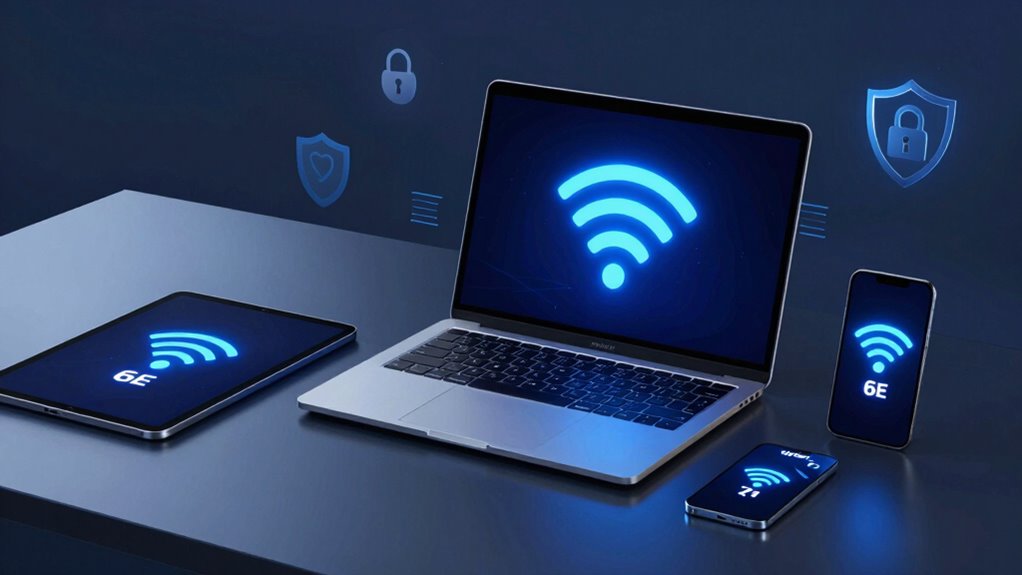
Enhanced security features in Wi-Fi 6E and Wi-Fi 7 help protect your network amid increasing device connectivity and data traffic. Both standards introduce advanced network encryption methods, making it harder for unauthorized users to access your data. Wi-Fi 6E upgrades include WPA3, which offers stronger password protection and individualized data encryption, boosting privacy. Wi-Fi 7 builds on this with even more robust security protocols, further enhancing privacy enhancements across your network. These improvements ensure your sensitive information stays secure, even as more devices connect and data flows grow. Additionally, network encryption methods in these standards are designed to provide resilient protection against emerging cyber threats. As the security landscape evolves, security protocols are continuously refined to address new vulnerabilities, giving you better control over your network’s safety, reducing the risk of breaches and ensuring your online activities remain private.
When Will Wi-Fi 7 Be Widely Available, and Should You Upgrade Now?
When will Wi-Fi 7 become widely available, and is now the right time for you to upgrade? Wi-Fi 7’s future adoption depends on device compatibility and infrastructure upgrades, which may take years. You’ll face some compatibility challenges as older devices won’t support the new standard immediately.
Consider these points:
- New routers and devices will gradually enter the market over the next 1-2 years.
- Compatibility challenges could require replacing or upgrading existing hardware.
- Early adopters may benefit from improved speeds but at a higher cost.
If your current setup meets your needs, waiting might be wise. However, if you want cutting-edge performance and are ready for an investment, upgrading now could future-proof your network.
Tips to Maximize Your Wi-Fi 6E and Wi-Fi 7 Performance
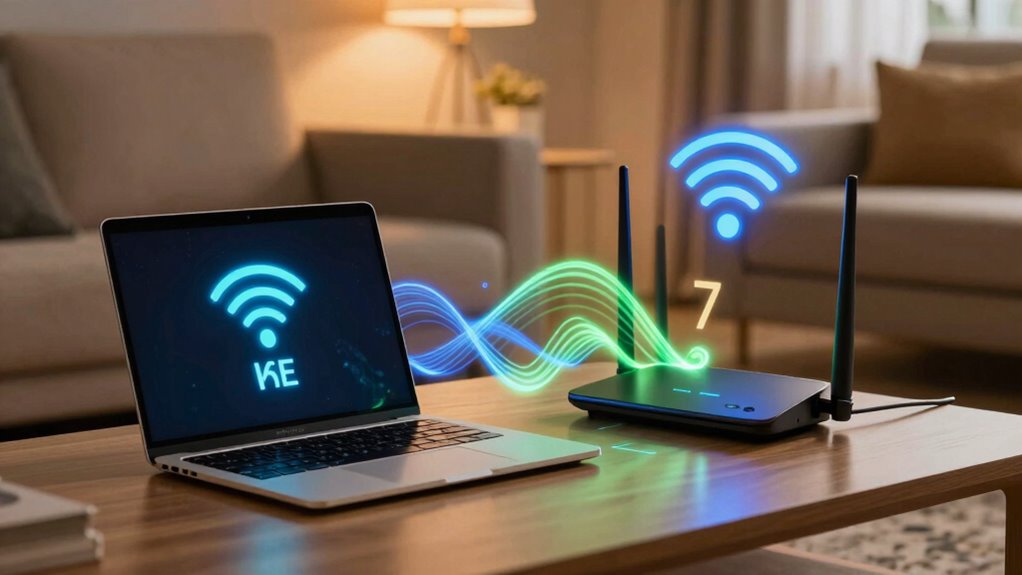
To get the most out of your Wi-Fi 6E or Wi-Fi 7 network, start by optimizing your router’s placement. Position it centrally and elevate it to reduce obstructions, ensuring strong signals across your space. Keep firmware updated to enhance performance and security, bolstering your network security against potential threats. Make sure your devices are compatible with Wi-Fi 6E or Wi-Fi 7 to fully leverage their speeds and features. Upgrading or replacing outdated devices can considerably improve your experience. Additionally, use a secure password and enable WPA3 encryption to protect your network. These steps help maximize your connection’s speed, stability, and security, making sure you get the best possible performance from your advanced Wi-Fi technology.
What’s Next in Wi-Fi Technology After Wi-Fi 7?

As Wi-Fi 7 begins to roll out, researchers and tech companies are already exploring the next frontier: Wi-Fi 8 and beyond. Future applications could include ultra-low latency for virtual reality, seamless integration with smart devices, and enhanced support for IoT ecosystems. Industry implications are significant, potentially transforming how businesses operate, boosting data speeds, and improving network reliability. You might see:
- Even faster, more stable wireless connections
- Greater efficiency for high-demand environments
- Innovations in augmented reality and autonomous systems
These advancements will shape the future of connectivity, pushing the boundaries of what’s possible and setting new standards for industry performance and user experience. As development continues, staying informed helps you prepare for the next leap in Wi-Fi technology.
Frequently Asked Questions
How Does Wi-Fi 6E and Wi-Fi 7 Impact Battery Life of Connected Devices?
Wi-Fi 6E and Wi-Fi 7 can improve battery life by enhancing power efficiency, reducing unnecessary battery consumption on your devices. These technologies optimize data transfer, allowing your devices to stay connected longer without draining power quickly. You’ll notice longer usage times, especially with frequent internet use. So, upgrading to these Wi-Fi standards benefits your connected devices by maintaining strong connections while conserving battery life.
Are There Specific Industries Benefiting Most From Wi-Fi 7’s Advancements?
You’ll find that industries like Smart City initiatives and Healthcare Innovation benefit most from Wi-Fi 7‘s advancements. Smart cities harness faster connections for traffic management and public safety, while healthcare providers rely on seamless data transfer for telemedicine and medical devices. With improved speed, lower latency, and increased capacity, Wi-Fi 7 helps these sectors operate more efficiently, connect more devices, and deliver better services, making a real difference in everyday life.
Will Wi-Fi 7 Be Compatible With Existing Wi-Fi 6E Routers?
Yes, Wi-Fi 7 will be compatible with existing Wi-Fi 6E routers through legacy compatibility features. You may need firmware updates to guarantee seamless integration and peak performance. While Wi-Fi 7 introduces new capabilities, your current Wi-Fi 6E devices will still work, allowing a smooth shift. Keep an eye out for updates from your router manufacturer to enjoy the full benefits of Wi-Fi 7 without replacing all your equipment immediately.
How Do Wi-Fi 6E and Wi-Fi 7 Affect Latency in Real-World Applications?
Like a swift river clearing obstacles, Wi-Fi 6E and Wi-Fi 7 reduce latency in real-world apps. They handle network congestion better and mitigate interference, making your online experience smoother. Wi-Fi 7, with its advanced tech, offers even lower latency than Wi-Fi 6E, so streaming, gaming, and video calls feel almost instantaneous. You’ll notice faster responses and less lag, especially in busy environments with many devices competing for bandwidth.
What Are the Environmental Considerations of Deploying Wi-Fi 7 Infrastructure?
When deploying Wi-Fi 7 infrastructure, you should consider its environmental impact, especially energy consumption and hardware sustainability. Wi-Fi 7 demands more power, which increases energy use, so you need to optimize network efficiency to reduce environmental strain. Additionally, choose durable, recyclable hardware to promote sustainability. By balancing performance with eco-friendly practices, you help minimize environmental impact while supporting advanced connectivity needs.
Conclusion
As you step into the future of wireless technology, remember that upgrading isn’t just about faster speeds—it’s about revealing new possibilities. Wi-Fi 6E and Wi-Fi 7 are the keys to a seamless, secure, and immersive online experience. Don’t wait for the perfect moment; it’s now or never—because the only thing standing between you and the next level of connectivity is your decision. Embrace the change and stay connected to what’s next.
Fall Picks
fall essentials
As an affiliate, we earn on qualifying purchases.