If you’re choosing between LiDAR and camera navigation for a robot vacuum, go for LiDAR if you want precise obstacle detection, efficient cleaning routes, and reliable performance in low-light or dark spaces. LiDAR’s detailed mapping reduces missed spots and keeps furniture safe, plus it’s lower maintenance and more battery-efficient. Camera systems may struggle with clutter or poor lighting, but they can work well in well-lit environments. Keep exploring to see which option suits your cleaning needs best.
Key Takeaways
- LiDAR offers precise, reliable mapping and obstacle detection, especially in low-light or cluttered environments.
- Camera-based vacuums may struggle with poor lighting and environmental changes, affecting navigation accuracy.
- LiDAR provides more consistent coverage and efficiency, extending battery life and reducing missed spots.
- Camera systems often require frequent lens cleaning and adjustments for optimal performance.
- Overall, LiDAR vacuums are more reliable and low-maintenance for diverse home environments.
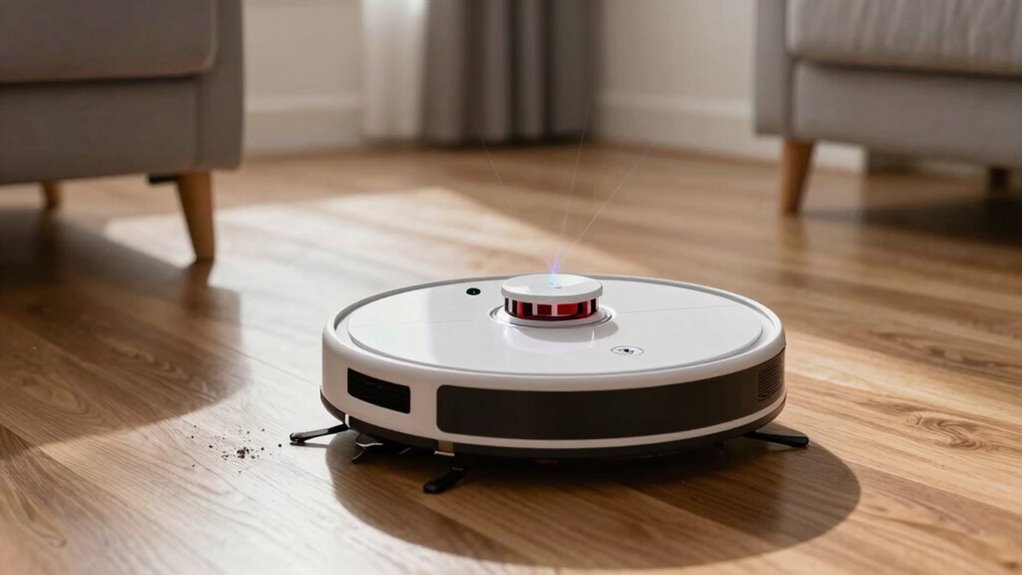
When choosing a robot vacuum, understanding how it navigates your home can make a big difference in performance. Two common navigation systems are LiDAR and camera-based technologies, each with its own strengths and limitations. Your choice impacts obstacle detection, battery efficiency, and overall cleaning effectiveness. LiDAR, short for Light Detection and Ranging, uses laser sensors to create precise 3D maps of your space. This technology offers highly accurate obstacle detection, allowing the vacuum to identify furniture, shoes, or cords even in low-light conditions. Because of this advanced sensing, LiDAR vacuums usually navigate efficiently, covering more area with fewer missed spots. They tend to be better at avoiding obstacles and changing routes seamlessly, which can save battery life by reducing unnecessary movements. When it comes to obstacle detection, LiDAR’s detailed mapping helps prevent collisions and tangles, keeping your furniture safe and reducing the risk of the vacuum getting stuck. Additionally, their efficient navigation contributes to better battery efficiency, allowing for longer cleaning sessions before needing a recharge. Laser sensors play a key role in enhancing the precision of these navigation systems, making LiDAR vacuums particularly effective. Moreover, LiDAR technology generally requires less maintenance compared to camera systems, further enhancing its appeal for consistent performance. In contrast, camera-based navigation relies heavily on visual data, which can be affected by environmental factors such as lighting or clutter, potentially requiring more frequent adjustments or cleaning of the camera lenses.
As an affiliate, we earn on qualifying purchases.
Frequently Asked Questions
Which Navigation Method Is More Affordable for Budget-Conscious Buyers?
If you’re budget-conscious, a camera navigation robot vacuum is more affordable. The price comparison shows that cameras tend to be cheaper than LiDAR systems, making them a better choice for saving money. While LiDAR offers more feature diversity and precision, cameras still provide reliable cleaning and navigation at a lower cost. So, if affordability is your priority, a camera-based vacuum gives you good value without sacrificing essential features.
How Do Lidar and Camera Systems Perform in Low-Light Conditions?
In low-light conditions, LiDAR systems excel with their night vision capabilities, providing reliable obstacle detection even in darkness. They actively use laser pulses to map your space accurately, making them highly effective when lighting is poor. Camera systems, however, struggle without sufficient light, often missing obstacles or misinterpreting visuals. So, if you prioritize obstacle detection at night, LiDAR-based vacuums are your best choice for better performance.
Can These Vacuums Differentiate Between Pets and Humans?
Imagine a vacuum smoothly maneuvering your home, distinguishing a pet from a person. These vacuums use pet detection and human differentiation to avoid accidents and guarantee efficient cleaning. Cameras, with their detailed images, are better at recognizing pets versus humans, while LiDAR primarily maps surroundings. So, if you want precise pet detection, a camera-equipped vacuum is your best choice. You’ll enjoy safer, smarter cleaning with clear differentiation.
What Is the Maintenance Requirement for Each Navigation System?
You’ll find that LiDAR systems require minimal maintenance, mainly sensor calibration every so often to guarantee accurate mapping, and the hardware is quite durable under typical use. Camera navigation systems, on the other hand, need regular cleaning of lenses and sensors to prevent dirt or smudges from impairing performance. Both systems benefit from avoiding exposure to moisture and physical shocks, but overall, LiDAR tends to demand less upkeep.
Are There Any Safety Concerns With Camera-Based Navigation?
Are you worried about your privacy or false obstacle detection? Camera-based navigation can raise safety concerns like privacy issues, since cameras record your home environment, and false obstacle detection, which might cause the vacuum to stop unnecessarily or miss spots. While cameras offer detailed navigation, you should consider these risks and guarantee your device has strong privacy controls to protect your personal space.
Conclusion
When choosing between LiDAR and camera navigation, remember that no solution is one-size-fits-all. LiDAR offers precision and reliability, especially in complex environments, while cameras provide visual details that can improve mapping. Think of it as weighing apples against oranges—consider your specific needs and space. Ultimately, the right choice depends on your home’s layout and your cleaning priorities. Don’t put all your eggs in one basket—opt for the technology that best suits your lifestyle.