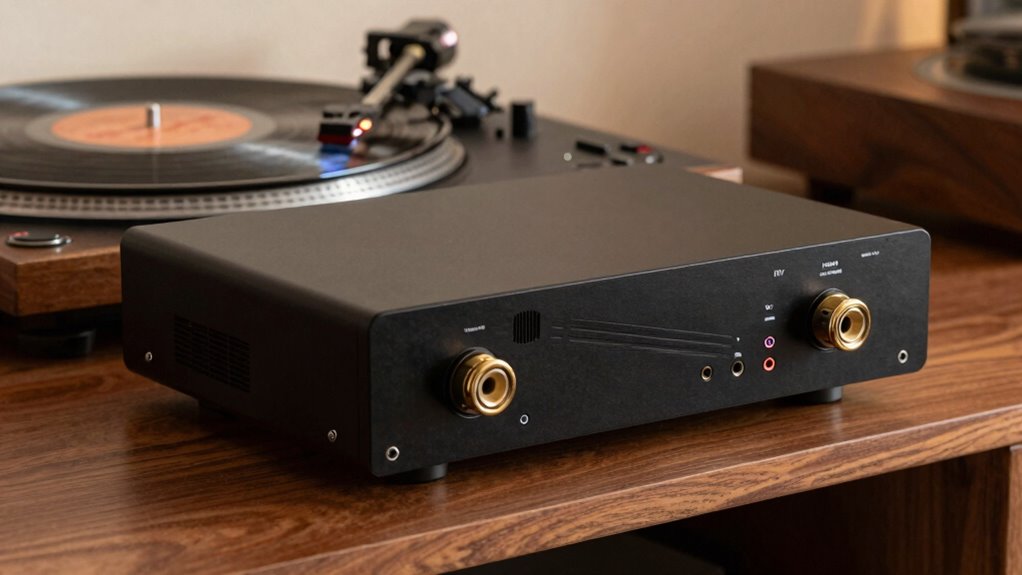

A phono preamp boosts the weak signal from your turntable’s cartridge to make your records sound full and vibrant. You’ll need one if your turntable doesn’t have a built-in preamp, or if you’re using a moving coil cartridge that requires higher gain. If your turntable already has a preamp, or if you connect directly to a receiver with dedicated phono input, you don’t need an external one. Keep exploring to learn more details on when and why you might need a preamp.
Key Takeaways
- Use an external preamp if your turntable lacks a built-in one and your system doesn’t have a dedicated phono input.
- Skip an external preamp when your turntable has a built-in preamp and connects directly to a powered speaker or receiver with phono input.
- External preamps offer customization and higher sound quality, especially for high-end or specialized cartridges.
- For moving magnet cartridges, most preamps work well; for moving coil cartridges, a specialized high-gain preamp may be necessary.
- A high-quality preamp improves sound clarity, reduces noise, and enhances overall vinyl playback experience.
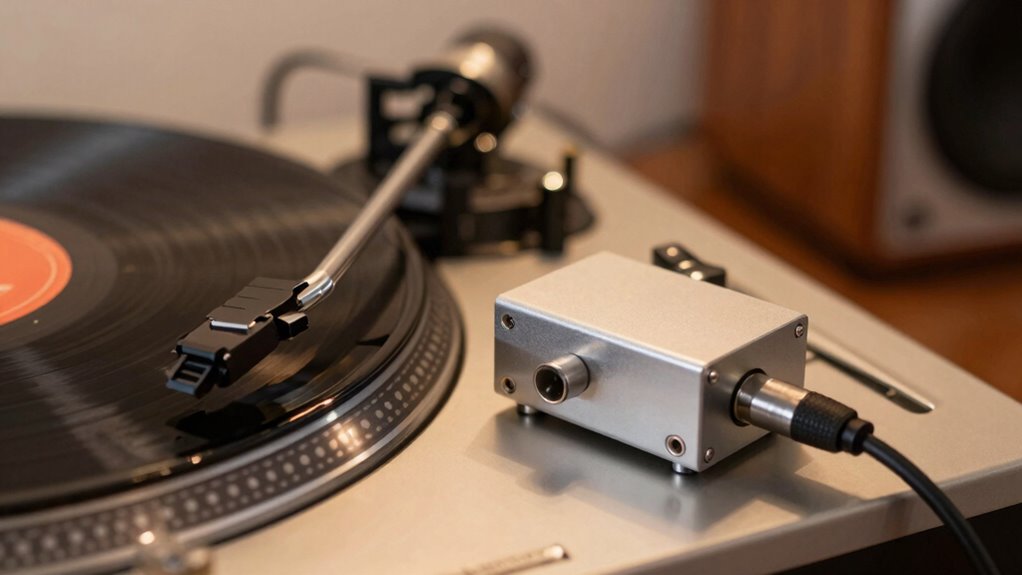
Ever wondered how your vinyl records sound so rich and detailed? The secret often lies in the quality of your audio chain, especially the phono preamp. This small but essential component amplifies the weak signal coming from your turntable’s cartridge to a level that your main amplifier or receiver can handle. Without a proper phono preamp, your records won’t sound as full or vibrant as they should. If you’re serious about vinyl record preservation, understanding when you need a dedicated phono preamp and when you don’t can make a big difference in your listening experience.
Many turntables come with built-in preamps, which means you might not need an external one. However, if your turntable lacks this feature, you’ll want to contemplate adding a dedicated phono preamp. This is especially true if you’re aiming for the best sound quality or if you want to customize your setup. When setting up your turntable, pay attention to turntable setup tips like proper grounding, cartridge alignment, and anti-skate adjustments. These ensure that your records stay in good condition and that your sound remains clear and detailed. A high-quality preamp complements these efforts by accurately boosting the signal without adding noise or distortion. Additionally, understanding the cartridge type can influence your choice of preamp, especially for moving coil (MC) cartridges that often need specialized equipment.
Using a high-quality preamp ensures clear, detailed sound without noise or distortion.
On the other hand, if you’re using a turntable with a built-in preamp, you may not need an external one at all. Many modern turntables are designed to connect directly to powered speakers or receivers equipped with a phono input. In this case, the internal preamp does all the work, and adding another could even degrade your sound quality. So, if your system already has a dedicated phono input, you can skip the external preamp.
Understanding when you need a phono preamp also depends on the cartridge type. Moving magnet (MM) cartridges typically work well with most preamps, but moving coil (MC) cartridges often require a specialized or high-gain preamp to capture their nuances properly. If you’re upgrading your setup or want to maximize vinyl record preservation, investing in a good external phono preamp can help you get the most out of your collection. It ensures your records sound as rich and detailed as they were meant to, and it helps maintain your turntable setup tips for top performance over time. Ultimately, whether you need a preamp hinges on your equipment and your desired listening quality, but knowing the ins and outs allows you to make the best choice for your setup.

Fluance PA10 High Fidelity Phono Preamp (Preamplifier) with RIAA Equalization for MM Turntables/Vinyl Record Players
- High-Fidelity Phono Amplification: Accurately converts turntable signals to line level
- Premium Circuit Design: High-quality components for low noise and distortion
- Enhanced Stereo Soundstage: Clear separation with minimal crosstalk
As an affiliate, we earn on qualifying purchases.
As an affiliate, we earn on qualifying purchases.
Frequently Asked Questions
Can I Use a Phono Preamp With a Bluetooth Speaker?
Yes, you can use a phono preamp with a Bluetooth speaker, but it depends on the speaker’s compatibility. Since most Bluetooth speakers lack wired audio inputs, you’ll need a Bluetooth receiver connected to the preamp, then pair it with your speaker wirelessly. This setup allows you to enjoy high-quality vinyl sound via wireless connectivity, but make certain your speaker supports Bluetooth and can handle the output from the preamp.
How Do I Choose the Right Phono Preamp for My Turntable?
To choose the right phono preamp for your turntable, start by checking your cartridge compatibility; some preamps work better with moving magnet (MM) cartridges, while others suit moving coil (MC) types. Next, consider impedance matching—ensure the preamp’s input impedance aligns with your cartridge’s needs for ideal sound quality. Also, look for features like adjustable gain and EQ options to match your setup and listening preferences.
Do All Record Players Require a Dedicated Preamp?
Not all record players need a dedicated preamp. Many modern turntables have built-in preamps for convenience, but if yours doesn’t, you’ll need an external one for vinyl preservation and ideal sound quality. Check your turntable’s preamp compatibility before connecting to your amplifier or speakers. If it lacks a preamp, adding one guarantees your vinyl sounds clear and maintains its quality over time.
What’s the Difference Between a Built-In and External Phono Preamp?
A built-in preamp is integrated into your turntable, making setup simpler, but it offers less flexibility for cartridge compatibility and gain adjustment. An external preamp provides more control, allowing you to match it precisely to your cartridge’s needs and adjust gain for peak sound. If you want tailored sound quality and compatibility, an external preamp is the better choice; for convenience, a built-in might suffice.
Can I Upgrade My Existing Preamp Easily?
Upgrading your existing preamp can be straightforward if you check preamp compatibility first. Many preamp models allow easy upgrade procedures, such as swapping out internal components or connecting a new external unit. You might worry about complexity, but with a bit of research and proper tools, you can enhance your audio quality without much hassle. Just make certain your new preamp matches your turntable and amplifier setup for seamless integration.
Conclusion
Now that you know the ins and outs of a phono preamp, you’re practically a vinyl whisperer! Whether you need one to release the full magic of your records or can skip it for more modern gear, you’ve got the power to make your sound epic. Don’t settle for dull, lifeless music—embrace the brilliance a quality preamp can bring. Your ears—and your collection—will thank you for it. Get ready to experience music like never before!