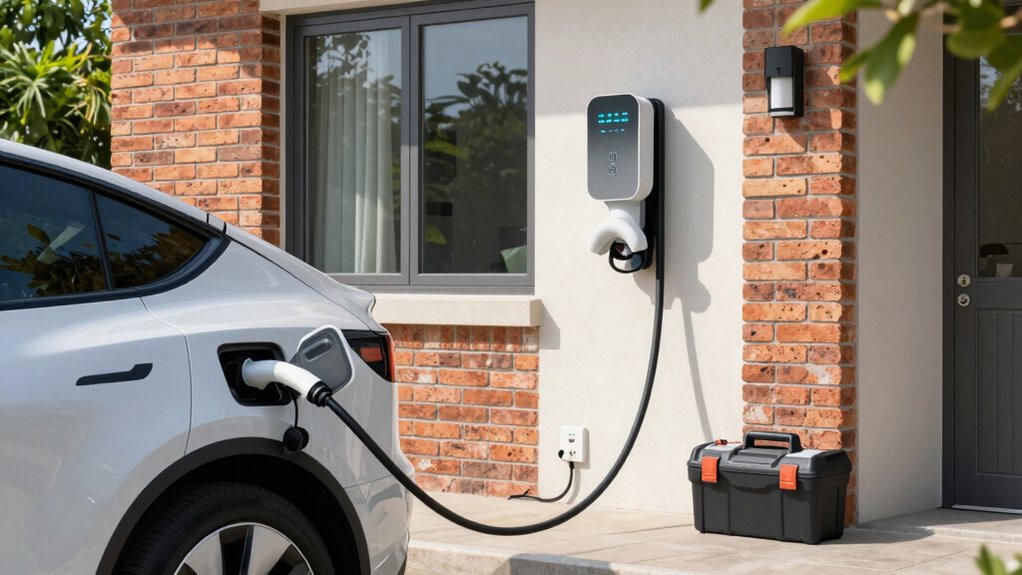

To set up EV home charging, you’ll need to verify your electrical system can handle the charger’s power requirements. A Level 2 charger, for example, often needs a dedicated 240V circuit and a minimum of 30A capacity. You might need to upgrade your electrical panel or wiring for safety and efficiency. Proper installation by a licensed electrician is essential. If you want to learn how to optimize your setup and avoid common pitfalls, keep exploring what’s involved.

Get the latest gadgets delivered free — and shop member deals
- Fast, free delivery on millions of items
- Access to Prime Big Deal Days deals on October 6–7
- Prime Video, Amazon Music and more included
Key Takeaways
- Home EV chargers often require electrical upgrades, like dedicated 240V circuits and higher amperage capacity, for safe and efficient operation.
- Proper wiring, grounding, and adherence to safety codes are essential for installation and long-term reliability.
- Existing electrical panels may need replacement or expansion to support Level 2 charging systems.
- Installation costs vary based on electrical infrastructure, distance, and whether outdoor weatherproof units are necessary.
- Consulting licensed electricians ensures compliance, safety, and optimal placement for home EV charging setups.
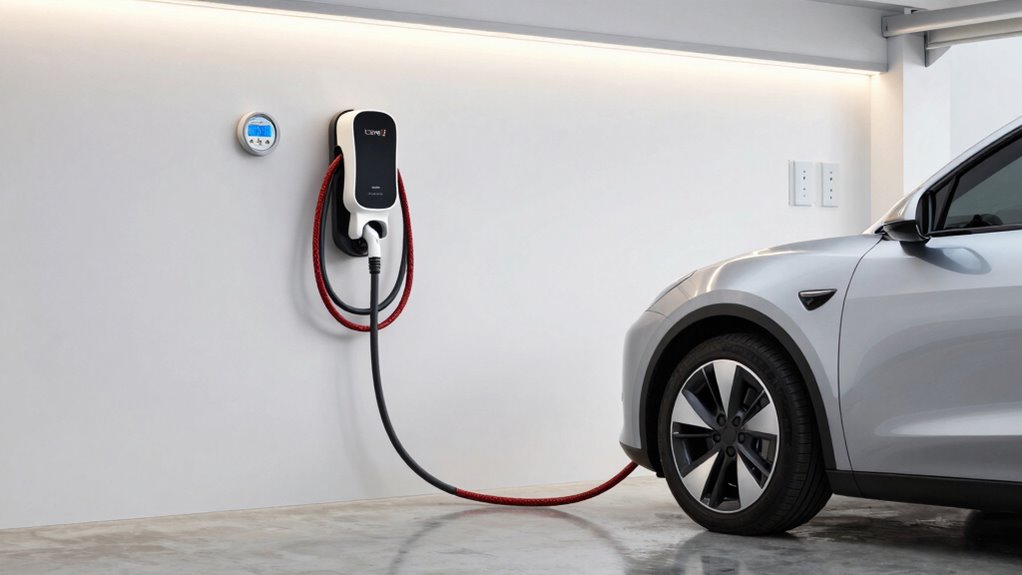
Ever wondered how convenient it can be to charge your electric vehicle right at home? With the right setup, you can say goodbye to long trips to public charging stations and enjoy the ease of plugging in overnight. But before you start, it’s crucial to understand the electrical requirements and installation realities involved in home EV charging. Your vehicle’s battery capacity plays a considerable role here, as it determines how much energy you can store and how long it takes to charge. A larger battery capacity means more driving range, but it also demands a more robust charging system to fill up efficiently. The charging speed, which depends on both the charger and your home’s electrical infrastructure, directly impacts how quickly you can get back on the road. Faster charging options, like Level 2 chargers, can greatly reduce your charging time, but they require specific electrical upgrades to handle higher power loads. Ensuring your electrical system is properly rated for these loads is essential for safe and efficient charging.
Installing an EV charger at home isn’t a simple plug-and-play process. You need to assess your existing electrical system’s capacity. Many homes may require upgrades to their electrical panels to support a dedicated circuit for the charger. This is especially true if you’re opting for a Level 2 charger, which can draw a substantial amount of power—typically 240 volts and a minimum of 30 amps. Without sufficient electrical capacity, your charger may not operate at ideal charging speeds, or worse, could pose safety risks. The installation process involves not only upgrading your electrical panel but also ensuring proper wiring and grounding to meet local safety standards. It’s advisable to hire a licensed electrician who can evaluate your home’s electrical system, install the necessary components, and ensure everything complies with safety codes. Additionally, understanding home electrical capacity can help you plan for future upgrades and avoid potential issues. Being aware of your home’s electrical capacity also allows you to optimize the placement of your charger for convenience and safety.
The reality of installation may also include some logistical considerations. Space for the charger, proximity to your parking spot, and the potential need for outdoor weatherproof units are factors to think about. While some chargers are designed for outdoor use, others may require additional protective measures. Budgeting for both the charger and any necessary electrical upgrades is important, as costs can vary widely depending on your home’s existing infrastructure. Once installed, your home charging station should seamlessly integrate into your routine, allowing you to recharge overnight and start each day with a full battery. Keep in mind, the overall efficiency of your charging setup hinges on understanding your vehicle’s battery capacity and choosing a charger that offers the best charging speed within your home’s electrical capabilities.
As an affiliate, we earn on qualifying purchases.
Frequently Asked Questions
Can I Install an EV Charger Myself Without Professional Help?
You can install an EV charger yourself, but you should prioritize DIY safety and follow electrical codes strictly. If you have experience with electrical work and understand local regulations, it’s possible. However, if you’re unsure about wiring, circuit breakers, or grounding, it’s best to hire a professional. Proper installation guarantees safety, compliance, and efficient charging performance, so don’t risk safety by rushing or skipping important steps.
How Long Does It Take to Install a Home Charging Station?
Installing a home charging station typically takes a few hours to a full day, depending on your home’s electrical wiring and the placement of the station. You need to take into account charging station placement carefully to ensure easy access and safety. If upgrades are necessary, like electrical wiring upgrades, it might extend installation time. Hiring a professional helps streamline the process, ensuring proper wiring and compliance with safety standards.
What Is the Cost Range for Residential EV Charger Installation?
The cost for installing a residential EV charger typically ranges from $500 to $2,500, depending on your charging station placement and electrical setup. To maximize energy consumption optimization, a professional evaluates your home’s electrical system and suggests the best location for efficient charging. Keep in mind that subtle adjustments in placement and wiring can influence overall costs, so working closely with an expert guarantees a smooth, cost-effective installation tailored to your needs.
Are There Specific Permits Required for Installing EV Chargers?
Yes, you typically need permits to install an EV charger. The permitting process involves obtaining approvals from your local regulations, which vary depending on your area. You should check with your city or county building department to understand specific requirements. This guarantees your installation meets safety standards and codes, preventing future issues. Failing to secure proper permits can lead to fines or difficulties when selling your home.
How Do I Ensure My Home’s Electrical System Can Support Fast Charging?
To guarantee your home’s electrical system can support fast charging, start by inspecting your electrical panel’s capacity. You need a circuit capable of handling higher power demands, typically a dedicated circuit for the charger. If your current panel is insufficient, consider upgrading it to increase circuit capacity. Consulting a licensed electrician helps determine whether your system can safely accommodate fast charging and if any upgrades are necessary.
Conclusion
Remember, a stitch in time saves nine. Ensuring you understand the electrical requirements and installation realities of your EV home charger now can save you from costly repairs and frustrations later. Proper planning and professional installation are key to a safe, efficient charging experience. Don’t wait until you’re stranded without power—take proactive steps today. Your EV deserves the best, and with the right setup, you’ll enjoy smooth, reliable charging every time.
Fall Picks
fall essentials
As an affiliate, we earn on qualifying purchases.