
Next-generation batteries are transforming how you power electric cars and devices. Innovations like solid-state technology, lithium-sulfur, and advanced lithium-ion chemistries deliver longer ranges, faster recharge times, and safer operation. Manufacturing breakthroughs and nanotechnology boost performance and reduce costs, making EVs more affordable and portable gadgets more reliable. If you want to explore how these innovations shape the future of energy storage, keep going to learn more about these exciting advances.
Key Takeaways
- Next-generation batteries like solid-state, lithium-sulfur, and lithium-air offer higher energy density, faster charging, and improved safety for electric vehicles and devices.
- Advances in nanotechnology and manufacturing techniques enhance battery performance, durability, and scalability while reducing costs and environmental impact.
- Innovations such as silicon-anodes and AI-optimized electrolytes significantly extend battery lifespan and enable rapid charging capabilities.
- Zinc-manganese oxide grid storage batteries provide cost-effective, safe solutions for large-scale renewable energy storage.
- These technological breakthroughs are driving wider adoption of electric vehicles and longer-lasting portable electronics in the future.

KU XIU Qi2.2 25W Solid-State Magnetic Portable Charger, for Magsafe 10000mAh Battery Pack, Built-in USB-C Cable Fast Charging Stand for iPhone 17/16/15/14/13 Pro Max, Black
[Qi2.2 Certified 25W Ultra-Fast Wireless Charging]: Featuring the latest Qi2.2 wireless charging protocol, the KUXIU wireless power bank…
As an affiliate, we earn on qualifying purchases.
As an affiliate, we earn on qualifying purchases.
Breakthroughs in Lithium-Ion Battery Innovations
Recent breakthroughs in lithium-ion battery innovations are transforming energy storage by substantially increasing capacity, charging speed, and lifespan. You’ll notice higher energy density thanks to advanced cathode materials that pack more power into a lighter package. Machine learning models now help discover new electrode compositions faster, boosting performance. Single-crystal electrodes reduce degradation, allowing batteries to last over 20,000 cycles. Silicon-composite anodes promise ten times the capacity of traditional graphite anodes. Researchers are also exploring lithium-sulfur cathodes, which could offer even higher energy densities. For charging, new electrolytes cut ion resistance, enabling full charges in under 15 minutes. AI-driven thermal management and pulse charging protocols improve efficiency and protect longevity. The development of new manufacturing techniques also plays a crucial role in enabling these advanced materials to be produced at scale. This is essential for battery scalability, ensuring that these innovations can be implemented broadly across various applications. Additionally, dynamic performance optimization techniques are being integrated to adapt charging protocols in real-time based on usage patterns. Data-driven design accelerates the development of better materials and improves overall battery performance. Moreover, sustainable manufacturing practices are increasingly being adopted to reduce environmental impact during production. These innovations are quickly making lithium-ion batteries more powerful, durable, and ready for the challenges of tomorrow.

Lithium-Sulfur Batteries
As an affiliate, we earn on qualifying purchases.
As an affiliate, we earn on qualifying purchases.
The Rise of Solid-State Battery Technologies

Building on the advancements in lithium-ion batteries, solid-state battery technology emerges as a promising next step in energy storage. These batteries replace liquid or gel electrolytes with a solid electrolyte, which acts as an ideal separator that only allows lithium ions to pass.
This design offers higher energy density, improved safety, and faster recharge times. With potential energy levels reaching 250–900 Wh/kg, they can operate effectively between -50 °C and 125 °C. The solid electrolyte materials, like ceramics and polymers, enhance stability and reduce flammability, making them safer.
Already used in medical devices and wearables, they promise longer cycle durability, lower self-discharge, and quicker recharging. Despite current challenges with cost and scalability, ongoing research aims to liberate their full potential for future electric vehicles and energy systems.

FASTPRO 20V Lithium Ion Battery, 1.5-Amp Hour, 1 Pack
20V Lithium Ion Battery, 1.5-Amp Hour, 1 Pack
As an affiliate, we earn on qualifying purchases.
As an affiliate, we earn on qualifying purchases.
Exploring Lithium-Sulfur and Lithium-Air Alternatives

Lithium-sulfur and lithium-air batteries represent promising alternatives to traditional lithium-ion systems, offering the potential for substantially higher energy densities. Lithium-sulfur batteries can store up to twice as much energy per kilogram, boosting your electric vehicle’s range without adding weight. They’re also environmentally friendly, using abundant materials, and safer thanks to solid-state designs that eliminate fire risks. Lithium-sulfur batteries achieved a cell energy density of 380 Wh/kg, with a target of 450 Wh/kg in the near future. Recent innovations have improved conductivity and introduced healable cathodes, addressing past performance issues. Companies like Stellantis are investing in this technology, signaling strong commercial interest. However, challenges remain, such as cathode efficiency, material degradation, and scalability. Understanding the material stability of cathodes is crucial for advancing this technology.] Lithium-air batteries, with their theoretical higher energy densities and use of atmospheric oxygen, could surpass both lithium-ion and lithium-sulfur options—yet, technical hurdles still need overcoming to release their full potential.
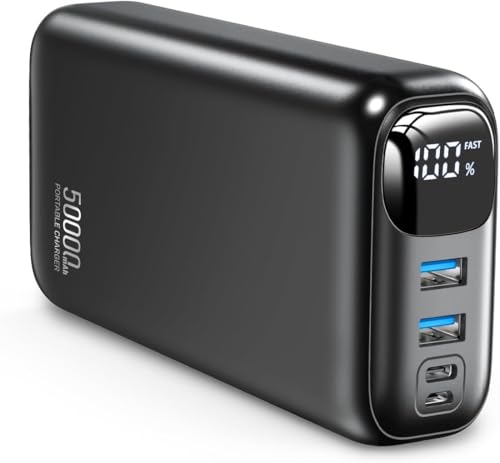
OHOVIV Portable Charger 50000mAh Power Bank – 22.5W Fast Charging External Battery Pack,USB-C Portable Phone Charger for iPhone 17/16/15/14/13 Pro Android Samsung, for Travel Camping Essential
Huge Capacity 50000mAh Portable Charger – The 50000mAh power bank ultra-high massive capacity will keep your phone and…
As an affiliate, we earn on qualifying purchases.
As an affiliate, we earn on qualifying purchases.
Advancements in Zinc-Manganese Oxide Grid Storage

Advancements in zinc-manganese oxide battery technology are enhancing the performance and durability of grid energy storage systems. These batteries use zinc and manganese dioxide to deliver improved stability and efficiency, making them a cost-effective alternative to traditional options. Recent developments focus on stabilizing manganese oxide structures to boost capacity retention, with strategies like electrolyte optimization and crystalline structure improvements. Doping techniques, such as N-doping, increase electronic conductivity and stability. As a result, these batteries can achieve capacity retention of up to 92% over 5,000 cycles. They’re particularly suited for renewable energy storage and grid support because of their medium- and long-duration capabilities. Additionally, the use of aqueous electrolytes makes them safer and more environmentally friendly, although manufacturing scalability remains a challenge. High material abundance also supports large-scale deployment and sustainable development.
Nano-Engineered Architectures for Superior Performance
Nano-engineered architectures are revolutionizing battery performance by optimizing materials at the nanoscale. You benefit from increased energy storage capacity, as nanomaterials improve electrode surface area and enable higher energy densities. Innovation in Battery Composition This approach also significantly enhances safety by employing non-flammable, aqueous saltwater electrolytes that reduce fire hazards. Faster charging times come from enhanced charge transfer kinetics, allowing you to recharge your devices quickly. Durability also improves—nano-engineered batteries last longer by reducing degradation caused by corrosion and heat. Safety features, such as nano-coatings, prevent overheating and thermal runaway, making batteries safer for everyday use. Nano-coatings like atomic layer deposition provide precise protection, extending battery lifespan. Advancements such as nano-spring technology and multi-walled carbon nanotubes absorb strain and stabilize electrodes, enabling higher energy densities and longer cycle life. These innovations also contribute to the cost reduction of battery manufacturing, making clean energy solutions more accessible. Additionally, material costs are lowered through the use of sustainable and abundant nanomaterials, which further reduces environmental impact. These innovations reduce material costs and environmental impact, powering a more efficient, durable future for electric vehicles and portable devices. Incorporating quality assurance practices in manufacturing helps ensure consistent performance and safety standards for nano-engineered batteries.
Revolutionizing Manufacturing and Supply Chains

Revolutionizing manufacturing and supply chains is transforming how next-generation batteries are produced and delivered. You’ll see advanced tooling, like precision machinery, boosting production speed and quality. Improved material handling diminishes waste and streamlines workflows. High-speed assembly systems cut production time, while automated quality control guarantees consistent standards. Additionally, implementing supply chain resilience strategies enhances the ability to adapt to disruptions and maintain steady production. Modular design approaches simplify manufacturing and facilitate upgrades. On the supply side, sustainable sourcing minimizes environmental impacts, and strategic partnerships help stabilize costs and supply. Digital platforms enable real-time supply chain management, increasing transparency and efficiency. Incorporating effective track development techniques ensures that manufacturing processes are optimized for performance and reliability. By integrating advanced analytics, companies can predict potential disruptions before they occur, further strengthening supply chain robustness. Diversifying suppliers reduces risks from geopolitical issues, and closed-loop recycling recovers valuable materials, lowering waste. Emphasizing innovative materials can further boost battery performance and lifespan. Implementing quality assurance practices throughout production ensures consistent product standards and reduces defects. These innovations collectively enhance scalability, reduce costs, and build resilient, eco-friendly supply chains for next-gen batteries.
Impacts on Electric Vehicles and Portable Devices

How will next-generation battery technologies transform electric vehicles and portable devices? You’ll enjoy longer driving ranges, with graphene batteries offering about 500 miles per charge, and BMW’s solid-state batteries reaching 1,200 Wh/L energy density.
Next-generation batteries will deliver longer ranges, faster charging, enhanced safety, and reduced costs for EVs and portable devices.
Charging times will drop dramatically, with some batteries reaching 100 km in just 10 minutes, reducing “range anxiety” and enabling quick recharges similar to gas stations.
Safety improves markedly, thanks to solid electrolytes and stable chemistries like LFP, lowering fire risks.
Costs will decrease as reliance on expensive materials lessens, making EVs and electronics more affordable.
For portable devices, expect longer battery life, faster recharges, lighter weights, and safer operation.
Frequently Asked Questions
What Are the Environmental Impacts of Next-Generation Battery Materials?
You should consider the environmental impacts of next-generation battery materials, as their extraction of lithium, nickel, and cobalt can cause water and land pollution.
Manufacturing consumes significant energy, often from non-renewable sources, and involves hazardous chemicals that threaten ecosystems and health.
Proper recycling and innovative materials like lithium-iron-phosphate help reduce these impacts, but ongoing efforts are essential to minimize environmental harm while improving battery performance.
How Will New Batteries Influence Global Energy Storage Policies?
You might think new batteries won’t change policies, but they actually drive major shifts. They push governments to create stronger incentives, update safety standards, and improve infrastructure.
These innovations help meet renewable energy goals and reduce resource reliance. As a result, you’ll see policies evolve to support faster adoption, recycling, and international cooperation, ensuring energy storage keeps pace with a sustainable, secure, and efficient energy future.
Are There Any Health Risks Associated With Advanced Battery Manufacturing?
You should be aware that advanced battery manufacturing poses health risks due to exposure to toxic materials like lithium, cobalt, and nickel, which can cause respiratory issues and long-term health problems.
Workers face dangers from airborne particulates, hazardous vapors, and potential fires from thermal runaway.
Proper safety measures, such as advanced filtration, automation, and protective gear, are essential to minimize these risks and protect worker health during production.
What Are the Challenges in Recycling Emerging Battery Chemistries?
Like steering through a labyrinth, recycling emerging battery chemistries presents complex challenges. You face diverse designs welded or glued, making disassembly difficult.
Different chemistries, such as LFP or lead-acid, demand tailored methods, while separating materials tests your ingenuity. Economic viability remains a hurdle, especially for low-value chemistries.
Technological innovations like direct recycling offer hope, but scaling up and establishing sustainable processes require collaboration and robust infrastructure to truly open their potential.
How Soon Can These Technologies Be Commercially Available?
You’re wondering when these advanced battery technologies will hit the market. Currently, solid-state batteries are expected to reach mass production by 2026, with Toyota’s new EVs launching then.
As technology improves and costs drop, more innovations will become commercially available shortly after. You can expect significant market growth by 2030, driven by increased demand, regulatory support, and ongoing R&D investments that speed up the deployment of safer, higher-capacity batteries.
Conclusion
As you explore these next-gen battery innovations, think of them as the heartbeat of a new era, propelling electric cars and devices forward like a powerful engine. With breakthroughs ranging from solid-state to nano-engineered designs, you’re on the cusp of a future where batteries are more efficient, durable, and sustainable. These advancements are like the spark that ignites endless possibilities, transforming how you power your world every day.