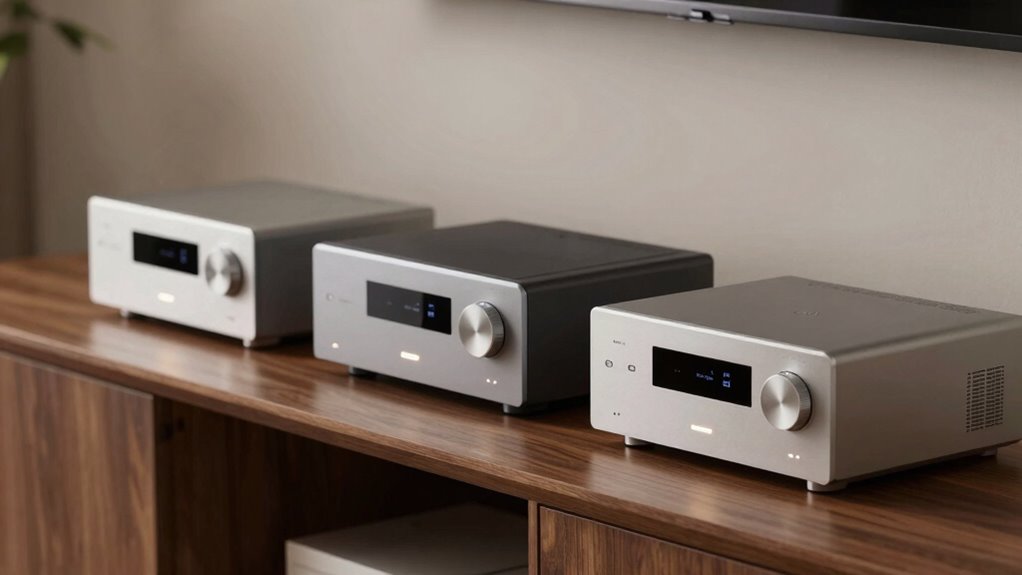

The Bluesound NODE (2024) is my best overall pick for network streamer audio because it offers a flexible way to bring modern streaming and multi-room playback to a stereo system. The WiiM Pro Plus is a strong value choice for listeners who want straightforward streaming, while the WiiM Ultra adds a touchscreen and more hands-on control. The main tradeoffs are how much connectivity and built-in audio processing you need, and whether you want a streamer alone or a model with amplification and extra sources. Some options prioritize simple setup, while others suit more elaborate systems or desktop listening. Read on for the full breakdown and help matching a streamer to your gear.

Get the latest gadgets delivered free with Prime
- Fast, free delivery on millions of items
- Prime Video, Amazon Music and more included
- Member-only deals all year
Complete the kit



Key Takeaways
- The Bluesound NODE (2024) ranks first as the most balanced standalone streamer, while the WiiM Ultra offers a more display-focused alternative.
- The WiiM Pro Plus is the value-oriented pick for adding streaming to an existing stereo without stepping up to a touchscreen model.
- The Eversolo Play CD Edition stands apart by combining streaming, amplification, room correction, and CD playback in one system component.
- The FiiO S15 models are aimed at listeners who want a larger, desktop-friendly digital hub; check the exact version carefully because one listing specifies HDMI ARC.
- Several entries are alternate finishes or closely related models, so the meaningful choices are platform, connection needs, and system role—not the number of listings.
| Bluesound NODE (2024) Hi-Res Wireless Multi-Room Music Streamer, White |  | Best for BluOS Multi-Room Systems | DAC: ESS ES9039Q2M SABRE | Processor: Quad-core 1.8 GHz ARM Cortex A53 | Streaming quality: Up to 24-bit/192 kHz | VIEW ON AMAZON | See Our Full Breakdown |
| Fosi Audio S3 HiFi Music Streamer DAC and Preamp | 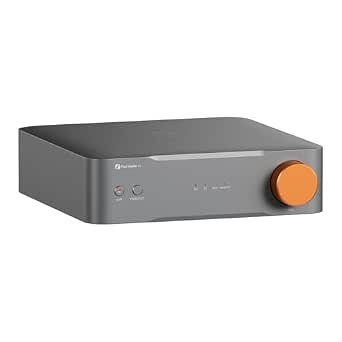 | Best for Balanced-System Connectivity | DAC: AK4493SEQ | Wi-Fi: Dual-band 2.4/5 GHz; Wi-Fi 6 | Bluetooth: 5.3 | VIEW ON AMAZON | See Our Full Breakdown |
| Bluesound NODE (2024) Hi-Res Wireless Multi-Room Music Streamer, Black |  | Best for a Feature-Rich Stereo Upgrade | DAC: ESS ES9039Q2M SABRE | Processor: Quad-core 1.8 GHz ARM Cortex A53 | Audio resolution: Up to 24-bit/192 kHz | VIEW ON AMAZON | See Our Full Breakdown |
| Eversolo Play CD Edition Streaming Amplifier with DAC, 5.5-Inch Touchscreen, and Room Correction | 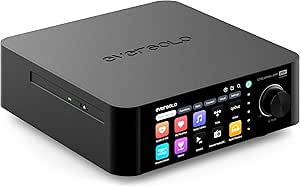 | Best All-in-One System | Edition: CD Edition with built-in CD drive | Amplifier output: 60W × 2 at 8Ω; 110W × 2 at 4Ω | DAC: AK4493SEQ | VIEW ON AMAZON | See Our Full Breakdown |
| WiiM Pro Plus Music Streamer with AirPlay 2 and Spotify Connect |  | Best Value for Existing Stereo Systems | Connectivity: Bluetooth; Ethernet; Wi-Fi | Connectors: USB Type-C; RCA; SPDIF (TOSLINK); coaxial; Ethernet | Audio formats: Up to 24-bit/192 kHz; TIDAL Master with MQA core decoder up to 24-bit/96 kHz | VIEW ON AMAZON | See Our Full Breakdown |
| WiiM Ultra Hi-Res Music Streamer with Touchscreen and ESS DAC, Silver |  | Best All-Rounder for Connected Stereo Systems | DAC: ESS ES9038 Q2M | Display: 3.5-inch touchscreen | Wireless and network: Wi-Fi 6, Bluetooth 5.3, Ethernet | VIEW ON AMAZON | See Our Full Breakdown |
| FiiO S15 HiFi Audio Streamer and Desktop DAC, Silver |  | Best for a Full-Featured Digital Hub | DAC architecture: AK4191 + AK4499EX | Operating system and processor: Android 12; Snapdragon 660 | Display: 7.84-inch, 720p color touchscreen | VIEW ON AMAZON | See Our Full Breakdown |
| WiiM Ultra Hi-Res Music Streamer with Touchscreen and ESS DAC, Space Gray |  | Best for a Modern TV-and-Stereo Setup | DAC: ESS ES9038 Q2M | Display: 3.5-inch touchscreen | Wireless and network: Wi-Fi 6, Bluetooth 5.3, Ethernet | VIEW ON AMAZON | See Our Full Breakdown |
| WiiM Mini Wi-Fi Music Streamer with AirPlay 2 and Hi-Res Audio |  | Best Compact Add-On for AirPlay Households | Connectivity: Wi-Fi, Bluetooth | AirPlay: AirPlay 2 receiver | Maximum audio resolution: 24-bit/192 kHz | VIEW ON AMAZON | See Our Full Breakdown |
| Bluesound NODE NANO Wireless Multi-Room Music Streamer |  | Best Compact BluOS Multiroom Pick | Processor: Quad-core 1.8 GHz ARM Cortex-A53 | DAC: ESS ES9039Q2M SABRE | Maximum audio resolution: 24-bit/192 kHz | VIEW ON AMAZON | See Our Full Breakdown |
| FiiO S15 HiFi Audio Streamer and Desktop DAC with HDMI ARC |  | Best for a Feature-Rich System Hub | DAC: AK4191 + AK4499EX | Operating system: Android 12 | Display: 7.84-inch, 720p color touchscreen | VIEW ON AMAZON | See Our Full Breakdown |
| WiiM Pro Plus Music Streamer for Stereo Systems |  | Best Compact Multiroom Value | Audio resolution: Up to 24-bit/192 kHz | Connectivity: Wi-Fi, Ethernet, Bluetooth | Connectors: USB-C, RCA, optical (TOSLINK), coaxial, Ethernet | VIEW ON AMAZON | See Our Full Breakdown |
| network streamer audio | DAC | Connectivity | Dimensions and weight |
|---|---|---|---|
| Bluesound NODE | ESS ES9039Q2M SABRE | HDMI eARC; analog/digital combo input; subwoofer output | — |
| Fosi Audio S3 HiFi Music Strea | AK4493SEQ | — | — |
| Bluesound NODE | ESS ES9039Q2M SABRE | Ethernet; Wi-Fi; HDMI eARC; optical/coaxial; RCA | — |
| Eversolo Play CD Edition Strea | AK4493SEQ | Bluetooth; Ethernet; Wi-Fi | — |
| WiiM Pro Plus Music Streamer w | — | Bluetooth; Ethernet; Wi-Fi | — |
| WiiM Ultra Hi-Res Music Stream | ESS ES9038 Q2M | — | 8.3 × 7.87 × 2.83 inches; 3.1 pounds |
| FiiO S15 HiFi Audio Streamer a | — | — | 16 × 12 × 4 inches; 6 kg |
| WiiM Ultra Hi-Res Music Stream | ESS ES9038 Q2M | — | 8.3 × 7.87 × 2.83 inches; 3.1 pounds |
| WiiM Mini Wi-Fi Music Streamer | — | Wi-Fi, Bluetooth | 2.7 × 2.7 × 0.9 inches; 1.69 ounces |
| Bluesound NODE NANO Wireless M | ESS ES9039Q2M SABRE | — | 5.53 × 5.6 × 1.4 inches; 1.3 pounds |
| FiiO S15 HiFi Audio Streamer a | AK4191 + AK4499EX | Bluetooth, HDMI, USB, Wi-Fi | 16 × 12 × 4 in; 5 kg |
| WiiM Pro Plus Music Streamer f | — | Wi-Fi, Ethernet, Bluetooth | 5.5 × 5.5 × 1.6 in; 14.1 oz |
More Details on Our Top Picks
Bluesound NODE (2024) Hi-Res Wireless Multi-Room Music Streamer, White
I’d choose the white Bluesound NODE when synchronized listening across several rooms matters as much as sound quality in one stereo setup. Its BluOS multi-room platform can group compatible speakers and create separate zones, while support for up to 24-bit/192 kHz streaming suits listeners with high-resolution libraries. HDMI eARC and Dolby Digital decoding also let it bring TV audio into a stereo system, a useful extra that the simpler WiiM Pro Plus does not match in the same way. The NODE can act as a preamp and headphone amp, but it still needs an amplifier or powered speakers to produce sound. Dirac Live adds room-correction flexibility; the tradeoff is that DSD playback is planned for a future update, not available now. This white version otherwise shares its core role with the black NODE.
Pros:- BluOS supports synchronized multi-room playback and independent zones.
- Streams supported services at up to 24-bit/192 kHz.
- HDMI eARC and Dolby Digital decoding make TV integration practical.
- Can serve as a preamplifier and headphone amplifier.
Cons:- Requires a separate amplifier or powered speakers.
- DSD playback is planned for a future update rather than available now.
Best for: Listeners building a BluOS-based home with multiple compatible rooms, a stereo amplifier or powered speakers, and a TV they want to connect by HDMI eARC.
Not ideal for: Buyers seeking a complete streamer-and-speaker amplifier, or listeners who need DSD playback immediately.
- DAC:ESS ES9039Q2M SABRE
- Processor:Quad-core 1.8 GHz ARM Cortex A53
- Streaming quality:Up to 24-bit/192 kHz
- Multi-room platform:BluOS
- Connectivity:HDMI eARC; analog/digital combo input; subwoofer output
- Audio features:Dolby Digital decoding; Dirac Live room correction
- Color:White
Our verdict“Choose the white NODE if BluOS multi-room control and HDMI eARC matter more than having amplification built in.”
Fosi Audio S3 HiFi Music Streamer DAC and Preamp
The Fosi Audio S3 is the strongest fit here for a system built around balanced XLR connections. It combines streamer, DAC, and preamp duties, then adds Wi-Fi 6, Bluetooth 5.3, and 10-band app EQ for flexible placement and tuning. XLR outputs can suit owners of compatible power amplifiers, while HDMI eARC and a subwoofer output widen its usefulness in a stereo-and-TV setup. Compared with the WiiM Pro Plus, the S3 leans harder into balanced output and hands-on tonal adjustment; the WiiM offers a clearly listed mix of services and broad voice-assistant support. Fosi lists PCM up to 32-bit/768 kHz via LAN, though that ceiling alone says little about the quality of a given stream. Buyers should also account for the firmware upgrade needed for additional features, which makes setup less straightforward than a ready-to-go streamer.
Pros:- Combines streaming, DAC, and preamp functions in one device.
- XLR balanced outputs support compatible audio systems.
- Wi-Fi 6 and Bluetooth 5.3 provide current wireless connectivity.
- App-based 10-band EQ offers useful sound-shaping control.
Cons:- A firmware upgrade is required to access additional features.
- Its listed high-resolution PCM ceiling applies via LAN, so it may not describe every streaming path.
Best for: Stereo owners with an XLR-compatible amplifier or powered system who want a streamer, DAC, preamp, and app-based EQ in one component.
Not ideal for: Buyers who want the simplest out-of-box setup, or systems that cannot use its balanced outputs and do not need its extra connections.
- DAC:AK4493SEQ
- Wi-Fi:Dual-band 2.4/5 GHz; Wi-Fi 6
- Bluetooth:5.3
- Supported PCM via LAN:Up to 32-bit/768 kHz
- Audio outputs:XLR balanced; optical; subwoofer output; HDMI eARC
- Equalizer:10-band app-based EQ
- Weight:0.87 kg
Our verdict“Pick the S3 if balanced XLR connectivity and adjustable EQ are priorities, and you are comfortable handling a firmware update.”
Bluesound NODE (2024) Hi-Res Wireless Multi-Room Music Streamer, Black
The black Bluesound NODE makes sense for a stereo owner who wants one hub for streaming, headphones, TV sound, and room tuning without replacing an existing amplifier. It supports up to 24-bit/192 kHz audio, includes Ethernet and Wi-Fi, and offers optical/coaxial plus RCA connections for fitting into varied systems. HDMI eARC with Dolby Digital decoding gives it a broader TV role than the WiiM Pro Plus, while BluOS makes it the more natural pick for listeners expanding into compatible multi-room audio. That added ecosystem focus may be unnecessary if all you need is a straightforward source for one receiver. Its built-in headphone amplifier and subwoofer output add useful routing options, but it remains a source and preamp, not a speaker amplifier. DSD playback is listed as coming in a future update, so I would not buy it for immediate DSD support.
Pros:- Supports audio up to 24-bit/192 kHz.
- BluOS enables grouped playback and independent multi-room zones.
- HDMI eARC and Dolby Digital decoding support TV integration.
- Includes a headphone amplifier and subwoofer output.
Cons:- Needs a separate amplifier or powered speakers for playback.
- DSD support is listed as coming in a future update.
Best for: Stereo listeners who want high-resolution network streaming, headphone listening, subwoofer integration, and TV audio through an existing amp or powered speakers.
Not ideal for: Anyone who needs a self-powered speaker amplifier or requires DSD playback to be available immediately.
- DAC:ESS ES9039Q2M SABRE
- Processor:Quad-core 1.8 GHz ARM Cortex A53
- Audio resolution:Up to 24-bit/192 kHz
- Connectivity:Ethernet; Wi-Fi; HDMI eARC; optical/coaxial; RCA
- Multi-room platform:BluOS
- Audio features:MQA; Dolby Digital decoding; Dirac Live room correction
- Dimensions:8.7 × 5.7 × 1.8 in
- Weight:2.26 kg
- Color:Black
Our verdict“Choose the black NODE for a versatile streaming hub with TV and headphone duties, provided your system already has amplification.”
Eversolo Play CD Edition Streaming Amplifier with DAC, 5.5-Inch Touchscreen, and Room Correction
Unlike the Bluesound NODE and Fosi S3, the Eversolo Play CD Edition includes speaker amplification, so it can be the center of a compact system rather than another source component. Its built-in CD drive sits alongside streaming, a DAC, room correction, and a 5.5-inch touchscreen; the 60W-per-channel rating at 8 ohms suits appropriately matched bookshelf speakers. Phono input, coaxial and optical inputs, plus USB audio make it unusually accommodating for a single unit. The NODE is a better fit for someone who already owns an amp and wants BluOS multi-room, while Eversolo offers a more self-contained route with CD playback. The tradeoff is output: it is not designed for large floor-standing speakers, and the listed compatibility notes rule out active speakers without coaxial input. Its many roles also mean fewer reasons to keep separate components.
Pros:- Combines streamer, DAC, amplifier, and CD drive.
- Room correction, EQ presets, and multi-room playback are supported.
- Touchscreen and app control offer two ways to manage playback.
- Phono, coaxial, optical, line, and USB inputs support varied sources.
Cons:- Not designed to drive large floor-standing speakers.
- Active speakers without a coaxial input are listed as incompatible.
Best for: Listeners assembling a compact living-room or desktop system who want streaming, CDs, room correction, and amplification for suitable passive speakers.
Not ideal for: Owners of large floor-standing speakers needing more drive, or active-speaker users without a coaxial input.
- Edition:CD Edition with built-in CD drive
- Amplifier output:60W × 2 at 8Ω; 110W × 2 at 4Ω
- DAC:AK4493SEQ
- Display:5.5-inch HD touchscreen
- Connectivity:Bluetooth; Ethernet; Wi-Fi
- Inputs:Coaxial; optical; line; phono (MM/MC); USB OTG
- Outputs:Speaker; subwoofer; coaxial; USB audio
- Supported formats:DSD; FLAC; APE; WAV
- Weight:6.4 lbs
Our verdict“Choose the Eversolo if you want a streamer that can also play CDs and power suitable passive speakers without a separate amplifier.”
WiiM Pro Plus Music Streamer with AirPlay 2 and Spotify Connect
For an existing receiver or stereo amplifier, the WiiM Pro Plus is the straightforward way to add network playback without buying another full-featured component. It supports AirPlay 2, Google Cast, Spotify Connect, TIDAL Connect, and Roon Ready, with analog RCA and digital optical/coaxial outputs to suit different systems. Gapless playback is useful for live albums and continuous mixes, while Ethernet offers a wired option when Wi-Fi is unreliable. Compared with the Bluesound NODE, the WiiM emphasizes broad casting and voice-assistant compatibility rather than BluOS multi-room and HDMI eARC. That makes it a flexible source, but not the stronger choice for a TV-centered setup needing eARC. It receives AirPlay streams but cannot send AirPlay to other devices, and high-resolution playback depends on the service and source material. It also needs an existing amplifier or powered speakers.
Pros:- Supports AirPlay 2, Google Cast, Spotify Connect, TIDAL Connect, and Roon Ready.
- Offers analog RCA, optical, and coaxial connections.
- Gapless playback suits continuous albums and mixes.
- Works with Alexa, Siri, and Google Assistant.
Cons:- Receives AirPlay streams but cannot transmit AirPlay to other devices.
- High-resolution content availability depends on the streaming service.
- Requires an existing amplifier or powered speakers.
Best for: Owners of a stereo receiver or powered speakers who want broad streaming-service support, casting, voice control, and both analog and digital outputs.
Not ideal for: Buyers who need HDMI eARC, AirPlay transmission to other devices, or a complete streamer-and-amplifier system.
- Connectivity:Bluetooth; Ethernet; Wi-Fi
- Connectors:USB Type-C; RCA; SPDIF (TOSLINK); coaxial; Ethernet
- Audio formats:Up to 24-bit/192 kHz; TIDAL Master with MQA core decoder up to 24-bit/96 kHz
- Supported streaming features:Spotify Connect; AirPlay 2 receiver; Google Cast; TIDAL Connect; Roon Ready; NAS; DLNA
- Voice assistants:Alexa; Siri; Google Assistant
- Dimensions:5.5 × 5.5 × 1.6 in
- Weight:14.1 ounces
- Color:Black
Our verdict“Pick the WiiM Pro Plus to add versatile network streaming to an existing stereo, but choose the NODE if HDMI eARC and BluOS are higher priorities.”
WiiM Ultra Hi-Res Music Streamer with Touchscreen and ESS DAC, Silver
I’d choose the WiiM Ultra when a stereo setup needs more than a basic streaming bridge. Its HDMI ARC and phono inputs let it connect a TV or turntable alongside network sources, while the headphone, subwoofer, and digital outputs give it room to fit different systems. The touchscreen is useful for quick on-device control, and room correction and multiroom playback add flexibility beyond what the tiny WiiM Mini offers. The tradeoff is that this is a component for an existing amplifier or powered-speaker system, not a complete listening setup. It also does not support AirPlay, so Apple-focused households may prefer the Mini or Bluesound NODE NANO. I’d pick this silver version for varied sources and connections, not for AirPlay convenience.
Pros:- HDMI ARC and phono inputs accommodate a TV and turntable
- Up to 24-bit/192 kHz playback with an ESS ES9038 Q2M DAC
- Room correction and multiroom audio offer useful system flexibility
- Wide range of analog and digital inputs and outputs
Cons:- Does not support AirPlay
- Requires compatible external speakers or audio equipment
- Its multiple connections may be unnecessary for buyers seeking a simple streaming adapter
Best for: Stereo owners who want one streamer to handle network music, a TV connection, and a turntable or other wired source.
Not ideal for: Apple households that rely on AirPlay, or buyers who need a complete system with built-in speakers or amplification.
- DAC:ESS ES9038 Q2M
- Display:3.5-inch touchscreen
- Wireless and network:Wi-Fi 6, Bluetooth 5.3, Ethernet
- Maximum audio resolution:24-bit/192 kHz
- Inputs:RCA, phono, optical, HDMI ARC
- Outputs:RCA, headphone, coaxial, optical, USB, subwoofer
- Channels:2.1
- Dimensions and weight:8.3 × 7.87 × 2.83 inches; 3.1 pounds
- AirPlay:Not supported
Our verdict“Choose the WiiM Ultra if you want a feature-rich hub for an existing stereo and do not need AirPlay.”
FiiO S15 HiFi Audio Streamer and Desktop DAC, Silver
The FiiO S15 is the choice here for listeners building a source-rich home audio system around a large control screen and extensive connections. Its 7.84-inch touchscreen, Android 12 platform, and support for streaming apps, local storage, and network playback put more control on the component itself than the smaller-screen WiiM Ultra. The connection selection is another step up: XLR, AES, I2S, and HDMI ARC can suit systems that need specialist digital or balanced links. AirPlay and Roon Ready support also widen its role across a home setup. That breadth comes with a substantial footprint: at 16 × 12 × 4 inches and 6 kg, it needs dedicated shelf space. Compared with the compact NODE NANO, the S15 is far less convenient for a simple stereo retrofit; I’d skip it if its extra connections and local playback options would go unused.
Pros:- Large 7.84-inch touchscreen and several control methods
- Supports streaming apps, network playback, and local storage sources
- Extensive connections include XLR, AES, I2S, and HDMI ARC
- AirPlay, Roon Ready, DLNA, and Bluetooth support
Cons:- Large chassis needs substantial shelf space
- Listed weight is 6 kg, making it less convenient to move or reposition
- Its wide feature set may be unnecessary for a straightforward streaming setup
Best for: Hi-fi listeners who want a large touchscreen, local and network playback, and a broad set of digital and analog connections.
Not ideal for: Buyers with limited rack or shelf space, or anyone seeking a compact, uncomplicated streamer for a basic stereo.
- DAC architecture:AK4191 + AK4499EX
- Operating system and processor:Android 12; Snapdragon 660
- Display:7.84-inch, 720p color touchscreen
- Streaming and network playback:Roon Ready, AirPlay, DLNA, Bluetooth, Wi-Fi; UPnP, SMB, WebDAV
- Listed streaming services:Amazon Music, Spotify
- Connections:HDMI with ARC, I2S, AES, coaxial, RCA, optical, XLR, USB
- Controls:Dual knobs, virtual buttons, app, remote
- Dimensions and weight:16 × 12 × 4 inches; 6 kg
Our verdict“Pick the FiiO S15 if your system can use its large screen, local playback, and specialist connections.”
WiiM Ultra Hi-Res Music Streamer with Touchscreen and ESS DAC, Space Gray
The space gray WiiM Ultra makes the most sense when a listener wants to bring TV sound and network music into the same existing audio system. HDMI ARC handles the TV connection, while phono and RCA inputs make it more versatile than a streaming-only box; its subwoofer output and room correction can also help shape a 2.1 setup. It shares the silver Ultra’s ESS DAC, touchscreen, hi-res capability, and AirPlay limitation, so the choice between those two versions is about finish rather than function. Against the WiiM Mini, this model takes up more space but offers a far broader set of inputs and outputs. I wouldn’t choose it for AirPlay or a minimal setup: the Mini is the simpler fit for basic streaming, and the Ultra still needs external audio equipment.
Pros:- HDMI ARC makes it suitable for connecting a TV to a stereo system
- Phono, RCA, optical, and coaxial connections support varied sources
- Room correction, customizable EQ, and multiroom audio add setup flexibility
- Wi-Fi 6, Bluetooth 5.3, and playback up to 24-bit/192 kHz
Cons:- Cannot act as an AirPlay receiver
- Requires external speakers or audio equipment for playback
- Offers more connections and controls than a basic streaming retrofit may need
Best for: Listeners connecting a TV and music sources to a stereo or 2.1 system who want room correction and hands-on controls.
Not ideal for: AirPlay-dependent households, or buyers who only need to add Wi-Fi streaming to a stereo with minimal setup.
- DAC:ESS ES9038 Q2M
- Display:3.5-inch touchscreen
- Wireless and network:Wi-Fi 6, Bluetooth 5.3, Ethernet
- Maximum audio resolution:24-bit/192 kHz
- Inputs:USB, optical, coaxial, RCA, phono, HDMI ARC
- Outputs:Headphone, subwoofer, RCA, optical, coaxial, USB
- Audio channels:2.1
- Dimensions and weight:8.3 × 7.87 × 2.83 inches; 3.1 pounds
- AirPlay:Not supported
Our verdict“Choose this space gray Ultra for a TV-connected stereo with extra sources, provided you do not rely on AirPlay.”
WiiM Mini Wi-Fi Music Streamer with AirPlay 2 and Hi-Res Audio
The WiiM Mini is the straightforward pick when the goal is to add wireless music to a stereo without making room for a full-size component. At 2.7 inches square, it is much easier to place than the WiiM Ultra or FiiO S15, and its AirPlay 2 receiver support suits homes that send audio from Apple devices. Spotify Connect, TIDAL Connect, voice control, and analog or optical output cover common ways to feed an existing system. It also supports gapless playback, useful for albums that should play without breaks. The compromise is a narrower role: unlike the Ultra, it lacks HDMI ARC, phono input, a touchscreen, and the same range of system connections. It receives AirPlay but cannot transmit it, and it does not support Google Cast. I’d choose it for simple stereo streaming, not as a system hub.
Pros:- Very compact body fits easily near an existing stereo
- Receives AirPlay 2 streams and supports Alexa and Siri voice control
- Works with Spotify Connect, TIDAL Connect, and Amazon Music Cast
- Analog and optical outputs support different stereo connections
Cons:- Receives AirPlay but cannot transmit it to other devices
- Does not support Google Cast
- Lacks the HDMI ARC, phono input, and broader connectivity of the WiiM Ultra
Best for: Apple-device owners who want a very small, uncomplicated way to stream music to an existing stereo.
Not ideal for: Buyers who need HDMI ARC, phono input, Google Cast, AirPlay transmission, or the broader connections of a full-size streamer.
- Connectivity:Wi-Fi, Bluetooth
- AirPlay:AirPlay 2 receiver
- Maximum audio resolution:24-bit/192 kHz
- Outputs:Analog, digital
- Connectors:USB Type-C, auxiliary, SPDIF (TOSLINK)
- Voice assistants:Alexa, Siri
- Dimensions and weight:2.7 × 2.7 × 0.9 inches; 1.69 ounces
- Channels:2
Our verdict“Choose the WiiM Mini to add compact, AirPlay-friendly streaming to an existing stereo without extra system features.”
Bluesound NODE NANO Wireless Multi-Room Music Streamer
The Bluesound NODE NANO is a compact route into BluOS multiroom playback for listeners who want a small streamer with both familiar app-based options and stereo connections. It supports AirPlay 2, Spotify Connect, and Tidal Connect, giving it broader named streaming compatibility than the WiiM Ultra, which does not support AirPlay. Its ESS SABRE DAC handles playback up to 24-bit/192 kHz, while Ethernet and dual-band Wi-Fi offer wired and wireless network choices. Bluetooth is two-way and supports aptX Adaptive, adding a way to send or receive audio. Compared with the WiiM Mini, the NODE NANO brings BluOS and a larger set of wired connections, but it is less appealing if Google Cast matters or if you need the Ultra’s HDMI ARC and phono inputs. DSD playback is listed for a future update, so I wouldn’t buy it expecting that feature now.
Pros:- BluOS supports multiroom playback
- AirPlay 2, Spotify Connect, and Tidal Connect are supported
- ESS SABRE DAC supports playback up to 24-bit/192 kHz
- Includes Ethernet, Wi-Fi, Bluetooth, and several wired audio connections
Cons:- DSD playback is listed as available through a future update
- Does not list HDMI ARC or phono input, unlike the WiiM Ultra
- Its BluOS and connection set may be unnecessary for buyers seeking a basic streaming adapter
Best for: Listeners who want a compact stereo streamer with BluOS multiroom playback, AirPlay 2, and both wired and wireless connections.
Not ideal for: Buyers who need HDMI ARC, phono input, Google Cast, or DSD playback as an available feature now.
- Processor:Quad-core 1.8 GHz ARM Cortex-A53
- DAC:ESS ES9039Q2M SABRE
- Maximum audio resolution:24-bit/192 kHz
- Connections:Stereo RCA, optical, coaxial, USB
- Network and Bluetooth:Dual-band Wi-Fi, Gigabit Ethernet, two-way aptX Adaptive Bluetooth
- Streaming features:AirPlay 2, Spotify Connect, Tidal Connect, MQA, local server mode
- Multiroom platform:BluOS
- Dimensions and weight:5.53 × 5.6 × 1.4 inches; 1.3 pounds
- Included items:International plug adapter, Ethernet cable, stereo RCA cable, USB power adapter, USB-C power cable
Our verdict“Pick the NODE NANO for a compact BluOS system with AirPlay 2, but look elsewhere for HDMI ARC or phono input.”
FiiO S15 HiFi Audio Streamer and Desktop DAC with HDMI ARC
The FiiO S15 makes the most sense when a network streamer needs to anchor a full-size system, not just add wireless playback. Its 7.84-inch touchscreen, Android 12 platform, and support for Roon Ready, AirPlay, DLNA, and major streaming apps give it more direct control and source flexibility than the compact WiiM Pro Plus. Local drives, NAS, and cloud sources also suit listeners with libraries beyond streaming subscriptions.
Its AK4191 and AK4499EX DAC architecture is paired with an unusually broad set of outputs, including XLR, RCA, HDMI ARC, I2S, and AES, so it can fit into varied component chains. That range comes with a real footprint: at 16 × 12 × 4 inches and 5 kg, it takes substantial shelf space. Buyers seeking a small, simple streamer should choose the WiiM Pro Plus instead; the S15 earns its place for those who want a more capable control and connection center.
Pros:- Large 7.84-inch touchscreen provides direct access to playback and system controls.
- Supports Roon Ready, AirPlay, DLNA, streaming apps, and local or network library sources.
- Broad output selection, including balanced XLR, RCA, HDMI ARC, I2S, AES, coaxial, and optical.
- Multiple control methods include dual knobs, touchscreen buttons, Bluetooth remote, and app control.
Cons:- The 16 × 12 × 4-inch chassis demands considerably more shelf space than a WiiM Pro Plus.
- At 5 kg, it is better suited to a stationary system than frequent relocation.
- Its extensive connections and Android interface may be excessive for listeners who only need basic streaming.
Best for: Listeners building a component-based stereo system who want a large onboard display, local and network library playback, and multiple digital and analog connection options.
Not ideal for: Buyers with limited shelf space or anyone seeking a lightweight, plug-in-and-forget streamer; the S15 is large and its many interfaces may be unnecessary for a basic setup.
- DAC:AK4191 + AK4499EX
- Operating system:Android 12
- Display:7.84-inch, 720p color touchscreen
- Streaming support:Roon Ready, AirPlay, DLNA, Bluetooth
- Audio interfaces:I2S, AES, coaxial, HDMI ARC, RCA, optical, XLR
- Playback sources:Built-in storage, TF cards, USB drives, external hard drives, NAS, LAN, cloud servers
- Connectivity:Bluetooth, HDMI, USB, Wi-Fi
- Dimensions and weight:16 × 12 × 4 in; 5 kg
Our verdict“Choose the FiiO S15 if you want a touchscreen-equipped streamer and DAC to serve as the flexible hub of a substantial audio system.”
WiiM Pro Plus Music Streamer for Stereo Systems
The WiiM Pro Plus is a practical way to add network playback to an existing stereo without giving up much space. Its Wi-Fi, Ethernet, and Bluetooth options cover different connection setups, while AirPlay 2, Google Cast, Spotify Connect, and TIDAL Connect make it easy to send music from several common services and devices. Compared with the far larger FiiO S15, this 5.5-inch-wide unit is a simpler fit for a crowded media shelf.
It also supports 24-bit/192 kHz audio, gapless playback, and synchronized multiroom listening, with RCA, optical, and coaxial outputs for connecting to an amplifier or DAC. The tradeoff is that AirPlay works as a receiver only: it cannot send audio onward to other AirPlay devices. High-resolution playback also depends on the service and the content available there. Pick this over the S15 for compact, straightforward streaming; choose the FiiO when you need a screen, broader system connections, and extensive local-source support.
Pros:- Compact 5.5-inch-square body fits easily on crowded shelves.
- Supports AirPlay 2, Google Cast, Spotify Connect, TIDAL Connect, and multiroom playback.
- Offers RCA, optical, and coaxial outputs alongside Wi-Fi, Ethernet, and Bluetooth.
- Supports audio up to 24-bit/192 kHz and gapless playback.
Cons:- AirPlay is receiver-only, so it cannot transmit music to other AirPlay devices.
- High-resolution playback depends on the service and whether a given track is available in that format.
- Its 512 MB memory storage is limited compared with a streamer built around extensive local-library storage.
Best for: Stereo owners who want a compact streamer for common streaming services, multiroom playback, and flexible wired or wireless connections.
Not ideal for: Buyers who need a streamer to transmit AirPlay audio to other devices, or who want a large onboard screen and the broader component connections of the FiiO S15.
- Audio resolution:Up to 24-bit/192 kHz
- Connectivity:Wi-Fi, Ethernet, Bluetooth
- Connectors:USB-C, RCA, optical (TOSLINK), coaxial, Ethernet
- Streaming and casting:AirPlay 2 receiver, Google Cast, Spotify Connect, TIDAL Connect
- Multiroom playback:Supported
- Voice assistants:Amazon Alexa, Google Assistant, Siri
- Memory storage capacity:512 MB
- Dimensions and weight:5.5 × 5.5 × 1.6 in; 14.1 oz
Our verdict“Choose the WiiM Pro Plus for compact, service-rich streaming and multiroom playback, but skip it if AirPlay transmission or a touchscreen is a requirement.”

How We Picked
I ranked these products by how well they solve the central network-streamer job: bringing online music into a home or desktop audio system with practical control and a useful set of connections. I weighed streaming and multi-room flexibility, setup demands, display and app usability, DAC and preamp functions, and how easily each option fits into a system the buyer already owns. A feature mattered most when it changed the listening setup or reduced the need for extra components.
The ranking favors versatile streamers that suit a broad range of existing stereo systems, followed by more specialized picks for budget-conscious setups, touchscreen control, desktop use, and all-in-one playback. Models that add an amplifier, CD playback, or room correction can replace more equipment, but they are not automatically a better fit for someone who already owns an amplifier. Duplicate color listings are treated as the same core product, and the FiiO S15 listings are distinguished only where their stated connection details differ.
| network streamer audio | DAC | Connectivity |
|---|---|---|
| Bluesound NODE | ESS ES9039Q2M SABRE | HDMI eARC; analog/digital combo input; subwoofer output |
| Fosi Audio S3 HiFi Music Strea | AK4493SEQ | — |
| Bluesound NODE | ESS ES9039Q2M SABRE | Ethernet; Wi-Fi; HDMI eARC; optical/coaxial; RCA |
| Eversolo Play CD Edition Strea | AK4493SEQ | Bluetooth; Ethernet; Wi-Fi |
| WiiM Pro Plus Music Streamer w | — | Bluetooth; Ethernet; Wi-Fi |
| WiiM Ultra Hi-Res Music Stream | ESS ES9038 Q2M | — |
| FiiO S15 HiFi Audio Streamer a | — | — |
| WiiM Ultra Hi-Res Music Stream | ESS ES9038 Q2M | — |
| WiiM Mini Wi-Fi Music Streamer | — | Wi-Fi, Bluetooth |
| Bluesound NODE NANO Wireless M | ESS ES9039Q2M SABRE | — |
| FiiO S15 HiFi Audio Streamer a | AK4191 + AK4499EX | Bluetooth, HDMI, USB, Wi-Fi |
| WiiM Pro Plus Music Streamer f | — | Wi-Fi, Ethernet, Bluetooth |
Factors to Consider When Choosing Network Streamer Audio
Before choosing a network streamer, I would start with the system it needs to join—not the longest feature list. A streamer can act as a simple source, a DAC and preamp, or part of a larger all-in-one setup, and those roles affect both connections and day-to-day use.
Match the streamer to your existing stereo
First identify what your amplifier or active speakers accept: analog RCA, optical, coaxial, USB, or another digital input. If your system already has a capable DAC, a streamer with a reliable digital output may be all you need. If the streamer will connect straight to powered speakers or a power amplifier, its analog output and volume control take on greater importance. Buyers often pay for a built-in DAC they will bypass, or discover their preferred connection is missing. Draw a simple signal path from the streamer to the speakers before comparing features. That step can matter more than choosing between small differences in streaming specifications.
Decide whether you need a streamer, preamp, or amplifier
Network streamers occupy different places in an audio system, and the labels can obscure what each component actually replaces. A basic streamer supplies music to a receiver or integrated amplifier; a streamer with preamp functions may control volume and feed powered speakers or a power amp. An all-in-one streaming amplifier can also drive passive speakers, reducing box count and cable clutter. The tradeoff is that an all-in-one choice can be less useful if you already own good amplification. Check whether speaker outputs are part of the model rather than assuming every touchscreen streamer can power speakers. Paying for functions you will not use rarely improves the system’s fit.
Choose control that suits how you listen
App-based control keeps the front panel simple, while a built-in screen can make browsing, playback checks, and input selection easier from the listening room. A screen does not necessarily make a device easier for every household: listeners who mostly start music from a phone may prefer fewer controls and a smaller component. Think about who will use the system and whether it needs to work without reaching for a phone. Also check which services and casting methods matter to you, since platform support can shape daily convenience more than the DAC name. Avoid choosing solely by a feature label; confirm that your usual listening route is supported.
Plan for multi-room audio and household devices
Multi-room playback is useful when the same music should follow listeners between rooms, but compatibility across brands and platforms is not guaranteed. If you already own wireless speakers, check whether the streamer can join their ecosystem or whether it will operate as a separate zone. AirPlay, Spotify Connect, and a manufacturer’s own multi-room system offer different paths from phone to playback, so prioritize the ones your household actually uses. A mixed-brand setup can still work well for single-room listening even when synchronized playback is limited. Buyers sometimes confuse network access with universal multi-room support. Confirm grouping behavior before building a system around it.
Spend on useful connections, not unused extras
Extra inputs can make a streamer the center of a system, especially if you want to connect a television, disc player, or other digital source. HDMI ARC can simplify TV audio, while USB or other digital connections may suit computer or local-library playback. Each added connection is valuable only if it solves a real routing problem; otherwise, it adds complexity without changing how you listen. Check the precise model variant and its published connections, since similarly named listings can differ. Leave room for future sources if you expect your system to grow, but avoid paying for ports that have no likely role. A short connection checklist prevents a mismatch after purchase.
Think about room correction and source flexibility
Room correction can help address the way speaker placement and room acoustics affect playback, but it does not replace careful positioning or fix every room problem. It is most appealing when the streamer also handles other jobs and you want fewer separate components. CD playback, local music libraries, and external digital sources matter to listeners who want more than streaming services. Each source adds setup and control considerations, so decide whether a single device should manage them all or whether dedicated components make more sense. A simpler streamer can be the cleaner choice in a system that already has a disc player and room tools. Pay extra for these features when they replace equipment or solve a specific listening need.
Frequently Asked Questions
Can I use a network streamer with an older stereo receiver?
Usually, yes, if the receiver has an input that matches the streamer’s output. Many setups use an analog line input, while a receiver with digital inputs may accept a digital signal from the streamer instead. Check whether the receiver’s selected input bypasses or uses its own DAC, since that affects which conversion stage handles the music. Also confirm that the streamer can connect to your home network in the way you need. An older receiver does not need built-in streaming to benefit from a separate source component.
Should I choose a streamer with a built-in DAC?
A built-in DAC is useful when you plan to connect the streamer to an amplifier or powered speakers using analog cables. If your receiver or external DAC already handles digital conversion, a digital output may be the more relevant feature. The DAC’s presence alone does not tell you how the complete system will sound; the output stage, downstream equipment, and room all play a part. Choose based on the connections you will use, not on a standalone chip specification. If you are unsure, map the signal path before buying.
Is a touchscreen streamer worth choosing over app-only control?
A touchscreen can make a streamer easier to operate from the stereo rack, especially when several people share the system or you often change inputs. It may be less useful if you select music from a phone and rarely touch the component. Screens also take more space and can add cost without changing the streaming services you can access. Consider whether you want playback information at a glance or mainly need a dependable source. For a compact, low-interaction setup, app-first control may be the simpler match.
Will one network streamer work with every multi-room speaker brand?
No; multi-room grouping depends on the streamer and speaker platforms supporting a shared system or protocol. A device may play music over Wi-Fi and still fail to synchronize with speakers from another brand. Before buying, check the exact grouping support for the speakers and streaming methods already in your home. If you only need music in one room, cross-brand grouping matters much less. For whole-home playback, ecosystem compatibility should be a deciding factor rather than an assumed feature.
When should I choose an all-in-one streaming amplifier instead of a separate streamer?
An all-in-one unit makes sense when you need amplification as well as streaming and want to reduce components, wiring, and remote controls. It is less compelling if you already own an amplifier that suits your speakers, since you may be paying for a section you will not use. Check that its power and speaker connections fit your speakers and room, not just that it includes a streamer. Separate components can also make later upgrades more flexible. Compare the full system you would assemble in each case, rather than comparing streamer features alone.
Conclusion
For most existing stereo systems, I recommend the Bluesound NODE (2024) as best overall for its balance of streaming flexibility and system fit. Choose the WiiM Pro Plus as best value if you want a capable, straightforward source without prioritizing a touchscreen. The Eversolo Play CD Edition is my best premium-style all-in-one pick for buyers who want amplification, CD playback, and room correction in one component. For a more approachable display-led option, the WiiM Ultra is best for beginners who want visible controls, while the FiiO S15 with HDMI ARC suits a specific need: bringing TV audio into a desktop-oriented digital setup. If compact size or a basic wireless link matters most, compare the WiiM Mini and Bluesound NODE NANO against your required outputs before choosing. Match the device to your connections and listening habits, and the right pick becomes clearer than any feature list.