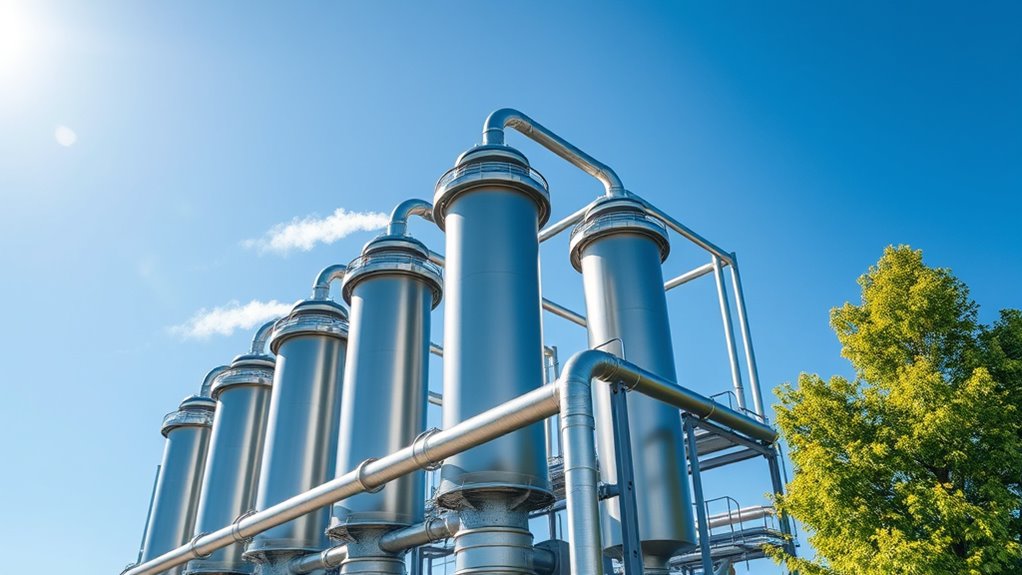

Carbon capture technologies are key to reducing industrial greenhouse gases by capturing CO₂ at source, such as steel or cement plants, and transforming or storing it safely. Governments support these efforts through policies, incentives, and market mechanisms that lower costs and encourage innovation. By retrofitting existing facilities or designing new ones, industries can reuse captured CO₂ in products, helping build a sustainable future. Keep exploring to discover how these solutions are shaping climate progress.
Key Takeaways
- Carbon capture technologies target large industrial emission sources, reducing greenhouse gases before they reach the atmosphere.
- Policy incentives like tax credits and subsidies promote adoption and help offset high installation costs.
- Innovations enable retrofit of existing plants and reuse of captured CO2 in products, supporting a circular economy.
- Industry-policy collaboration accelerates research, reduces costs through economies of scale, and fosters sustainable practices.
- Combining technological advances with supportive policies advances climate goals and promotes responsible industrial transformation.
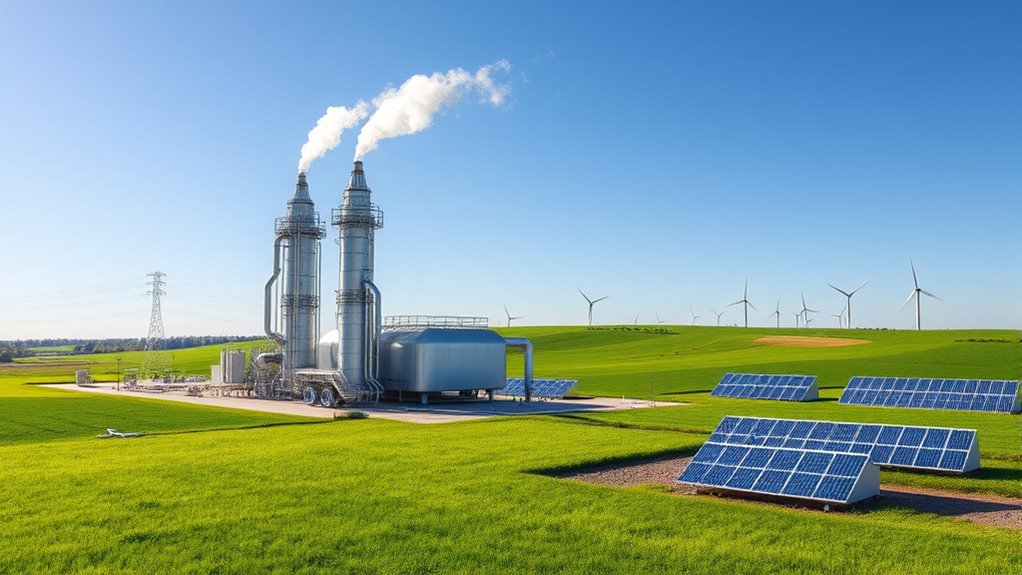
Have you ever wondered how we can reduce the greenhouse gases driving climate change? One promising approach involves carbon capture technologies that target emissions directly at their source. These systems are increasingly integrated into industrial applications, where large quantities of CO2 are produced, such as in cement manufacturing, steel production, and chemical plants. By capturing carbon dioxide before it’s released into the atmosphere, we can substantially cut down on the greenhouse effect. This isn’t just about technological innovation; it’s also about creating supportive policies that encourage widespread adoption.
Carbon capture technology at industrial sources reduces emissions and supports climate solutions.
Policy incentives play an essential role in making carbon capture financially viable for industries. Governments worldwide are starting to recognize the importance of these incentives, offering tax credits, grants, and subsidies to companies that implement carbon capture systems. For example, some regions provide carbon pricing or cap-and-trade programs that make emitting CO2 more expensive, pushing industries to adopt cleaner methods. These policy tools help offset the high upfront costs of installing capture equipment and demonstrate a clear commitment to combating climate change. When industries see tangible benefits—whether through financial savings or regulatory compliance—they’re more likely to invest in these technologies.
Incorporating carbon capture into industrial processes isn’t just about compliance; it’s about transformation. Industries are exploring ways to retrofit existing plants with capture systems or design new facilities optimized for efficiency and sustainability. These innovations can lead to a more circular approach where captured CO2 isn’t simply stored but repurposed into useful products like fuels, plastics, or building materials. Such applications not only reduce emissions but also create economic opportunities, encouraging industries to view carbon capture as a strategic asset rather than an expense. Additionally, advancements in capture technology efficiency are making these systems more effective and affordable over time.
The collaboration between policymakers and industry leaders is essential. When policies are clear, consistent, and provide long-term support, industries gain confidence to invest in advanced capture technologies. This partnership can accelerate research, lower costs through economies of scale, and foster innovation. As technology advances and economies of scale kick in, capturing carbon becomes more affordable and accessible for a broader range of industries.
Ultimately, reducing greenhouse gases involves a combination of technological advances and supportive policy frameworks. By focusing on industrial applications and leveraging policy incentives, we can make considerable progress toward a sustainable future. It’s a shared effort—your role, whether as a consumer, advocate, or policymaker, can influence the momentum toward cleaner, more responsible industry practices that help combat climate change.

Carbon Capture
As an affiliate, we earn on qualifying purchases.
As an affiliate, we earn on qualifying purchases.
Frequently Asked Questions
What Are the Economic Impacts of Large-Scale Carbon Capture Deployment?
You’ll see that large-scale carbon capture deployment influences economic incentives and market dynamics considerably. It creates new opportunities for investments and job growth in clean tech industries, encouraging innovation. However, it also requires substantial upfront costs, which can impact market stability. Overall, if managed well, it can stimulate economic development while helping meet climate goals, balancing benefits with potential financial risks.
How Does Carbon Storage Ensure Long-Term Safety and Security?
You can trust that carbon storage remains safe long-term by following strict monitoring protocols and ensuring geological stability. Continuous monitoring detects any potential leaks early, while extensive geological assessments confirm the integrity of the storage site. You should also implement regular inspections and use advanced technology to track stored CO2. This exhaustive approach guarantees the security of stored carbon, protecting the environment and supporting climate solutions.
What Are the Energy Requirements for Different Capture Methods?
You’ll find that the energy requirements vary among capture methods. Post-combustion capture needs significant energy, impacting efficiency, but recent technological advancements are improving energy efficiency. Pre-combustion and oxy-fuel processes can be more energy-efficient, yet they still demand substantial power. As technology progresses, these methods are becoming more streamlined, reducing energy consumption. Staying updated on these advancements is vital for optimizing carbon capture’s effectiveness while minimizing energy use.
How Can Carbon Capture Be Integrated With Renewable Energy Sources?
You can achieve direct integration by pairing carbon capture systems with renewable energy sources like solar or wind, ensuring clean power for operation. This renewable synergy reduces carbon footprint and enhances efficiency, making the process more sustainable. By designing systems that seamlessly connect with renewables, you optimize energy use, lower costs, and accelerate climate goals, ultimately creating a more resilient and eco-friendly solution for capturing CO2 while relying on renewable energy.
What Are the Potential Environmental Risks of Underground Storage?
You might worry about underground storage‘s potential for environmental risks, but focusing on geological stability helps. If the storage site remains stable, it prevents leaks that could harm groundwater or soil. Regular monitoring and meticulous site selection are essential to leakage prevention. While risks exist, proper practices and advanced technology can minimize hazards, making underground storage a safer, sustainable solution for reducing carbon emissions.
CO2 capture and storage equipment
As an affiliate, we earn on qualifying purchases.
As an affiliate, we earn on qualifying purchases.
Conclusion
As you explore carbon capture technologies, remember that every step forward counts in fighting climate change. These innovations hold the promise of a cleaner, healthier planet, but they require your support and action. Keep in mind the adage, “Many hands make light work”—together, we can turn the tide. By embracing these solutions, you become part of the change, proving that even small efforts can make a big difference in protecting our future.

68406048AA Cabin Air Filter and Filter Access Door with Activated Carbon Compatible with Dodge Ram 1500 2500 3500 4500 5500 Cabin Air Filter Kit Replaces# 68318365AA 5058693AA 68052292AA
ACTIVATED CARBON LAYER: The high-performance activated carbon layer helps to effectively capture pollutants, exhaust gases and harmful gases,…
As an affiliate, we earn on qualifying purchases.
As an affiliate, we earn on qualifying purchases.

Carbon Capture and Storage
As an affiliate, we earn on qualifying purchases.
As an affiliate, we earn on qualifying purchases.