
A hi-fi integrated amplifier combines the preamp and power amp functions needed to drive passive speakers, but the right model depends on your sources and system plans. I’d put the Yamaha A-S301BL first for its useful mix of conventional inputs and straightforward stereo focus; the WiiM Amp stands out for built-in streaming and TV connection, while the Denon PMA-600NE suits listeners who want a traditional stereo amp with Bluetooth. The main tradeoff is between a full-featured, expandable component and a smaller or more specialized amp that saves space or adds features such as tubes, subwoofer output, or streaming. Matching the amplifier’s inputs and speaker-driving capability matters more than chasing a large wattage figure. Read on for the full comparison and advice on choosing a model that fits your system.

Get the latest gadgets delivered free with Prime
- Fast, free delivery on millions of items
- Prime Video, Amazon Music and more included
- Member-only deals all year
Complete the kit



Key Takeaways
- The Yamaha A-S301BL is the roundup’s best all-rounder for buyers who want a conventional stereo amplifier with a balanced selection of inputs, rather than a tiny power amp or a streaming-first unit.
- The WiiM Amp separates itself through streaming and TV-friendly connectivity; it is a better fit for a living-room system than a buyer who wants a traditional component with minimal digital features.
- The Denon PMA-600NE and Marantz PM6007 favor classic two-channel listening, while the Fosi and AIYIMA compact models prioritize small footprints and feature-focused value.
- Tube styling and hybrid designs are a different kind of upgrade: the Fosi MC331 and Dayton Audio HTA200 offer distinctive presentation, but their appeal is less universal than a straightforward solid-state amplifier.
- Several Fosi models target specific setups, not every stereo system: the BT30D and MC351 add 2.1-channel flexibility, while the BT10A, BT20A, BT20A Pro, and TB10D focus on compact amplification with varying feature sets.
| AIYIMA A07 TPA3255 Class D Stereo Amplifier with AUX Pre-Out |  | Best for a Compact Passive-Speaker Setup | Amplifier chip: Texas Instruments TPA3255 | Channels: 2 | Output power: 300 W × 2 stated | VIEW ON AMAZON | See Our Full Breakdown |
| Integrated Hi-Fi Amplifier with Auto-Switching Class A/AB |  | Best for High-Power, Traditional Hi-Fi Systems | Class A power output: 30 W at 8 ohms | Class AB power output: Up to 370 W at 4 ohms | Transformer power: 800 W total from two custom toroidal transformers | VIEW ON AMAZON | See Our Full Breakdown |
| Fosi Audio MC331 Tube Integrated Amplifier with DAC, 2-Channel Home Audio Stereo Power Amp for HiFi Bookshelf Speakers and 3.5mm Headphones, Vintage VU Meter Preamp with Bluetooth, USB, Optical, Coaxial, RCA | 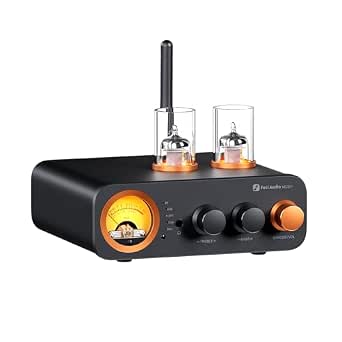 | Best All-in-One for Digital Sources and Headphones | Model: MC331 | Power output: 105 W × 2 at 4 ohms | Inputs: Bluetooth, USB, coaxial, optical, RCA | VIEW ON AMAZON | See Our Full Breakdown |
| Fosi Audio BT10A Bluetooth 5.0 Stereo Audio Amplifier Receiver 2 Channel Class D Mini Hi-Fi Integrated Amp for Home Passive Speakers 50W x 2 TPA3116 |  | Best for a Simple Bluetooth Desktop System | Amplifier chipset: TPA3116 Class D | Power output: 50 W × 2 | Bluetooth: Version 5.0; stated range up to 15 m | VIEW ON AMAZON | See Our Full Breakdown |
| Yamaha A-S301BL Natural Sound Integrated Stereo Amplifier, Black |  | Best Traditional Integrated Amp for Digital and Analog Sources | Model: A-S301BL | Color: Black | Digital inputs: Coaxial and optical | VIEW ON AMAZON | See Our Full Breakdown |
| Denon PMA-600NE 2-Channel Bluetooth Stereo Amplifier | 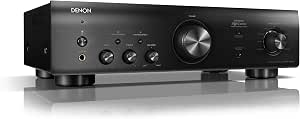 | Best for Versatile Source Switching | Channels: 2 | Output power: 70 watts per channel at 4 ohms | Connectivity: Bluetooth | VIEW ON AMAZON | See Our Full Breakdown |
| Fosi Audio BT20A Pro Bluetooth 5.0 Stereo Amplifier |  | Best Compact Amp for Tuning Your Sound | Channels: 2 | Amplifier chip: TI TPA3255 | Connectivity: Bluetooth 5.0 | VIEW ON AMAZON | See Our Full Breakdown |
| Fosi Audio BT20A Bluetooth Stereo Amplifier |  | Best for Simple Bluetooth Setups | Amplifier type: Class D | Channels: 2 | Maximum output power: 100 W × 2 | VIEW ON AMAZON | See Our Full Breakdown |
| Marantz PM6007 Slimline Integrated Stereo Amplifier, 45W |  | Best for a Traditional Hi-Fi Source Rack | Power: 45W | Analog inputs: 5 | Digital inputs: 1 coaxial, 2 optical | VIEW ON AMAZON | See Our Full Breakdown |
| Fosi Audio TB10D 2-Channel Class D Stereo Amplifier |  | Best for Passive Speakers or Bass Shakers | Channels: 2 | Amplifier class: D | Amplifier chip: TPA3255 | VIEW ON AMAZON | See Our Full Breakdown |
| AIYIMA A80 Bluetooth Stereo DAC Amplifier with TPA3255 and Digital VU Meter |  | Best for Flexible Digital Connections | Channels: 2 | Amplifier type: Class D | Amplifier chipset: TPA3255 | VIEW ON AMAZON | See Our Full Breakdown |
| Dayton Audio HTA200 200W Integrated Stereo Hybrid Tube Amplifier with Bluetooth |  | Best for a Tube-Inspired System | Power output: 100 watts per channel RMS at 4 ohms | Amplifier design: Hybrid tube preamp with Class A/B amplifier | Bluetooth: Bluetooth 5.0 | VIEW ON AMAZON | See Our Full Breakdown |
| Fosi Audio BT30D Bluetooth 5.0 2.1-Channel Stereo Amplifier |  | Best for a Simple 2.1 Setup | Channels: 2.1 | Amplifier type: Class D | Amplifier chips: 2 x Texas Instruments TPA3116D2 | VIEW ON AMAZON | See Our Full Breakdown |
| WiiM Amp Streaming Amplifier for Passive Speakers with HDMI ARC, Space Gray |  | Best for Streaming and TV Audio | Channels: 2 | Output power: 60 W per channel at 8 ohms; 120 W at 4 ohms | Wireless technologies: Bluetooth, Wi-Fi, AirPlay 2 | VIEW ON AMAZON | See Our Full Breakdown |
| Fosi Audio MC351 2.1-Channel Integrated Amplifier with DAC and Bluetooth |  | Best for Digital 2.1 Connectivity | Channels: 2.1 | Amplifier chips: Dual Texas Instruments TPA3255 Class D | Maximum output: 165W x 2 + 350W | VIEW ON AMAZON | See Our Full Breakdown |
| hi fi integrated amplifier | Channels | Weight |
|---|---|---|
| AIYIMA A07 TPA3255 Class D Ste | 2 | — |
| Integrated Hi-Fi Amplifier wit | — | — |
| Fosi Audio MC331 Tube Integrat | — | — |
| Fosi Audio BT10A Bluetooth 5.0 | — | — |
| Yamaha A-S301BL Natural Sound | — | — |
| Denon PMA-600NE 2-Channel Blue | 2 | 18 pounds |
| Fosi Audio BT20A Pro Bluetooth | 2 | 567 g |
| Fosi Audio BT20A Bluetooth Ste | 2 | 567 g |
| Marantz PM6007 Slimline Integr | — | 10,499 g |
| Fosi Audio TB10D 2-Channel Cla | 2 | 2.4 pounds |
| AIYIMA A80 Bluetooth Stereo DA | 2 | — |
| Dayton Audio HTA200 200W Integ | — | 3.6 pounds |
| Fosi Audio BT30D Bluetooth 5.0 | 2.1 | 1.1 kg |
| WiiM Amp Streaming Amplifier f | 2 | 4.1 pounds |
| Fosi Audio MC351 2.1-Channel I | 2.1 | 1 kg |
More Details on Our Top Picks
AIYIMA A07 TPA3255 Class D Stereo Amplifier with AUX Pre-Out
The AIYIMA A07 is a straightforward way to power passive bookshelf speakers without giving up much shelf space. Its TPA3255-based, two-channel design supports 2–8-ohm speakers, while the volume-controlled 3.5 mm pre-out lets me add a subwoofer or connect powered speakers. That flexibility gives it an edge over the smaller Fosi Audio BT10A when I want a 2.1 arrangement or a path to expand.
The tradeoff is a simpler system: there is no Wi-Fi or built-in streaming, and the included 32 V, 5 A adapter is not the supply needed for the stated maximum output. Replaceable op-amps offer a customization route, but this remains a compact power amp rather than a feature-rich traditional integrated amplifier. I’d choose it for speaker flexibility, not one-box convenience.
Pros:- Supports 2–8-ohm passive speakers in a two-channel setup.
- Volume-controlled 3.5 mm pre-out supports a subwoofer or powered speakers.
- Replaceable NE5532 op-amps allow component experimentation.
- Compact metal housing includes an internal cooling system.
Cons:- No Wi-Fi or built-in wireless streaming.
- The included 32 V, 5 A adapter does not provide the supply required for the stated maximum output.
Best for: Listeners building a compact passive bookshelf-speaker system who want a subwoofer or powered-speaker pre-out and may customize the op-amps.
Not ideal for: Buyers who want Wi-Fi streaming, multiple digital inputs, or the stated maximum output from the included power adapter.
- Amplifier chip:Texas Instruments TPA3255
- Channels:2
- Output power:300 W × 2 stated
- Speaker impedance:2–8 ohms
- Pre-out:3.5 mm AUX
- Op-amp:Replaceable NE5532 dual op-amp
- Included power adapter:32 V, 5 A
- Dimensions:6.06 × 3.94 × 1.57 inches
Our verdict“Choose the A07 for a compact, expandable passive-speaker system, but skip it if you want streaming or a fully featured integrated amp.”
Integrated Hi-Fi Amplifier with Auto-Switching Class A/AB
The Emoryseric EY-1000 is the most ambitious choice here for listeners who want substantial amplification and hands-on stereo controls. Its automatic Class A/AB switching is designed to pair lower-level Class A operation with higher-output Class AB for demanding peaks. Dual toroidal transformers and a large capacitor bank support that power-focused design, while A/B speaker outputs and a subwoofer output make it more system-oriented than the compact AIYIMA A07.
It also offers bass and treble controls, a Direct bypass, and mute, giving me more ways to adapt playback than the stripped-back A07. That hardware comes with a real cost in space and operating simplicity: this is a large, heavy unit with a feature-rich front end. I’d favor it for a full-sized system that can use its connections and power; casual desktop listeners are better served by the Fosi Audio BT10A.
Pros:- Automatically switches between stated Class A and Class AB operating modes.
- Dual toroidal transformers and 80,000 µF total capacitor capacity support its high-power design.
- A/B speaker outputs and subwoofer output offer useful system flexibility.
- Bass and treble controls plus Direct bypass provide different listening options.
Cons:- Large, heavy chassis needs substantial space and sturdy support.
- Numerous controls and connection options may be more involved than casual users need.
Best for: Listeners with a full-sized hi-fi system who need high output, A/B speaker connections, tone controls, and a subwoofer connection.
Not ideal for: Desktop listeners, buyers with limited rack space, or anyone who prefers a simple amplifier with few controls.
- Class A power output:30 W at 8 ohms
- Class AB power output:Up to 370 W at 4 ohms
- Transformer power:800 W total from two custom toroidal transformers
- Capacitor capacity:80,000 µF total
- Signal-to-noise ratio:118 dB
- Damping factor:480; up to 800 in certain measurements
- Power transistors:12 Japanese power transistors
- Connections and controls:A/B speaker outputs, subwoofer output, bass/treble, Direct bypass, mute
Our verdict“Pick the EY-1000 for a substantial traditional system that can use its power and speaker options, not for a compact or simple setup.”
Fosi Audio MC331 Tube Integrated Amplifier with DAC, 2-Channel Home Audio Stereo Power Amp for HiFi Bookshelf Speakers and 3.5mm Headphones, Vintage VU Meter Preamp with Bluetooth, USB, Optical, Coaxial, RCA
The Fosi Audio MC331 suits listeners who want a compact hub for several sources rather than a bare stereo power amp. Its built-in DAC, tube preamp and power amp combine with Bluetooth, USB, optical, coaxial, and RCA inputs, so I can connect both wireless and wired sources without adding separate components. A headphone output and pre-out extend its use beyond the speaker system. Compared with the AIYIMA A07, it provides far more source flexibility in one unit.
The tubes are replaceable, but they also bring upkeep and a different ownership experience from the simpler Class D Fosi Audio BT10A. Its stated 105 W × 2 is for 4-ohm loads, and the supplied description notes limits with large floor-standing speakers. I’d choose the MC331 for a compact desk or bookshelf setup with varied sources, not as a high-power choice for a demanding room-filling system.
Pros:- Combines a DAC, preamp, tube power amp, and headphone output in one unit.
- Bluetooth, USB, optical, coaxial, and RCA inputs accommodate varied sources.
- Replaceable tubes allow tube changes over time.
- Pre-out and headphone output support more than speaker listening.
Cons:- Tube ownership can involve maintenance or replacement over time.
- Its stated output and described capabilities may not suit large, demanding floor-standing speakers.
Best for: Desktop and small-room listeners who want a single amplifier for digital sources, Bluetooth, passive bookshelf speakers, and headphones.
Not ideal for: Owners of large floor-standing speakers who need substantial power, or buyers who want a tube-free setup with minimal upkeep.
- Model:MC331
- Power output:105 W × 2 at 4 ohms
- Inputs:Bluetooth, USB, coaxial, optical, RCA
- Outputs:Pre-out, 3.5 mm headphone jack
- Tube count:2 replaceable vacuum tubes
- Power adapter:24 V, 4.5 A
- Item weight:1.4 pounds
Our verdict“Choose the MC331 for a compact, source-flexible system with tube character and headphone listening, rather than for high-demand speakers.”
Fosi Audio BT10A Bluetooth 5.0 Stereo Audio Amplifier Receiver 2 Channel Class D Mini Hi-Fi Integrated Amp for Home Passive Speakers 50W x 2 TPA3116
The Fosi Audio BT10A is the uncomplicated pick for a small space where Bluetooth and passive speakers are the main requirements. Its Class D design is rated at 50 W × 2, and Bluetooth 5.0 offers wireless playback from a phone or other compatible source. Bass and treble controls provide basic adjustment without adding a complicated interface. Compared with the AIYIMA A07, the BT10A puts wireless streaming first, while the A07 offers a pre-out for expanding a speaker system.
This simplicity also sets its limits: the listed inputs are Bluetooth and 3.5 mm AUX, and there is no dedicated remote or advanced equalizer. Its output rating is more modest than the MC331’s stated figure, and the product data does not list a subwoofer output. I’d use it for a desktop or small bookshelf setup, not as the center of a source-heavy living-room system.
Pros:- Compact Class D design suits desk and shelf installations.
- Bluetooth 5.0 supports wireless playback with a stated range up to 15 m.
- Bass and treble controls allow basic tone adjustment.
- Protection circuits cover short-circuit, thermal, voltage, and DC faults.
Cons:- Only Bluetooth and 3.5 mm AUX inputs are listed.
- No dedicated remote or advanced equalizer settings.
- No subwoofer output is listed in the product data.
Best for: Desktop listeners and small-room owners who want a compact amp for passive speakers with Bluetooth and a basic AUX input.
Not ideal for: Buyers who need digital inputs, a subwoofer connection, a remote, or an amp for a demanding large-room system.
- Amplifier chipset:TPA3116 Class D
- Power output:50 W × 2
- Bluetooth:Version 5.0; stated range up to 15 m
- Inputs:Bluetooth, 3.5 mm AUX
- Tone controls:Bass and treble
- Protection:Short-circuit, thermal, over-voltage, under-voltage, and DC protection
- Item weight:650 g
Our verdict“Choose the BT10A for a small Bluetooth-first passive-speaker setup, but look elsewhere for wider connectivity or system expansion.”
Yamaha A-S301BL Natural Sound Integrated Stereo Amplifier, Black
The Yamaha A-S301BL is the most conventional full-size integrated amplifier in this group, making it a strong fit for buyers who prefer a familiar hi-fi layout over a miniature Class D box. Its listed optical and coaxial digital inputs let me connect compatible digital sources directly, while A/B speaker connections support more than one speaker pair. A subwoofer output adds another route for system building. Compared with the AIYIMA A07, Yamaha offers a more traditional component format and digital inputs, rather than a compact, bare-bones amplifier with a 3.5 mm pre-out.
The limitation is the available product information: it gives no specific power or performance figures, so I can’t judge speaker-driving headroom against the Emoryseric EY-1000 or other high-output choices from these details alone. Its 19.8-pound weight also makes it less convenient to move than the lightweight Fosi Audio MC331. I’d favor it when established connections and a full-size component matter more than published output numbers.
Pros:- Optical and coaxial inputs accept compatible digital sources.
- A, B, and A+B speaker connection options support flexible speaker arrangements.
- Dedicated subwoofer output can support a two-channel system with added bass.
- Full-size integrated-amplifier format suits a conventional hi-fi rack.
Cons:- The supplied product data does not state power output or other performance figures.
- At 19.8 pounds, it is less portable than compact options such as the Fosi Audio MC331.
- Wireless streaming is not listed in the supplied specifications.
Best for: Listeners assembling a traditional stereo system with optical or coaxial digital sources, A/B speaker needs, and a subwoofer.
Not ideal for: Buyers who need confirmed power figures before matching an amp to demanding speakers, or who want a lightweight compact unit.
- Model:A-S301BL
- Color:Black
- Digital inputs:Coaxial and optical
- Speaker connections:A, B, and A+B
- Subwoofer output:Yes
- Item weight:19.8 pounds
Our verdict“Choose the Yamaha for a traditional system built around digital inputs and A/B speakers, but verify speaker-matching needs since power figures are not provided here.”
Denon PMA-600NE 2-Channel Bluetooth Stereo Amplifier
The Denon PMA-600NE is my pick for listeners who want one integrated amplifier for turntables, digital sources, and Bluetooth. Its phono input, built-in 192 kHz/24-bit DAC, and three digital inputs cover more source types than the compact Fosi BT20A Pro, which keeps things simpler with Bluetooth and passive-speaker amplification. The Denon also offers an analog mode that disables digital circuitry, a useful option for a setup centered on analog playback. The tradeoff is that Bluetooth is unavailable in that mode, so switching between those listening approaches means giving up convenience. Its listed 70 watts per channel applies at 4 ohms, and HDMI input support is not specified despite an HDMI controller reference. Choose it for varied sources, not for HDMI-based TV integration.
Pros:- Phono input supports a turntable without a separate phono preamp.
- Built-in DAC and three digital inputs connect optical and coaxial sources.
- Bluetooth adds wireless playback without an external receiver.
- Analog mode can disengage digital circuitry for analog-focused listening.
Cons:- Bluetooth is disabled when analog mode is selected.
- HDMI audio input support is not specified.
- Its larger, heavier chassis is less suited to compact desktop systems than the Fosi mini amplifiers.
Best for: Listeners combining an MM turntable, optical or coaxial digital sources, and occasional Bluetooth streaming in one stereo system.
Not ideal for: Buyers who need HDMI audio input or want Bluetooth to remain available while analog mode is active.
- Channels:2
- Output power:70 watts per channel at 4 ohms
- Connectivity:Bluetooth
- Digital inputs:2 optical, 1 coaxial
- DAC:Built-in, up to 192 kHz/24-bit
- Phono input:Yes
- Dimensions:17.1 × 12.1 × 4.76 inches
- Weight:18 pounds
Our verdict“Choose the Denon if you need a full-size stereo amplifier that can handle turntables, digital sources, and Bluetooth, and skip it if HDMI is a requirement.”
Fosi Audio BT20A Pro Bluetooth 5.0 Stereo Amplifier
The Fosi Audio BT20A Pro suits listeners who want a small, straightforward amplifier but also want more control than the basic BT20A provides. It adds Bass and treble controls, Bluetooth 5.0 with pairing memory, and replaceable op-amps, giving tinkering-minded owners room to adjust the system. Its TPA3255 Class D design and included 32 V/5 A adapter make it a self-contained choice for passive speakers. Compared with the Denon PMA-600NE, though, it gives up a built-in DAC, phono input, and optical and coaxial connections; it is a compact speaker amp rather than a broad-source hi-fi hub. The op-amps also require separate sourcing if you want to experiment. I’d pick it over the simpler BT20A for user adjustment, but not for turntable or digital-source flexibility.
Pros:- Bluetooth 5.0 pairing memory makes repeat wireless connections convenient.
- Bass and treble controls allow basic system tuning.
- Replaceable op-amps provide a customization path.
- Includes a power adapter and Bluetooth antenna.
Cons:- Designed for passive speakers and does not provide the source range of the Denon PMA-600NE.
- Op-amp replacements must be purchased separately.
- No phono or digital inputs are listed.
Best for: Desktop and small-room listeners with passive speakers who want Bluetooth, tone controls, and the option to experiment with op-amps.
Not ideal for: Turntable owners or buyers who need a built-in DAC, optical or coaxial inputs, or a larger set of source connections.
- Channels:2
- Amplifier chip:TI TPA3255
- Connectivity:Bluetooth 5.0
- Audio controls:Bass and treble
- Replaceable op-amps:2 NE5532
- Signal-to-noise ratio:≥108 dB
- Total harmonic distortion:≤0.005%
- Weight:567 g
Our verdict“Pick the BT20A Pro for a compact Bluetooth-and-passive-speaker setup with tone adjustment, not as an all-source integrated amplifier.”
Fosi Audio BT20A Bluetooth Stereo Amplifier
The Fosi Audio BT20A is the straightforward choice for someone who wants to power passive speakers from Bluetooth or an RCA source without building around a full-size receiver. Its compact Class D design, bass and treble controls, and one-touch power switch keep setup simple in a small room or secondary system. Compared with the BT20A Pro, it has a more basic feature set: the supplied information does not list replaceable op-amps or Bluetooth 5.0 pairing memory. Against the Denon PMA-600NE, it also lacks a phono stage and built-in DAC, so digital and turntable sources need other equipment. The listed 100 watts per channel is maximum output, not a like-for-like specification with the Denon’s stated 4-ohm rating. I’d choose it for simplicity, not source flexibility.
Pros:- Bluetooth and RCA inputs cover wireless and wired playback.
- Compact Class D format suits small spaces.
- Bass and treble controls offer simple tonal adjustment.
- One-touch power switch keeps operation uncomplicated.
Cons:- Designed for passive speakers rather than a complete source-and-speaker system.
- Its feature set is simpler than the BT20A Pro, including no listed replaceable op-amps.
- No built-in DAC, phono input, or optical and coaxial inputs are listed.
Best for: Listeners setting up passive bookshelf speakers in a small room and wanting Bluetooth plus a basic RCA connection.
Not ideal for: Buyers building a turntable-and-digital hi-fi system who need a phono input, built-in DAC, or multiple digital connections.
- Amplifier type:Class D
- Channels:2
- Maximum output power:100 W × 2
- Inputs:Bluetooth, RCA
- Controls:Bass and treble
- Weight:567 g
- Power supply:24 V, 4.5 A
- Warranty:24 months
Our verdict“Choose the BT20A when you want a compact, uncomplicated Bluetooth amp for passive speakers and do not need built-in hi-fi source connections.”
Marantz PM6007 Slimline Integrated Stereo Amplifier, 45W
The Marantz PM6007 is my choice for a conventional hi-fi setup where several wired sources matter more than wireless convenience. It pairs five analog inputs with optical and coaxial connections, a built-in MM phono stage, and an AK4490 DAC supporting up to 192 kHz/24-bit audio. Speaker A/B switching and a subwoofer output also give a system more routing options than the compact Fosi BT20A Pro, which focuses on Bluetooth and passive-speaker amplification. The PM6007’s stated power is 45W, so buyers should match it carefully to their speakers and room rather than assume it offers the same headroom as every higher-powered alternative. Bluetooth is not listed, and its 10,499 g weight makes it a substantial component. This is a wired-source specialist, not a wireless-first pick.
Pros:- Five analog inputs and three digital inputs support a varied wired-source collection.
- Built-in MM phono stage connects a compatible turntable directly.
- 192 kHz/24-bit DAC supports high-resolution digital sources.
- Speaker A/B switching and subwoofer output allow flexible system connections.
Cons:- Bluetooth connectivity is not listed, unlike the Denon PMA-600NE and Fosi BT20A models.
- The stated power is 45W, which may be a limiting factor for some speaker and room combinations.
- At 10,499 g, it is a heavy component to move or place.
Best for: Listeners with an MM turntable and multiple analog or digital components who want speaker switching and a subwoofer connection.
Not ideal for: Bluetooth-first buyers or listeners who want a lightweight, compact amplifier with a higher stated power figure.
- Power:45W
- Analog inputs:5
- Digital inputs:1 coaxial, 2 optical
- DAC:AK4490, up to 192 kHz/24-bit
- Phono input:MM
- Speaker switching:A/B
- Subwoofer output:Yes
- Weight:10,499 g
Our verdict“Choose the PM6007 for a wired hi-fi system with multiple sources and an MM turntable, and look elsewhere if Bluetooth is central to your setup.”
Fosi Audio TB10D 2-Channel Class D Stereo Amplifier
The Fosi Audio TB10D is a compact power-focused option for buyers who already have a source and want to drive passive speakers or a bass shaker. Its TPA3255 Class D chip, RCA input, and bass and treble controls create a focused setup with straightforward tone adjustment. The listed output reaches 300W per channel, but that figure should not be read as a directly comparable real-world rating to the Denon PMA-600NE’s specified 70 watts per channel at 4 ohms. Unlike the Denon or Marantz PM6007, the TB10D has no listed DAC, phono stage, digital inputs, or Bluetooth; it is not an all-in-one integrated hub. Built-in protection circuits and a 24-month warranty add practical reassurance, but the single RCA input keeps the system simple. Choose it when amplification is the main need.
Pros:- Compact Class D chassis fits desktop and smaller audio systems.
- Bass and treble controls let listeners adjust tonal balance.
- Supports passive speakers and bass shakers.
- Built-in protection circuits and a 24-month warranty are included.
Cons:- No wireless connectivity is listed, unlike the Fosi BT20A models.
- RCA is the only listed input, limiting direct source connections.
- Requires passive speakers or a bass shaker and does not function as a complete source hub.
Best for: Desktop or home-audio builders with passive speakers or a bass shaker who already have an RCA source and want tone controls.
Not ideal for: Listeners who need Bluetooth, a turntable input, a built-in DAC, or multiple sources connected directly to the amplifier.
- Channels:2
- Amplifier class:D
- Amplifier chip:TPA3255
- Power:300W per channel; 600W total
- Supported speaker impedance:2–8 ohms
- Input:RCA
- Controls:Bass and treble
- Weight:2.4 pounds
Our verdict“Choose the TB10D when you need a compact amplifier for passive speakers or a bass shaker and already have a source, but skip it for an all-in-one hi-fi system.”
AIYIMA A80 Bluetooth Stereo DAC Amplifier with TPA3255 and Digital VU Meter
The AIYIMA A80 suits a system built around several digital sources, pairing an ESS9038Q2M DAC with USB, optical, coaxial, Bluetooth, and balanced TRS inputs. That range is broader than the Fosi Audio BT30D’s Bluetooth-and-RCA setup, making the A80 a better fit if you want to connect a computer, TV, and other components without adding a separate DAC. Its subwoofer pre-out, tone controls, and 12V trigger also give it useful system-building flexibility in a compact chassis. DSD256 and PCM support will appeal to listeners with high-resolution files, though format support alone does not determine sound quality. The main limitation is that the stated 600-watt maximum lacks per-channel test conditions, so I would not use it to predict speaker-driving capacity. Choose it for connectivity, not a clear power comparison.
Pros:- Combines a DAC and Class D amplifier in one compact unit
- Accepts Bluetooth, USB, optical, coaxial, and balanced TRS sources
- Subwoofer pre-out and 12V trigger support system expansion
- Supports DSD256 and PCM audio
Cons:- The 600-watt maximum is not accompanied by per-channel test conditions
- Does not include speakers, so a complete system requires separate passive speakers
Best for: Listeners assembling a compact passive-speaker system with a computer, TV, Bluetooth devices, and a subwoofer.
Not ideal for: Buyers who need clearly documented per-channel power figures to match the amplifier with demanding speakers.
- Channels:2
- Amplifier type:Class D
- Amplifier chipset:TPA3255
- DAC:ESS9038Q2M
- Inputs:Bluetooth, USB, optical, coaxial, balanced TRS
- Outputs:3.5 mm AUX, RCA, subwoofer pre-out
- Audio formats:DSD256 and PCM
- Dimensions:6.1 x 4.84 x 1.61 inches
Our verdict“Choose the A80 if broad digital connectivity and a subwoofer output matter more to you than clearly specified channel-by-channel power.”
Dayton Audio HTA200 200W Integrated Stereo Hybrid Tube Amplifier with Bluetooth
The Dayton Audio HTA200 takes a different route from compact all-digital options such as the AIYIMA A80: it combines a tube preamp with a Class A/B power stage and provides a phono input alongside USB DAC, optical, coaxial, AUX, and Bluetooth connections. That makes it a more natural centerpiece for a mixed vinyl-and-digital system, while its 100 watts per channel RMS at 4 ohms gives a useful, specified reference for speaker matching. Bass and treble controls, a headphone output, motorized volume, and a remote add practical everyday control. The tradeoff is its substantial footprint: at nearly 16 inches wide and deep, it takes more space than the A80 or Fosi BT30D. It also needs passive speakers for stereo playback, and the supplied details give no specific phono-stage or headphone performance figures.
Pros:- Hybrid tube preamp and Class A/B amplifier combine distinct design approaches
- Phono, USB DAC, optical, coaxial, AUX, and Bluetooth inputs cover varied sources
- Rated at 100 watts per channel RMS at 4 ohms
- Includes bass and treble controls, headphone output, motorized volume, and remote
Cons:- Large dimensions require more shelf or rack space than compact Class D alternatives
- Passive speakers are required for stereo playback
- The available specifications do not detail phono-stage or headphone-output performance
Best for: Listeners with passive speakers who want one substantial amplifier for turntable, digital sources, Bluetooth, and headphone listening.
Not ideal for: Small-desk setups or buyers seeking a tiny, lightweight amplifier with a clearly compact footprint.
- Power output:100 watts per channel RMS at 4 ohms
- Amplifier design:Hybrid tube preamp with Class A/B amplifier
- Bluetooth:Bluetooth 5.0
- Inputs:USB DAC, phono, AUX, optical, coaxial
- Outputs:Speaker outputs, full-range preamp output, headphone output
- Dimensions:15.91 x 15.51 x 9.61 inches
- Weight:3.6 pounds
- Model:HTA200
Our verdict“Pick the HTA200 if you want tube-preamp character, a phono input, and broad source support in a full-size amplifier.”
Fosi Audio BT30D Bluetooth 5.0 2.1-Channel Stereo Amplifier
The Fosi Audio BT30D is the straightforward pick here for listeners who want passive speakers and a subwoofer without the A80’s wider digital-input selection or the WiiM Amp’s streaming platform. Its 2.1-channel layout has adjustable subwoofer volume and frequency controls, letting you tune the low end around your speakers rather than relying on a fixed crossover setting. Bluetooth 5.0 and RCA cover casual wireless listening and a basic wired source, while separate bass and treble controls provide direct adjustments. The tradeoff is a narrow connection set: unlike the Fosi Audio MC351, it has no USB, optical, or coaxial inputs. Its up to 200-watt power figure also lacks channel and test-condition details in the supplied data. I’d choose it for a simple, controllable 2.1 arrangement, not a system that needs broad source compatibility.
Pros:- Supports passive speakers with either passive or powered subwoofers
- Adjustable subwoofer volume and frequency aid 2.1 system setup
- Bluetooth 5.0 and RCA provide wireless and wired input options
- Separate bass and treble controls offer straightforward tonal adjustment
Cons:- Bluetooth and RCA are the only listed inputs
- Up to 200-watt output is not specified by channel or test conditions
- Speakers and subwoofer are not included
Best for: Listeners who already own passive stereo speakers and a passive or powered subwoofer and want simple Bluetooth and RCA playback.
Not ideal for: TV- or computer-centered systems that need HDMI ARC, USB, optical, or coaxial digital inputs.
- Channels:2.1
- Amplifier type:Class D
- Amplifier chips:2 x Texas Instruments TPA3116D2
- Bluetooth:Bluetooth 5.0
- Inputs:Bluetooth, RCA
- Maximum power output:Up to 200 W
- Bluetooth range:Up to 50 feet
- Weight:1.1 kg
Our verdict“Choose the BT30D for a basic 2.1 passive-speaker system with adjustable subwoofer controls, but skip it if you need digital inputs.”
WiiM Amp Streaming Amplifier for Passive Speakers with HDMI ARC, Space Gray
The WiiM Amp is the clearest fit for a hi-fi system that also serves as a streaming hub and TV amplifier. Its HDMI ARC connection simplifies TV playback, while Wi-Fi, Bluetooth, AirPlay 2, supported streaming services, and voice-assistant compatibility make it more versatile for daily listening than the Fosi Audio BT30D. It also delivers specified output of 60 watts per channel at 8 ohms and includes room correction and independent EQ, giving you tools to adapt sound to the room without a separate processor. The compromise is system scope: it powers passive speakers but is not a standalone speaker system, and fuller movie bass may call for a separate powered subwoofer. AirPlay is receive-only here, so it cannot send AirPlay audio onward to other speakers. Pick it for integrated streaming, not maximum source variety in a traditional hi-fi component stack.
Pros:- HDMI ARC connects TV audio directly to the amplifier
- Wi-Fi, Bluetooth, AirPlay 2, streaming services, and voice-assistant support
- Specified output is 60 watts per channel at 8 ohms
- RoomFit room correction and independent EQ support system tuning
Cons:- Requires passive speakers and does not operate as a standalone speaker system
- A powered subwoofer may be needed for fuller cinematic bass
- AirPlay works as a receiver and cannot transmit audio to other speakers
Best for: Listeners who want passive bookshelf or floorstanding speakers to handle music streaming and TV sound through one app-controlled amplifier.
Not ideal for: Buyers who need an all-in-one speaker system, AirPlay transmission to other speakers, or a traditional amplifier with a wider range of listed physical inputs.
- Channels:2
- Output power:60 W per channel at 8 ohms; 120 W at 4 ohms
- Wireless technologies:Bluetooth, Wi-Fi, AirPlay 2
- HDMI ARC:Yes
- Hi-res audio support:24-bit/192 kHz
- Room correction:RoomFit
- Voice assistants:Amazon Alexa, Google Assistant, Siri
- Weight:4.1 pounds
Our verdict“Choose the WiiM Amp if you want one compact hub for passive speakers, streaming, and HDMI-connected TV audio.”
Fosi Audio MC351 2.1-Channel Integrated Amplifier with DAC and Bluetooth
The Fosi Audio MC351 makes more sense than the BT30D when your 2.1 system needs several digital sources: it accepts USB, optical, coaxial, and Bluetooth, while the BT30D is limited to RCA and Bluetooth. Dual TPA3255 Class D chips, bass and treble controls, and the vintage-style VU meter give it a feature-rich footprint, and automatic standby is a practical touch for a system that stays connected. Its listed maximum output of 165W x 2 + 350W indicates separate stereo and subwoofer figures, but the supplied data does not specify test conditions or speaker impedance. Compared with the WiiM Amp, the MC351 emphasizes physical digital inputs rather than Wi-Fi streaming, HDMI ARC, and room correction. Choose it for a compact digital-source 2.1 setup; skip it if app-based streaming is central to your system.
Pros:- USB, optical, coaxial, and Bluetooth inputs cover varied source devices
- 2.1-channel design supports a stereo-and-subwoofer system
- Bass and treble controls allow direct tonal adjustment
- Automatic standby and a vintage-style VU meter add practical and visual touches
Cons:- Maximum output figures do not include speaker impedance or test conditions
- No Wi-Fi streaming or HDMI ARC is listed
- Requires separate speakers and other system components
Best for: Listeners building a compact 2.1 passive-speaker system around a TV, computer, or other digital sources, with Bluetooth as an added option.
Not ideal for: Buyers who want Wi-Fi streaming, HDMI ARC, room correction, or clearly documented output conditions.
- Channels:2.1
- Amplifier chips:Dual Texas Instruments TPA3255 Class D
- Maximum output:165W x 2 + 350W
- Inputs:Bluetooth, USB, optical, coaxial
- Controls and features:Bass and treble controls, automatic standby, vintage-style VU meter
- Weight:1 kg
- Warranty:24 months
- Model:MC351
Our verdict“Choose the MC351 if you want multiple wired digital inputs for a compact 2.1 setup and do not need Wi-Fi streaming or HDMI ARC.”

How We Picked
I compared the 15 amplifiers by how well they serve as the control center for a real passive-speaker system: speaker-driving role, source connections, usability, and room to grow. I gave preference to models that make common setups straightforward, including a turntable or digital source, a television, wireless playback, or a subwoofer. I also weighed physical size, feature complexity, and whether the product is a full integrated amplifier or a more limited compact power amp that buyers may mistake for one.
The ranking favors versatility and a clear use case over headline wattage or decorative features. That puts balanced, conventional models and capable streaming options ahead of niche designs, while compact amps remain strong picks when their limitations suit the system. I also account for tradeoffs: some units have fewer inputs, some depend on external streaming sources, and some add specialty functions that will matter only to particular buyers. Model names and feature descriptions alone do not establish sound quality, so the comparison centers on stated functions and practical system fit.
Factors to Consider When Choosing Hi Fi Integrated Amplifier
Before choosing an amplifier, I’d map the system you want it to serve—not just the speakers you own today. The best match is the one that connects your sources cleanly, suits your listening habits, and leaves enough flexibility for likely changes without paying for functions you will not use.
1. Confirm It Is an Integrated Amplifier, Not Just a Power Amp
Product labels can blur the line between an integrated amplifier and a compact stereo power amp. An integrated model normally combines input selection and volume control with speaker amplification, while a basic power amp may rely on an external preamp or source with its own volume control. That difference affects both convenience and the number of components you need. Before buying, check whether the unit has the inputs you plan to use and a practical way to control volume. A low-cost amp can become a less simple system if it requires extra boxes to cover missing functions. I’d choose a compact power-focused unit only when its limits fit the setup rather than assuming every “integrated” listing offers the same control features.
2. Match Inputs to Your Actual Sources
Write down every source you expect to connect, then check the amplifier’s input types one by one. A television may call for HDMI ARC or an optical connection; a computer or network device may need USB or another digital input; a turntable generally needs a phono stage unless it has one built in. Bluetooth is convenient for quick playback, but it does not replace wired inputs for every source or listening routine. A common mistake is choosing an amp for one prominent feature and discovering there is no room for the rest of the system. Paying more for extra connections makes sense when they remove separate adapters or components you would otherwise need, not just because the input list is longer.
3. Match Amplifier Capability to Speakers and Room
Amplifier power figures are only one part of speaker matching. Speaker impedance, sensitivity, listening distance, room size, and how loudly you play music all affect the amount of drive a system needs. A small desktop setup has different demands from a large room where speakers sit far apart. Check that the amplifier supports the speaker load specified by the speaker maker, and leave headroom for normal listening peaks rather than treating maximum wattage as a quality score. Buyers often overemphasize power while overlooking placement and speaker sensitivity. If your speakers are difficult to drive or your room is large, prioritize verified compatibility and a suitable amplifier class before choosing based on size or cosmetic features.
4. Decide Whether Streaming Belongs in the Amplifier
A streaming amplifier can reduce clutter by bringing network playback and amplification together, while a conventional integrated amp leaves streaming to a separate device. The all-in-one approach is appealing if you want a single control point or plan to connect a television and passive speakers in a living room. A separate streamer can be a better long-term choice when you want to replace or update digital features without changing the amplifier. Consider the services, control method, network reliability, and update support you actually need, not just the word “streaming” on a product page. Built-in convenience is worth paying for when you will use it often; otherwise, a simple amplifier may be the cleaner fit.
5. Treat Subwoofer and 2.1 Support as a System Choice
A 2.1-channel amplifier can simplify a setup with a subwoofer, but a subwoofer output does not automatically mean the amplifier performs every bass-management task you expect. Check whether the system offers the crossover, level control, and connection type your subwoofer requires. Also decide whether you want the amplifier to manage both main speakers and subwoofer or whether your subwoofer can handle its own filtering. Buyers sometimes add a subwoofer to compensate for speakers or placement without checking how the components will integrate. Choose a 2.1 model when its controls align with your planned system; if you want a conventional stereo setup, extra subwoofer features may add complexity without benefit.
6. Pay for Useful Build and Features, Not Visual Appeal Alone
Tube windows, VU meters, compact cases, and retro styling can make an amplifier more enjoyable to own, but they do not answer whether it suits your speakers or sources. Think about where the unit will sit, how often you will change connections, and whether you prefer physical controls or app-based operation. Small chassis designs save shelf space but may offer fewer connections or less room for future expansion. A premium component can make sense when its build, inputs, controls, and system role serve a long-term setup. If the upgrade is mostly cosmetic, I’d direct the budget toward speakers or a source that addresses a clear limitation in the system.
Frequently Asked Questions
Can I connect a turntable to any of these amplifiers?
Not automatically. A turntable with a built-in phono preamp can connect to a standard line-level input, while a turntable without one needs an amplifier with a phono input or a separate phono preamp. Check the specifications for a dedicated phono connection rather than assuming an RCA input is suitable. If you use an external phono stage, you can choose among more amplifiers, but it adds another component and cable pair. Confirm the turntable’s output type before deciding which route is simpler for your system.
Should I choose the WiiM Amp or a traditional stereo amplifier?
I’d choose the WiiM Amp if built-in streaming and a convenient television connection are central to the system. A traditional model such as the Yamaha A-S301BL or Denon PMA-600NE is a stronger match when you prefer a conventional component layout and plan to connect sources directly. The right choice depends on whether you want network features integrated into the amp or prefer to keep streaming separate. Check the inputs and control method against your daily use, since extra features add little if you will not use them. Either path can work well with passive speakers when the amplifier and speaker requirements match.
Do compact Fosi or AIYIMA amplifiers have enough power for my speakers?
That depends on the speakers, listening distance, room, and volume level rather than the brand or chassis size alone. Compare the amplifier’s supported speaker impedance and credible power information with the speaker maker’s guidance. Compact models can suit desktop listening or efficient speakers, but a large room or demanding speaker may call for a more capable unit. Do not rely on a single maximum-power figure without checking the conditions under which it was measured. If you are uncertain, gather the speaker model and room details before buying so you can verify the match.
Is a tube or hybrid amplifier a better choice for hi-fi listening?
Not by default. Tube and hybrid designs such as the Fosi MC331 and Dayton Audio HTA200 offer a distinctive format and styling, but those traits do not make them universally better than the solid-state Yamaha, Denon, or Marantz options. Choose one if its sound character, controls, or appearance are a real priority and its connections suit your sources. A conventional solid-state model is often the simpler choice for buyers who want familiar operation and broad everyday use. Also check tube replacement needs and ventilation guidance before making a tube-based design your long-term system center.
When should I pick a 2.1-channel amplifier instead of a stereo model?
A 2.1-channel option makes sense when you plan to run two passive speakers with a subwoofer and its controls match the subwoofer’s connection and filtering needs. In this roundup, the Fosi BT30D and MC351 are aimed at that kind of setup rather than a basic two-speaker system. A standard stereo amplifier remains the simpler choice if you do not need subwoofer integration or already manage bass elsewhere. Check whether the amplifier offers the level and crossover functions your setup needs; the 2.1 label alone does not tell you how much control you get. Choose based on the subwoofer and speaker combination you intend to use.
Conclusion
For most buyers seeking a flexible, conventional hi-fi integrated amplifier, I’d start with the Yamaha A-S301BL as the best overall fit. The Fosi Audio BT10A is a compact value-oriented option for a simpler system, while the WiiM Amp is my pick for beginners who want streaming and TV-friendly use without assembling a separate source chain. For a more traditional two-channel component, compare the Denon PMA-600NE and Marantz PM6007 against your source needs. Choose the Dayton Audio HTA200 or Fosi MC331 if a hybrid or tube-style design is a specific priority, and look to the BT30D or MC351 for a 2.1 setup. The best choice is the one that matches your speakers and sources—not the one with the longest feature list.