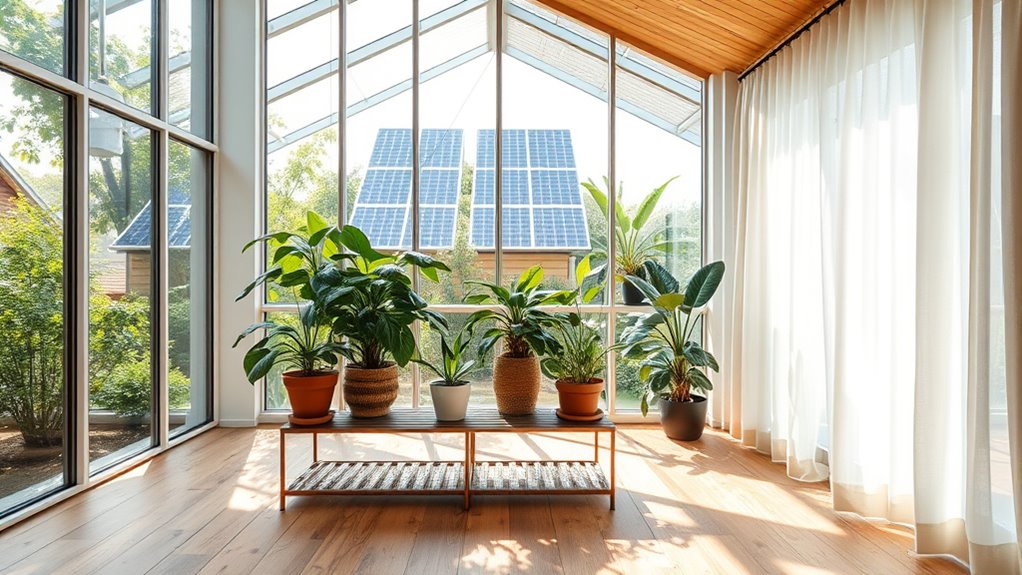

To make your home more eco-friendly, consider installing solar panels to harness sunlight and reduce energy bills. Use green roofing for insulation and rainwater absorption, and incorporate eco-friendly materials like recycled wood and low-VOC paints. Apply passive solar design principles to optimize natural light and temperature control. Upgrading with these features can lower costs, boost property value, and support environmental health—stay tuned to discover even more innovative ideas for your sustainable home.
Key Takeaways
- Install solar panels to generate clean energy and reduce utility costs.
- Use eco-friendly materials like recycled wood and low-VOC paints for sustainable renovations.
- Incorporate passive solar design principles to optimize natural heating and cooling.
- Upgrade insulation and windows to improve energy efficiency and indoor comfort.
- Add green roofs and rainwater harvesting systems to enhance environmental benefits and reduce runoff.
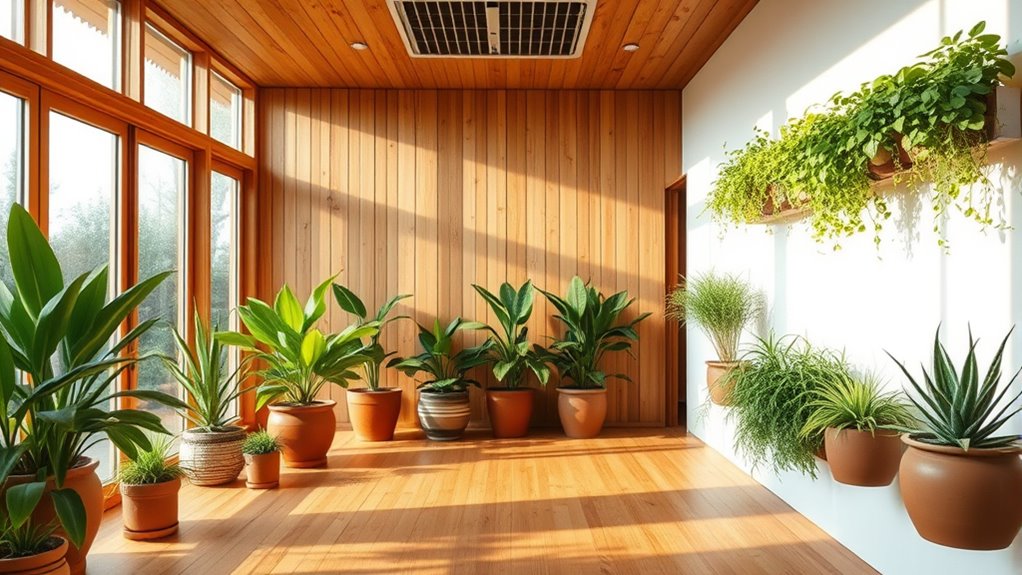
Renovating your home with eco-friendly ideas not only reduces your environmental impact but also saves you money in the long run. One of the most impactful upgrades you can make is installing solar panels. By harnessing the sun’s energy, you generate your own electricity, which lowers your reliance on fossil fuels and cuts your utility bills. Modern solar panels are more efficient and affordable than ever, making them a practical choice for eco-conscious homeowners. They can be integrated seamlessly into your roof, providing clean energy without compromising your home’s aesthetic. In addition to reducing your carbon footprint, solar panels can increase your property’s value and offer potential tax incentives or rebates, making them a smart investment.
Another powerful way to make your home more sustainable is by adopting green roofing. Green roofing involves covering your roof with vegetation, which offers multiple environmental benefits. It helps insulate your home more effectively, reducing the need for heating and cooling and consequently lowering energy consumption. Green roofs also absorb rainwater, decreasing runoff and helping prevent urban flooding. Plus, they improve air quality by filtering pollutants and producing oxygen. Installing a green roof can be a more involved process, requiring structural reinforcement and proper drainage systems, but the long-term benefits outweigh the initial effort. It creates a natural habitat for birds and pollinators, adding to your property’s ecological value.
Beyond these major upgrades, consider using eco-friendly materials during your renovation. Choose low-VOC paints, recycled wood, and sustainable flooring options to reduce indoor air pollution and minimize waste. Incorporate energy-efficient windows and appliances to maximize your home’s efficiency. When redesigning your living spaces, think about passive solar design principles—positioning windows to maximize sunlight in winter and minimize heat gain in summer. These small adjustments can considerably boost your home’s sustainability.

Callsun N-Type 16BB 400W Bifacial Solar Panel, 2Pcs 200 Watt Solar Panel 12V, 25% High Efficiency, Dual-module Parallel Anti-Shade Design, for RV Van Marine Home Rooftop Off-Grid Systems (2 Pack 200W)
【N-Type 16BB High-Efficiency Solar Cells】The Callsun 200 watt solar panel is built with advanced N-type solar cells and…
As an affiliate, we earn on qualifying purchases.
As an affiliate, we earn on qualifying purchases.
Frequently Asked Questions
What Are the Costs of Eco-Friendly Renovations Compared to Traditional Methods?
Eco-friendly renovations often cost more upfront compared to traditional methods, but the long-term savings are significant. When you do a cost comparison, you’ll find that energy-efficient materials and systems reduce your utility bills over time. For effective budget planning, consider these higher initial costs as an investment. While eco-friendly options may seem pricier initially, they pay off through lower maintenance costs and environmental benefits, making them a smart financial decision.
How Long Do Eco-Friendly Materials Typically Last?
You might notice that eco-friendly materials often last just as long as traditional ones, sometimes even longer. Their durability of materials can be quite impressive, and they usually require less maintenance over time. This coincidence shows that choosing sustainable options doesn’t mean sacrificing longevity; instead, it can enhance your home’s resilience. With proper care, these materials can serve you well for many years, making your renovation both eco-smart and cost-effective.
Are There Government Incentives for Green Home Upgrades?
Yes, you can benefit from government grants and tax credits when upgrading your home to be more eco-friendly. These incentives aim to encourage sustainable practices, helping offset costs for improvements like solar panels, energy-efficient windows, or insulation. You should check with local or federal programs to see what’s available in your area. Taking advantage of these incentives makes it more affordable to make environmentally conscious upgrades to your home.
Can Eco-Friendly Renovations Increase Property Value?
Yes, eco-friendly renovations can boost your property value. When you improve energy savings with upgrades like better insulation or solar panels, you save money and attract eco-conscious buyers. Additionally, enhancing aesthetic appeal with sustainable materials makes your home more attractive. These upgrades not only make your property more appealing but also demonstrate your commitment to sustainability, which can markedly increase its market value.
What Are the Best Eco-Friendly Insulation Options?
You should consider spray foam insulation for its high R-value and air-sealing properties, showcasing advanced insulation techniques. Imagine a homeowner upgrading their attic with sustainable materials, reducing energy bills and boosting comfort. Spray foam offers eco-friendly benefits by minimizing environmental impact during manufacturing and application. Its versatility makes it a top choice for eco-conscious renovations, helping you create a more sustainable, energy-efficient home with the best insulation options.

EVOLVE Interior Paint & Primer, Eggshell (Cloud White), 1 Gallon – One-Coat Coverage, Excellent Hide, Low VOC, Low Odor, Washable Paint for Walls, Doors & Trim
PAINT + PRIMER IN ONE: Evolve’s paint-and-primer formula helps you get great coverage from the start, sealing your…
As an affiliate, we earn on qualifying purchases.
As an affiliate, we earn on qualifying purchases.
Conclusion
By embracing eco-friendly home renovations, you not only reduce your environmental impact but also create a healthier living space. Some might worry these upgrades cost too much or take too long, but many sustainable options are affordable and straightforward. Plus, the long-term savings on energy bills make it worth the effort. Ultimately, taking small, mindful steps toward greener living benefits both your wallet and the planet, making your home a true reflection of your values.

Essential Green Roof Construction: The Complete Step-by-Step Guide (Sustainable Building Essentials Series, 12)
As an affiliate, we earn on qualifying purchases.
As an affiliate, we earn on qualifying purchases.
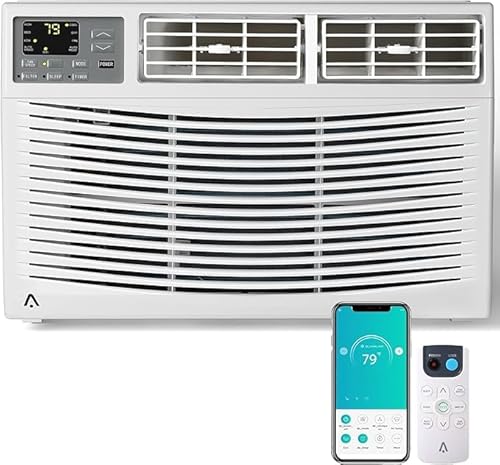
Window Air Conditioner 12000 BTU with WiFi, Energy Efficient Window AC Unit Cools Up to 550 Sq.Ft. with Remote App Control, Ideal for Apartment, Living Room, Medium Room, White
Control Your Cool from Anywhere: Effortlessly start or stop cooling, switch modes, or tweak temperatures on the go…
As an affiliate, we earn on qualifying purchases.
As an affiliate, we earn on qualifying purchases.