
To choose energy-efficient transportation options, consider switching to electric or hybrid vehicles, which produce fewer emissions. Using public transit, biking, or walking helps cut down on fuel use and traffic congestion. Car-sharing and ride-hailing with eco-friendly vehicles further reduce your carbon footprint. Additionally, supporting renewable energy-powered transit systems boosts sustainability. Making these changes can markedly lower your environmental impact, and exploring more tips will reveal even easier ways to live eco-friendlier.

Get the latest gadgets delivered free with Prime
- Fast, free delivery on millions of items
- Prime Video, Amazon Music and more included
- Member-only deals all year
Key Takeaways
- Switching to electric, hydrogen, or biofuel-powered vehicles reduces greenhouse gas emissions.
- Utilizing public transit, biking, and walking lowers individual carbon footprints and energy consumption.
- Car-sharing, ride-hailing, and electric scooter rentals decrease total vehicles and emissions on roads.
- Designing cities with efficient transit systems and active transportation infrastructure promotes sustainable mobility.
- Combining multiple eco-friendly transportation modes maximizes energy savings and environmental benefits.
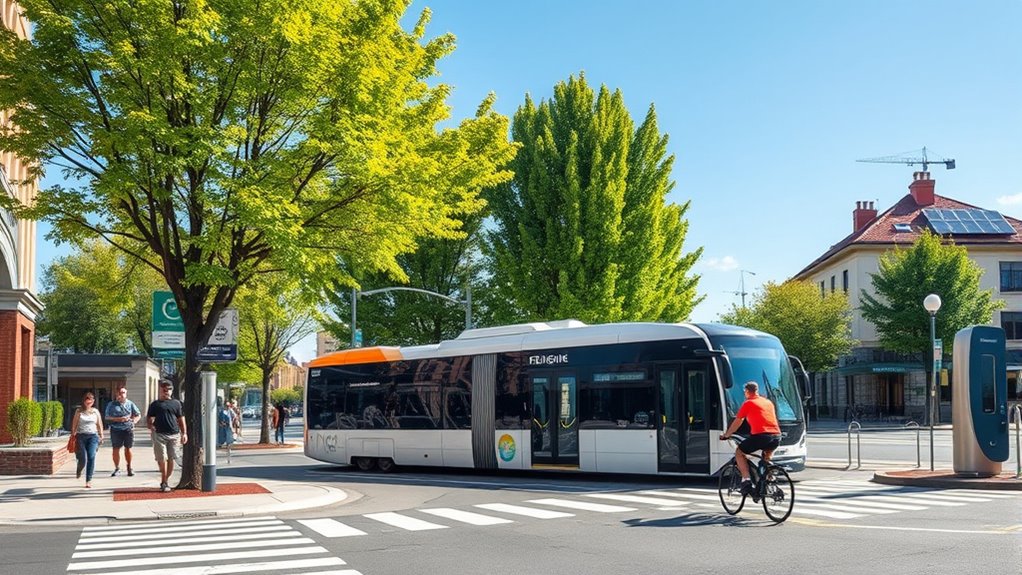
Have you ever wondered how you can reduce your carbon footprint while getting around? The good news is, there are plenty of energy-efficient transportation options that can help you do just that. One of the most effective ways is to explore alternative fueling methods. Traditional gasoline and diesel vehicles release significant amounts of greenhouse gases, but shifting to alternative fuels like electricity, hydrogen, or biofuels can drastically cut your emissions. Electric vehicles (EVs), in particular, are becoming more accessible and offer a cleaner way to navigate urban mobility. They produce zero tailpipe emissions, and as the grid becomes greener with renewable energy sources, their overall environmental impact diminishes even further.
When thinking about urban mobility, it’s clear that the way cities are designed plays a vital role in promoting sustainable transportation. Public transit options such as buses, trams, and trains are excellent alternatives to personal cars, especially when powered by renewable energy. They move large numbers of people efficiently, reducing the number of individual vehicles on the road and easing traffic congestion. Biking and walking are also highly energy-efficient modes of travel, requiring no fuel at all and offering health benefits along the way. Cities worldwide are investing in dedicated bike lanes and pedestrian zones, making these options safer and more appealing.
Car-sharing services and ride-hailing platforms are other ways to optimize urban mobility. By sharing rides, you reduce the total number of vehicles on the road, which leads to less traffic and lower emissions per trip. Some services now include electric or hybrid vehicles, further enhancing their energy efficiency. If you’re concerned about convenience, look for electric scooter rentals or bike-sharing programs; they’re quick, flexible, and don’t rely on fossil fuels, making them an excellent choice for short trips.
Incorporating alternative fueling into your daily routine doesn’t mean you have to overhaul your entire lifestyle overnight. Start by choosing an electric or hybrid vehicle if possible, and prioritize public transportation or active modes of travel when feasible. Consider combining different options—like biking to a transit station or walking for short distances—to maximize energy savings. As cities develop more sustainable infrastructure and technology advances, your choices will become even more eco-friendly and accessible. By making conscious decisions about how you get around, you actively contribute to reducing pollution, fighting climate change, and promoting healthier urban environments. Every small step towards energy-efficient transportation helps create a more sustainable future for everyone.
electric vehicle charging station
As an affiliate, we earn on qualifying purchases.
As an affiliate, we earn on qualifying purchases.
Frequently Asked Questions
What Are the Latest Innovations in Energy-Efficient Vehicle Technology?
You’ll find the latest innovations include vehicles running on renewable fuel, reducing emissions markedly. Autonomous driving technology also enhances energy efficiency by optimizing routes and driving patterns, saving fuel. These advancements make your commute more sustainable and cost-effective. As these innovations develop, expect even smarter, greener vehicles that prioritize renewable energy sources and autonomous systems, helping you reduce your carbon footprint while enjoying safer, more efficient transportation.
How Do Electric Bikes Compare to Traditional Bikes in Energy Efficiency?
Electric bikes are generally more energy-efficient than traditional bikes, using about 40% less energy to cover the same distance. You’ll appreciate the longer battery life and increased riding comfort, especially on longer rides. While traditional bikes rely solely on your effort, electric bikes assist you, making your ride smoother and less tiring. This efficiency makes electric bikes a smart choice for commuting, helping you save energy and enjoy a comfortable, effortless ride.
What Government Incentives Are Available for Adopting Eco-Friendly Transportation?
You can take advantage of government incentives like tax credits for electric vehicles and rebates for switching to public transportation. Many programs also offer carpool incentives to encourage sharing rides, reducing emissions. Check local and federal websites for specific offers in your area. These incentives make eco-friendly options more affordable and accessible, helping you save money while reducing your carbon footprint and supporting sustainable transportation.
How Can Urban Planning Promote Energy-Efficient Transportation Systems?
You can promote energy-efficient transportation systems by designing urban zoning that prioritizes public transit access and walkability. Encourage mixed-use developments to reduce travel distances and support infrastructure for buses, trains, and cycling. Implementing dedicated lanes for transit and creating pedestrian-friendly spaces make alternatives to driving more attractive. These strategies help reduce emissions, ease congestion, and foster sustainable mobility within cities.
What Are the Environmental Impacts of Hybrid Versus Fully Electric Vehicles?
Think of hybrid and fully electric vehicles as two sides of the same coin. Hybrids produce lower emissions during their lifecycle but still rely on fossil fuels, while electric vehicles boast zero tailpipe emissions. However, their environmental impact depends heavily on battery recycling and the emissions lifecycle of electricity sources. Fully electric cars generally have a greener footprint, especially with cleaner energy grids, but both options benefit from advances in sustainable battery recycling practices.
Conclusion
By choosing energy-efficient transportation, you help reduce pollution and conserve resources, making a real difference today. Remember, even in this fast-paced world, the wise ancient proverb “A journey of a thousand miles begins with a single step” still holds true. So, take that step now—opt for greener options like biking, walking, or electric vehicles. Your small change can lead to a healthier planet, proving that sometimes, the simplest actions are the most powerful.
Halloween Picks
halloween
As an affiliate, we earn on qualifying purchases.