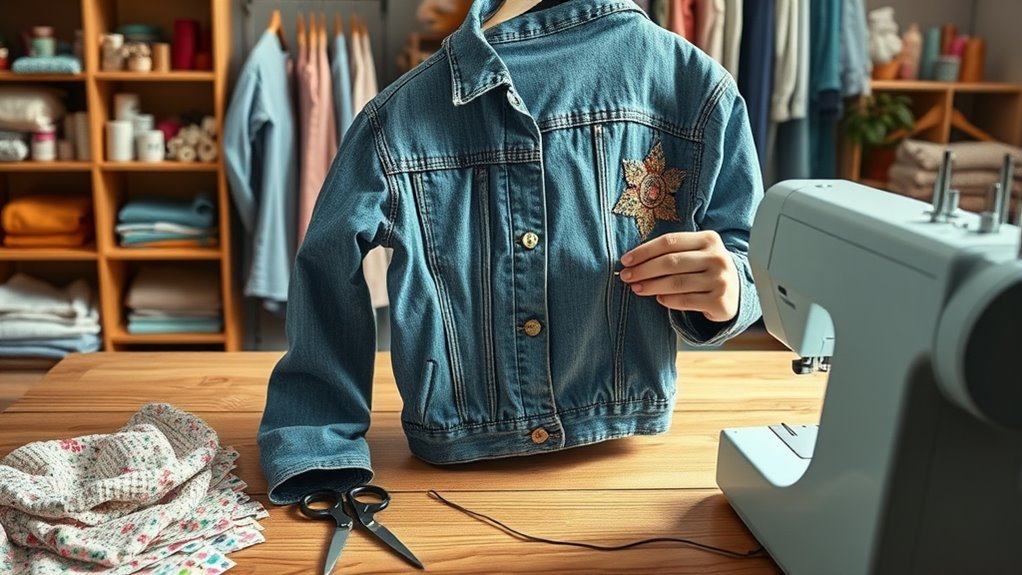
To upcycle old clothes into new styles, start by evaluating what items you want to transform, like plain shirts or jeans. Use simple techniques such as cutting, sewing, adding patches, or fabric paint to create personalized pieces. Experiment with turning oversized sweaters into crop tops or distressing jeans for a trendy look. Incorporate creative design ideas and eco-friendly dyes. Keep exploring different projects to uncover more ways to breathe new life into your wardrobe.

Get the latest gadgets delivered free — and shop member deals
- Fast, free delivery on millions of items
- Access to Prime Big Deal Days deals on October 6–7
- Prime Video, Amazon Music and more included
Key Takeaways
- Evaluate clothes for potential, such as plain shirts or jeans, and choose suitable fabrics for upcycling projects.
- Use basic techniques like cutting, sewing, and decorating to transform old garments into fresh styles.
- Add patches, embroidery, fabric paint, or distressing to customize and update your clothing.
- Repurpose fabric scraps into accessories or combine multiple pieces for layered, trendy looks.
- Document your projects and experiment with design principles to enhance creativity and personal style.
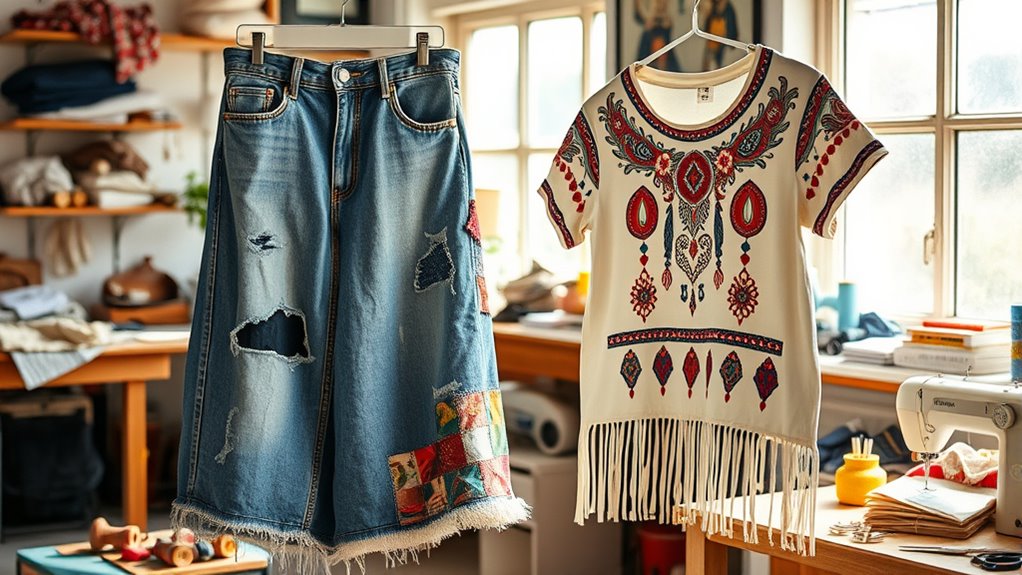
If you’re looking for ways to reduce waste and refresh your wardrobe, upcycling old clothes is a smart and creative solution. Not only does it help you practice sustainable fashion, but it also allows you to express your unique style through inventive DIY projects. Instead of tossing out that worn-out t-shirt or outdated pair of jeans, you can transform them into something entirely new and fashionable. The process is simple, fun, and eco-friendly, making it a great way to make your wardrobe more sustainable and personalized.
Start by evaluating what you have. Look for pieces that have potential, like a plain shirt that can be embellished or a pair of jeans that can be turned into shorts. Keep in mind that you don’t need to be an expert sewer or crafter—many creative DIY projects rely on basic techniques like cutting, sewing, or adding decorative elements. For example, you can cut old t-shirts into crop tops or tank tops, or add patches, embroidery, or fabric paint to give them a fresh vibe. Cropping or distressing jeans can give them a trendy, worn-in look without buying new ones. The key is to think outside the box and see your clothes as blank canvases.
As you get more comfortable, you can experiment with more complex upcycling ideas. Turn an oversized sweater into a chic crop top, or repurpose fabric scraps into accessories like headbands or bags. Using sustainable fashion principles, you can select eco-friendly dyes or natural fabrics to enhance your projects. This not only minimizes your environmental impact but also ensures that your new creations are safe and sustainable. Additionally, exploring interior design principles such as organization and aesthetics can inspire innovative ways to display or store your upcycled fashion pieces. Plus, upcycling encourages you to be resourceful, making the most of what you already own instead of constantly buying new items.
Document your creative DIY projects by sharing them online or keeping a scrapbook. This can inspire others to join the movement towards more sustainable fashion practices. Remember, upcycling isn’t about perfection; it’s about enjoying the process and making something uniquely yours. Each project allows you to breathe new life into old clothes and reduces waste in a meaningful way. Whether you’re adding embellishments, altering shapes, or combining different garments, your efforts contribute to a more sustainable fashion industry and help you develop your crafting skills. So grab those scissors, needles, and fabric paints, and start transforming your old clothes into stylish, one-of-a-kind pieces you’ll love to wear every day.
upcycling fabric paint for clothing
As an affiliate, we earn on qualifying purchases.
As an affiliate, we earn on qualifying purchases.
Frequently Asked Questions
What Tools Are Essential for Upcycling Clothes?
You’ll need a good sewing machine to start upcycling, along with basic sewing machine tools like needles, threads, and scissors. Fabric selection tips include choosing complementary or contrasting fabrics to add style. A seam ripper is handy for undoing mistakes, and pins or clips help hold fabric in place. With these essential tools, you can transform old clothes into fresh, trendy pieces efficiently and creatively.
How Can I Choose Fabrics Suitable for Upcycling?
When choosing fabrics for upcycling, focus on textile durability to make certain your new design lasts. Look for sturdy materials like denim, canvas, or thick cotton that can withstand cutting and sewing. Pay attention to fabric selection by considering the original garment’s condition, texture, and color. Avoid fragile or heavily worn fabrics, as they may not hold up well, and select pieces that complement your style and project needs.
Are There Eco-Friendly Dyes for Repurposing Garments?
Imagine your old clothes blooming anew with vibrant life—yes, eco-friendly dyes make this possible. You can explore natural dyeing using plant-based dyes, which gently infuse fabrics with color while honoring the Earth. These dyes, derived from roots, leaves, and berries, create stunning hues without harmful chemicals. By choosing plant-based dyes, you transform your garments into eco-conscious masterpieces, turning upcycled clothes into sustainable works of art.
How Do I Measure for Custom Alterations?
You measure for custom alterations by using proper measuring techniques, like taking accurate measurements of your bust, waist, hips, and inseam. Stand straight and avoid tight clothing to guarantee precision. Use a flexible tape measure and keep it snug but not tight. For fitting adjustments, compare your measurements to the garment’s size chart, then mark or pin areas needing alteration. This helps achieve a perfect fit and upcycled style tailored just for you.
What Safety Precautions Should I Take During Upcycling?
When upcycling, you should always wear safety gear like gloves and goggles to protect your skin and eyes from sharp tools and chemicals. Make sure your workspace is well-ventilated to avoid inhaling fumes from paints, dyes, or adhesives. Keep scissors, rotary cutters, and hot tools away from children, and work in a clutter-free area to prevent accidents. Taking these precautions keeps your upcycling process safe and enjoyable.
Conclusion
By upcycling your old clothes, you breathe new life into forgotten fabrics, turning trash into treasure. Think of each piece as a blank canvas waiting for your creative touch, proving that sustainability and style go hand in hand. When you transform outdated garments into fresh fashion, you’re not just saving money—you’re planting seeds for a greener future. So, roll up your sleeves and let your imagination turn clutter into couture. Your wardrobe—and the planet—will thank you.
Fall Picks
fall essentials
As an affiliate, we earn on qualifying purchases.