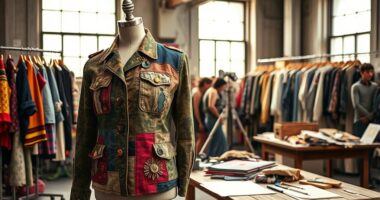
Circular fashion encourages you to rethink your wardrobe by focusing on reusing and recycling clothes to lessen environmental impact. You can donate garments in good condition, shop thrift stores for unique pieces, or participate in brand recycling programs. Choosing sustainable materials and brands committed to eco-friendly practices helps extend your clothing’s lifespan. By embracing these habits, you’ll support a more sustainable fashion cycle. Discover more tips to make your wardrobe greener and more responsible.
Key Takeaways
- Embrace the concept of circular fashion by prioritizing reuse, recycling, and extending clothing lifecycles.
- Choose sustainable materials like organic or recycled fibers to reduce environmental impact.
- Donate, thrift, or repurpose clothes to minimize waste and promote reuse.
- Participate in brand recycling programs to give garments a second life.
- Support brands committed to sustainable design principles that facilitate recycling and durability.
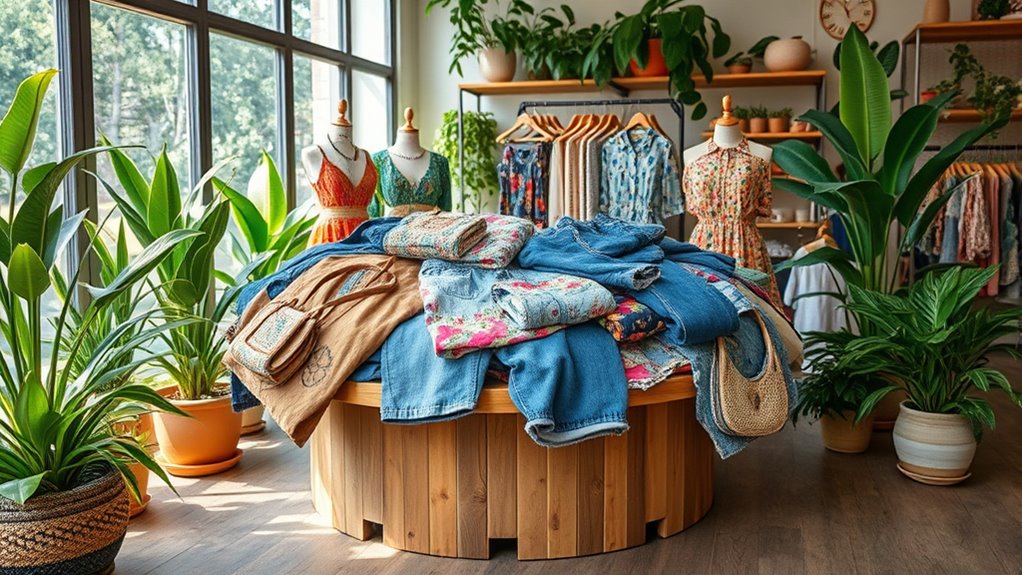
Have you ever wondered how fashion can be more sustainable? The answer lies in understanding and embracing the concept of circular fashion, which emphasizes reusing and recycling your clothes rather than discarding them. One of the key ways to do this is by choosing garments made from sustainable materials. These materials are designed to minimize environmental impact, often using organic or recycled fibers that reduce the need for resource-intensive production methods. By selecting clothing made from sustainable materials, you contribute to reducing waste and conserving natural resources, helping to extend the clothing lifecycle.
Understanding the clothing lifecycle is essential to making more sustainable choices. Every piece of clothing has a lifecycle that begins with raw material extraction, continues through manufacturing, and ends with disposal or reuse. In traditional fashion, many garments are quickly discarded after just a few wears, filling landfills and polluting ecosystems. Circular fashion aims to break this cycle by encouraging you to think differently about your clothes. Instead of throwing them away when they’re no longer in style or fit, you can find ways to reuse, repurpose, or recycle them. This approach not only reduces waste but also diminishes the demand for new, resource-heavy clothing.
Reusing your clothes is a simple yet impactful step. You can donate items that are still in good condition or pass them on to friends and family. Thrift shopping is another excellent way to give older garments a new life, often finding unique pieces that add character to your wardrobe. When clothes are beyond repair, recycling becomes an essential option. Many textiles can be broken down and transformed into new fabrics or other products, reducing the need for virgin materials. Some brands now accept old garments for recycling programs, making it easier for you to participate in the circular fashion movement. Additionally, the WWE Raw’s financial impact demonstrates how industries can generate billions, highlighting the potential for sustainable practices to also have significant economic benefits.
To truly make a difference, you should also consider supporting brands committed to sustainable practices and circular design principles. These companies often create clothes with longer lifespans or incorporate features that facilitate recycling at the end of the product’s life. By choosing such brands, you help promote a more sustainable clothing lifecycle—one that minimizes waste and maximizes reuse. Ultimately, embracing circular fashion requires a mindset shift: viewing your wardrobe as part of a larger ecosystem, where every item has value beyond its initial use.
Incorporating sustainable materials, understanding the clothing lifecycle, and practicing reuse and recycling are powerful steps you can take today. They help reduce environmental impact, conserve resources, and foster a more responsible approach to fashion. When you see your clothing as part of a circular system, you become an active participant in transforming the industry for the better.
organic cotton sustainable clothing
As an affiliate, we earn on qualifying purchases.
As an affiliate, we earn on qualifying purchases.
Frequently Asked Questions
How Can I Identify Eco-Friendly Clothing Brands?
To identify eco-friendly clothing brands, look for those with sustainable certifications like Fair Trade or GOTS. You should also check their brand transparency—do they openly share their sourcing, manufacturing, and environmental impact? These indicators show a genuine commitment to sustainability. By researching certifications and transparency, you can confidently choose brands that prioritize eco-friendly practices and reduce your fashion footprint.
What Are the Best Ways to Repurpose Old Clothes?
Like a savvy Jane of the 1920s, you can breathe new life into old clothes through clothing upcycling. Turn that worn-out shirt into a tote bag or a stylish pillow cover. Use fabric dyeing techniques to refresh faded fabrics and add unique patterns. Cutting, sewing, and dyeing are simple ways to repurpose clothes, making them trendy again while reducing waste. Embrace creativity and reduce your fashion footprint today!
How Does Circular Fashion Impact the Environment Long-Term?
Circular fashion benefits the environment long-term by reducing waste and conserving resources. When you choose brands focused on sustainable materials and ethical manufacturing, you help lower pollution and energy consumption. This approach encourages reuse, recycling, and responsible production, which minimizes landfill overflow and decreases reliance on virgin resources. Over time, it promotes a healthier planet, supports fair labor practices, and fosters a more sustainable fashion industry for future generations.
Are There Financial Incentives for Recycling Clothes?
Yes, there are financial incentives for recycling clothes. You can benefit from clothing resale programs, where you earn money by selling your used clothes. Many stores also offer discounts or store credit when you recycle garments through their recycling programs. These incentives motivate you to participate in sustainable fashion practices, helping reduce waste and save money while contributing to a greener environment.
How Can I Start a Clothing Swap Community Locally?
To start a clothing swap community locally, you should focus on community organizing by reaching out to friends, neighbors, and local groups who share your interest. Use social media promotion to spread the word and attract attendees. Create an event plan, choose a convenient location, and set clear guidelines for swapping. Engage your community through regular events and encourage everyone to bring clothes they no longer need.
Conclusion
By embracing circular fashion, you become part of a powerful cycle that keeps clothes out of landfills and extends their life. Imagine your favorite shirt, handed down or repurposed, like a gift that keeps giving—each reuse adding a new chapter to its story. Just as a single seed can grow into a thriving tree, your conscious choices can help create a sustainable future for fashion. Every small step you take fuels this positive cycle.