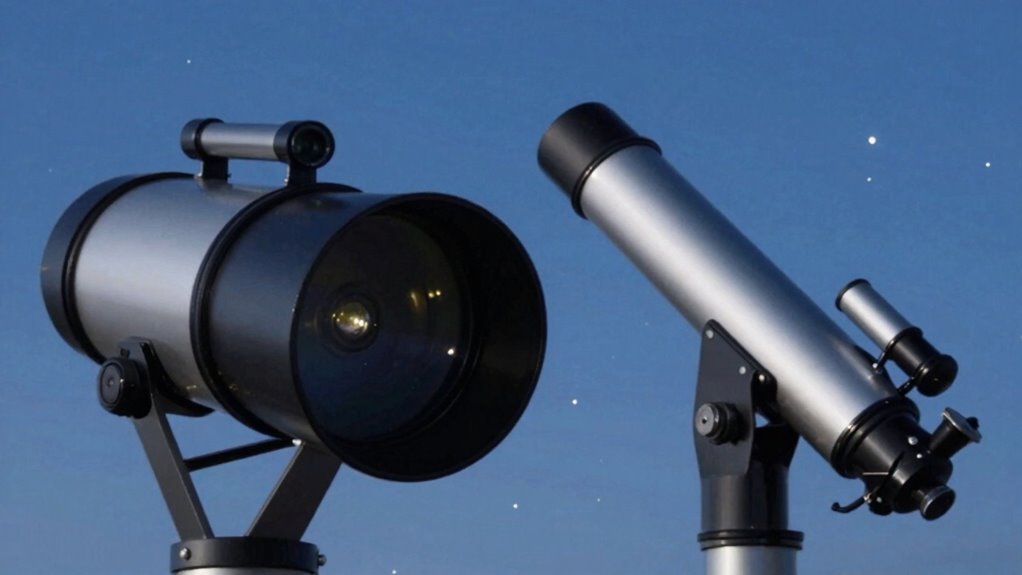

When choosing a telescope, focus on aperture over magnification, as your telescope’s main lens or mirror determines the brightness and detail of images, especially for faint objects like galaxies. Higher magnification doesn’t always mean clearer views and can cause blurry images. Instead, invest in a good-quality eyepiece and a stable mount—these make a bigger difference. Keep an eye on the priorities, and you’ll get better sights; discover more tips to improve your stargazing.

Get the latest gadgets delivered free with Prime
- Fast, free delivery on millions of items
- Prime Video, Amazon Music and more included
- Member-only deals all year
Key Takeaways
- Prioritize aperture over magnification for brighter, more detailed celestial images.
- High magnification doesn’t improve image quality; it can cause blurriness and dimness.
- Choose quality eyepieces and a stable mount to maximize the telescope’s potential.
- Focus on a balanced setup rather than chasing the highest magnification numbers.
- Larger aperture allows for better observation of faint objects like galaxies and nebulae.
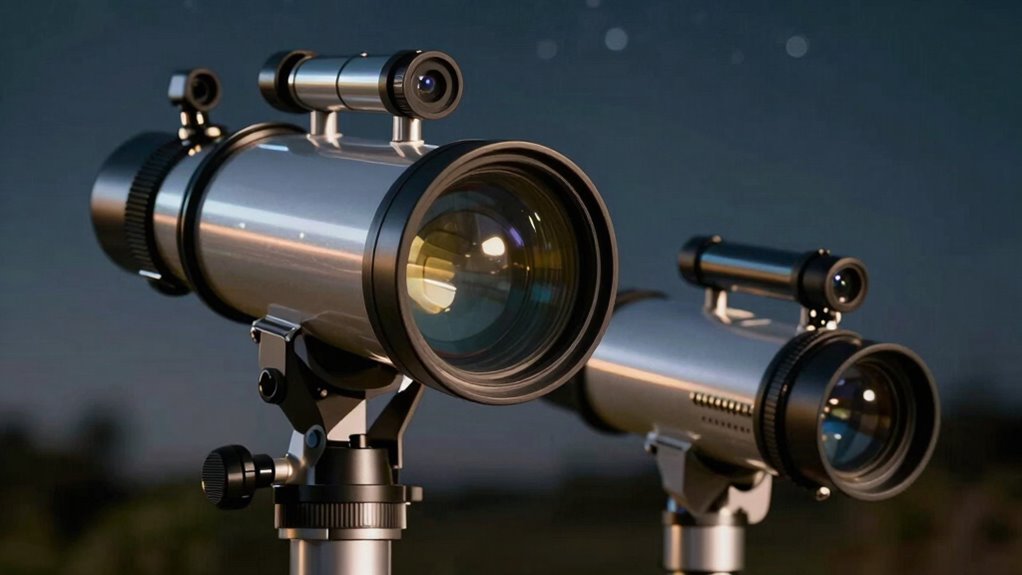
When choosing a telescope, understanding the difference between aperture and magnification is essential, as each plays a vital role in your observing experience. Aperture—the size of the telescope’s main lens or mirror—determines how much light it can gather. The larger the aperture, the brighter and more detailed the images you’ll see, especially when observing faint objects like galaxies or nebulae. Magnification, on the other hand, refers to how large objects appear through the eyepiece. While higher magnification can make objects seem closer, it doesn’t always improve clarity or detail. Instead, it can lead to blurry or dim images if the telescope isn’t suited for high magnification.
Choosing the right eyepiece quality is equally important. A good eyepiece enhances image sharpness, contrast, and brightness, allowing you to truly appreciate the details your telescope’s aperture reveals. Cheap or poorly made eyepieces can introduce distortions, reduce clarity, and diminish your overall experience. Therefore, investing in high-quality eyepieces that match your telescope’s specifications is crucial for getting the most out of your equipment.
Mount stability also plays a critical role in your viewing experience. Even if you have a telescope with a large aperture and excellent eyepieces, an unstable mount can cause vibrations and jitter, making it difficult to focus or track celestial objects smoothly. A sturdy, well-designed mount ensures steady viewing and precise tracking, especially when observing objects at higher magnifications. Without stability, your efforts to see finer details are compromised, no matter how advanced your telescope might be. Additionally, understanding the importance of mount stability can help you select equipment that provides a more comfortable and successful observing session.
Many beginners fall into the trap of focusing solely on magnification, thinking bigger numbers mean better views. But without proper consideration of aperture, eyepiece quality, and mount stability, you might end up with a telescope that can’t deliver clear images or that’s frustrating to use. Instead, prioritize a balanced setup: a decent aperture that gathers plenty of light, high-quality eyepieces for sharp images, and a stable mount for smooth tracking. This combination ensures your observations are bright, detailed, and steady, making your stargazing experience truly rewarding.
Ultimately, understanding how aperture and magnification work together helps you avoid buying the wrong telescope. Focus on what enhances image quality and stability rather than chasing the highest magnification numbers. A balanced approach to equipment selection ensures you enjoy clear, captivating views of the night sky that keep you eager to explore more.
high quality telescope eyepieces
As an affiliate, we earn on qualifying purchases.
As an affiliate, we earn on qualifying purchases.
Frequently Asked Questions
How Does Atmospheric Conditions Affect Telescope Performance?
You’ll notice atmospheric conditions, like turbulence, can blur your telescope’s view, making planets and stars look shaky or fuzzy. Light pollution impact also dims faint objects, reducing detail and contrast. When the air is stable and clear, your telescope performs better, providing sharper images. To get the most out of your observations, choose a dark, calm location, especially during nights with minimal atmospheric turbulence and light pollution.
What Is the Best Telescope for Astrophotography?
For astrophotography, you should choose a telescope with a stable mount and high-quality eyepieces. A mount with good stability minimizes vibrations and guarantees clear, sharp images. Look for one with precise tracking capabilities to keep celestial objects centered during long exposures. Additionally, invest in high-quality eyepieces to improve image clarity and detail. Combining these features helps you capture stunning astrophotos and get the most out of your telescope.
Can Small Telescopes Be as Powerful as Large Ones?
Is size truly everything? Small telescopes can’t match large ones in power because aperture importance outweighs magnification limitations. A larger aperture gathers more light, revealing fainter objects and finer details. While small telescopes may seem impressive, they lack the light-gathering capacity essential for detailed astrophotography and deep-sky observation. So, if you’re chasing clarity and brightness, bigger really is better—size matters more than magnification.
How Do I Choose Between a Refractor and Reflector Telescope?
You should choose a refractor telescope if you want sharp, high-contrast images, especially for planetary and lunar viewing, because of its stable mount and excellent lens coatings. Opt for a reflector if you’re interested in deep-sky objects and prefer a budget-friendly, larger aperture. Reflectors often have less mount stability, so make certain your mount is sturdy. Consider your viewing interests and setup preferences before making a decision.
What Accessories Improve Telescope Viewing Experience?
To improve your telescope viewing experience, prioritize quality eyepieces, as they enhance image clarity and field of view. Invest in a stable mount, which reduces vibrations and keeps objects steady in your view. Consider adding a Barlow lens for increased magnification and filters for better contrast. These accessories make observing more enjoyable and detailed, helping you get the most out of your telescope during each session.
Conclusion
Remember, when choosing a telescope, prioritize aperture over magnification. A larger aperture lets you see fainter objects and more detail, making your stargazing more rewarding. Did you know that the Hubble Space Telescope‘s aperture is 2.4 meters, giving it a clear edge over most amateur telescopes? So, focus on aperture to get the best out of your night sky adventures—you’ll be amazed at what you can discover with the right choice. Happy stargazing!
Halloween Picks
halloween
As an affiliate, we earn on qualifying purchases.