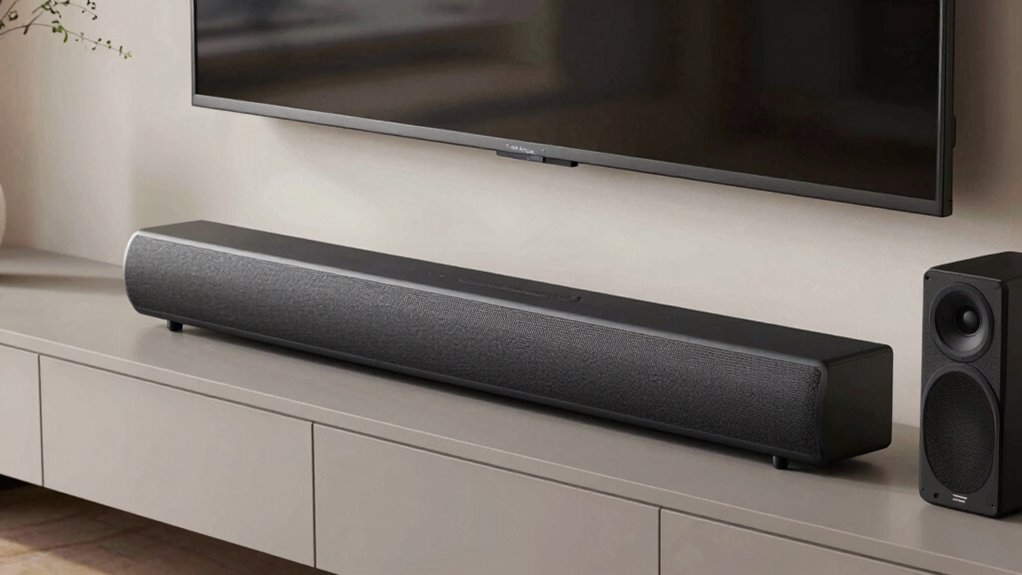

To improve Atmos with your soundbar, focus on proper placement and angle. Position the soundbar below or above your TV, centered with the screen, and keep it unobstructed for clear sound. Adjust the height and tilt to direct sound toward your ears. Use calibration tools and make small tweaks as needed since room acoustics can change. Proper setup makes a noticeable difference in immersion—keep going to discover more tips to perfect your sound experience.
Key Takeaways
- Position the soundbar slightly above or below the TV, centered for optimal sound reflection and immersive Atmos effects.
- Avoid placing obstructions near the soundbar drivers to maintain clear, direct audio delivery.
- Calibrate the soundbar using auto-tuning features or manual adjustments for room-specific acoustics.
- Adjust the height and angle of the soundbar to direct sound precisely toward ear level for better Atmos immersion.
- Regularly revisit and tweak placement and calibration to adapt to changing room acoustics and improve sound clarity.
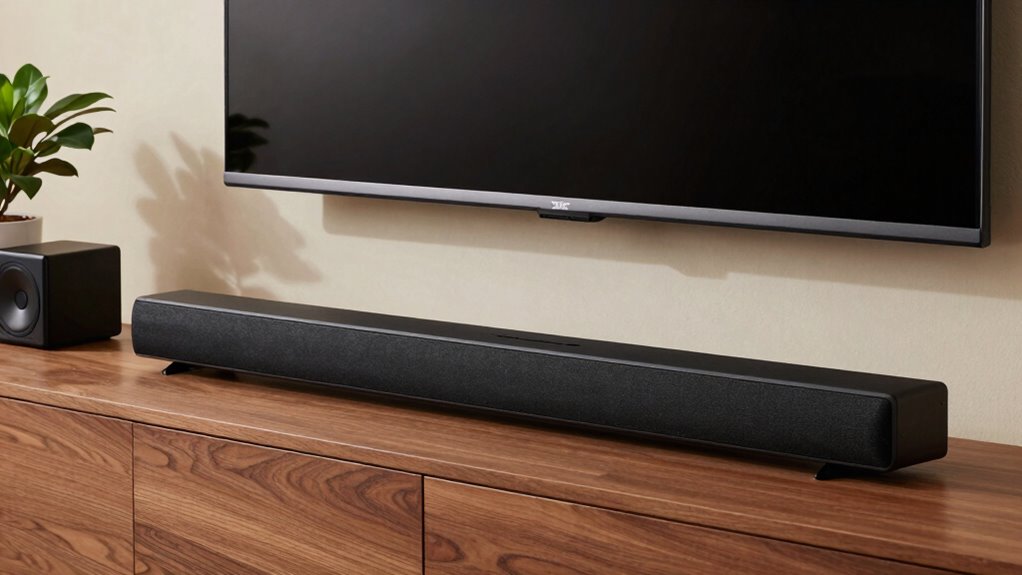
Soundbar Placement is essential to maximize your audio experience and guarantee clear, balanced sound. When positioning your soundbar, you should consider room acoustics, which directly influence how sound waves travel and reflect within your space. Soft furnishings, curtains, and even wall color can absorb or bounce sound, affecting clarity and stereo imaging. A properly chosen placement can significantly enhance your listening experience. The goal is to find a spot where sound reflects minimally, providing a more direct and immersive audio experience. Typically, placing the soundbar just below or above your TV screen, centered with the screen, offers the best results. Avoid blocking the speaker drivers with furniture or decorative items, as this can muffle sound and distort the audio.
Once you’ve placed your soundbar, speaker calibration becomes your next critical step. Many modern soundbars come with calibration tools or auto-tuning features that analyze your room’s acoustics and adjust the output accordingly. Run these calibration processes to optimize sound quality. If your device doesn’t have auto-calibration, manual adjustments are equally effective. Use your remote or app to tweak speaker levels, bass, treble, and surround effects, tailoring the sound to your room’s unique acoustics. Proper calibration ensures that dialogue remains clear, sound effects are immersive, and the overall audio balances well with your TV’s picture.
It’s important to remember that room acoustics aren’t static; they change based on furniture arrangement, number of people, and even the time of day. You might find that a position that worked well in the morning sounds different in the evening. Regularly revisit your setup, making small adjustments to the soundbar’s placement or calibration settings as needed. For example, if you notice echoes or muddiness, try moving the soundbar slightly forward or backward, or add soft furnishings to absorb sound reflections. Additionally, understanding room acoustics can help you make more informed decisions to enhance your listening environment. Considering sound reflection and absorption can significantly improve your overall audio quality.
In addition to physical placement, consider the height and angle of your soundbar. Angling it upward or downward can help direct sound toward your ears, especially if it’s mounted on a shelf or wall. Fine-tuning these details ensures your soundbar produces a more three-dimensional, immersive atmosphere, heightening your overall viewing experience. Ultimately, paying attention to room acoustics and speaker calibration makes a subtle but significant difference, transforming your home theater into a more enthralling, balanced audio environment.

TCL S45H 2.0 Sound Bar for Smart TV | Dolby Atmos DTS:X Auto Room Calibration| 100W Power Wireless Bluetooth Home Theater Audio | App & Remote Control | Latest Model
- Brand: TCL
- Model: S45H 2.0
- Sound Technology: Dolby Atmos & DTS Virtual:X
As an affiliate, we earn on qualifying purchases.
As an affiliate, we earn on qualifying purchases.
Frequently Asked Questions
How Does Room Acoustics Affect Soundbar Placement?
You need to consider room acoustics because sound reflection can distort your soundbar’s audio quality. Proper placement helps minimize unwanted reflections, ensuring clearer sound. Acoustic treatment, like adding panels or diffusers, reduces echo and enhances sound clarity. By positioning your soundbar away from reflective surfaces and incorporating acoustic treatment, you create an ideal environment that maximizes the immersive effect of your sound system.
Should I Place the Subwoofer Near or Far From the Soundbar?
Think of your subwoofer like the bass player in a band—you want it close enough to feel the rhythm but not so close it drowns out the melody. For ideal sound, position your subwoofer near the soundbar but avoid placing it directly against walls, which can cause boominess. Adjust the subwoofer positioning and soundbar orientation to balance bass and overall sound quality, creating a richer, more immersive experience.
What Height Is Ideal for Mounting a Soundbar?
You should mount your soundbar at ear level for ideal sound and aesthetics. The perfect height is typically between 2 to 4 inches above or below the TV’s top edge, depending on your mounting options. This placement enhances sound clarity and maintains sleek aesthetics. Use adjustable mounting brackets if available, so you can fine-tune the position for the best sound experience and seamless integration with your decor.
How Can I Minimize Reflections for Better Sound Quality?
Did you know that up to 50% of sound reflections come from nearby surfaces? To minimize reflections and improve sound quality, focus on echo reduction by placing soft materials like curtains or rugs near your soundbar. Avoid reflective surfaces such as glass or bare walls, and consider mounting acoustic panels. These simple steps help reduce unwanted echoes, creating a clearer, more immersive audio experience.
Does Furniture Placement Impact Soundbar Performance?
Yes, furniture placement impacts your soundbar’s performance. You should position furniture to minimize reflections and avoid blocking the soundbar’s speaker calibration sensors. Keep the soundbar clear of large objects, and guarantee it’s at ear level for ideal sound. Also, consider wireless connectivity options to reduce cable clutter, which can help you place furniture more freely. Proper placement enhances sound quality, immersive Atmos effects, and overall listening experience.
Conclusion
Think of your soundbar as the conductor of your home theater symphony. When placed thoughtfully—just like positioning a maestro at the right spot—you’ll notice richer, more immersive sound that surrounds you. I once moved my soundbar slightly higher, and suddenly dialogue clarity improved dramatically—almost like tuning an instrument. Small adjustments can make a big difference, turning everyday viewing into a mesmerizing experience. So, experiment with placement and let your sound system hit all the right notes.