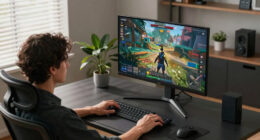
When size and performance matter, a Mini PC often beats a laptop. Mini PCs can feature powerful graphics and processors, handle demanding games, and offer better cooling for long sessions. They’re more energy-efficient, upgradable, and fit into small spaces, making them ideal for boosting performance without the bulk. While laptops are portable, they can’t always match a mini PC’s customizability and power. Keep exploring—there’s more to discover about how small boxes can outperform big machines.

Get the latest gadgets delivered free with Prime
- Fast, free delivery on millions of items
- Prime Video, Amazon Music and more included
- Member-only deals all year
Key Takeaways
- Mini PCs often outperform laptops in gaming and demanding tasks due to higher-end hardware options.
- Mini PCs are more energy-efficient and offer greater upgradability, extending device lifespan.
- When space-saving and portability are priorities, mini PCs fit small setups better than bulky laptops.
- Mini PCs provide better cooling for extended high-performance use compared to laptops with limited cooling.
- Without batteries, mini PCs are less suitable for mobility, making laptops preferable for on-the-go use.
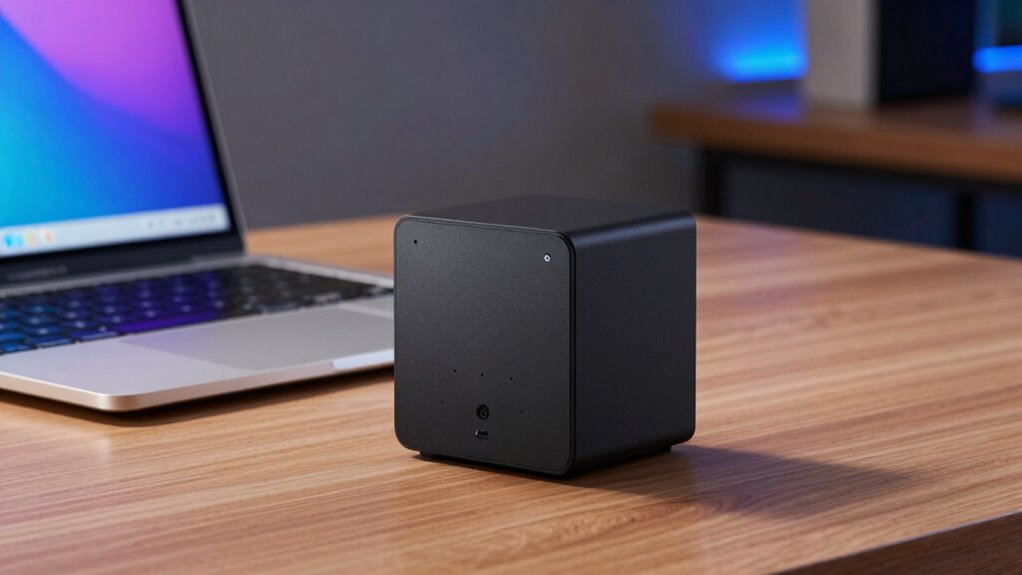
When deciding between a mini PC and a laptop, understanding their key differences can help you choose the right device for your needs. Both options serve different purposes, and knowing what to prioritize can make your decision easier. If gaming performance is a top concern, you’ll find that mini PCs often pack more power into a smaller footprint. Many mini PCs are equipped with high-end graphics cards and processors that can handle demanding games smoothly. Since they don’t have to worry about size constraints as much as laptops do, mini PCs can often include better cooling systems, which helps maintain optimal performance during extended gaming sessions. On the other hand, laptops, especially gaming-oriented models, tend to be more limited in hardware due to portability concerns. You might experience throttling or reduced performance over time if the laptop’s cooling isn’t sufficient, which can impact your gaming experience.
Battery longevity is another critical factor when choosing between these two devices. Laptops are designed with portability in mind, so they come with built-in batteries that allow you to work or play on the go. The battery life varies widely depending on the model, but in general, laptops can last anywhere from a few hours to over a day on a single charge. This makes them ideal if you need mobility and don’t want to be tethered to an outlet constantly. Mini PCs, however, don’t have batteries; they rely on a constant power source. If portability isn’t a priority, this isn’t a drawback, but if you need a device you can use away from a power outlet, a mini PC might not be the best choice. Power source is thus a significant consideration in your decision-making process. Additionally, mini PCs tend to be more energy-efficient, which can be relevant depending on your electricity consumption concerns. Moreover, mini PCs often have expandable hardware options, allowing users to upgrade components like RAM or storage, which can extend their lifespan and performance capabilities over time.
Another aspect to consider is size and space. Mini PCs are incredibly compact, fitting into small spaces and even being portable enough to move around easily if they’re connected to a monitor, keyboard, and mouse. Laptops combine all those components into a single unit, which is convenient but bulkier compared to a mini PC setup. Additionally, performance capabilities can vary significantly between these devices, influencing your decision based on your specific needs.
As an affiliate, we earn on qualifying purchases.
Frequently Asked Questions
Can Mini PCS Run High-End Gaming Titles Effectively?
Mini PCs can run high-end gaming titles, but their gaming performance depends on components like powerful GPUs and CPUs. Keep in mind, thermal management is essential; small size can cause overheating, which hampers performance. If you choose a mini PC with good cooling solutions, you’ll enjoy smooth gameplay. However, for the best gaming experience, high-end laptops often outperform mini PCs in both gaming performance and thermal management.
How Do Mini PCS Compare in Upgradeability to Laptops?
Mini PCs generally offer better upgradeability than laptops because you can access and replace components more easily. You’ll find more external ports for expanding hardware options, like additional storage or peripherals. Laptops often have limited hardware flexibility, with soldered components and fewer ports, making upgrades more challenging. If you prioritize upgrading and expanding your system over portability, a mini PC gives you more control and flexibility.
Are Mini PCS Suitable for Professional Video Editing Tasks?
Mini PCs are suitable for professional video editing because of their portable design and cost efficiency. They’re compact enough to fit in small spaces and easy to transport, making them ideal for on-the-go editing. Plus, they often offer powerful specs at a lower price compared to high-end laptops, giving you a budget-friendly way to handle demanding editing software without sacrificing performance.
What Are the Power Consumption Differences Between Mini PCS and Laptops?
Mini PCs typically consume less power than laptops due to their smaller size and energy-efficient components, making them more energy-efficient overall. They excel in power management, often running cooler and using less electricity during idle or low-load situations. Laptops, while portable, may draw more power for their built-in displays and batteries. If reducing energy consumption is your goal, mini PCs are generally the better choice for efficient power use.
How Do Mini PCS Handle Multiple Display Setups?
Mini PCs handle multiple display setups well due to their compact design and versatile ports, making them highly space-efficient. You can connect several monitors via HDMI, DisplayPort, or USB-C, depending on the model. Their small footprint doesn’t limit performance, allowing you to expand your workspace easily. Just guarantee the mini PC has the necessary video outputs and enough power supply to support multiple displays simultaneously, maximizing your productivity.
Conclusion
When choosing between a mini PC and a laptop, consider your needs for portability, performance, and space. Did you know that mini PCs have grown by over 30% in popularity over the past year? If you prioritize a compact design with customizable power, a mini PC can be a game-changer. On the other hand, laptops offer unmatched mobility. Ultimately, your choice depends on whether you value portability or power—both options prove small boxes can truly outperform big machines.
Halloween Picks
halloween
As an affiliate, we earn on qualifying purchases.