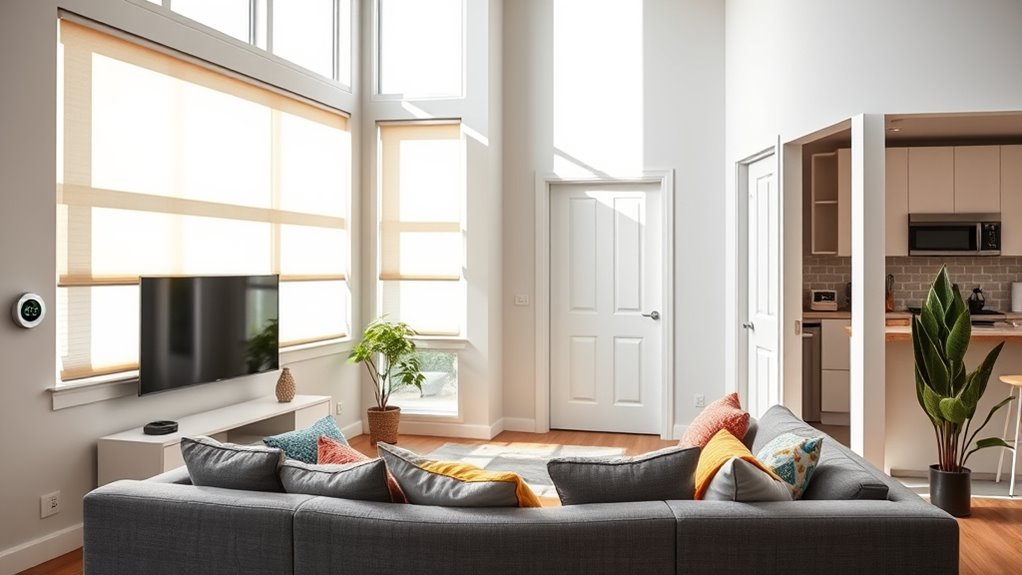

To save energy at home, upgrade to ENERGY STAR appliances and use smart home devices like thermostats and lighting systems to optimize energy use. Run appliances with full loads, use cold water, and seal leaks to reduce heating and cooling needs. Integrate smart tech for greater control and efficiency, and develop good habits like unplugging devices and maintaining equipment. Keep exploring for more practical tips to cut your bills and protect the environment.
Key Takeaways
- Upgrade to ENERGY STAR appliances to reduce energy consumption and lower utility bills.
- Use smart thermostats and lighting to optimize energy use and prevent waste.
- Run appliances with full loads and choose cold water settings to maximize efficiency.
- Seal leaks and maintain home insulation to lessen heating and cooling demands.
- Combine appliance upgrades with smart technology for a comprehensive, energy-efficient home solution.
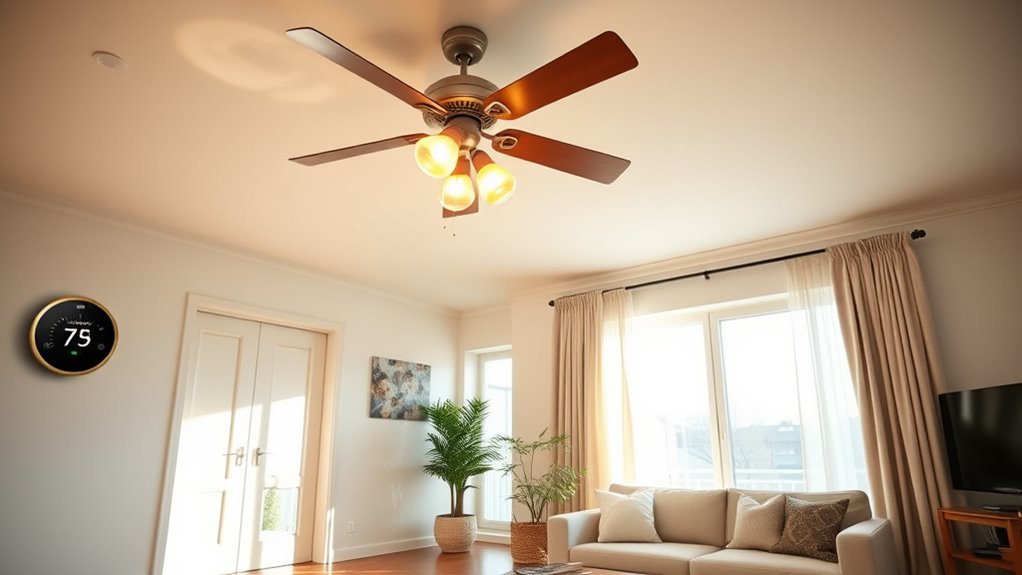
Are you looking for simple ways to cut your energy bills and reduce your environmental impact? One effective starting point is upgrading to energy efficient appliances. These appliances use less electricity while delivering the same performance, helping you save money over time. Look for products with the ENERGY STAR label, which guarantees they meet strict energy-saving standards. Swapping out your old refrigerator, washer, or dishwasher for more efficient models can appreciably lower your energy consumption. Not only does this benefit your wallet, but it also reduces your carbon footprint.
Upgrade to ENERGY STAR appliances to save money and reduce your carbon footprint.
In addition, integrating smart home technology can make a big difference in managing your energy use. Smart thermostats, for example, allow you to control your heating and cooling remotely, ensuring you’re not wasting energy when you’re away or asleep. They learn your schedule over time and optimize temperature settings, which can lead to substantial savings. Smart lighting systems also help cut costs by automatically turning off lights when rooms are unoccupied or adjusting brightness based on the time of day. These devices offer convenience and efficiency, giving you real-time data on your energy consumption and empowering you to make smarter choices.
Using energy efficient appliances and smart home tech together creates a synergy that amplifies your savings. For instance, a smart refrigerator with advanced insulation and energy-efficient compressors will use less power, and you can monitor and control its operation via your smartphone. Similarly, smart power strips can turn off multiple devices at once, preventing phantom energy drain from electronics left in standby mode. This way, you’re actively reducing unnecessary energy use without sacrificing comfort or convenience.
Another tip is to pay attention to how you operate your appliances. Always run dishwashers and laundry machines with full loads to maximize efficiency. Use cold water whenever possible, and avoid overusing heating or cooling systems. Sealing leaks around windows and doors also helps maintain your home’s temperature, reducing the workload on your HVAC system. Additionally, understanding the importance of contrast ratio in projectors can help you choose more energy-efficient models that perform well even in darker environments. Combining these habits with your investment in energy-efficient appliances and smart home devices makes your efforts even more effective.
Ultimately, saving energy at home isn’t just about one or two changes; it’s about creating a smarter, more mindful approach. By choosing energy efficient appliances and embracing smart home technology, you take control of your energy consumption. This not only cuts your bills but also contributes to a healthier planet. With consistent effort and smart choices, you’ll find that small adjustments can lead to big savings over time.

Midea WHD-113FSL 3.1 Cu Ft Compact Fridge with Freezer, Energy Star Certified Mini Fridge with Interior Light, Adjustable Shelves, Perfect for Office, Dorm, Bedroom, Silver
- Energy Efficient: R600A compressor, low energy use
- Compact Size: Space-saving 3.1 Cu Ft design
- Multi-Air Flow: Ensures even temperature distribution
As an affiliate, we earn on qualifying purchases.
As an affiliate, we earn on qualifying purchases.
Frequently Asked Questions
What Are the Most Cost-Effective Energy-Saving Upgrades for My Home?
You should start with cost-effective upgrades like installing smart thermostats and solar panels. Smart thermostats help you control your heating and cooling efficiently, reducing energy waste. Solar panels, though an investment, substantially cut your electricity bills over time. Both upgrades are affordable and deliver quick savings. Plus, they boost your home’s energy efficiency, making your energy use smarter and more sustainable in the long run.
How Can I Track My Household Energy Consumption Effectively?
Imagine your energy use as a bustling cityscape; smart meters and energy monitors are your neon signs, illuminating every flicker and flick. Install a smart meter to get real-time updates, then pair it with portable energy monitors to track specific appliances. This dynamic duo turns your home into a well-lit map, revealing where to cut back and save energy effortlessly. Stay vigilant, and you’ll master your household’s power flow.
Are There Government Incentives for Installing Energy-Efficient Appliances?
Yes, you can take advantage of government rebates and tax incentives when installing energy-efficient appliances. These programs often offer financial support to help offset the costs, making it more affordable for you to upgrade your home. Check with local and federal agencies for current offers, as eligibility varies. By utilizing these incentives, you not only save money but also reduce your energy consumption, benefiting both your wallet and the environment.
How Does Insulation Impact Overall Home Energy Savings?
Insulation is like a giant thermal barrier that can drastically cut your energy bills—it’s almost magical! By choosing the right insulation materials, you create a cozy bubble that keeps warm air in winter and cool air out summer. This boosts your home’s energy efficiency, reduces heating and cooling costs, and makes your home more comfortable. The better your insulation, the less energy you waste—it’s a simple upgrade with huge savings!
What Are the Best Practices for Maintaining Energy-Efficient Heating and Cooling Systems?
You should regularly calibrate your thermostat to guarantee accurate temperature control, which helps your heating and cooling systems run efficiently. Additionally, sealing your ductwork prevents air leaks, reducing energy waste and maintaining consistent temperatures. Schedule professional maintenance annually to check system components and filters. These practices keep your HVAC system running smoothly, save energy, and lower your utility bills, making your home more comfortable year-round.
Conclusion
By making small changes, you can save energy and reduce your bills. Did you know that turning off unused electronics can save your household enough energy to power a small refrigerator for a year? Imagine the impact of unplugging devices or upgrading to energy-efficient appliances. Every effort counts, and together, we can make a big difference for the environment and your wallet. Start today, and see how simple steps can lead to significant savings.