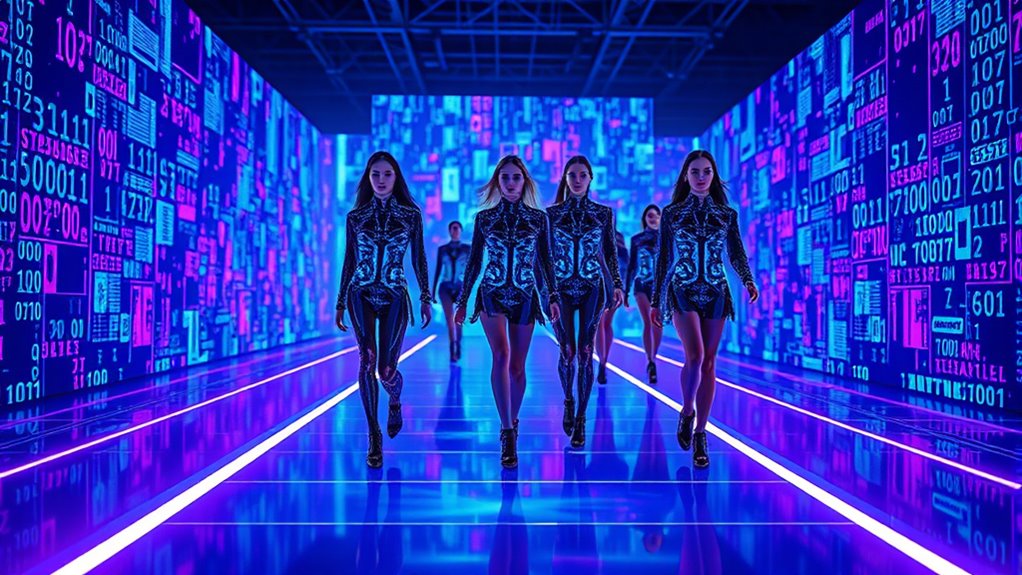

Digital fashion shows and virtual runways are changing how you experience fashion by moving events online with immersive technologies like AR and 3D visualization. These formats make collections more accessible, interactive, and engaging, often featuring celebrities and influencers who boost excitement and trend appeal. As you explore these digital showcases, you’ll discover how brands are blending technology, storytelling, and star power to create innovative, inclusive fashion experiences. Keep going to uncover even more about this exciting evolution in fashion.
Key Takeaways
- Digital fashion shows and virtual runways replace physical events, offering immersive experiences through screens and digital platforms.
- Augmented Reality (AR) enhances virtual showcases with interactive try-ons, detailed views, and environmental visualization of garments.
- Celebrity endorsements during virtual shows boost visibility, create buzz, and make collections more relatable and exciting.
- Combining AR with celebrity participation amplifies engagement, providing real-time, personalized experiences that drive online exploration.
- These digital formats are redefining fashion discovery, democratizing access, and fostering a global, innovative industry environment.
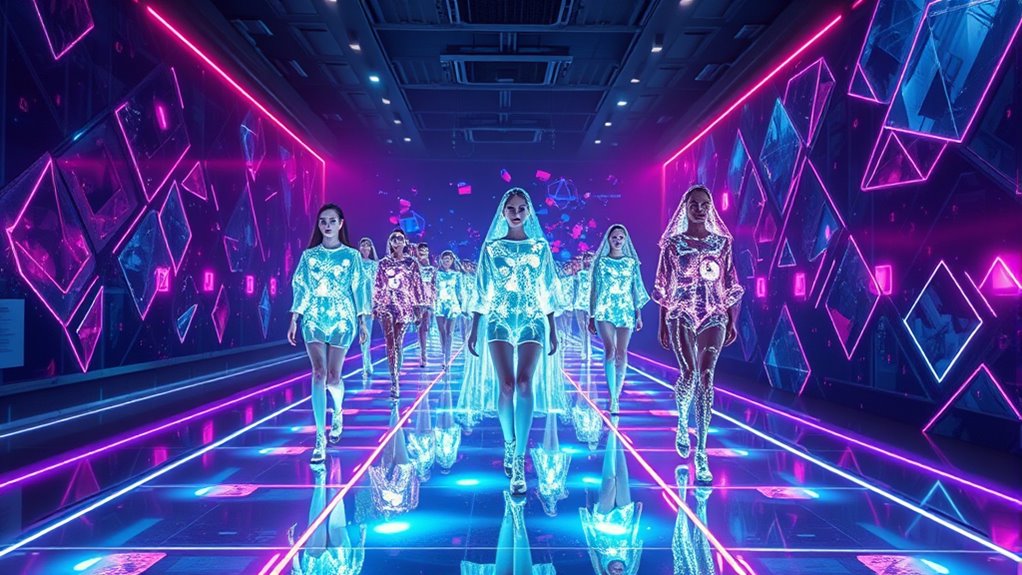
Digital fashion shows and virtual runways are transforming how designers showcase their collections, making fashion more accessible and innovative. Instead of traditional brick-and-mortar events or physical runway shows, you now experience the excitement through screens, immersing yourself in a new era of style. Augmented Reality (AR) plays a key role in this evolution, allowing you to virtually try on outfits or see how pieces look in your environment. Imagine opening an app and instantly seeing a designer’s latest collection superimposed onto your living room or mirror. This technology bridges the gap between online shopping and physical experience, making it easier for you to connect with collections from anywhere in the world.
AR also enhances the storytelling behind a collection, giving you a more interactive and personalized experience. You can explore intricate details or view garments from different angles, all from your device. Many brands are integrating AR into their virtual runway shows, providing a richer, more engaging way to experience fashion. This not only democratizes access—since you don’t need to attend in person—but also allows for more creative expression. Designers experiment with augmented reality backdrops, 3D models, and interactive elements that captivate viewers like you. It’s no longer just about watching a show; it’s about participating in it.
Celebrity endorsements are another powerful element in digital fashion shows. When you see your favorite celebrities or influencers wearing a designer’s pieces during a virtual runway, it amplifies the collection’s reach. These endorsements often appear in real-time, on social media, or as part of digital events, giving you instant access to trends and style inspiration. Celebrities lend their influence to virtual shows, making them more relatable and exciting for you. Their presence can turn a simple digital presentation into a must-see event, sparking conversations and driving engagement across platforms.
The combination of AR and celebrity endorsements creates a buzz that traditional fashion shows can’t match. You get to see top-tier personalities endorsing collections in real-time, often wearing the latest pieces in interactive formats. This synergy makes fashion feel more immediate and personal, encouraging you to explore and purchase designs directly through online platforms. Virtual runways now serve as both a showcase and a marketing tool, with celebrity presence adding credibility and allure. As a viewer, you’re no longer just an observer—you’re part of a global, interactive fashion experience that’s constantly evolving.
Furthermore, the use of passive voice detection tools can help designers and marketers craft more engaging and direct messaging, making their communication clearer and more impactful.
In essence, digital fashion shows and virtual runways are redefining how you discover, engage with, and influence fashion trends. With AR providing immersive experiences and celebrity endorsements amplifying reach, you’re at the forefront of a more inclusive, innovative, and dynamic fashion landscape.

RayNeo Air 3s AR/XR Glasses, 201" at 6m, 120Hz FHD HueView Display, Portable AR Video Eyewear Gaming Glasses for iPhone 17/16/15, Android, Mac, Switch, PS5, Steam Deck – 3S-Silver
[Quantum Leap in Image Quality]:RayNeo's latest HueView empowers vision with 98% DCI-P3, ΔE <2 color accuracy, 200,000:1 infinite…
As an affiliate, we earn on qualifying purchases.
As an affiliate, we earn on qualifying purchases.
Frequently Asked Questions
How Do Virtual Runways Impact Traditional Fashion Week Schedules?
Virtual runways impact traditional fashion week schedules by reducing scheduling conflicts, allowing designers to showcase collections more flexibly. You can reach a global audience, boosting engagement beyond physical attendance. This shift means less pressure on physical venues and more opportunities for audiences to engage online at their convenience. Overall, virtual runways make fashion week schedules more adaptable, increasing audience engagement and streamlining the presentation process for designers.
What Are the Environmental Benefits of Digital Fashion Shows?
You’ll notice digital fashion shows markedly reduce your environmental impact by cutting down on travel and physical resources. They promote the use of sustainable materials in designs, which lessens your overall carbon footprint. By shifting to virtual presentations, you help conserve energy and reduce waste, making the fashion industry more eco-friendly. This approach encourages sustainable practices, allowing you to enjoy stylish innovation while actively supporting environmental preservation.
How Do Designers Monetize Virtual Runway Presentations?
You monetize virtual runway presentations through digital licensing, allowing brands to sell virtual outfits or experiences directly to consumers. You also leverage virtual collaborations with other designers or brands, creating exclusive digital collections that generate revenue. By offering these digital assets for licensing or partnerships, you tap into new income streams while expanding your reach. These methods not only boost your profits but also enhance your brand’s digital presence and engagement.
Can Virtual Fashion Shows Replace Physical Retail Experiences?
Virtual fashion shows can’t fully replace physical retail experiences, but they substantially enhance digital accessibility and global reach. For example, over 60% of consumers now shop online, making virtual shows a powerful way to connect with audiences worldwide. You can explore new collections from anywhere, breaking geographical barriers, and engaging more diverse customers. While in-person shopping offers tactile experiences, virtual events complement retail by expanding exposure and accessibility.
What Technology Innovations Are Driving Virtual Runway Experiences?
You’re leveraging augmented reality and 3D modeling to create immersive virtual runway experiences. Augmented reality lets you overlay digital garments onto real-world settings, making interactions more engaging. Meanwhile, 3D modeling helps you design highly realistic, detailed outfits that viewers can explore from multiple angles. These innovations enable you to deliver mesmerizing virtual runway shows that captivate audiences and showcase fashion in new, interactive ways, pushing the boundaries of traditional presentations.

Fashion Angels 12103 Virtual Reality Portfolio Virtual Reality Runway
BE YOUR OWN FASHION DESIGNER!
As an affiliate, we earn on qualifying purchases.
As an affiliate, we earn on qualifying purchases.
Conclusion
As you explore digital fashion shows and virtual runways, you experience innovation, creativity, and limitless possibilities. You see how technology transforms design, how imagination breaks free from physical bounds, and how fashion becomes more accessible, sustainable, and inclusive. Embrace the future where art meets technology, where boundaries dissolve, and where you become part of a new fashion frontier. In this digital era, your style evolves, your perspective broadens, and your role in fashion’s next chapter begins.
augmented reality clothing mirror
As an affiliate, we earn on qualifying purchases.
As an affiliate, we earn on qualifying purchases.
celebrity endorsed virtual fashion
As an affiliate, we earn on qualifying purchases.
As an affiliate, we earn on qualifying purchases.