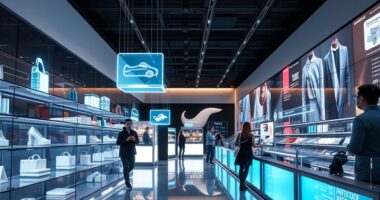
The post-labor economy is transforming retail by increasing automation, leveraging AI, and enhancing personalized shopping experiences. As technology reshapes how consumers shop, traditional jobs decline while new opportunities emerge. Price sensitivity and demand for affordable brands grow, influenced by economic pressures like inflation and slower wage growth. To stay ahead, retailers innovate with augmented reality and private labels. Keep exploring to understand how these shifts impact your shopping habits and the future of retail.

Get the latest gadgets delivered free — and shop member deals
- Fast, free delivery on millions of items
- Access to Prime Big Deal Days deals on October 6–7
- Prime Video, Amazon Music and more included
Key Takeaways
- Automation and AI are transforming retail jobs, reducing traditional roles and shifting employment toward tech and customer experience positions.
- Consumer spending shifts toward private labels and online channels, reflecting changing job security and income dynamics.
- Retail innovation, like augmented reality, enhances shopping experiences, compensating for decreased in-store employment opportunities.
- Economic pressures, including inflation and supply chain issues, influence retail prices and consumer purchasing power in the post-labor economy.
- The retail sector is adapting to demographic shifts and evolving lifestyles, emphasizing flexibility, digital engagement, and sustainability.

As the post-labor economy takes shape, the retail sector is experiencing significant shifts that impact consumer behavior and industry growth. In August 2025, US retail sales grew by 0.6% month-over-month, continuing a robust upward trend from July. Online retailers led the way with a 2% increase, reflecting the ongoing dominance of e-commerce. Clothing, sporting goods, food services, and motor vehicles also saw notable gains, signaling resilient consumer demand. Meanwhile, some sectors, like miscellaneous store retailers and furniture, experienced declines, hinting at changing spending priorities and economic pressures. When you strip out the most volatile sectors, core retail sales still rose by 0.7%, indicating underlying strength in consumer spending despite uncertainties. These figures highlight retail’s role as a barometer of economic resilience amid shifting employment patterns and automation. Despite rising costs, retail sales are projected to continue growing steadily, demonstrating consumer adaptability. Maintaining a clean and organized environment can significantly enhance mental well-being for both consumers and employees. Looking ahead, consumer spending is expected to grow by 3.1% in 2025, driven primarily by a 4.7% increase in durable goods. You’re likely to see more diverse consumer demographics, with varying ages, household types, ethnic backgrounds, and lifestyles challenging traditional retail forecasts. Inflation still influences your purchasing decisions, especially in groceries, where prices have surged 20% over the past four years. As a result, shoppers tend to favor affordable brands, private labels, “dupes,” and seasonal promotions like Black Friday and Cyber Monday. Economic uncertainties, tariff impacts, and potential interest rate hikes could slow spending growth or tighten your budget further. The retail industry’s size and growth projections underscore its importance. Globally, the market is expected to reach $35.2 trillion in 2025, expanding at a 7.65% CAGR through 2030. In the US, retail sales hit $7.26 trillion in 2024 and are projected to surpass $8.29 trillion by 2030. Retail remains a major employer, supporting over 55 million jobs, and integrating advanced technologies. By 2025, about 80% of retailers plan to adopt AI tools to improve personalization and efficiency, transforming how you shop. Augmented reality is also gaining traction, valued at nearly $20 billion, offering immersive shopping experiences. These technological advances are reshaping retail engagement, making it more interactive and tailored to your preferences. Labor market conditions continue to influence retail’s trajectory. The US economy is forecasted to add around 800,000 jobs in 2025—slower than the previous year’s two million—raising the unemployment rate slightly to 4.5%. Wage growth remains steady but decelerates, meaning your income growth might not keep pace with inflation. Personal income, after adjusting for inflation, is expected to increase by just 1.4%, down from 2.7% in 2024. With inflation sticking around 3%, driven by tariffs and supply chain issues, retail costs and prices stay elevated. Despite these challenges, retail remains the largest private-sector employer and a crucial contributor to the US economy, supporting millions of jobs and generating trillions in economic activity. The sector’s evolution signals a fundamental shift in how you will experience shopping and consumption in the post-labor era.
augmented reality shopping glasses
As an affiliate, we earn on qualifying purchases.
As an affiliate, we earn on qualifying purchases.
Frequently Asked Questions
How Will Consumer Behavior Change in a Post-Labor Economy?
In a post-labor economy, you’ll likely become more pragmatic and value-conscious, seeking hybrid products and secondhand luxury deals. You’ll prioritize local, authentic experiences and demand transparency, especially around sustainability. Expect increased price sensitivity, leading you to trade down or shop across multiple stores for specific needs. Impulse buying will rise via quick commerce, but you’ll stay cautious, balancing spending on luxury and travel with your financial comfort.
What New Job Opportunities Will Emerge in Retail?
You’ll find new retail jobs focused on technology, like AI specialists, data analysts, and software developers, supporting automation and digital platforms. You’ll also see roles in personalized customer experiences, safety, and sustainability, such as retail trainers, environmental engineers, and cybersecurity experts. Delivery drivers with tech skills will be in high demand, alongside advisory sales roles. These opportunities blend digital expertise with frontline service, creating diverse, evolving careers in retail.
How Can Retailers Adapt to Automation-Driven Cost Reductions?
You can adapt to automation-driven cost reductions by embracing new technology and focusing on customer experience. Invest in AI-powered inventory systems, smart shelves, and contactless payment options to streamline operations and cut costs. Train your staff to handle advanced tools and provide personalized service, creating a balance between automation and human touch. This approach boosts efficiency, satisfies customers, and positions your retail business for future growth.
What Are the Ethical Concerns With AI Replacing Human Workers?
AI replacing human workers sparks serious ethical concerns, and you should pay close attention. You might worry about job security, loss of autonomy, and rising inequality, especially if access to AI training isn’t fair. When AI deskills roles or makes decisions without human oversight, it threatens dignity and fairness. It’s vital for companies to be transparent and support workers through ethical AI integration to prevent widespread harm and guarantee everyone benefits.
How Might Government Policies Support Displaced Retail Workers?
You can benefit from government policies that support displaced retail workers by accessing retraining programs and vocational grants, which help you learn new skills for growing industries. Take advantage of unemployment benefits and retraining allowances to ease financial burdens during *shifts*. Explore entrepreneurship opportunities with startup grants and small business loans. Additionally, utilize career counseling and digital literacy training to stay adaptable and find new, rewarding job opportunities in a changing economy.
Conclusion
As you face this post-labor economy, remember that retail jobs have already dropped by over 30% since 2000. This shift means you’ll see fewer traditional roles, but also new opportunities in automation and technology. Embrace the change, because the retail landscape is evolving fast. Staying adaptable and tech-savvy will help you thrive in this new world where the old rules no longer apply. The future belongs to those who can keep up.
Fall Picks
fall essentials
As an affiliate, we earn on qualifying purchases.