
TL;DR
For wireless earbuds for workouts, prioritize a secure, comfortable fit, a suitable water-resistance rating, easy controls, and battery life that covers your sessions. Choose an awareness mode or open-ear design for outdoor exercise, and dry earbuds fully before charging after a sweaty workout.
A loose earbud can turn a steady run into a one-handed game of catch. The right pair should stay comfortable through the movement you actually do, whether that means lifting under bright gym lights or jogging past wet leaves and traffic.

Get the latest gadgets delivered free with Prime
- Fast, free delivery on millions of items
- Prime Video, Amazon Music and more included
- Member-only deals all year
This guide shows you how to choose wireless earbuds for workouts by fit, water resistance, sound, awareness, controls, and battery life. You’ll also get a simple way to match designs to activities and a practical cleaning routine, so you can focus on your session instead of your ears.
Test several ear-tip sizes in both ears, then try the movements your workout includes.
Treat IPX4 as splash resistance under test conditions, not swimming protection or a promise against long-term wear.
For outdoor runs, use a suitable awareness setting, moderate volume, and attention to local rules and surroundings.
Check battery claims against your typical session length and the features you use, especially noise cancellation.
Wipe sweaty earbuds and let them dry fully before charging; follow the maker’s care instructions.
Choose a fit that stays put without pinching
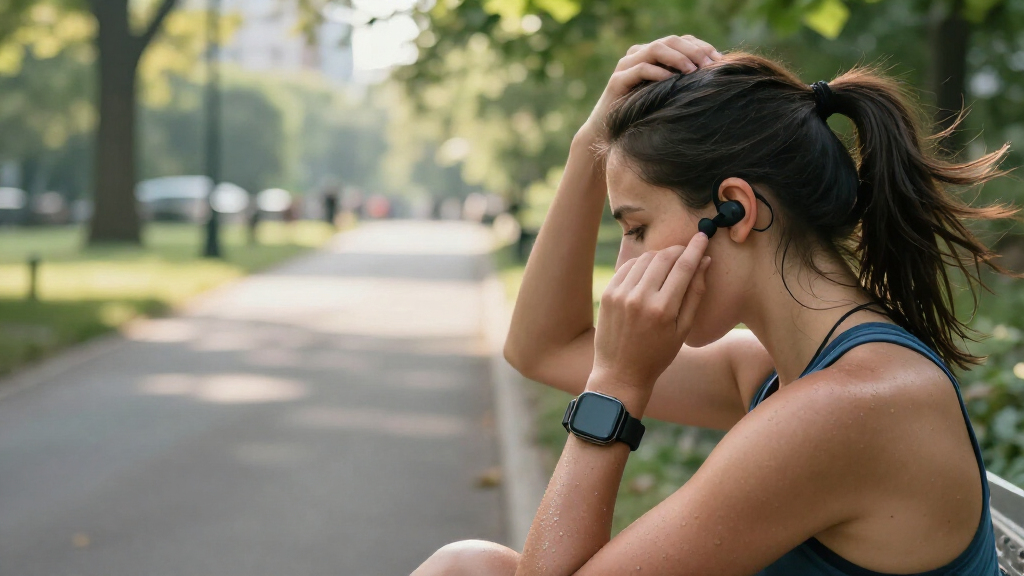
Wireless earbuds for workouts should stay seated when you move and feel comfortable across a full session. A secure fit means the earbud holds its position without you having to press it back in or tolerate painful pressure. That balance matters during running, jumping, and sets where you grip weights with both hands.
Start by trying each included ear-tip size. A tip that is too small can slip loose; one that is too large can feel like a cork pushed too far into a bottle. Fit both ears, since they may need different sizes, and turn or press the buds only as the manufacturer directs. Walk, shake your head gently, and do a few bodyweight squats before trusting them on a run.
If standard in-ear buds loosen during a treadmill sprint, try models with wing tips or ear hooks. Open-ear headphones sit outside the ear canal and can suit people who dislike the plugged feeling, though their sound and bass may differ. The right fit is personal: a snug seal can improve stability, but soreness is a sign to adjust the tip or try another design.
Think of fit like a well-laced running shoe: snug enough to move with you, never so tight that you notice every step. If a bud keeps slipping, test another tip size or style before deciding the device itself is faulty.
Products Worth Considering

LG UltraGear 27GX700A-B 27-Inch QHD OLED Gaming Monitor

Sonos One (Gen 2) Voice-Controlled Smart Speaker, White

DJI Mic 3 Wireless Microphone (2 Transmitters, 1 Receiver, Charging Case)
As an affiliate, we earn on qualifying purchases.
Read the water rating before your next sweaty session
Water resistance ratings tell you how a device performed under specific tests; they do not promise survival through every downpour, sweaty class, or year of hard use. For example, IPX4 means resistance to splashing water under the rating’s test conditions. It is not a swimming rating, and it does not guarantee that sweat or moisture will never cause damage.
That distinction matters after a humid indoor cycling class. Salt from sweat, skincare products, and everyday wear can affect materials over time, even when earbuds carry a water-resistance rating. Think of the rating as a rain jacket’s label: useful for choosing gear, but not a reason to leave it wet in a bag.
Check the rating for both the earbuds and their charging case; the case may have different protection. Most workout earbuds are not designed for swimming, so don’t assume you can use them underwater just because they tolerate splashes. Product specifications and ratings can change as models are updated, so check the current manufacturer listing before buying.
After a sweaty session, wipe your earbuds with a soft, dry cloth and let them air-dry before placing them in the case. Follow the maker’s care instructions, particularly for removable tips. Drying matters because a damp earbud sealed in a charging case stays in a small, enclosed space instead of drying in open air.
Match the design to your gym, run, or ride
The right workout design depends on how you move and what you need to hear. Compact in-ear buds may be easy to pack, while ear-hook models emphasize stability and open-ear styles leave your ear canal unobstructed. No single shape wins every workout; your setting changes what matters most.
For strength training, a comfortable in-ear fit and buttons you can operate between sets may be enough. During an outdoor run, being able to hear a bicycle bell or approaching traffic may matter more than strong noise cancellation. On a noisy gym floor, open-ear audio can be harder to hear clearly, while sealed buds can block more of the room.
Use this quick comparison as a starting point:
| Workout | What to prioritize | Possible tradeoff |
|---|---|---|
| Weight training | Comfort, sweat resistance, simple controls | A snug seal may feel tiring in a long session |
| Outdoor running | Stable fit and awareness of surroundings | Open-ear sound may have weaker bass |
| Indoor cycling | Secure fit, clear sound, easy volume control | Strong isolation can make class instructions harder to hear |
| Cycling near traffic | Environmental awareness and attention | Headphones should not distract you from road conditions |
Bluetooth lets earbuds connect to a watch, but that alone does not provide music: your watch needs compatible playback, stored tracks, or a supported streaming connection. Check device and service compatibility before leaving your phone in the locker.
Stay aware when you run outside
Awareness matters outdoors because earbuds can make it harder to hear people, vehicles, and other sounds around you. Transparency or ambient modes can let more outside sound reach your ears, and open-ear headphones keep the ear canal unobstructed. Both choices may help, but neither replaces paying attention to your route.
Imagine jogging on a shared path as a cyclist approaches from behind. If your music is loud and noise cancellation is active, you might miss a bell even with an awareness mode available. Keep the volume moderate, choose a familiar route when possible, and check local rules about headphone use for running or cycling.
Noise cancellation can be useful on a treadmill beside a row of clattering machines. Outside, however, you may prefer a mode that lets you hear the world. Some recent products advertise adaptive cancellation, improved transparency, or better wind-noise handling, but performance varies by model. These are product claims to check in current specifications and reviews, not guarantees that you will hear every warning.
An awareness mode is a tool, not a substitute for attention. If the route is busy or visibility is poor, choose audio and volume settings that leave you able to respond to what is around you.
A useful test: stand somewhere quiet and switch between listening modes before you run. Notice how much outside sound reaches you, then decide whether the result suits your route.
Make battery life and controls fit your routine
Battery life should cover your real routine, including the trip to the gym and your cooldown, rather than just the workout itself. Advertised listening time comes from particular test conditions. Volume, calls, noise cancellation, and battery age can all affect actual playback.
If you train for 45 minutes four times a week, the earbuds’ own charge may be enough for several sessions—but only if their real playback time matches your needs. A charging case adds extra listening time, while quick charging can help when you notice a low battery on the way out the door. Think of the case as a water bottle: useful backup, but you still need to remember to bring it.
Controls deserve a hands-on check. Physical buttons can be easier to find with sweaty fingers, while touch controls may suit you if you prefer a smooth shell. Try pausing, changing volume, and switching awareness modes without staring at the buds. Multipoint Bluetooth may help if you switch between a phone and tablet, but check that it supports the devices you actually use.
On a chilly morning, complicated touch gestures can be frustrating when you just want to pause a track before crossing a street. Good controls make everyday choices quick, while reliable pairing saves you from troubleshooting instead of warming up. Fitness sensors, spatial audio, and other extras vary by product; judge them by useful performance rather than their presence on a spec sheet.
Use this five-step check before you buy
A quick fit-and-function check can reveal more than a long feature list. Compare earbuds against the movements and places in your normal week, then test the basics before your first serious workout.
- Pick your main activity. Decide whether you mostly lift, run outdoors, cycle indoors, or mix workouts. If you run beside traffic, awareness should rank high on your list.
- Try the fit in both ears. Test every tip size and move your head, jaw, and body. If you get pressure or a loose seal, adjust the size or try wings, hooks, or an open-ear design.
- Check the rating and care instructions. Confirm what the IP rating covers and check the charging case separately. Treat splash resistance as limited protection, not permission to swim.
- Test controls and connection. Pair the earbuds with your intended phone or watch. Pause audio and adjust volume with the controls you’ll use in a sweaty session.
- Compare real-world value. Weigh comfort, durability, warranty, and battery needs against premium features such as adaptive noise cancellation. A higher price only helps if the features suit your routine.
This is also a good way to compare products at home: wear a candidate while walking around before committing to it for intervals. A short fit check may catch a sore spot that a glossy specification sheet cannot.
Sound matters too, but strong bass is personal preference, not a workout requirement. A reliable fit and usable controls often make more difference to the session than a technical audio feature you rarely notice.
Clean sweaty earbuds so they stay pleasant to wear
Cleaning after exercise helps remove moisture and residue from the parts that touch your ears. After a hot workout, take off removable tips only if the manufacturer says you can, wipe them and the earbud as directed, and let every part dry before reassembly or charging.
Imagine dropping earbuds straight into their closed case after a spin class: warm moisture sits against small surfaces and can leave a stale smell. A few minutes of wiping and air-drying gives them time in open air instead. Don’t rinse or submerge them unless the manufacturer specifically says the design supports that cleaning method.
Check the nozzle and accessible surfaces for buildup, using only the cleaning tools and products the maker allows. Avoid pushing debris deeper into the earbud. If you use a cloth or brush, keep it gentle; delicate mesh can be damaged by force or sharp tools.
Comfort is part of care, too. If your ears feel sore or irritated, take a break and check the fit and cleanliness of the tips. Persistent pain or irritation is a reason to stop wearing the earbuds and seek appropriate medical advice. High volume can harm hearing, so keep listening moderate and give your ears quiet breaks during long sessions.
Frequently Asked Questions
What IP rating should I look for in workout earbuds?
Start by checking the manufacturer’s stated rating and what it covers. IPX4 indicates resistance to splashes under specified test conditions, but it does not mean the earbuds are made for swimming or protected indefinitely from sweat.
Check the case rating separately, and follow the maker’s cleaning and drying guidance after exercise.
How do I stop earbuds from falling out while running?
Try every included ear-tip size and check whether each bud feels secure without painful pressure. A short walk, head shake, and a few gentle jumps can help you check the fit before heading out.
If standard tips still loosen, consider wing tips, ear hooks, or open-ear designs. Ears vary, so the best option may be a different shape rather than a tighter fit.
Are noise-cancelling earbuds safe for outdoor running?
Noise cancellation can make it harder to hear what is around you. Use transparency or ambient mode if it helps, keep volume moderate, and pay close attention to traffic and other people.
Awareness modes do not guarantee that you will hear every sound. Check local rules, especially if you run or cycle near roads.
Are open-ear headphones better for exercise?
Open-ear designs leave your ear canal unobstructed, which can help you hear more of your surroundings and may feel less intrusive. They can have weaker bass and may be harder to hear in a noisy gym.
They suit some outdoor runners, while a stable in-ear pair may suit someone training beside loud equipment. Fit and setting should guide your choice.
Can I wear workout earbuds in the rain or while swimming?
Some earbuds have ratings for splashes, but water-resistance ratings describe specific test conditions and differ from one product to another. Splash resistance does not mean swimming protection.
Check the manufacturer’s instructions before wearing them in rain, and don’t swim with them unless they are specifically designed for that use.
How should I clean earbuds after a sweaty workout?
Follow the maker’s care instructions, wipe the earbuds with a soft, dry cloth, and remove tips for separate cleaning only if allowed. Let all parts dry fully before charging.
Avoid rinsing, soaking, or using cleaning products unless the manufacturer approves them. Gentle care helps protect small surfaces and charging contacts.
Conclusion
Choose earbuds around the workout you actually do: a secure, comfortable fit first, then suitable water resistance, useful controls, and the right level of awareness. A feature list can’t tell you whether a tip will pinch after 30 minutes or whether you’ll hear a bicycle bell.
Try them with the movements you train, keep outdoor listening attentive, and give damp earbuds time to dry. Then let the music carry you through the last hill or the final set.