
The Apple Watch Series 11 takes my best overall spot among premium smartwatches thanks to its class-leading display, app ecosystem, and refined health tracking, while the Samsung Galaxy Watch Ultra2 wins for Android users who want a titanium flagship with LTE flexibility, and the Garmin fēnix 8 Pro stands above everything else for serious outdoor athletes. The main tradeoff in this category is straightforward: Apple and Samsung deliver the smartest watch experiences with multi-day-at-best battery life, while Garmin models last weeks but feel more like training tools than wrist computers. Price also clusters oddly — several older Ultra models sit alongside their successors, so knowing which generation to buy matters. Keep reading for the full ranked breakdown and which model fits your wrist, phone, and workout style.

Get the latest gadgets delivered free with Prime
- Fast, free delivery on millions of items
- Prime Video, Amazon Music and more included
- Member-only deals all year
Complete the kit



Key Takeaways
- Phone ecosystem remains the single biggest deciding factor: the Apple Watch Series 11 and SE 3 only make sense with an iPhone, while the Galaxy Watch 8 and Ultra line lose features when paired outside Samsung‘s ecosystem.
- Garmin dominated the battery conversation — the Instinct 3 Solar and both fēnix 8 models measured endurance in weeks, while every Apple and Samsung pick needed charging within one to three days.
- Older-generation flagships (the 2024 Galaxy Watch Ultra models) offer nearly identical hardware to their successors at a lower effective tier, making them the smart value plays over the Ultra2.
- Sapphire glass and titanium cases separated true premium builds from merely expensive ones — the Amazfit Active 2 Premium and Garmin fēnix 8 Sapphire punch above their price tier on materials.
- The Apple Watch SE 3 and Amazfit Active 3 emerged as gateway picks: they carry the core smartwatch experience of their pricier siblings while cutting advanced sensors and premium casework.
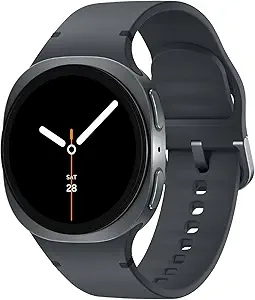


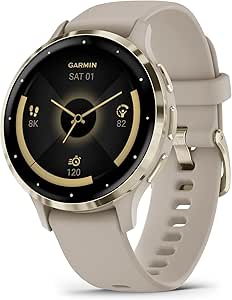


| premium smartwatch | Connectivity | Battery Life | Water Resistance | Display |
|---|---|---|---|---|
| Samsung Galaxy Watch 8 | Bluetooth | — | — | — |
| Amazfit Active 2 Premium Smart | — | Up to 10 days (typical use) | 50m | 1.32" AMOLED |
| Garmin Instinct® 3 Solar Rugge | — | Unlimited in smartwatch mode with solar | 10 ATM | 1.1 inches |
| Garmin vívoactive 5 GPS Fitnes | — | Up to 11 days in smartwatch mode | — | AMOLED |
| Apple Watch Series 11 GPS Smar | GPS (paired with iPhone or Wi-Fi) | Up to 24 hours of normal use | — | Always-on |
| Garmin Venu 3S | Phone calls, texts, music storage, Garmin Pay | Up to 10 days | — | — |
| Apple Watch SE 3 GPS 44mm Smar | GPS | Up to 18 hours | Water resistant | — |
| Garmin fēnix 8 Pro | LTE, inReach satellite technology | Up to 15 days (smartwatch mode) | 40-meter dive rating | 1.4-inch AMOLED touchscreen |
| Garmin Venu 4 Advanced Fitness | — | Up to 12 days | — | Bright, colorful AMOLED |
| Samsung Galaxy Watch Ultra | LTE | — | 10ATM (up to 100m), IP68 | — |
| Samsung Galaxy Watch Ultra2 Sm | LTE | — | 10ATM, IP69K, up to 100m | — |
| Amazfit Active 3 Smart Watch | Bluetooth calls, voice control | Up to 12 days | — | 1.32" AMOLED |
| Samsung Galaxy Watch Ultra | LTE | — | 10ATM | — |
| Samsung Galaxy Watch Ultra | LTE | — | 10 ATM / IP68, up to 100m | — |
| Garmin fēnix 8 Sapphire 43mm G | Smartphone pairing, Garmin Pay | Up to 10 days in smartwatch mode | 40-meter dive rating | 1.3-inch AMOLED |
More Details on Our Top Picks
Samsung Galaxy Watch 8 (2025) 40mm Bluetooth Smartwatch – Graphite
This option stands out for pairing a thinner, lighter design with genuinely useful health intelligence rather than raw specs. The Energy Score with Galaxy AI and Advanced Sleep Coaching turn scattered metrics into a readable daily picture, which the Garmin vívoactive 5 matches in breadth but not in interpretive depth. Compared with the Apple Watch Series 11, it wins on multi-day battery comfort and blood pressure monitoring, though that feature requires calibration with a separate cuff. The 40mm case suits smaller wrists better than the chunkier 47mm Galaxy Watch Ultra models, which trade comfort for ruggedness most buyers never need.
The tradeoff is ecosystem lock-in: there is no iOS support at all, and some features work best with a Samsung phone rather than any Android device.
Pros:- Advanced Sleep Coaching and Energy Score make health data actionable
- Running Coach provides real-time feedback and structured 5K-to-marathon programs
- Thinner and lighter than previous Galaxy generations for all-day comfort
- Blood pressure monitoring alongside core heart rate tracking
Cons:- Android-only; no iOS support whatsoever
- Blood pressure monitoring requires a separate cuff for calibration
Best for: Android owners, especially Samsung phone users, who want health insights and coaching in a compact everyday watch
Not ideal for: iPhone users — it simply won’t pair, and the blood pressure feature needs a separate calibration cuff
- Case Size:40mm
- Color:Graphite
- Connectivity:Bluetooth
- Compatibility:Samsung and other Android smartphones
- Key Health Features:Advanced Sleep Coaching, Energy Score, blood pressure monitoring
- Required Apps:Galaxy Wearable, Samsung Health, Samsung Health Monitor
- Warranty:2-year warranty
Our verdict“The most balanced premium pick for Android users who want smart health coaching without a rugged or oversized case.”
Amazfit Active 2 Premium Smart Watch, 1.32″ Sapphire Glass, GPS, iOS/Android Compatible
This pick makes the most sense for buyers who want genuinely premium materials without a flagship price. The stainless steel case and sapphire glass give it durability that the aluminum Apple Watch Series 11 can’t match, and the included leather strap plus silicone sport band covers both office and trail use in one box. Where the Garmin vívoactive 5 charges extra for navigation depth, this model includes free offline maps with turn-by-turn directions and works with both iOS and Android — unlike the Galaxy Watch 8. Battery life of up to 10 days also embarrasses the Apple Watch’s single day.
The compromises: it lacks an app ecosystem as rich as Apple’s or Samsung’s, and speech-to-text replies only work on Android, so iPhone owners get a more limited smart experience.
Pros:- Sapphire glass and stainless steel construction at a mid-tier price point
- Up to 10 days of battery life
- Free offline maps with turn-by-turn navigation and ski resort guidance
- No subscription fees for the Zepp app
Cons:- Speech-to-text message replies limited to Android
- Smarter app ecosystem trails Apple and Samsung alternatives
Best for: Budget-conscious buyers who want sapphire glass, GPS maps, and cross-platform support without flagship pricing
Not ideal for: iPhone users who rely on voice replies to messages — that feature is Android-only
- Display:1.32″ AMOLED
- Glass:Sapphire
- Case Material:Stainless steel
- Battery Life:Up to 10 days (typical use)
- GPS:5 satellite positioning systems
- Sports Modes:160+
- Water Resistance:50m
- Compatibility:iOS and Android (Zepp app, free)
Our verdict“The smartest spend in the lineup for buyers who prioritize build quality and battery over deep smartphone integration.”
Garmin Instinct® 3 Solar Rugged GPS Smartwatch, 50mm, Charcoal
This model is better suited to people whose watches take abuse, because it’s built like a tool rather than jewelry. The fiber-reinforced polymer case and 10 ATM water resistance out-toughen every AMOLED option here, and solar charging delivers effectively unlimited smartwatch battery in good light — a claim the vívoactive 5 and Apple Watch Series 11 can’t approach. The built-in LED flashlight and multi-band GPS with SatIQ are practical trail features the Amazfit Active 2 partially matches on navigation but not on positioning accuracy or durability.
The tradeoff is the 1.1-inch display: it’s a low-resolution MIP-style screen, so anyone wanting the vivid visuals of a Venu 3S or Galaxy Watch 8 will find it dated. Garmin’s menu structure also takes patience to learn.
Pros:- Effectively unlimited battery in smartwatch mode with solar charging
- Rugged 10 ATM design with shock-resistant build
- Built-in LED flashlight is genuinely useful outdoors
- Multi-band GPS with SatIQ plus compass and barometric altimeter
Cons:- Small 1.1-inch display looks dated next to AMOLED rivals
- Complex feature set has a real learning curve
Best for: Hikers, backpackers, and outdoor athletes who need a watch that survives rough conditions and never dies on a multi-day trip
Not ideal for: Buyers who want a bright, colorful display and simple interface — the small screen and Garmin menus demand patience
- Display:1.1 inches
- Case Size:50mm
- Material:Fiber-reinforced polymer with metal-reinforced bezel
- Water Resistance:10 ATM
- Battery Life:Unlimited in smartwatch mode with solar
- Navigation:Multi-band GPS with SatIQ, 3-axis compass, barometric altimeter
- Extras:LED flashlight, Garmin Pay, incident detection
Our verdict“The clear choice for adventurers who value survivability and endless battery over screen beauty.”
Garmin vívoactive 5 GPS Fitness Smartwatch, 42 mm, Black
This option stands out for translating training science into adaptive coaching anyone can follow. With more than 30 sport apps, HRV status, and training plans that adjust to your recovery, it’s the middle ground between the rugged Instinct 3 Solar and the more expensive Garmin Venu 3S — same AMOLED brightness and health depth, less premium casing. The 11-day battery beats the Apple Watch Series 11’s 24 hours by a wide margin, and onboard music storage means phone-free runs are easy. The thoughtful wheelchair mode tracking pushes instead of steps is a genuine inclusivity differentiator no rival here offers.
Its health metrics are estimates rather than clinical readings, and some music services behind the download feature require their own accounts, which adds friction.
Pros:- Up to 11 days of battery life in smartwatch mode
- Adaptive training plans across 30+ sports apps
- Broad recovery tracking including HRV status, sleep score, and nap detection
- Onboard music storage for phone-free workouts
Cons:- Health metrics are estimates, not medical readings
- Some music services require separate accounts
Best for: Runners and gym-goers who want adaptive training plans, recovery tracking, and long battery in a light 42mm case
Not ideal for: Buyers wanting clinical-grade health data or advanced smart features like ECG and fall detection — the Apple Watch Series 11 covers those better
- Display:AMOLED
- Case Size:42mm
- Battery Life:Up to 11 days in smartwatch mode
- Sports Apps:30+ indoor and GPS apps
- Health Features:Heart rate, sleep score, HRV status, stress, nap detection
- Music:Music downloads with wireless headphone support
- Accessibility:Wheelchair mode tracking pushes and handcycle activities
Our verdict“A fitness-first pick that outlasts and out-coaches most rivals for buyers who care more about training than smartwatch tricks.”
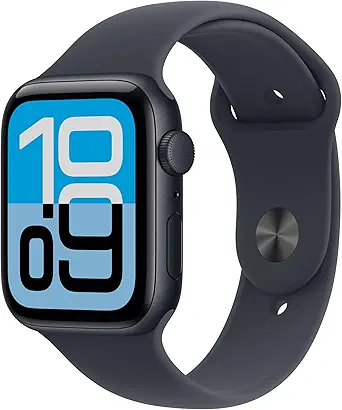
Apple Watch Series 11 GPS Smartwatch, 42mm Jet Black Aluminum Case with Black Sport Band (S/M)
For iPhone owners, this pick makes the most sense as the safety net on your wrist. Fall detection, crash detection with automatic emergency contact, ECG, and potential hypertension notifications form a health-and-safety package no Android-compatible option in this lineup matches — the Galaxy Watch 8 comes closest but stops short of crash detection. Fast charging (15 minutes for 8 hours of use) partly offsets the 24-hour battery, which remains the weakest spec here next to the Amazfit Active 2’s 10 days or the Instinct 3 Solar’s solar charging. The always-on display, 50m water resistance, and IP6X dust rating make it equally at home in the pool or the workshop.
It’s also the least flexible: without an iPhone or Wi-Fi, connectivity features simply stop working.
Pros:- ECG, heart rate alerts, and possible hypertension notifications
- Fall and crash detection with automatic emergency contacts
- Fast charging delivers 8 hours of use in 15 minutes
- 50m water resistance plus IP6X dust rating
Cons:- Requires an iPhone or Wi-Fi for connectivity features
- Battery life tops out at 24 hours of normal use
Best for: iPhone owners who prioritize medical-grade features like ECG and automatic fall or crash detection
Not ideal for: Android users and anyone wanting multi-day battery — it needs nightly charging and an iPhone to function fully
- Case Size:42mm
- Case Material:Jet Black aluminum
- Connectivity:GPS (paired with iPhone or Wi-Fi)
- Battery Life:Up to 24 hours of normal use
- Fast Charging:15 minutes for up to 8 hours of use
- Water/Dust Resistance:50m water resistance, IP6X dust
- Display:Always-on
Our verdict“The safest smartwatch you can buy if you’re on iPhone, provided you accept daily charging.”
Garmin Venu 3S, Premium Fitness Smartwatch, 41mm, French Gray
The Venu 3S proves that a premium smartwatch doesn’t have to swallow your wrist. At 41mm, it fits wearers who find the 47mm Galaxy Watch Ultra or the fēnix 8 Pro outright enormous, yet it keeps the full Garmin health suite: sleep coaching, HRV, stress, and the genuinely useful Body Battery energy monitor. Where the Apple Watch SE 3 dies after 18 hours, this model runs up to 10 days per charge, which changes how you relate to a smartwatch — sleep tracking becomes automatic rather than a nightly charging decision.
The tradeoff is smartwatch polish. Notifications, calls, and Garmin Pay work, but the app ecosystem and interface feel less refined than Apple’s or Samsung’s. Music streaming also demands a premium subscription.
Pros:- Up to 10 days of battery life
- Complete health suite including HRV, stress, sleep, and Body Battery
- Calls, texts, music storage, and contactless payments from the wrist
- Over 30 sports apps including wheelchair activity modes
Cons:- Music streaming requires a paid subscription
- Many features depend on a paired compatible smartphone
- Smartwatch interface and app ecosystem lag Apple and Samsung
Best for: Smaller-wristed buyers and anyone who wants Garmin-grade health tracking in a watch that disappears on the arm
Not ideal for: App-centric users who want the deepest third-party app and Siri/Assistant integration Apple and Samsung offer
- Display Size:41mm
- Battery Life:Up to 10 days
- Health Monitoring:Heart rate, HRV, stress, sleep, menstrual and pregnancy tracking
- Sports Modes:Over 30 built-in apps including wheelchair activities
- Connectivity:Phone calls, texts, music storage, Garmin Pay
- Special Features:Body Battery, animated workouts, nap detection
Our verdict“Buy the Venu 3S if you want full Garmin health tracking in a compact, week-plus-battery watch, and skip it if third-party apps are your priority.”
Apple Watch SE 3 GPS 44mm Smartwatch with Midnight Aluminum Case and Midnight Sport Band
The Apple Watch SE 3 is the smartest way into Apple’s ecosystem without paying Series 11 money. It covers the essentials beautifully: always-on display, fast charging that adds roughly 8 hours of use in 15 minutes, and safety features like fall detection that Garmin’s Venu line simply doesn’t match in depth.
The compromise is endurance. Compared with the Venu 3S’s 10-day battery, the SE 3’s 18-hour rating means nightly charging, and the aluminum case feels less rugged than the titanium Galaxy Watch Ultra. It’s also iPhone-only — Android owners gain nothing here. But if you live in Apple’s world and want polished software, tight iPhone integration, and reliable safety features, this pick makes the most sense for the money.
Pros:- Always-on display with glanceable information
- Fast charging: about 8 hours of battery in 15 minutes
- Fall detection and emergency assistance features
- Deep, polished iPhone integration
Cons:- iPhone-only compatibility
- 18-hour battery requires daily charging
- No LTE option on this GPS configuration
Best for: iPhone owners who want core Apple Watch features and safety tools at the most accessible premium price
Not ideal for: Android users (it’s incompatible) and multi-day adventurers who can’t charge a watch nightly
- Model:Apple Watch SE 3
- Size:44mm
- Connectivity:GPS
- Case Material:Midnight aluminum
- Band:Midnight Sport Band
- Battery Life:Up to 18 hours
- Fast Charging:Yes — up to 8 hours in 15 minutes
- Water Resistance:Water resistant
Our verdict“The SE 3 is the premium Apple Watch experience for iPhone owners who value software polish over multi-day battery.”
Garmin fēnix 8 Pro, 47mm, Sapphire, Titanium, Graphite/Black
The fēnix 8 Pro sits at the extreme end of this lineup — and proudly so. Its titanium bezel and sapphire lens outclass the Venu 4’s stainless steel in scratch resistance, while LTE and inReach satellite communication let you stay reachable far beyond cell coverage, something no other watch here offers. Add built-in maps, an LED flashlight, and a 40-meter dive rating, and it becomes a genuine expedition tool rather than a fitness accessory.
Those capabilities come at a cost beyond price: satellite features need an active subscription, setup is fiddly, and at 47mm it’s a heavy, imposing slab next to the Venu 3S. This model is better suited to backcountry users than everyday commuters who’d never leave cell range.
Pros:- Titanium and sapphire construction built for abuse
- LTE plus inReach satellite messaging for off-grid use
- Built-in maps and LED flashlight
- Up to 15 days of battery in smartwatch mode
Cons:- Satellite and LTE features require paid subscriptions
- Satellite setup is complicated
- Premium materials and features push the price well above the rest
Best for: Backcountry hikers, climbers, and divers who need satellite communication, mapping, and near-indestructible build
Not ideal for: Casual fitness trackers and office wearers — it’s heavy, expensive, and its headline features require subscriptions
- Display:1.4-inch AMOLED touchscreen
- Materials:Titanium bezel, sapphire lens
- Connectivity:LTE, inReach satellite technology
- Battery Life:Up to 15 days (smartwatch mode)
- Water Resistance:40-meter dive rating
- Key Features:Built-in maps, health monitoring, LED flashlight, performance metrics
Our verdict“If your weekends involve trailheads rather than treadmills, the fēnix 8 Pro justifies its cost; everyone else should stick with a Venu.”
Garmin Venu 4 Advanced Fitness Smartwatch, 45mm, Brown Leather
The Venu 4 targets the buyer who wants one watch for the gym and the dinner table. Its stainless steel case and brown leather band read as a dress watch, yet underneath sits Garmin’s full monitoring stack: HRV, sleep score, stress, skin temperature, and Body Battery, plus up to 12 days of battery — two days more than the smaller Venu 3S.
Compared with the fēnix 8 Pro, it trades ruggedness and satellite connectivity for a slimmer, dressier profile, which is exactly the point. The catches are real, though: health data is estimation-grade, not medical-grade, Pulse Ox isn’t available in every country, and that leather band needs care — sweat-heavy athletes will want to swap it for silicone, undercutting the style pitch a little.
Pros:- Dressy stainless steel and leather design rare among fitness watches
- Broad health monitoring including HRV, skin temperature, and Body Battery
- Up to 12 days of battery life
- Personalized training plans and animated on-screen workouts
Cons:- Health metrics are estimations, not medical-grade data
- Pulse Ox unavailable in some countries
- Leather band requires maintenance and isn’t swim-friendly
Best for: Style-conscious professionals who want discreet, all-day health tracking without a plastic or rugged look
Not ideal for: Athletes who sweat heavily or swim regularly — the leather band demands maintenance and swapping
- Display:Bright, colorful AMOLED
- Size:45mm
- Materials:Stainless steel case, leather band
- Battery Life:Up to 12 days
- Health Monitoring:Heart rate, HRV, stress, skin temperature, sleep score, Body Battery, Pulse Ox
- Features:Sleep coaching, circadian rhythm alignment, animated workouts, GPS, call functionality
- Health Alerts:Health status alerts and activity logging
Our verdict“The Venu 4 is the pick when you want Garmin’s health engine wrapped in a watch that passes at the office — just plan a sport band for workouts.”
Samsung Galaxy Watch Ultra (2024) 47mm LTE AI Smartwatch with Titanium, White
Samsung’s Galaxy Watch Ultra is the Android answer to the Garmin fēnix line, but with a consumer-friendly twist. The titanium case and 100-meter water resistance handle swimming and hard outdoor use, while AI-driven Energy Scores and wellness insights feel more approachable than Garmin’s data-dense dashboards. LTE connectivity means calls and messages without your phone nearby — a step up from the GPS-only Apple Watch SE 3.
The catch is ecosystem lock-in: full feature access presumes a Samsung Galaxy phone, so Pixel or iPhone owners should look elsewhere. And while Garmin publishes multi-week battery figures for watches like the fēnix 8 Pro, Samsung doesn’t commit to a number here, and real-world endurance with the always-on display is typically measured in days, not weeks.
Pros:- Titanium build rated for rugged outdoor use
- Water resistance to 100 meters, suitable for swimming
- LTE connectivity for phone-free calls and messages
- Personalized AI wellness insights and Energy Score
Cons:- Full feature set requires a compatible Samsung Galaxy phone
- Some functions depend on network and app compatibility
- No official battery life figure — expect days, not Garmin-style weeks
Best for: Samsung Galaxy phone owners who want a rugged, swim-ready LTE watch with friendly AI wellness coaching
Not ideal for: Non-Samsung or iPhone users — core features and setup depend on Galaxy device compatibility
- Model:Galaxy Watch Ultra (2024)
- Size:47mm
- Connectivity:LTE
- Material:Titanium, White
- Water Resistance:10ATM (up to 100m), IP68
- Compatibility:Samsung Galaxy phones
- Features:Heart rate tracking, sleep monitoring, Energy Score, GPS, wellness tips
Our verdict“If you carry a Galaxy phone and want one rugged watch for trails, pools, and phone-free runs, the Galaxy Watch Ultra is the premium Android choice.”
Samsung Galaxy Watch Ultra2 Smartwatch, 47mm, Titanium Gray, LTE
This is the pick that justifies a premium budget better than anything else in this lineup. Compared with the Galaxy Watch Ultra (2024), the Ultra2 adds trail navigation with elevation and pace guidance, AI voice commands without a wake phrase, and an EN13319-certified dive computer from Mares — a genuine scuba-grade capability no other watch here matches. The 5,000-nit display outshines the Garmin fēnix 8 Sapphire in direct sunlight, and the IP69K plus 10ATM rating means mud, pressure washing, and 100m dives are all fair game. The tradeoffs are real: it’s Android-only, the 47mm case dwarfs smaller wrists, and LTE adds monthly carrier fees. But if the budget exists and the phone is Android, this model covers adventure, health, and daily smartwatch duties in one titanium package.
Pros:- Rugged IP69K/10ATM titanium build rated to 100m with EN13319 dive computer support
- Extremely bright 5,000-nit display readable in harsh sunlight
- Built-in LTE for calls and texts without your phone
- Trail navigation with elevation and pace guidance plus heart score and sleep Vitals tracking
Cons:- No iOS support — Android phones only
- Full feature set leans on the Samsung ecosystem and extra apps
- LTE connectivity typically requires an additional carrier plan
Best for: Android users who want one watch for rugged outdoor adventures, diving, and full smartwatch features
Not ideal for: iPhone owners, who get no compatibility, or anyone unwilling to pay recurring LTE carrier fees
- Case Size:47mm
- Color:Titanium Gray
- Connectivity:LTE
- Water Resistance:10ATM, IP69K, up to 100m
- Display Brightness:Up to 5,000 nits
- Dive Certification:EN13319 (Mares app)
- Compatibility:Samsung and other Android smartphones
Our verdict“The most complete premium smartwatch on this list for Android adventurers who want dive-grade durability and top-tier brightness in one device.”
Amazfit Active 3 Smart Watch, 1.32″ AMOLED, GPS, iOS/Android
Not every premium roundup needs every pick to cost a fortune, and the Active 3 earns its slot by delivering the features that actually matter to runners — sapphire glass, six-system GPS, offline maps with rerouting — at a fraction of what the Garmin fēnix 8 Sapphire commands. Its 12-day battery life embarrasses both Galaxy Watch Ultra models, which need far more frequent charging once LTE is active. The 1.32-inch AMOLED is smaller and less bright than Samsung’s 5,000-nit panel, and the Zepp app ecosystem feels thin next to Garmin Connect or Wear OS. There’s also no stated water-resistance rating, which swimmers should treat as a caution. Still, for cross-platform buyers who want GPS accuracy and durability without ecosystem lock-in, this option makes the most sense.
Pros:- Up to 12 days of battery life, far beyond most premium smartwatches
- Sapphire glass and stainless steel frame at a value price
- Accurate GPS with six satellite systems, offline maps, and rerouting
- Works with both iOS and Android
Cons:- Smarter features depend on the Zepp app, which is less polished than Garmin or Samsung platforms
- No published waterproof depth or rating
- App ecosystem is limited compared with Wear OS or watchOS alternatives
Best for: Runners on both iOS and Android who want sapphire durability and long battery life without paying flagship prices
Not ideal for: Swimmers or triathletes, since no official water-resistance rating is provided, and app power users who need a deep ecosystem
- Display:1.32″ AMOLED
- Glass:Sapphire
- Frame:Stainless steel
- GPS:Yes, six satellite systems with offline maps
- Battery Life:Up to 12 days
- Health Monitoring:Heart rate, blood oxygen, stress, sleep
- Connectivity:Bluetooth calls, voice control
- Compatibility:iOS and Android
Our verdict“The sensible pick for cross-platform runners who prioritize battery life and scratch resistance over app depth and water ratings.”
Samsung Galaxy Watch Ultra (2025) LTE Smartwatch, Titanium Silver, 47mm
Sitting between the 2024 Ultra and the Ultra2, this model is the strongest choice for runners specifically, thanks to dual-frequency GPS — the same multi-band accuracy Garmin is known for on the fēnix 8 — paired with structured running coaching and Samsung’s sleep and health tracking. Compared with the Galaxy Watch Ultra (2024), the dual-frequency GPS is the meaningful upgrade: it holds a lock through tall buildings and tree cover where single-band GPS drifts. Blood pressure monitoring is included, but it demands a separately sold calibration cuff, which softens the value of that headline feature. Battery life is endurance-focused but still trails the Amazfit Active 3’s 12 days. If trail navigation and diving don’t matter but precise pace data does, this model beats its siblings on the features runners actually use.
Pros:- Dual-frequency GPS for accurate tracking under obstructions
- Built-in running coaching plus sleep and health monitoring
- Durable titanium build with 10ATM water resistance
- LTE connectivity for phone-free runs
Cons:- Blood pressure readings require a separately sold calibration cuff
- Android smartphones only — no iOS support
- Battery life lags dedicated fitness watches like the Amazfit Active 3
Best for: Serious runners on Android who want dual-frequency GPS accuracy and coaching without Garmin’s price
Not ideal for: iPhone users, and anyone drawn in by blood pressure tracking who doesn’t want to buy a separate cuff
- Case Material:Titanium
- Color:Titanium Silver
- Case Size:47mm
- Connectivity:LTE
- Water Resistance:10ATM
- GPS:Dual-frequency
- Compatibility:Samsung and other Android smartphones
Our verdict“The best GPS-accuracy-per-dollar choice for Android runners who want coaching and LTE in a rugged titanium body.”
Samsung Galaxy Watch Ultra (2024) 47mm LTE Titanium Silver Smartwatch
Buying last year’s flagship is a classic premium play, and the 2024 Ultra still delivers the core experience: titanium build, 100m water resistance, LTE, and personalized wellness insights. What you give up versus the Galaxy Watch Ultra (2025) is dual-frequency GPS — expect some accuracy loss around tall buildings — and versus the Ultra2, the trail navigation and dive computer are absent. Where this model still wins is simple: it covers swimming, hiking, and everyday health tracking at a lower entry point than its successors, and it outclasses the rounder Galaxy Watch 8 (2025) on ruggedness and battery headroom. Feature lock-in is the main catch — several functions want a Samsung Galaxy phone and network connection rather than just any Android. For buyers who want Ultra hardware without Ultra pricing, this is the sensible middle path.
Pros:- Durable titanium build suited to rugged outdoor use and swimming to 100m
- Advanced health tracking with heart rate, sleep, and personalized insights
- LTE connectivity included
- 1-year manufacturer warranty
Cons:- Full feature set requires a compatible Samsung Galaxy phone
- Single-band GPS accuracy can suffer near obstructions
- Some features depend on network connection and specific apps
Best for: Buyers who want Ultra-grade titanium durability and 100m water resistance at a previous-generation price
Not ideal for: Non-Samsung Android users, since full features demand a Galaxy phone, and urban runners who need dual-band GPS
- Model Year:2024
- Size:47mm
- Connectivity:LTE
- Material:Titanium
- Color:Silver
- Water Resistance:10 ATM / IP68, up to 100m
- Warranty:1 Year Manufacturer
Our verdict“The value-minded entry into Samsung’s Ultra lineup for Galaxy owners who don’t need dual-band GPS or dive features.”
Garmin fēnix 8 Sapphire 43mm GPS Multisport Smartwatch – Fog Gray/Dark Sandstone
The fēnix 8 Sapphire is the training tool of this lineup, not a smartphone accessory. Unlike the Galaxy Watch Ultra2, which blends apps and adventure features, Garmin bets everything on multisport depth: multi-band GPS accuracy, a 40-meter dive rating, and a built-in LED flashlight that no Samsung or Apple watch offers. The compact 43mm case also answers a real gap — buyers who found the 47mm Ultras too bulky get premium materials here without the wrist bulk. Around 10 days of battery in smartwatch mode beats both Galaxy Ultras handily, though the Amazfit Active 3 stretches further. The honest drawbacks: this is the priciest tier of the roundup, Garmin’s menu system takes real learning time, and ECG availability depends on your region. For athletes who train across sports, nothing else here is as capable.
Pros:- Scratch-resistant sapphire lens with steel or titanium bezel options
- Up to 10 days of battery life in smartwatch mode
- Multi-band GPS with a 40-meter dive rating and built-in LED flashlight
- Advanced health monitoring including respiration, Pulse Ox, and ECG where available
Cons:- Expensive relative to the rest of this lineup
- Steep learning curve for its deep feature set
- ECG and some features are region-dependent
Best for: Multisport athletes and outdoor enthusiasts who need training depth, dive capability, and a smaller 43mm case
Not ideal for: Casual smartwatch buyers who mainly want notifications and calls — the price and complexity will feel wasted
- Display:1.3-inch AMOLED
- Lens:Sapphire
- Case Size:43mm
- Bezel Material:Steel or titanium
- Battery Life:Up to 10 days in smartwatch mode
- Water Resistance:40-meter dive rating
- Connectivity:Smartphone pairing, Garmin Pay
- Health Monitoring:Heart rate, sleep, respiration, Pulse Ox, ECG (region-dependent)
Our verdict“The athlete’s choice in this roundup — unmatched training depth and durability in a 43mm case, if you’re willing to pay and learn Garmin’s system.”

How We Picked
My ranking logic starts with the question a premium buyer actually asks: does this watch justify spending more than the mid-range? That meant judging build materials (sapphire crystal, titanium, water resistance), ecosystem depth (third-party apps, LTE independence, phone compatibility), and tracking accuracy across GPS, heart rate, and sleep. Battery life was weighted heavily but contextually — a three-day smartwatch isn’t a failure if it offers features Garmin can’t match, and a two-week battery isn’t a win if the interface feels dated.
I also factored in generational positioning: when a 2024 model and its 2025 or 2026 successor appear together, the older watch was judged on whether its tradeoffs justify a lower rank rather than penalized for existing. Versatility mattered too — watches that handle office, gym, and trail scored better than single-purpose devices. The result is a ranked list where each pick has a distinct role, and the reasoning behind every placement is explained in the reviews that follow.
Factors to Consider When Choosing Best Premium Smartwatches
Before committing to a premium smartwatch, a few structural decisions will narrow the field faster than any feature comparison. These are the factors that most often cause buyer regret when skipped.Match the Watch to Your Phone, Not the Other Way Around
The most expensive mistake in this category is buying a watch your phone can’t fully support. Apple Watches require an iPhone and lose core functionality — including setup itself — without one, while Galaxy Watches deliver their complete experience only on Samsung devices and drop to a reduced feature set on other Android phones. Garmin and Amazfit are the platform-agnostic exceptions, working nearly identically on iOS and Android. My advice: decide ecosystem first, features second, because a brilliant watch on the wrong platform becomes a glorified step counter. Buyers who switch phones every few years should weigh this even more heavily.
Be Honest About Battery Tolerance
Premium smartwatches split into two endurance camps: one-to-three-day devices with rich smart features, and one-to-several-week devices focused on fitness. Charging behavior is the real variable — if you already charge a phone nightly, an Apple Watch or Galaxy Watch adds no friction, but if you travel or hate nightly rituals, a Garmin changes the ownership experience entirely. Solar charging, like on the Instinct 3 Solar, sounds appealing but only meaningfully extends battery in GPS-sparse, sunlight-heavy usage. Don’t pay a premium for endurance you won’t use, and don’t underestimate how quickly daily charging becomes a chore.
Case Materials Are What You’re Actually Paying For
The step from mid-range to premium largely buys materials: sapphire crystal resists scratches that ruin ordinary glass within months, and titanium cases cut weight while resisting corrosion and dings. Watches like the fēnix 8 Pro and Galaxy Watch Ultra line justify their tier through exactly this construction. The catch is that sapphire is slightly more reflective and titanium scuffs differently than stainless steel. Buyers who baby their devices or replace watches every two years may get more value from an aluminum-cased model with a screen protector than from a materials premium they’ll never stress.
LTE Is More Expensive Than the Price Suggests
Cellular versions of Apple and Samsung watches cost more upfront and typically require a monthly carrier line fee, which adds up over a two-year ownership period. LTE makes sense for runners who want to leave the phone home, parents using the watch as a kid’s communication device, or anyone who needs calls during phone-less activities. For everyone else, Bluetooth-only models deliver the same experience when a phone is within range — which for most people is nearly always. Many buyers in this roundup’s price range pay for LTE and never activate it, which is pure wasted spend.
Training Depth vs. Smart Features
Garmin and Apple/Samsung optimize for opposite users, and no watch does both perfectly. Garmin’s strength is training-load analysis, route navigation, multi-band GPS, and metrics that serious athletes actually use; its weakness is app selection and voice-assistant polish. Apple and Samsung invert that trade with superb apps, calls, and payments but shallower recovery and training science. Casual exercisers will be more than served by the smart-first camp. Anyone training for an ultramarathon or tracking training load across seasons will find Garmin’s data model worth the interface compromises.
Size and Wrist Comfort Decide Daily Wear
A premium watch you don’t wear is worthless, and case size affects both comfort and screen usability. Smaller wrists generally suit 40–43mm cases like the Galaxy Watch 8 40mm, Venu 3S, or fēnix 8 43mm, while larger displays (47mm and 50mm models) trade wrist presence for readable maps and data fields. Weight matters as much as diameter — titanium large-case watches can feel lighter than smaller steel ones. Sleep tracking adds another constraint, since a heavy 50mm case is genuinely uncomfortable overnight. If possible, try the case size on a wrist before buying, because returns over fit are the most common regret I see in this category.
Frequently Asked Questions
Is it worth buying the 2024 Galaxy Watch Ultra now that the Ultra2 and 2025 model exist?
For most buyers, yes. The 2024 Galaxy Watch Ultra shares the same titanium case, rotating-style bezel navigation, LTE support, and nearly identical health sensor suite as its successors, and the year-over-year upgrades are iterative rather than transformative. The Ultra2 and 2025 model refine the display, processor efficiency, and some AI features, which matters if you keep a watch for four-plus years and want the longest software runway. But if you want maximum value per dollar, the 2024 Ultra delivers roughly ninety percent of the flagship experience. The one exception is buyers who specifically want the newest battery-efficiency claims, where the newer models genuinely pull ahead.
Apple Watch Series 11 or Apple Watch SE 3 — where does the premium actually go?
The SE 3 covers the fundamentals: notifications, fitness tracking, Apple Pay, safety features, and the same core watchOS experience. The Series 11 justifies its higher tier through the always-on display, more advanced health sensors including temperature and ECG capability, a brighter screen, and faster charging. If you check the time glancingly rather than waking the screen, the always-on display alone changes how the watch feels in daily use. Serious health trackers or anyone who wants the watch to last a full sleep-plus-day cycle on one charge should step up to the Series 11. Casual users who mainly want notifications and workouts will genuinely not miss what the SE 3 omits.
Do I need a Garmin fēnix 8, or is the vívoactive 5 or Venu 4 enough?
The fēnix 8 line — including the Pro and Sapphire variants — exists for people who need multi-band GPS, topographic mapping, weeks of battery, and military-grade durability for hiking, trail running, or multisport racing. The Venu 4 and vívoactive 5 carry much of Garmin’s same heart-rate and sleep analytics in lighter, cheaper, more everyday-friendly bodies with roughly week-long battery. The honest test is navigation: if you’d ever rely on the watch to find your way back in unfamiliar terrain, the fēnix earns its price. If your workouts happen on known routes and in gyms, the Venu line delivers the same training insights without paying for ruggedized hardware you’ll never stress.
Can Amazfit watches really compete at a premium level with Apple and Garmin?
In specific dimensions, yes — and the Active 2 Premium is the proof, pairing sapphire glass with GPS and full iOS/Android compatibility at a price well below the flagship tier. Where Amazfit trails is polish and ecosystem: the app experience, voice assistants, third-party app selection, and sensor consistency don’t match Apple or Garmin at their best. Amazfit makes the most sense for buyers who want premium hardware materials and long battery without paying flagship prices, and who treat the watch primarily as a fitness tracker with smart features attached. Buyers who live inside their watch — replying to messages, taking calls, using apps daily — will feel the gap quickly.
What size premium smartwatch should I get for everyday and overnight wear?
Wrists under roughly 6.5 inches in circumference generally suit 40–42mm cases like the Galaxy Watch 8 40mm, Apple Watch 42mm, Venu 3S 41mm, or fēnix 8 43mm, and going bigger risks a top-heavy, gap-wristed fit. Larger cases — the 47mm Ultra models and 50mm Instinct 3 — buy screen real estate for maps and data but become noticeable during sleep tracking and typing. Titanium helps: the Ultra line’s titanium construction keeps its large case wearable for all-day comfort that steel equivalents wouldn’t achieve. Since sleep tracking is a headline feature of most of these watches, weigh overnight comfort as heavily as daytime looks — a watch you take off at night silently disables half its value.
Conclusion
For most buyers, the Apple Watch Series 11 is my best overall pick — it combines the deepest app ecosystem, best display, and most polished health tracking in the lineup, provided you carry an iPhone. Android users get their answer in the Samsung Galaxy Watch Ultra2 as the best premium option, with titanium build and full LTE independence, while the 2024 Galaxy Watch Ultra is the best value play, offering nearly identical hardware one tier down. For beginners or budget-conscious buyers, the Apple Watch SE 3 and Amazfit Active 3 deliver the core experience without the flagship price, and the Amazfit Active 2 Premium adds sapphire glass for durability-focused newcomers. Specific needs break cleanly along activity lines: the Garmin fēnix 8 Pro for serious outdoor athletes and adventurers, the Instinct 3 Solar for maximum battery in rugged conditions, and the Venu 3S or vívoactive 5 for style-conscious fitness trackers with smaller wrists. Whichever direction you take, matching the watch to your phone, wrist size, and charging habits will matter more than any single spec — choose against your real routine, not the feature list.
Halloween Picks
halloween
As an affiliate, we earn on qualifying purchases.