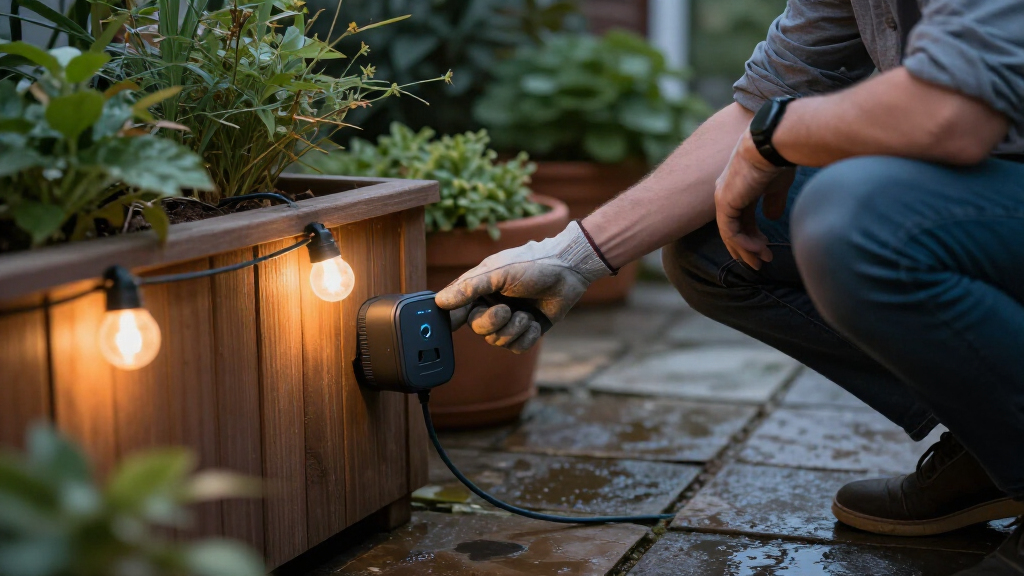

The best outdoor smart plugs combine weather-aware design, dependable app control, and the outlet layout your yard actually needs. My best overall pick is the Kasa EP40, which balances two independently controlled outlets with broad everyday smart-home utility. The Tapo P400M stands out for Matter support, while the Wyze Plug Outdoor adds energy monitoring for buyers who want usage data. The main tradeoffs are one versus multiple outlets, ecosystem compatibility, and whether added features justify a more involved setup. Read on for the full comparison and a guide to choosing a plug that fits your outdoor setup.

Get the latest gadgets delivered free — and shop member deals
- Fast, free delivery on millions of items
- Access to Prime Big Deal Days deals on October 6–7
- Prime Video, Amazon Music and more included
Complete the kit



Key Takeaways
- Two independently controlled outlets are a strong middle ground in this lineup: amazon.com/dp/B091FXH2FR?tag=t3chbillion-20&ascsubtag=dc-1148548″ target=”_blank” rel=”nofollow sponsored noopener”>Kasa EP40, Meross, Tapo P400M, Linkind, and several others let you schedule separate devices without using multiple wall sockets.
- Matter support is a meaningful differentiator in the Linkind and Tapo P400M models for households mixing smart-home platforms, though buyers should check their controller and network setup before choosing.
- Outlet count changes the job a plug can do: BN-LINK offers three grounded outlets, while Meross’s three-socket model suits setups that need more connections; neither should be treated as a way to exceed the device’s electrical limits.
- Monitoring and control features are not universal: Wyze adds energy monitoring, while simpler single-outlet options such as Geeni and GE Cync may suit basic on/off schedules without the same outlet flexibility.
- Hub and connectivity needs separate specialist picks from easy Wi-Fi choices: YoLink uses its own ecosystem, while many models rely on 2.4 GHz Wi-Fi; check range, controller compatibility, and required hardware before buying.
| Meross Outdoor Smart Plug with Two Independently Controlled Outlets |  | Best for Smart-Home Compatibility | Model: MSS620 | Outlets: 2 independently controlled AC sockets | Weather resistance: IP44 | VIEW LATEST PRICE | See Our Full Breakdown |
| Kasa EP40 Outdoor Smart Plug with 2 Independently Controlled Outlets |  | Best Value for Dual-Device Control | Outlets: 2 independently controlled AC outlets | Weather resistance: IP64 | Wi-Fi: 2.4 GHz; up to 300 ft in open space | VIEW LATEST PRICE | See Our Full Breakdown |
| Linkind Matter Outdoor Smart Plug, Works with Alexa, Apple Home, Google Home |  | Best Matter Pick | Connectivity protocol: Matter over Wi-Fi | Compatible platforms: Alexa, Apple Home, Google Home | Weather resistance: IP65 | VIEW LATEST PRICE | See Our Full Breakdown |
| Amazon Basics Outdoor Smart Plug with 2 Individually Controlled Outlets |  | Best for Alexa Households | Model: HPPA52CWBAMZ | Outlets: 2 independently controlled | Compatibility: Amazon Alexa only | VIEW LATEST PRICE | See Our Full Breakdown |
| Lutron Caseta Weatherproof+ Smart Outdoor Plug | 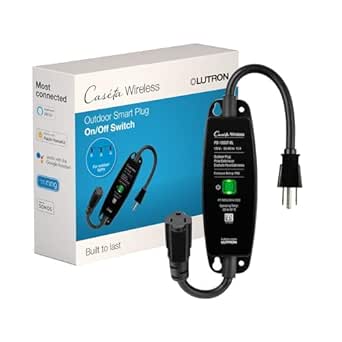 | Best for Outdoor Motors | Model: PD-15OUT-BL | Weather resistance: IP66 | Operating voltage: 120 V | VIEW LATEST PRICE | See Our Full Breakdown |
| Tapo P400M Matter Outdoor Smart Plug with 2 Individually Controlled Outlets | 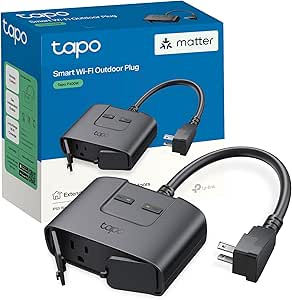 | Best for Matter Smart Homes | Outlets: 2 individually controlled AC outlets | Weather resistance: IP65 | Connectivity: 2.4 GHz Wi-Fi | VIEW LATEST PRICE | See Our Full Breakdown |
| ELEGRP PQR20 Outdoor Smart Plug with Two Individually Controlled Outlets |  | Best for Heavy-Weather Exposure | Model: PQR20 | Outlets: 2 independently controlled | Wi-Fi: 2.4 GHz; up to 300 ft in open space | VIEW LATEST PRICE | See Our Full Breakdown |
| Kasa Smart Outdoor Plug KP401 |  | Best for Straightforward Scheduling | Model: KP401 | Weather resistance: IP64 | Wi-Fi: 2.4 GHz | VIEW LATEST PRICE | See Our Full Breakdown |
| Geeni Indoor/Outdoor Smart Plug Weatherproof, 1 Socket |  | Best Compact Single-Device Pick | Model: Wi Fi | Socket count: 1 | Control: Geeni app and voice control | VIEW LATEST PRICE | See Our Full Breakdown |
| BN-LINK Outdoor Smart Wi-Fi Plug with 3 Grounded Outlets |  | Best for Group-Controlled Devices | Outlets: 3 grounded outlets, controlled together | Wi-Fi: 2.4 GHz | Weather protection: IP44 | VIEW LATEST PRICE | See Our Full Breakdown |
| YoLink Outdoor Smart Energy Plug, 15A, YS6803 | 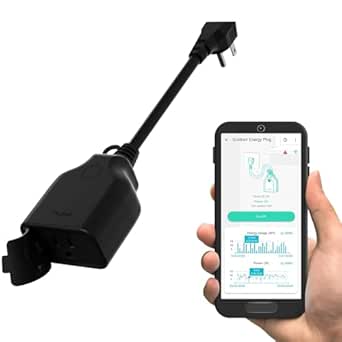 | Best for Energy Monitoring and Long-Range YoLink Setups | Model: YS6803 | Maximum current: 15 A | Maximum power: 1800 W | VIEW LATEST PRICE | See Our Full Breakdown |
| meross Outdoor Smart Plug with 3 Independent Sockets |  | Best for Three Separately Scheduled Devices | Model: MSS630 | Outlets: 3 independently controlled sockets | Connectivity: 2.4 GHz Wi-Fi | VIEW LATEST PRICE | See Our Full Breakdown |
| Leviton Decora Smart Wi-Fi Weather-Resistant Outdoor Plug (D215O-1RE) – Black |  | Best for Weather Protection and Ambient-Light Automation | Model: D215O-1RE | Operating temperature: -20°F to 122°F | Listed voltage: 20 V | VIEW LATEST PRICE | See Our Full Breakdown |
| Wyze Plug Outdoor Dual Outlets Energy Monitoring IP64 2.4GHz WiFi Smart Plug |  | Best Value for Two Outlets with Energy Monitoring | Voltage: 120 volts | Amperage: 15 A | Outlets: 2 | VIEW LATEST PRICE | See Our Full Breakdown |
| GE Cync Outdoor Smart Plug, Weather-Resistant Bluetooth & Wi-Fi Outlet |  | Best for Existing Cync Households | Model: CPLGOD2BLG1 | Connectivity: Bluetooth and Wi-Fi | Amperage: 15 A | VIEW LATEST PRICE | See Our Full Breakdown |
| outdoor smart plug | Model | Connectivity | Outlets | Weather resistance |
|---|---|---|---|---|
| Meross Outdoor Smart Plug with | MSS620 | Wi-Fi | 2 independently controlled AC sockets | IP44 |
| Kasa EP40 Outdoor Smart Plug w | — | — | 2 independently controlled AC outlets | IP64 |
| Linkind Matter Outdoor Smart P | — | — | — | IP65 |
| Amazon Basics Outdoor Smart Pl | HPPA52CWBAMZ | 2.4 GHz Wi-Fi | 2 independently controlled | IP65 |
| Lutron Caseta Weatherproof+ Sm | PD-15OUT-BL | Clear Connect | — | IP66 |
| Tapo P400M Matter Outdoor Smar | — | 2.4 GHz Wi-Fi | 2 individually controlled AC outlets | IP65 |
| ELEGRP PQR20 Outdoor Smart Plu | PQR20 | — | 2 independently controlled | — |
| Kasa Smart Outdoor Plug KP401 | KP401 | — | — | IP64 |
| Geeni Indoor/Outdoor Smart Plu | Wi Fi | — | — | — |
| BN-LINK Outdoor Smart Wi-Fi Pl | — | — | 3 grounded outlets, controlled together | — |
| YoLink Outdoor Smart Energy Pl | YS6803 | LoRa YoLink protocol | — | — |
| meross Outdoor Smart Plug with | MSS630 | 2.4 GHz Wi-Fi | 3 independently controlled sockets | IP44 |
| Leviton Decora Smart Wi-Fi Wea | D215O-1RE | 2.4 GHz Wi-Fi | — | — |
| Wyze Plug Outdoor Dual Outlets | — | 2.4 GHz Wi-Fi | 2 | — |
| GE Cync Outdoor Smart Plug | CPLGOD2BLG1 | Bluetooth and Wi-Fi | — | — |
More Details on Our Top Picks
Meross Outdoor Smart Plug with Two Independently Controlled Outlets
I’d pick the Meross MSS620 when platform flexibility matters more than the toughest weather seal. Its two independently controlled outlets let me schedule, for example, patio lights separately from another seasonal device, while support for HomeKit, Alexa, Google Assistant, and SmartThings covers more ecosystems than the Alexa-only Amazon Basics plug. The app also offers timers and sunrise or sunset schedules, which make recurring outdoor lighting easier to automate. Its IP44 rating is a step below the IP64 Kasa EP40 and the IP65 Amazon Basics model, so I’d place it in a more sheltered outdoor spot. Remote HomeKit control needs an Apple home hub, and the manufacturer advises against using it with pumps. That makes it a flexible choice for lights, but not my pick for exposed locations or pump control.
Pros:- Two outlets operate independently, allowing separate schedules and control.
- Broad support for HomeKit, Siri, Alexa, Google Assistant, and SmartThings.
- App supports schedules, timers, and sunrise or sunset settings.
- Includes overload protection and a two-year warranty.
Cons:- IP44 protection is lower than the IP64 Kasa EP40 and IP65 options in this group.
- Remote HomeKit control requires an Apple home hub.
- Manufacturer advises against use with pumps.
Best for: Households using HomeKit, SmartThings, or a mix of voice assistants that want independent control of two outdoor devices.
Not ideal for: Buyers needing a stronger weather-resistance rating, remote HomeKit access without an Apple home hub, or a plug for a pump.
- Model:MSS620
- Outlets:2 independently controlled AC sockets
- Weather resistance:IP44
- Voltage:110 V
- Connectivity:Wi-Fi
- Compatibility:Apple HomeKit, Siri, Alexa, Google Assistant, SmartThings
- Certifications:FCC, ETL
- Warranty:2 years
Our verdict“Choose the Meross if you need broad smart-home support for outdoor lights, but skip it for exposed placements or pump control.”
Kasa EP40 Outdoor Smart Plug with 2 Independently Controlled Outlets
The Kasa EP40 is a practical pick when I want two separately controlled outdoor outlets and stronger weather protection without adding a hub. Its IP64 rating offers a more reassuring fit for outdoor use than the Meross MSS620’s IP44 rating, while both provide independent outlet control and app-based schedules. Kasa also lists a Wi-Fi range of up to 300 feet in open space, which can help when a plug sits away from the house, though walls and landscaping can reduce that reach. The tradeoff is a narrower smart-home lineup: it supports Alexa and Google Assistant, not HomeKit or SmartThings like the Meross. It also relies on 2.4 GHz Wi-Fi. I’d choose it for straightforward control of two devices, not for a mixed-platform home or a location with weak wireless coverage.
Pros:- Two independently controlled outlets support separate schedules and operation.
- IP64 weather resistance is higher than the Meross MSS620’s IP44 rating.
- Supports app control, voice commands, schedules, and timers.
- Specified Wi-Fi range reaches up to 300 feet in open space.
Cons:- Works with Alexa and Google Assistant, but not HomeKit or SmartThings.
- Requires a 2.4 GHz Wi-Fi connection.
- The listed open-space range may be shorter around walls and outdoor obstacles.
Best for: Alexa or Google Assistant households that want two independently scheduled outdoor devices and an IP64-rated enclosure.
Not ideal for: HomeKit or SmartThings users, and buyers whose outdoor Wi-Fi signal is weak or whose network only offers 5 GHz.
- Outlets:2 independently controlled AC outlets
- Weather resistance:IP64
- Wi-Fi:2.4 GHz; up to 300 ft in open space
- Voice assistants:Alexa, Google Assistant
- Dimensions:4.9 × 2.38 × 2.29 in
- Material:Polycarbonate
- Certification:ETL
- Warranty:2 years
Our verdict“Pick the Kasa EP40 for dual-device control and IP64 protection if Alexa or Google Assistant support meets your needs.”
Linkind Matter Outdoor Smart Plug, Works with Alexa, Apple Home, Google Home
I’d favor the Linkind Matter Outdoor Smart Plug when cross-platform control is the priority and a Matter controller is already part of the home setup. Matter over Wi-Fi lets it connect with Alexa, Apple Home, and Google Home, while its IP65 rating provides a sturdier weather-resistance claim than the Meross MSS620’s IP44. Its stated 15 A / 1800 W capacity also suits a wider range of compatible outdoor devices than a lights-only use case. The tradeoff is setup dependence: integration with the listed platforms requires a Matter-certified hub or controller, and the plug only supports 2.4 GHz Wi-Fi. Unlike the Lutron Caseta plug, it does not use a separate low-frequency wireless system, and it has no built-in energy monitoring. I’d choose it for Matter-based control, not for a hub-free setup.
Pros:- Matter support connects with Alexa, Apple Home, and Google Home through a compatible controller.
- IP65 weatherproof rating exceeds the Meross MSS620’s IP44 rating.
- Rated for up to 15 A and 1800 W at 120 V.
- Specified Wi-Fi range reaches up to 300 feet.
Cons:- A Matter-certified hub or controller is required for the listed platform integrations.
- Supports 2.4 GHz Wi-Fi only.
- Does not include energy monitoring.
Best for: Smart-home owners with a Matter-certified controller who want IP65 protection and broad platform support for outdoor devices.
Not ideal for: Buyers without a Matter hub or controller, users who need 5 GHz Wi-Fi, or anyone seeking built-in energy monitoring.
- Connectivity protocol:Matter over Wi-Fi
- Compatible platforms:Alexa, Apple Home, Google Home
- Weather resistance:IP65
- Operating voltage:120 V
- Power capacity:15 A / 1800 W
- Wi-Fi range:Up to 300 ft
- Control methods:App, voice
- Wi-Fi band:2.4 GHz
Our verdict“Choose Linkind if you already use Matter and want a higher weather-resistance rating than the Meross, but not if you need hub-free control.”
Amazon Basics Outdoor Smart Plug with 2 Individually Controlled Outlets
The Amazon Basics Outdoor Smart Plug suits buyers who want two separately controlled outlets and already run their home through Alexa. It supports remote control, voice commands, schedules, and routines without a separate hub, and its IP65 rating gives it a stronger weather-resistance specification than the Meross MSS620. That combination keeps setup relatively simple for an Alexa household, while independent outlets make it more useful than a single-output plug for separate lighting zones. The limitation is platform lock-in: unlike the Kasa EP40, it does not also support Google Assistant, and it offers no listed HomeKit or SmartThings compatibility. It also needs 2.4 GHz Wi-Fi. I’d rank it as a focused Alexa option rather than a flexible smart-home choice; buyers who may change ecosystems should look at the Meross or Kasa instead.
Pros:- Two outlets can be controlled independently.
- IP65 weather resistance is higher than the Meross MSS620’s IP44 rating.
- Works with Alexa routines, schedules, voice commands, and remote control.
- No separate hub is required.
Cons:- Works exclusively with Amazon Alexa.
- Requires a 2.4 GHz Wi-Fi connection.
- Offers less platform flexibility than the Kasa EP40 and Meross MSS620.
Best for: Alexa users who want hub-free control and independent schedules for two outdoor devices.
Not ideal for: Households using Google Assistant, HomeKit, or SmartThings, or buyers seeking platform flexibility beyond Alexa.
- Model:HPPA52CWBAMZ
- Outlets:2 independently controlled
- Compatibility:Amazon Alexa only
- Connectivity:2.4 GHz Wi-Fi
- Hub required:No
- Weather resistance:IP65
- Amperage:15 A
- Material:PC, rubber
Our verdict“Pick this plug for simple, hub-free Alexa control of two outdoor devices, and choose another model if you use multiple smart-home platforms.”
Lutron Caseta Weatherproof+ Smart Outdoor Plug
The Lutron Caseta Weatherproof+ plug stands apart from the Wi-Fi models here because it is rated to control motors up to 1/2 hp, alongside lights. That makes it the clearest fit for buyers automating a compatible motorized outdoor device, while its IP66 rating and stated operating range of -4°F to 122°F support demanding outdoor conditions. Its Clear Connect** wireless connection avoids relying on Wi-Fi, unlike the Kasa EP40 and Amazon Basics plug. The cost of that system choice is a required Caseta Smart Hub for app, scheduling, and voice control; the hub and optional Pico remote are sold separately. Compared with the simpler Alexa-only Amazon Basics model, Lutron asks for more setup hardware but offers compatibility with Alexa, Google Assistant, Apple Home, and Ring through the hub. I’d choose it for motor capacity and a Caseta setup, not for a plug-and-go installation.
Pros:- IP66 rating provides the strongest listed weather and dust protection in this group.
- Supports compatible motors up to 1/2 hp as well as lights.
- Clear Connect does not rely on a Wi-Fi connection.
- With the required hub, supports Alexa, Google Assistant, Apple Home, and Ring.
Cons:- Caseta Smart Hub is required for app, scheduling, and voice control and is sold separately.
- Pico remote is sold separately.
- Requires more setup hardware than the hub-free Amazon Basics plug.
Best for: Caseta users who need outdoor control for compatible lights or motors up to 1/2 hp and want a non-Wi-Fi connection.
Not ideal for: Buyers who do not own or want to add a Lutron Caseta Smart Hub, or who need a self-contained, hub-free smart plug.
- Model:PD-15OUT-BL
- Weather resistance:IP66
- Operating voltage:120 V
- Power capacity:1800 W
- Motor capacity:Up to 1/2 hp
- Operating temperature:-4°F to 122°F
- Connectivity:Clear Connect
- Hub requirement:Lutron Caseta Smart Hub required for app, scheduling, and voice control
Our verdict“Choose Lutron for compatible outdoor motors or a Caseta system, but skip it if you want smart control without a separate hub.”
Tapo P400M Matter Outdoor Smart Plug with 2 Individually Controlled Outlets
The Tapo P400M is the clearest fit here for households that want outdoor control to work across more than one smart-home ecosystem. Its Matter support spans Apple Home, Alexa, Google Home, and SmartThings, while its two outlets can run separate schedules—useful when, for example, patio lights and a seasonal decoration need different routines. Compared with the Kasa Smart Outdoor Plug KP401, it offers a second independently controlled outlet and broader stated platform compatibility. The IP65 rating and operating range from -4°F to 122°F also suit exposed installations. The tradeoffs are 2.4 GHz Wi-Fi only and the fact that the advertised 300-foot range applies to an open field, not every yard or wall-filled home. Choose it for ecosystem flexibility; skip it if one outlet is enough.
Pros:- Matter support spans Apple Home, Alexa, Google Home, and SmartThings.
- Two outlets support independent control and scheduling.
- IP65 weather resistance and a broad stated operating temperature range suit outdoor placement.
- App and voice control are available.
Cons:- Requires a 2.4 GHz Wi-Fi network.
- The stated 300-foot range is based on open-field conditions and may not reflect a typical property.
Best for: Smart-home households using Matter or multiple platforms that want separate schedules for two outdoor devices.
Not ideal for: Buyers with only one device to control or outdoor Wi-Fi coverage that does not reliably reach the installation point.
- Outlets:2 individually controlled AC outlets
- Weather resistance:IP65
- Connectivity:2.4 GHz Wi-Fi
- Wi-Fi range:Up to 300 ft in an open field
- Operating temperature:-4°F to 122°F (-20°C to 50°C)
- Maximum wattage:1800 W
- Compatible platforms:Apple Home, Amazon Alexa, Google Home, SmartThings
- Mounting type:Wall mount
Our verdict“Choose the Tapo P400M if you want two separately scheduled outdoor outlets with Matter support across major smart-home platforms.”
ELEGRP PQR20 Outdoor Smart Plug with Two Individually Controlled Outlets
The ELEGRP PQR20 puts weather protection ahead of broad smart-home reach: its IP66-rated housing offers a higher stated ingress rating than the IP65 Tapo P400M and IP64 Kasa KP401. That distinction may matter for an installation exposed to harsher outdoor conditions, while the two independently controlled outlets let lights and another device follow different schedules. It works with Alexa and Google Assistant through 2.4 GHz Wi-Fi, with no hub required. The tradeoff is narrower platform support than the Tapo P400M, which also lists Apple Home and SmartThings compatibility. ELEGRP also specifies that pump motors must not exceed 1/2 HP, so buyers should check their equipment rather than assume the maximum wattage covers every motor. Its appeal is weather protection and practical dual-outlet control, not ecosystem breadth.
Pros:- IP66-rated housing has the highest stated weather-protection rating among these five picks.
- Two outlets can be controlled independently.
- Supports app control, voice commands, and scheduling without a hub.
- UL and FCC certifications are listed.
Cons:- Works with Alexa and Google Assistant, but the listed compatibility is narrower than the Tapo P400M’s.
- Requires 2.4 GHz Wi-Fi.
- Pump motors must not exceed 1/2 HP.
Best for: Alexa or Google Assistant users placing two separately controlled devices in a highly exposed outdoor location.
Not ideal for: Apple Home or SmartThings households, and anyone connecting a pump motor above the stated 1/2 HP limit.
- Model:PQR20
- Outlets:2 independently controlled
- Wi-Fi:2.4 GHz; up to 300 ft in open space
- Maximum wattage:1875 W
- Operating temperature:-20°C to 50°C
- Voice assistants:Amazon Alexa, Google Assistant
- Certifications:UL, FCC
Our verdict“Pick the ELEGRP PQR20 for two separately managed outdoor devices in a more exposed spot, provided Alexa or Google Assistant meets your needs.”
Kasa Smart Outdoor Plug KP401
The Kasa KP401 is a practical pick when scheduled control matters more than managing several outlets. Its Kasa app supports countdown timers and sunrise/sunset offsets, which can help outdoor lights follow changing daylight without frequent manual updates. Alexa and Google Assistant voice control are available, and SmartThings compatibility is listed. Compared with the Tapo P400M, the KP401 has one outlet rather than two independently controlled ones, and it does not list Matter support; in return, its controls stay focused on a single connected device. The IP64 rating is below the IP65 Tapo and IP66 ELEGRP ratings, so this is a better match for a suitably protected outdoor setup than a buyer prioritizing the strongest listed ingress rating. It also requires 2.4 GHz Wi-Fi.
Pros:- Kasa app offers countdown timers and sunrise/sunset scheduling.
- Supports Alexa and Google Assistant voice control.
- SmartThings compatibility is listed and no hub is required.
- ETL certification and a two-year warranty are specified.
Cons:- A single plug outlet gives less flexibility than the dual-outlet Tapo P400M or ELEGRP PQR20.
- IP64 is a lower stated weather rating than the IP65 Tapo and IP66 ELEGRP.
- Requires 2.4 GHz Wi-Fi.
Best for: Buyers automating one outdoor light or device with sunrise, sunset, countdown, or routine-based schedules.
Not ideal for: People who need independent control of multiple outdoor devices or want a higher listed weather rating than IP64.
- Model:KP401
- Weather resistance:IP64
- Wi-Fi:2.4 GHz
- Wi-Fi range:Up to 300 feet
- Maximum load:15 A / 1875 W
- Voice assistants:Amazon Alexa, Google Assistant
- Smart-home compatibility:SmartThings
- Warranty:2 years
Our verdict“Choose the Kasa KP401 if you need one outdoor device on flexible daylight-based schedules rather than two independently controlled outlets.”
Geeni Indoor/Outdoor Smart Plug Weatherproof, 1 Socket
The Geeni indoor/outdoor plug suits buyers who want remote control for just one outdoor device, without the extra outlet capacity of the Tapo P400M or ELEGRP PQR20. Its single socket keeps the job simple, while the compact body and hanging buckle give buyers a straightforward way to position it. Geeni app access, timers, and Alexa or Google Assistant voice commands cover basic remote operation. The tradeoff is limited specification detail: unlike the Kasa KP401, the supplied data does not state an IP rating or a maximum load, making it harder to match the plug confidently to a demanding installation. Its plastic construction may also feel less suited to heavy-duty outdoor setups. This is a modest, single-device option—not the right choice for separately scheduling several appliances or comparing weather ratings precisely.
Pros:- Single socket keeps control focused on one connected device.
- Geeni app supports remote control and timer scheduling.
- Works with Amazon Alexa and Google Assistant.
- Compact design includes a hanging buckle.
Cons:- Only one socket, unlike the dual-outlet Tapo P400M and ELEGRP PQR20.
- The supplied product data does not specify an IP rating or maximum load.
- Plastic construction may be less reassuring for heavy-duty outdoor use.
Best for: Someone who wants app or voice control for one outdoor light or similar device and values a compact, hanging installation.
Not ideal for: Buyers needing two or more controlled outlets, a published IP rating, or a clearly stated maximum electrical load.
- Model:Wi Fi
- Socket count:1
- Control:Geeni app and voice control
- Voice assistants:Amazon Alexa, Google Assistant
- Wi-Fi requirement:2.4 GHz
- Material:Plastic
- Weight:7.2 ounces
- Installation feature:Hanging buckle
Our verdict“Choose Geeni for simple control of one outdoor device, but opt for Kasa, Tapo, or ELEGRP if you need clearer weather and load specifications.”
BN-LINK Outdoor Smart Wi-Fi Plug with 3 Grounded Outlets
The BN-LINK outdoor plug is the most useful of these five when several devices should switch together: it has three grounded outlets, all controlled as a group. That can simplify a cluster of outdoor lights, but it is not a substitute for the Tapo P400M or ELEGRP PQR20 if different devices need separate schedules. Alexa and Google Assistant support, compatible apps, scheduling, and countdown timers cover everyday control. Its 6.8-inch cord adds some placement flexibility compared with a directly mounted plug. Weather protection is the main limitation: the listed IP44 rating is lower than the IP64 Kasa, IP65 Tapo, and IP66 ELEGRP. The plug also uses 2.4 GHz Wi-Fi only. I would choose it for a grouped setup in a more sheltered outdoor location, not for individually managed or highly exposed devices.
Pros:- Three grounded outlets accommodate several connected devices.
- Alexa and Google Assistant voice control are supported.
- Scheduling and countdown timers are available.
- A 6.8-inch cord allows some placement flexibility.
Cons:- All three outlets are controlled together, unlike the independently controlled outlets on the Tapo P400M.
- IP44 is a lower stated weather rating than the other reviewed multi-outlet options.
- Requires 2.4 GHz Wi-Fi.
Best for: People who want one schedule or voice command to control up to three nearby outdoor devices together.
Not ideal for: Buyers who need outlets controlled separately or a higher listed weather rating for a highly exposed installation.
- Outlets:3 grounded outlets, controlled together
- Wi-Fi:2.4 GHz
- Weather protection:IP44
- Operating voltage:120 V
- Cord length:6.8 inches
- Voice assistants:Amazon Alexa, Google Assistant
- App compatibility:BN-LINK Smart, Smart Life, Tuya Smart
- Safety certification:ETL listed
Our verdict“Pick BN-LINK when three devices should turn on and off as one group in a suitably sheltered spot.”
YoLink Outdoor Smart Energy Plug, 15A, YS6803
The YoLink YS6803 is the pick here for buyers who want to track power use and set alerts, not just switch outdoor equipment on and off. Its energy monitoring and automatic shutoff for overload or overheating add useful oversight for a compatible 15A load. The stated LoRa range of up to 2,034 feet may also suit properties where Wi-Fi coverage is unreliable, but this plug needs a YoLink Hub, so it is not a hub-free shortcut like the Wyze Plug Outdoor. There is a major placement caveat: despite its outdoor design, the YS6803 is not waterproof and needs a protected spot away from moisture. I would choose it for monitored equipment under shelter, not for an exposed outlet in rain.
Pros:- Tracks energy use in the YoLink app.
- Can shut off power during overloads or overheating.
- Supports remote control and customizable power alerts.
- Handles loads up to 15A and 1800W.
Cons:- Requires a separate YoLink Hub.
- Not waterproof, so it must be kept away from moisture.
- Depends on the YoLink protocol rather than direct Wi-Fi connectivity.
Best for: YoLink users who want energy-use tracking and overload alerts for outdoor equipment installed in a sheltered location.
Not ideal for: Buyers who need a plug exposed to rain or who want a Wi-Fi smart plug that works without a separate hub.
- Model:YS6803
- Maximum current:15 A
- Maximum power:1800 W
- Connectivity:LoRa YoLink protocol
- Maximum range:Up to 2034 feet
- Hub required:Yes
- Dimensions:1.49 × 3.19 × 1.49 in (D × W × H)
- Certifications:ETL, FCC
Our verdict“Choose the YS6803 for energy monitoring and safety alerts in a sheltered YoLink setup, but skip it for exposed outdoor outlets.”
meross Outdoor Smart Plug with 3 Independent Sockets
With three independently controlled sockets, this meross plug makes sense when one outdoor connection needs to serve several devices on different schedules. That flexibility separates it from the Wyze Plug Outdoor, which has two outlets, and the single-plug YoLink YS6803, which adds energy monitoring instead. The meross model also supports Apple HomeKit, Alexa, Google Assistant, and SmartThings, giving it broader platform choice than plugs limited to a narrower ecosystem. Its IP44 weather resistance suits weather-exposed use better than the non-waterproof YoLink, though it is not the strongest weather rating in this group. Setup requires 2.4 GHz Wi-Fi, and HomeKit remote access needs a compatible Apple home hub. I’d pick it for outlet count and platform flexibility, not for energy tracking or the most robust weather protection.
Pros:- Three sockets can be controlled independently.
- Supports schedules and voice control.
- Works with Apple HomeKit, Alexa, Google Assistant, and SmartThings.
- IP44 weather resistance is suited to outdoor use.
Cons:- Setup requires a 2.4 GHz Wi-Fi network.
- HomeKit remote access requires a compatible Apple home hub.
- IP44 offers less protection than the Leviton plug’s IP65 rating.
Best for: Smart-home owners who need to schedule three outdoor devices independently and want a choice of major platforms.
Not ideal for: Buyers who need energy monitoring, use only 5 GHz Wi-Fi, or want HomeKit remote access without an Apple home hub.
- Model:MSS630
- Outlets:3 independently controlled sockets
- Connectivity:2.4 GHz Wi-Fi
- Operating voltage:110 V AC
- Wattage:1200 W
- Weather resistance:IP44
- Compatible platforms:Apple HomeKit, Amazon Alexa, Google Assistant, SmartThings
- Warranty:2 years
Our verdict“Pick the meross when three separately controlled outlets and broad smart-home compatibility matter more than energy monitoring or stronger weather protection.”
Leviton Decora Smart Wi-Fi Weather-Resistant Outdoor Plug (D215O-1RE) – Black
The Leviton stands apart for buyers prioritizing protection from the elements and lighting that responds to ambient conditions. Its IP65 rating covers rain, dust, and UV exposure, a stronger stated protection level than the meross plug’s IP44 rating. A built-in light sensor can automate outdoor lighting around changing daylight without relying only on fixed schedules. Matter support and compatibility with major platforms also give it broader smart-home options than the GE Cync plug, whose full functionality is tied more closely to its own ecosystem. The tradeoff is that Leviton needs 2.4 GHz Wi-Fi, and its listed voltage is 20 V, an unusual specification that buyers should verify against the product labeling and intended setup before purchase. It also has no battery backup for power outages.
Pros:- IP65 rating protects against rain, dust, and UV exposure.
- Built-in light sensor can trigger lighting based on ambient light.
- Matter support works with major voice-assistant platforms.
- Can pair with up to three wire-free Anywhere Switch companions.
Cons:- Requires a 2.4 GHz Wi-Fi network.
- No battery backup means it loses functionality during power outages.
- The listed 20 V voltage is unusual and should be verified before buying.
Best for: Homeowners automating exterior lights who want a high stated weather-protection rating, ambient-light control, and Matter compatibility.
Not ideal for: Buyers with 5 GHz-only Wi-Fi, those who need backup operation during outages, or anyone unable to verify that the listed voltage suits their setup.
- Model:D215O-1RE
- Operating temperature:-20°F to 122°F
- Listed voltage:20 V
- Wattage:1500 W
- Connectivity:2.4 GHz Wi-Fi
- Compatibility:Matter, Alexa, Google Assistant, Apple HomeKit/Siri, SmartThings, IFTTT
- Mounting:Wall mount
Our verdict“Choose the Leviton for weather protection and sensor-based lighting automation, after confirming its listed voltage suits your setup.”
Wyze Plug Outdoor Dual Outlets Energy Monitoring IP64 2.4GHz WiFi Smart Plug
The Wyze Plug Outdoor is a straightforward fit for buyers who want two outdoor outlets plus energy monitoring without adding a hub. It connects over 2.4 GHz Wi-Fi and works with Alexa, Google Assistant, and IFTTT, making it simpler to add to a compatible setup than the hub-dependent YoLink YS6803. Its IP64 rating and rubber housing suit outdoor placement, though the Leviton’s IP65 rating offers a higher stated level of protection, and Leviton adds a light sensor for automatic lighting control. Wyze’s main advantage is the combination of two outlets and power-use visibility; its limitation is connectivity, since it supports only 2.4 GHz Wi-Fi. I’d favor it for monitoring two devices on a compatible network, but not for buyers whose smart home relies on HomeKit or SmartThings.
Pros:- Dual outlets provide connections for two devices.
- Energy monitoring shows real-time power use.
- IP64 rating and rubber housing are suited to outdoor installation.
- Works with Alexa, Google Assistant, and IFTTT without a hub.
Cons:- Only works with 2.4 GHz Wi-Fi.
- Does not list Apple HomeKit or SmartThings compatibility.
- Leviton offers a higher stated weather-protection rating.
Best for: Alexa, Google Assistant, or IFTTT users who want two outdoor outlets and real-time energy monitoring without a hub.
Not ideal for: Households using 5 GHz-only Wi-Fi or buyers who need Apple HomeKit or SmartThings compatibility.
- Voltage:120 volts
- Amperage:15 A
- Outlets:2
- Connectivity:2.4 GHz Wi-Fi
- Plug type:Type B
- Material:Rubber
- Compatible platforms:Alexa, Google Assistant, IFTTT
Our verdict“Choose Wyze for two outdoor connections and energy tracking on a 2.4 GHz network, but skip it if you need other smart-home platforms.”
GE Cync Outdoor Smart Plug, Weather-Resistant Bluetooth & Wi-Fi Outlet
The GE Cync outdoor plug is best suited to buyers already using the Cync app who want voice control and remote scheduling for outdoor equipment. Its listed Bluetooth and Wi-Fi connectivity gives it more than one connection method, while Alexa and Google Home support handles common voice-control needs. The product description also says its outlets can be controlled individually, a useful distinction from a single-output plug such as the YoLink YS6803. But the Cync option is less versatile across smart-home platforms than the meross plug, which lists HomeKit and SmartThings compatibility alongside Alexa and Google. Its weather-resistant design is described broadly rather than with an IP rating, so I would not rank it ahead of the IP64 Wyze or IP65 Leviton for buyers comparing stated protection levels. It is also bulky enough to block adjacent outlet space.
Pros:- Supports remote on/off control and scheduling through the Cync app.
- Works with Alexa and Google Home.
- Description lists Bluetooth and Wi-Fi connectivity.
- Individually controllable outlets can manage multiple devices.
Cons:- Full functionality is tied to the GE Cync ecosystem.
- Bulky design may block an adjacent outlet.
- No specific IP weather rating is provided in the product data.
Best for: Existing GE Cync users who want scheduled outdoor control and Alexa or Google Home voice commands.
Not ideal for: Buyers who need a stated IP weather rating, broad platform compatibility, or a compact plug that leaves nearby outlets clear.
- Model:CPLGOD2BLG1
- Connectivity:Bluetooth and Wi-Fi
- Amperage:15 A
- Plug type:Type B
- Product grade:Residential
- Compatible platforms:Alexa, Google Home, Cync app
- Material:Plastic
- Weight:9.12 ounces
Our verdict“Choose the GE Cync plug if your household already uses Cync, but favor Wyze or Leviton if a stated IP rating is a priority.”

How We Picked
I compared these 15 plugs around the practical demands of outdoor automation: outlet count and independent control, smart-home compatibility, stated weather resistance, setup requirements, and features such as energy monitoring. I gave more weight to useful control and a clear fit for common yard tasks than to a long list of platform badges. I also treated weather protection as a product-specific claim, not a guarantee that a plug can sit exposed in every location.
The ranking favors options that pair flexible control with a broadly useful feature set and straightforward ownership. That puts the Kasa EP40 at the top as a balanced choice, with the Tapo P400M and Linkind standing out for Matter-minded households. Specialist options rank higher for the buyers they serve—such as energy monitoring, extra outlets, or a dedicated ecosystem—but lower for readers who would not use those advantages. I also account for tradeoffs: added outlets do not raise safe electrical capacity, and a smart-home feature is only helpful if it works with the devices and network a buyer already has.
Factors to Consider When Choosing Best Outdoor Smart Plugs
Before choosing an outdoor smart plug, match its design to the device, location, and smart-home setup you plan to use. A larger outlet count may look like better value, but capacity, exposure, and connection reliability matter just as much as convenience features.
Choose Outlet Count Around the Actual Devices
List the outdoor devices you want to automate and note whether they need separate schedules. A pair of independently controlled outlets can handle, for example, a light and a pump on different routines, while a single outlet may be enough for one seasonal decoration. Three outlets can reduce the need for extra hardware, but they do not give the plug more electrical capacity. Check the product’s rated load and the combined load of everything connected before plugging in multiple devices. Avoid choosing based on outlet count alone if the sockets will be crowded by bulky plugs or adapters. For a single appliance, a simpler one-outlet model may be easier to place and manage.
Treat Weather Resistance as a Location Question
“Outdoor” does not mean every plug can be left fully exposed to rain, standing water, or direct spray. Check the model’s stated weather-resistance rating and installation instructions, then compare them with the exact location: a covered porch is different from an open garden wall. The receptacle, connected plug, and any extension cord all affect how protected the setup is. Keep connections off the ground and away from pooling water, and use a suitable outdoor-rated receptacle and cover where required. A weather-resistant smart plug cannot correct an unsafe or poorly protected outlet. If the location is harsh, prioritize clear protection guidance over extra app features.
Check Wi-Fi Reach Before Buying
Outdoor devices often sit beyond the strongest part of a home’s Wi-Fi coverage, even when the phone still shows a signal nearby. Many plugs in this roundup depend on 2.4 GHz Wi-Fi, so confirm that your router supports the required band and that the setup process will work with your network configuration. Test coverage at the outlet location before deciding that a plug is faulty or that a different app will solve the problem. A mesh node or access point may help, but it should be placed where it can receive a solid connection itself. For a remote garden or outbuilding, compare whether a dedicated ecosystem and its required hub better match the distance. Do not buy a hub-based option without accounting for that extra hardware.
Match Smart-Home Support to Your Controller
Compatibility labels can describe different levels of control, so check that the features you need work with your chosen platform. Matter models can simplify mixed-platform households, but they still need a compatible controller and network setup for the intended functions. A product that works with a voice assistant may offer basic on/off control without exposing every schedule, status detail, or energy feature through that assistant. If you already use one ecosystem, a plug designed for it can be simpler than adding another app and account. Think about who else in the household needs access and whether controls should remain available in the manufacturer’s app. Choose interoperability for a real household need, not just because a longer compatibility list sounds reassuring.
Decide Whether Energy Monitoring Will Change Your Routine
Energy monitoring can help identify how much a connected device uses, but the information is only useful if you plan to act on it. It may suit a buyer comparing seasonal equipment or checking the draw of a recurring outdoor load. It will add little value for lights that are used briefly or for a device whose consumption is already known. Confirm whether monitoring is available per outlet or only for the whole plug, since that affects what you can learn from multi-outlet setups. Also check whether the app provides the history and export options you want. If monitoring is not part of a specific decision, favor simpler control or better fit for the installation instead.
Check Load, Plug Shape, and Installation Details
Before ordering, compare the plug’s current and power ratings with the appliance label and instructions, especially for motors, pumps, or equipment with a high startup draw. A smart plug should not be used to control a load beyond its rating, and multiple sockets do not create extra capacity. Look at the body dimensions and socket orientation too: a large plug can block a neighboring receptacle or sit awkwardly under a cover. Confirm whether the outlet requires a grounded connection and whether the unit’s controls remain accessible after installation. If the device will be hard to reach, app status and schedule recovery after an outage matter more than they do for a patio lamp. When the load or wiring requirements are unclear, check the appliance and plug documentation before connecting them.
Frequently Asked Questions
Is Matter support worth prioritizing for an outdoor smart plug?
Matter is most useful when your household uses, or may later use, more than one smart-home platform. It can reduce dependence on a single manufacturer’s app, but it does not remove the need for a compatible controller or suitable network setup. Check which functions the plug exposes through your chosen platform, since app-specific features may differ. If you use one ecosystem and only need schedules and voice control, a non-Matter plug may meet the need with less setup. In this lineup, Linkind and Tapo P400M are the Matter-focused choices to compare.
Can I connect several outdoor devices to a three-outlet smart plug?
You can connect more than one device only when the plug’s instructions permit it and their combined load stays within its rating. Three sockets describe the number of connections, not the amount of power the unit can safely supply. Motor-driven equipment may also draw more power at startup than its normal running figure suggests. Check each device’s label and instructions, and avoid adding adapters that make the sockets crowded or hard to protect from moisture. If you cannot confirm the total load, use separate properly rated outlets or ask a qualified electrician.
Will an outdoor smart plug work if the outlet is under a covered porch?
A covered location can reduce direct exposure, but it does not automatically make every plug suitable. Wind-driven rain, damp air, splashes, and water collecting near the outlet can still pose problems. Read the plug’s weather-resistance instructions and check whether the connected cord and receptacle need extra protection. Keep the connection elevated and avoid placing it where water can pool. If the location is not clearly within the manufacturer’s permitted use, choose a more protected position or a model rated for the exposure.
Should I choose Wi-Fi or a plug that needs a separate hub?
A Wi-Fi plug is usually the simpler fit when the outdoor outlet has a reliable signal and you want to avoid adding hardware. A hub-based option may better suit an outbuilding or a location where the product’s dedicated system is a better match for distance, but the hub adds setup and another component to maintain. Check the required hub model, its placement, and whether your phone or router setup supports the system. Do not assume a hub will fix a weak connection unless the manufacturer specifies how the range works. For either type, confirm coverage at the exact installation point before buying.
Do I need energy monitoring for garden lights or outdoor equipment?
Energy monitoring is useful when the readings will help answer a real question, such as comparing the consumption of equipment or tracking a recurring load. For simple garden lighting on a timer, the feature may not change how you use the plug. Check whether the monitor reports each socket separately or combines readings, especially if you plan to connect multiple devices. Also review how the app presents usage history and whether that information stays available for the period you need. If you will not use the data, prioritize weather suitability, load rating, and reliable control instead.
Conclusion
For most households, I would start with the Kasa EP40 as the best overall: its pair of independently controlled outlets gives common outdoor setups useful flexibility. The Amazon Basics or BN-LINK models are worth comparing for value-minded buyers who want straightforward multi-outlet control, while the Linkind or Tapo P400M are my picks for Matter-focused homes. Buyers seeking a more established premium smart-home setup should compare the Lutron Caseta Weatherproof+ plug with their existing Caseta system and confirm the required setup before choosing it. For beginners, a simple Wi-Fi option that matches the home’s network and needs is a better starting point than paying for a hub or features they will not use. Choose Wyze for energy monitoring, a three-outlet model for more connections, or a single-outlet pick for one device; in every case, verify load limits, placement, and weather guidance before installation.
Halloween Picks
halloween
As an affiliate, we earn on qualifying purchases.