Before installing an under-sink RO system, you should test your water pressure and flow rate to make sure they meet system requirements, ideally above 40 psi. Use a pressure gauge to check pressure and watch for slow flow, which could indicate low pressure or clogging. Also, test your water quality to identify contaminants like chlorine, heavy metals, or bacteria. Knowing this helps choose the right filters and prevent system issues; explore further to optimize your setup.

Get the latest gadgets delivered free — and shop member deals
- Fast, free delivery on millions of items
- Access to Prime Big Deal Days deals on October 6–7
- Prime Video, Amazon Music and more included
Key Takeaways
- Measure water pressure with a gauge to ensure it meets the minimum 40 psi requirement for optimal RO system performance.
- Test water flow rate to identify potential pressure issues or pipe blockages affecting filtration efficiency.
- Conduct water quality tests to determine contaminant levels and necessary filtration stages.
- Identify specific contaminants like chlorine or heavy metals to select appropriate filters and pre-treatment components.
- Analyze your water source characteristics to ensure system compatibility and prevent future system failures.
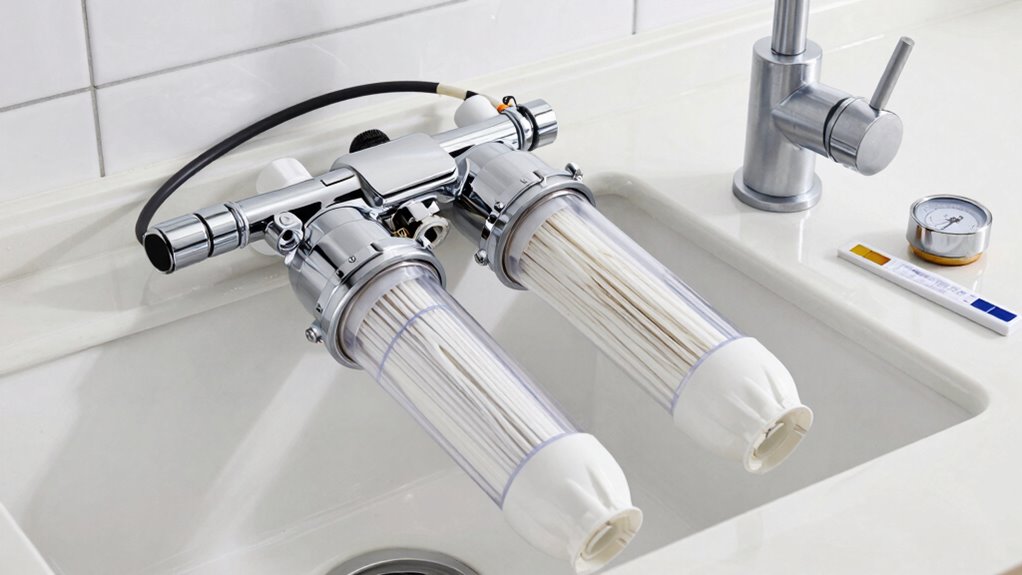
Under-sink reverse osmosis (RO) systems offer an efficient way to guarantee clean, great-tasting water directly from your tap. Before you commit to the installation, you need to test your existing plumbing and water quality to make certain the system will work effectively. Water filtration isn’t just about removing impurities; it’s about tailoring the setup to your specific water source. Testing helps you identify if your water contains high levels of contaminants, such as heavy metals, chlorine, or bacteria, so you can choose the right RO unit and filters for your needs.
Start by checking your water pressure and flow rate. Many under-sink RO systems require a minimum water pressure—typically around 40 psi—to operate at its best. You can measure this with a simple pressure gauge attached to your faucet or hose bib. If your water pressure is too low, consider installing a booster pump, or you might need a system designed to handle lower pressures. Additionally, test your water’s flow rate; slow flow can indicate low pressure or clogged pipes, which could hinder the system’s efficiency. Understanding your water’s contaminant levels helps you select the appropriate filtration stages. It’s also important to be aware of water quality testing options to accurately determine what’s in your water. Conducting regular testing can also help you monitor the ongoing effectiveness of your filtration system over time. Proper testing methods can provide valuable insights into water source characteristics, ensuring your system is optimally configured. Recognizing the specific contaminants present in your water can significantly impact the lifespan and performance of your filtration components.
Check your water pressure and flow rate to ensure your RO system operates efficiently and avoid potential issues.
Next, analyze your water quality. Use a reliable water testing kit or send a sample to a lab to assess the levels of contaminants present. This step is vital for selecting the appropriate filtration stages. For example, if your water contains high levels of chlorine, you’ll want a system with a carbon filter to remove it. If heavy metals like lead are a concern, ensure your RO unit includes a sufficient pre-treatment stage. Knowing your water’s composition also helps you determine how often you’ll need to replace filters and membranes, saving you time and money in the long run. Proper testing and understanding of your water source ultimately aid in choosing the most effective filtration system. Remember, accurate testing is the foundation for selecting the right home water system solutions.
under sink reverse osmosis water filter system
As an affiliate, we earn on qualifying purchases.
As an affiliate, we earn on qualifying purchases.
Frequently Asked Questions
How Long Does an Under-Sink RO System Typically Last?
An under-sink RO system generally lasts about 2 to 3 years, depending on water filtration quality and system durability. Regular maintenance and filter replacements can extend its lifespan. You should monitor water flow and quality, replacing filters as needed. Proper installation and routine upkeep ensure your system functions efficiently, providing clean, safe water for years. Keep an eye on performance to maximize your investment and maintain ideal water filtration.
Can I Install an RO System Myself or Need a Professional?
You can install an RO system yourself, but be aware of potential installation challenges. If you’re comfortable with basic plumbing and follow the instructions carefully, it’s doable and saves on cost considerations. However, if you face complex fittings or uncertain about your skills, hiring a professional might be best. This guarantees proper setup, prevents leaks, and guarantees your system functions efficiently right from the start.
What Maintenance Is Required for Under-Sink RO Systems?
You need to regularly replace filters and membranes to maintain filtration effectiveness and guarantee your under-sink RO system’s durability. Check for leaks, clean the system periodically, and monitor water quality to catch issues early. It’s also wise to sanitize the system annually. Proper maintenance keeps your system functioning efficiently, providing clean water and extending its lifespan, so stay consistent with these tasks for peak performance.
Are Under-Sink RO Systems Suitable for All Water Types?
While under-sink RO systems are versatile, they aren’t suited for all water types. You’ll want to test water pH and mineral content first. Acidic or highly mineralized water can challenge the system’s effectiveness, causing corrosion or clogging. If your water’s pH is too low or mineral levels are too high, consider pre-treatment options. Proper testing guarantees your system functions efficiently and prolongs its lifespan.
How Much Space Is Needed Under the Sink for Installation?
You’ll need about 10 to 12 inches of installation space under the sink, including adequate under sink clearance for easy installation and maintenance. Measure the available space carefully, ensuring there’s enough room for the system, filters, and connections. Keep in mind that some models may require slightly more space. Clear access is essential for future filter replacements and troubleshooting, so don’t underestimate the importance of proper installation space.
Conclusion
Before installing your under-sink RO system, remember that testing isn’t just a step—it’s the foundation of clean, safe water. Think of it as checking the engine before a long drive; neglect it, and you risk surprises along the way. While the system promises purity, your initial tests guarantee it truly delivers. So, take a moment now, verify your water quality, and enjoy the peace of mind that comes with knowing your drinking water is as clean as it’s meant to be.
Fall Picks
fall essentials
As an affiliate, we earn on qualifying purchases.