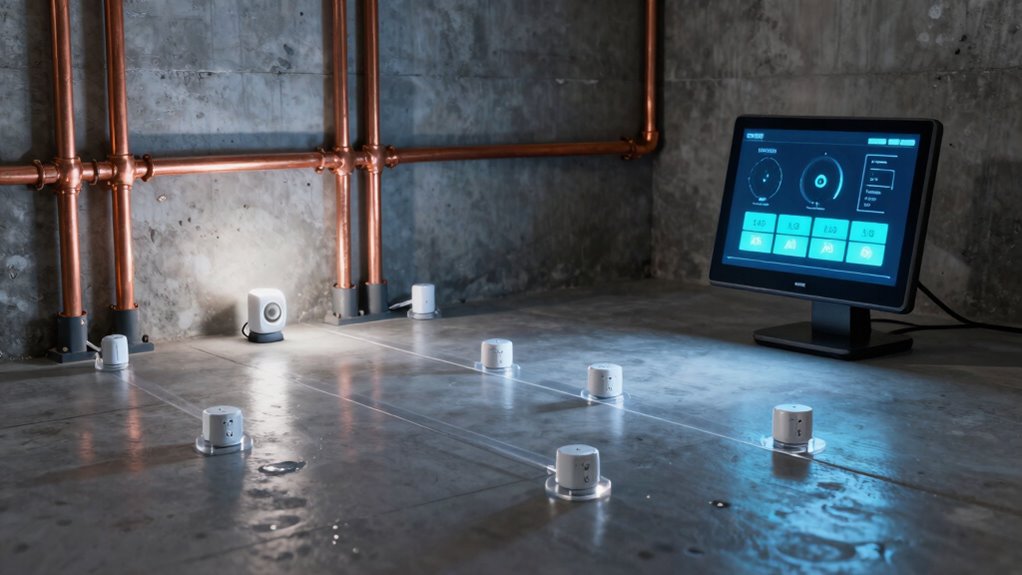

When it comes to minimizing water damage, sensors save the most at key points like under sinks, near appliances, and along pipes—places prone to slow leaks or sudden bursts. These sensors detect even tiny drips early, sending alerts to your phone and automatically shutting off water if needed. By installing sensors in these critical spots, you’ll catch problems before they escalate. Keep going to discover more about how this smart system can protect your home effectively.
Key Takeaways
- Sensors detect small leaks early, preventing extensive water damage in vulnerable areas.
- Continuous monitoring alerts homeowners immediately, minimizing damage from unnoticed slow leaks.
- Strategic sensor placement in high-risk zones maximizes leak detection coverage and accuracy.
- Automated shut-off valves triggered by sensors prevent water damage during leaks.
- Real-time alerts and detailed reports enable prompt action, reducing overall repair costs.

Have you ever considered how a small leak can lead to costly water damage and high utility bills? It’s easy to overlook tiny drips or slow leaks, but they can quickly escalate into noteworthy problems if left unnoticed. That’s where whole-home leak detection systems come into play, especially those equipped with smart water monitoring. These advanced systems use sensors placed throughout your house to continuously track water flow and detect irregularities. When they sense a leak or abnormal activity, they send immediate alerts to your phone, giving you the chance to shut off the water supply before extensive damage occurs. This proactive approach minimizes repairs, saves money, and preserves your property.
Detect leaks early with smart water systems—prevent damage, save money, and protect your home effortlessly.
Smart water monitoring is a game changer because it provides real-time insights into your plumbing system. Instead of waiting for visible signs of trouble, you get early warnings about leaks that might otherwise go unnoticed for days or weeks. These sensors are often integrated with your home’s existing plumbing system, creating a seamless network that offers thorough coverage. When combined with plumbing system integration, the sensors don’t just detect leaks—they communicate with your water shut-off valves and other smart home devices. This means that in many cases, the system can automatically stop the flow of water when a leak is detected, preventing damage without requiring your immediate intervention. Such automation ensures that small issues don’t turn into major disasters, especially when you’re away from home.
The integration of these systems also simplifies maintenance and monitoring. Instead of manually inspecting pipes, you rely on the sensors to do the work for you. Many systems allow you to access detailed reports and alerts through mobile apps, so you always stay informed about your plumbing’s health. This continuous oversight helps you catch leaks early, which can markedly reduce water waste and the costs associated with repairs. Additionally, this technology promotes more efficient water use, helping you lower utility bills and contribute to environmental conservation. Proper sensor placement is essential to maximize detection accuracy and ensure comprehensive coverage throughout your home, especially because sensor positioning can significantly impact the system’s effectiveness. Moreover, understanding water flow patterns within your plumbing can enhance the system’s precision in leak detection. Implementing smart home technology can further optimize your water management system and improve overall efficiency.
By leveraging these innovative solutions, homeowners can better protect their properties and enjoy greater peace of mind. In essence, whole-home leak detection with smart water monitoring and plumbing system integration offers peace of mind. It’s a smart investment in protecting your property, saving money, and ensuring your plumbing functions smoothly. By catching leaks early and automating responses, you’re effectively safeguarding your home against water damage while embracing the convenience and efficiency of modern technology. This approach not only saves you from costly repairs but also provides confidence that your home is protected around the clock.
whole home leak detection sensor system
As an affiliate, we earn on qualifying purchases.
As an affiliate, we earn on qualifying purchases.
Frequently Asked Questions
How Often Do Leak Sensors Need Maintenance or Battery Replacement?
Leak sensors usually need battery replacements every 1 to 2 years, depending on the model and usage, and sensor calibration should be checked annually to guarantee accuracy. You should test your sensors monthly to confirm they’re functioning properly. Keep an eye on battery life indicators, and replace batteries promptly when they run low. Regular maintenance helps prevent false alarms and ensures your leak detection system stays reliable and effective.
Can Leak Detection Systems Distinguish Between Minor and Major Leaks?
You might think your leak sensor can tell the difference between minor drips and major floods, but it primarily depends on sensor sensitivity. While some systems are advanced enough to distinguish leak severity, many can trigger false alarms if sensitivity isn’t properly adjusted. That’s why it’s essential to choose a system with customizable sensitivity settings, so you can avoid false alarms while catching significant leaks early, minimizing damage and stress.
Are Wireless Leak Sensors More Reliable Than Wired Ones?
Wireless leak sensors can be quite reliable, but their effectiveness depends on proper sensor placement and wireless reliability. If you position sensors in areas prone to leaks and guarantee your Wi-Fi or network is strong, they can perform just as well as wired systems. However, obstacles or interference might impact wireless signals, so it’s essential to test and optimize sensor placement for the best protection.
What Is the Typical Installation Process for Whole-Home Leak Detection?
You’ll start by evaluating your home’s plumbing layout, then calibrate sensors to guarantee accurate leak detection. During installation, you might face challenges like tight spaces or hard-to-reach pipes, but careful planning helps. Mount sensors near potential leak sources, like under sinks or around appliances, and connect them to your system. Testing the setup confirms proper operation, preventing false alarms and ensuring early leak detection to minimize damage.
How Do Sensors Alert Homeowners About Detected Leaks?
You get alerted about leaks through your sensor’s real-time notifications, which activate when they detect abnormal water pressure or moisture. Proper sensor placement is key—install them near appliances, under sinks, or along pipes where leaks are most likely. When a leak is detected, you’ll receive an instant alert on your phone or home system, allowing you to act quickly and minimize water damage.
Conclusion
Think of whole-home leak detection as a vigilant guardian, silently watching over your home like an unbreakable shield. With sensors on your side, you catch leaks early, preventing small drips from turning into devastating floods. It’s your home’s heartbeat, keeping everything flowing smoothly and safely. Investing in these sensors is like planting a seed of peace—nurturing your home’s health and protecting your most precious memories from water’s silent threat.