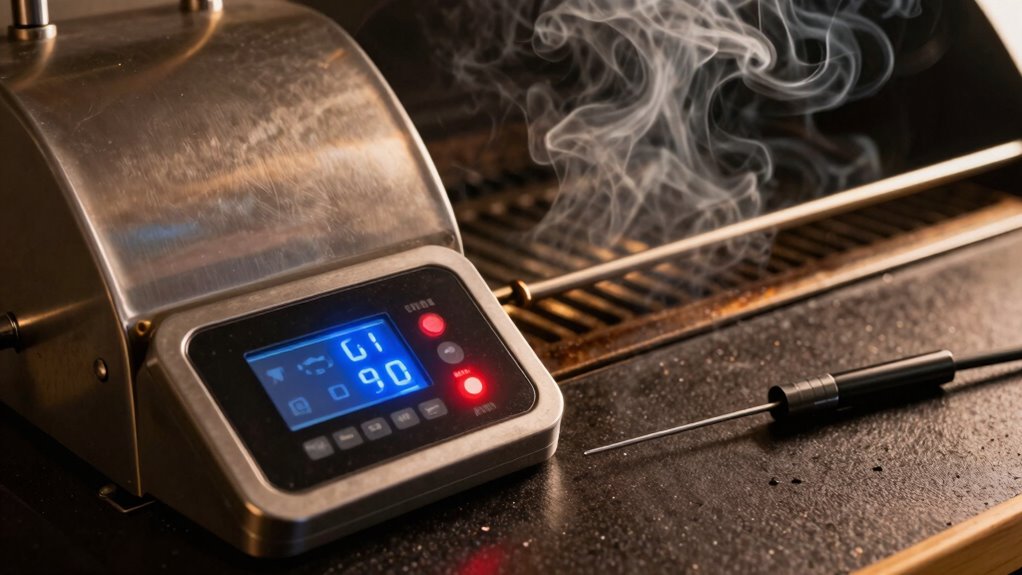

On a pellet grill, the controller acts as the brain, adjusting pellet feed and fan speed to maintain a steady temperature. Probes are placed in your food to monitor internal temperature, providing real-time data that helps prevent overcooking. You can also control smoke levels to customize flavor, balancing smoke output for the perfect taste. Understanding how these features work together will help you master your grill and achieve consistent, delicious results every time.

Get the latest gadgets delivered free with Prime
- Fast, free delivery on millions of items
- Prime Video, Amazon Music and more included
- Member-only deals all year
Key Takeaways
- Controllers regulate pellet feed and fan speed to maintain a consistent internal temperature during cooking.
- Probes measure the internal temperature of food and send real-time data to the controller for precise adjustments.
- Proper probe placement ensures accurate temperature readings, supporting consistent doneness and cooking precision.
- Smoke levels can be adjusted to customize flavor intensity, balancing smoky taste with food delicacy.
- Mastering smoke control and probe feedback helps achieve optimal flavor infusion and even cooking results.
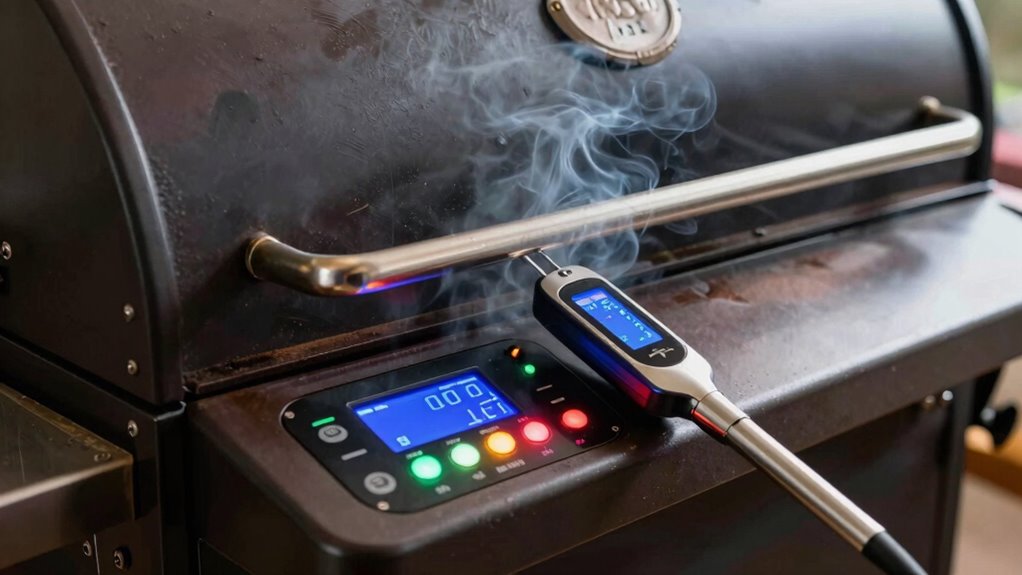
Pellet grills have revolutionized outdoor cooking by offering precise temperature control and enhanced flavor, but understanding how their controllers, probes, and smoke levels work can seem complex at first. When you’re aiming for ideal flavor infusion, the grill’s ability to maintain consistent heat is essential. The controller is fundamentally the brain of the system, constantly adjusting the pellet feed rate and fan speed to keep the temperature stable. Once you set your desired temperature, the controller monitors internal sensors and makes real-time adjustments, guaranteeing your food is cooked evenly. This stability prevents fluctuations that could compromise flavor infusion or result in undercooked or burnt spots, giving you confidence that your meal turns out just right. Understanding the temperature regulation system is key to mastering the use of pellet grills.
The probes are your direct link to monitoring the cooking process. Inserted into the meat or food item, they transmit real-time temperature data back to the controller, allowing you to track progress without opening the lid. This ability to keep an eye on internal temperatures helps prevent overcooking and assures that your food reaches the perfect level of doneness. It’s especially helpful when smoking or slow-cooking, as it allows you to fine-tune your approach without disrupting the cooking environment. Some advanced probes even sync with smartphone apps, giving you remote updates and control, which makes managing multiple dishes or attending to other tasks a breeze. Proper placement of these probes is crucial to obtaining accurate temperature readings and achieving consistent results. A good understanding of the feedback loop in pellet grills helps in making precise adjustments during cooking.
Smoke levels on pellet grills are adjustable, letting you customize the amount of smoke flavor infused into your food. Many grills feature a dedicated smoke setting or allow you to modify pellet feed rates to increase or decrease smoke production. When you want a bold smoky flavor, you can dial up the smoke level, which produces more smoke and enhances flavor infusion. Conversely, if you prefer a subtler finish, lowering the smoke output reduces the intensity. Proper control over smoke levels is crucial because too much can overpower delicate flavors, while too little might leave your dish lacking that signature smoky aroma. The key is understanding your food and your personal taste preferences to strike the perfect balance. Achieving the ideal smoke profile requires practice and familiarity with your grill’s capabilities.
Pellet grill temperature controller
As an affiliate, we earn on qualifying purchases.
As an affiliate, we earn on qualifying purchases.
Frequently Asked Questions
How Long Do Pellet Grills Typically Last?
Pellet grills usually last between 3 to 5 years, depending on pellet durability and your maintenance schedules. If you regularly clean the grill, replace parts as needed, and use quality pellets, it can extend its lifespan. Proper upkeep helps prevent issues with controllers and probes, ensuring consistent performance. Invest in good maintenance habits, and your pellet grill can serve you well for many grilling seasons.
Can Pellet Grills Be Used Indoors Safely?
You shouldn’t use pellet grills indoors because they pose safety risks. Adequate indoor ventilation is essential to prevent carbon monoxide buildup, which can be deadly. Additionally, pellet grills rely on controlled flames, so flame safety becomes a concern, as any flare-up could cause fires or smoke damage inside. Always use pellet grills outdoors on a stable surface, and never operate them inside closed spaces.
Are Pellet Grills Energy-Efficient Compared to Other Types?
You’ll find pellet grills are quite energy-efficient, using about 50% less energy than gas grills for the same cooking tasks. An energy comparison shows they’re cost-effective and environmentally friendly, thanks to their precise fuel consumption. Plus, their automated pellet feeding minimizes waste, reducing environmental impact. So, if you’re looking to save energy and lessen your carbon footprint, pellet grills offer a smart and sustainable grilling solution.
How Often Should I Replace the Auger Motor?
You should replace your auger motor if it shows signs of wear, such as unusual noises, slow pellet feed, or failure to operate. There’s no strict replacement schedule, but generally, expect to replace it every 3-5 years with regular maintenance. If your grill’s performance declines or the motor becomes unreliable, it’s time for a replacement. Keeping an eye on its condition helps guarantee consistent cooking and prolongs your grill’s lifespan.
Do Pellet Grills Require Special Fuel Types?
You won’t need a secret decoder ring to figure out pellet grill fuel needs. They don’t require special fuel types—just compatible pellets made from ingredient varieties like hardwood or fruit woods. Think of it as a gourmet buffet for your grill; as long as you stick to the recommended fuel compatibility, your grill will happily dance with whatever tasty pellets you choose. No exotic fuel required—just good, honest wood pellets.
Conclusion
Now that you understand how controllers, probes, and smoke levels work together, you’re armed with the knowledge to master your pellet grill. It’s like having a high-tech symphony at your fingertips—precision and control in a world of smoky flavor. So, don’t just cook—craft perfection. With these tools, you’re not just grilling; you’re creating culinary art. The grill’s secrets are yours—ready to turn up the smoke and elevate every meal.
Columbus Day / Indigenous Peoples' Day Picks
long weekend sales
As an affiliate, we earn on qualifying purchases.