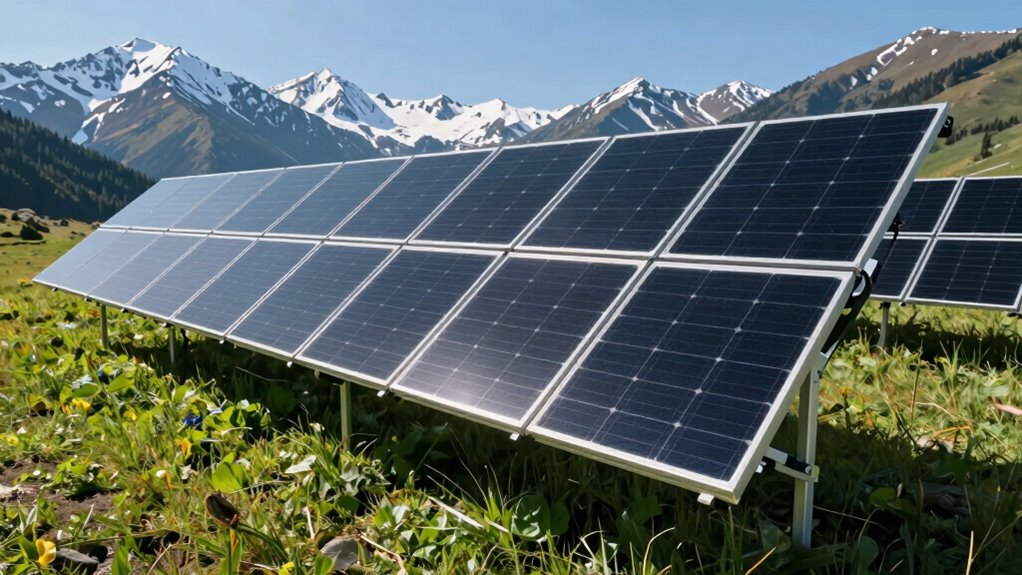

A 400W folding solar panel can provide substantial off-grid charging, but its real-world usefulness depends on setup, sunlight, and compatibility with your power station. I’d put the Renogy 400W Portable Solar Panel first for its stated 25% efficiency, while the CTOLITY 400W with Kickstands stands out for easier positioning and the TPDEFZQ 400W for its 36V MC4 output. The main tradeoffs are panel weight and folded size versus convenient setup, along with connector and voltage fit. Rated wattage is a peak under test conditions, not a promise of that output all day. Read on for the full comparison and advice on matching a panel to your power station and routine.

Get the latest gadgets delivered free with Prime
- Fast, free delivery on millions of items
- Prime Video, Amazon Music and more included
- Member-only deals all year
Complete the kit



Key Takeaways
- Renogy’s 25% efficiency model leads this lineup on its stated efficiency, a useful distinction when collection area matters, though efficiency alone does not guarantee more daily energy.
- CTOLITY’s kickstand version has a practical setup advantage over its similarly rated panel without kickstands, especially when the sun angle changes during the day.
- TPDEFZQ’s 36V MC4 output makes voltage and connector compatibility a key buying check; a higher panel voltage is not automatically suitable for every power station.
- ZOUPW’s 480W bifacial panel and 450W N-Type 16BB model exceed the nominal 400W target, but buyers should weigh their format and specifications against a 400W panel’s portability and system limits.
- Several models share a 400W rating, so the decisive differences are usability, electrical compatibility, construction details, and how much panel area and setup effort you can accept.
| Twelseavan 400W Foldable Portable Solar Panel |  | Best Overall for Adjustable Setup | Maximum power: 400 W | Conversion efficiency: 24% | Maximum voltage: 46.9 V | VIEW ON AMAZON | See Our Full Breakdown |
| LVYUAN 400W Foldable Portable Solar Panel |  | Best for Compact Packed Storage | Maximum power: 450 W listed | Output voltage: 36 V | Amperage capacity: 12.5 A | VIEW ON AMAZON | See Our Full Breakdown |
| CTOLITY 400W Foldable Portable Solar Panel with Kickstands |  | Best for ETFE Surface Construction | Maximum power: 400 W | Output voltage: 40 V DC listed in specifications; title lists 36 V | Conversion efficiency: 23.4% claimed | VIEW ON AMAZON | See Our Full Breakdown |
| Ecosonique 400W Foldable Portable Solar Panel with MC4 Connectors |  | Best for Multi-Connector Power Stations | Maximum power: 400 W | Maximum voltage: 40 V | Amperage capacity: 10 A | VIEW ON AMAZON | See Our Full Breakdown |
| Renogy 400W Portable Solar Panel, 25% Efficiency |  | Best Lightweight Solar Blanket | Stated efficiency: 25% | Cell type: 16BB N-Type | Weight: 16.09 lb | VIEW ON AMAZON | See Our Full Breakdown |
| Renogy 400W Foldable Portable Solar Panel |  | Best for Rugged, Shade-Prone Campsites | Maximum power: 400 watts | Efficiency: 23% | Maximum voltage: 67.5 V DC | VIEW ON AMAZON | See Our Full Breakdown |
| Renogy 400W N-Type Foldable Solar Blanket | | Best for Lightweight, Compact Carry | Maximum power: 400 watts | Cell type: 16BB N-Type | Number of cells: 16 | VIEW ON AMAZON | See Our Full Breakdown |
| TPDEFZQ 400W Portable Foldable Solar Panel, 36V, ETFE, MC4 Output |  | Best for Buyers with Mixed Power Station Connections | Maximum power: 400 watts | Output voltage: 36 volts | Conversion efficiency: 25% | VIEW ON AMAZON | See Our Full Breakdown |
| ZOUPW 480W Bifacial Foldable Portable Solar Panel |  | Best for Extra Rated Capacity and Two-Sided Light | Maximum power: 480 watts | Cell type: N-type 16BB monocrystalline | Conversion efficiency: 25% | VIEW ON AMAZON | See Our Full Breakdown |
| MHPOWOS 400W Foldable Portable Solar Panel Charger |  | Best for Broad Connector Compatibility | Power: 400 watts | Conversion efficiency: 23.5% | Amperage capacity: 12 A | VIEW ON AMAZON | See Our Full Breakdown |
| ZOUPW 450W Portable Solar Panel with N-Type 16BB Cells |  | Best for Higher Output | Maximum power: 450 W | Cell type: N-type monocrystalline | Busbar design: 16BB | VIEW ON AMAZON | See Our Full Breakdown |
| CTOLITY 400W Foldable Portable Solar Panel |  | Best for Jackery and EcoFlow Owners | Model: SP400 | Wattage: 400 W | Conversion rate: 23% | VIEW ON AMAZON | See Our Full Breakdown |
| folding solar panel 400w | Weight | Maximum power | Conversion efficiency | Amperage capacity |
|---|---|---|---|---|
| Twelseavan 400W Foldable Porta | About 22.7 lb | 400 W | 24% | 10.6 A |
| LVYUAN 400W Foldable Portable | 22 lb | 450 W listed | Up to 23% | 12.5 A |
| CTOLITY 400W Foldable Portable | — | 400 W | 23.4% claimed | — |
| Ecosonique 400W Foldable Porta | 22.9 lb in specifications; 20.3 lb in description | 400 W | 23.5% | 10 A |
| Renogy 400W Portable Solar Pan | 16.09 lb | — | — | — |
| Renogy 400W Foldable Portable | 30.2 lb | 400 watts | — | 12.1 A |
| Renogy 400W N-Type Foldable So | 16.09 lb | 400 watts | — | — |
| TPDEFZQ 400W Portable Foldable | 31.3 lb | 400 watts | 25% | — |
| ZOUPW 480W Bifacial Foldable P | 22.5 lb | 480 watts | 25% | 11.3 A |
| MHPOWOS 400W Foldable Portable | 27.9 lb | — | 23.5% | 12 A |
| ZOUPW 450W Portable Solar Pane | 29.5 lbs | 450 W | 25% | — |
| CTOLITY 400W Foldable Portable | — | — | — | — |
More Details on Our Top Picks
Twelseavan 400W Foldable Portable Solar Panel
I’d put the Twelseavan near the top for buyers who want a conventional folding panel with useful setup flexibility. Its four adjustable kickstands make it easier to angle the panel toward the sun than a blanket-style option such as the Renogy 400W Portable Solar Panel, 25% Efficiency, which is designed for several placement styles instead. The Twelseavan also lists 24% conversion efficiency and includes MC4 cabling with three DC adapters, giving owners of compatible power stations more connection options out of the box. Its IP65 rating adds protection for outdoor use, but does not remove the need to check the power station’s input limits. At 22.7 pounds, it is a substantial item to carry, and its 46.9V maximum voltage may rule it out for smaller units. I’d choose it for stable, angled setups, not ultralight packing.
Pros:- Four adjustable kickstands help set the panel angle.
- Lists 24% conversion efficiency.
- Includes MC4 cabling and three DC adapters for compatible power stations.
- IP65 rating and a magnetic carrying handle support outdoor use and transport.
Cons:- At about 22.7 pounds, it is heavy for frequent carrying.
- Its 46.9V maximum voltage may exceed some power stations’ input limits.
Best for: Campers and RV owners with a compatible power station who want adjustable panel positioning and included adapter options.
Not ideal for: Backpackers or owners of smaller power stations whose voltage limits may not accept the panel’s 46.9V maximum.
- Maximum power:400 W
- Conversion efficiency:24%
- Maximum voltage:46.9 V
- Output voltage:40 V
- Amperage capacity:10.6 A
- Connector:MC4
- Weight:About 22.7 lb
- Water resistance:IP65
- Warranty:24 months
Our verdict“Choose the Twelseavan if you want a kickstand-equipped 400W panel and your power station accepts its voltage; skip it if low carry weight is the priority.”
LVYUAN 400W Foldable Portable Solar Panel
The LVYUAN is the pick I’d examine first when folded storage dimensions matter more than a small footprint in use. It packs down to 19.5 × 23.6 × 2.36 inches, a distinctly compact shape compared with the CTOLITY 400W Foldable Portable Solar Panel with Kickstands, whose supplied information does not list folded dimensions at all. The tradeoff appears once deployed: its 84.6 × 57-inch footprint needs a generous, clear patch of ground. The data lists up to 450W maximum power despite the 400W product name, so I would confirm the exact panel rating and match its 36V output to the power station’s input range before buying. MC4 cables, adapters, carabiners, and S-hooks add useful mounting choices, but compatibility still depends on the charge controller.
Pros:- Folds to a compact 19.5 × 23.6 × 2.36-inch size.
- Includes MC4 cables, several adapters, six carabiners, and four S-hooks.
- Lists up to 23% conversion efficiency.
- Weather-resistant construction is suited to outdoor use.
Cons:- Its unfolded 84.6 × 57-inch footprint requires substantial space.
- Power-station compatibility depends on voltage range and charge controller.
- The 450W maximum-power specification differs from the 400W product name.
Best for: Van and RV travelers who need a compact packed panel and have enough clear ground to deploy a large array.
Not ideal for: Campers with limited setup space or buyers who want confirmed plug-and-play compatibility without checking voltage and controller limits.
- Maximum power:450 W listed
- Output voltage:36 V
- Amperage capacity:12.5 A
- Conversion efficiency:Up to 23%
- Folded dimensions:19.5 × 23.6 × 2.36 in
- Unfolded dimensions:84.6 × 57 in
- Weight:22 lb
- Connector:MC4
- Included accessories:6 carabiners, 4 S-hooks, MC4 cables, and adapters
Our verdict“Pick the LVYUAN for compact storage and included hanging hardware if you can accommodate its large deployed footprint and verify the listed output with your power station.”
CTOLITY 400W Foldable Portable Solar Panel with Kickstands
The CTOLITY stands out for its ETFE-laminated surface and adjustable kickstands, a straightforward combination for buyers who want a freestanding panel for camping or RV use. Its claimed 23.4% efficiency sits close to the Twelseavan’s listed 24%, so I’d look more closely at fit and compatibility than that small specification gap. Both provide kickstands and MC4 connectors; unlike the Twelseavan, however, CTOLITY does not provide a weight or folded dimensions in the supplied data, making transport planning harder. There is also a voltage discrepancy: the title lists 36V while the specifications say 40V DC. That uncertainty matters when matching the panel to a power station. I’d confirm the actual voltage and package details before purchase; this is less suitable for buyers who need well-documented dimensions and electrical limits.
Pros:- ETFE-laminated surface is specified.
- Claims 23.4% conversion efficiency.
- Adjustable kickstands support angled placement.
- MC4 connectors suit compatible power stations.
Cons:- Voltage is inconsistent across the listing: 36V in the title versus 40V in the specifications.
- Weight and folded dimensions are not provided in the supplied product data.
- Included components are listed as the solar panel, with no adapters specified.
Best for: Campers and RV owners seeking an ETFE-laminated, kickstand-equipped panel who can confirm its voltage with the seller and their power station.
Not ideal for: Buyers who need published weight, folded dimensions, or unambiguous voltage information before choosing a panel.
- Maximum power:400 W
- Output voltage:40 V DC listed in specifications; title lists 36 V
- Conversion efficiency:23.4% claimed
- Connector:MC4
- Surface:ETFE laminated
- Model number:400W-NEW
- Included components:Solar panel
Our verdict“Consider the CTOLITY if ETFE construction and kickstands fit your setup, but confirm voltage and carrying dimensions before committing.”
Ecosonique 400W Foldable Portable Solar Panel with MC4 Connectors
I’d shortlist the Ecosonique for buyers who want several common power-station connection options included. Its package lists an MC4 cable plus an MC4-to-XT60/Anderson/DC8020 cable, making it more connection-ready than the Renogy blanket, which requires its 4-in-1 adapter to be purchased separately. The Ecosonique also gives buyers a defined IP65 rating, a six-fold layout, and an adjustable kickstand. Its listed 23.5% efficiency is competitive with the CTOLITY’s 23.4% claim, while the Ecosonique supplies more electrical and physical specifications. There are caveats: the weight is inconsistent, with 22.9 pounds in the specifications and 20.3 pounds in the description, and its 12-month warranty is shorter than the Twelseavan’s 24 months. I’d verify weight and power-station compatibility before relying on it for a frequent carry setup.
Pros:- Includes MC4 cable and an adapter cable for XT60, Anderson, and DC8020 connections.
- IP65 water and dust resistance is specified.
- Six-fold design and adjustable kickstand support transport and positioning.
- Lists 23.5% conversion efficiency and a 40V maximum voltage.
Cons:- Weight differs between the description and specifications: 20.3 lb versus 22.9 lb.
- The 12-month warranty is shorter than the Twelseavan’s listed 24-month coverage.
- Actual charging depends on sunlight and the power station’s input limits.
Best for: Power-station owners who want included adapters for common connector types and a foldable, IP65-rated panel for outdoor charging.
Not ideal for: Buyers prioritizing the longest stated warranty or those who need a verified carry weight for frequent transport.
- Maximum power:400 W
- Maximum voltage:40 V
- Amperage capacity:10 A
- Conversion efficiency:23.5%
- Weight:22.9 lb in specifications; 20.3 lb in description
- Folded dimensions:26.18 × 22.44 × 2.95 in
- Water and dust resistance:IP65
- Warranty:12 months
- Included cables:3 m MC4 cable and 0.5 m MC4-to-XT60/Anderson/DC8020 cable
Our verdict“Choose the Ecosonique when its included connector options and IP65 protection suit your setup, but verify its weight and accept the shorter warranty.”
Renogy 400W Portable Solar Panel, 25% Efficiency
The Renogy is the clearest choice here for buyers who value a lower carry weight and flexible placement over a rigid kickstand format. At 16.09 pounds, it is much lighter than the roughly 22-pound Twelseavan and Ecosonique, and its blanket-style design can sit on the ground, across a windshield, or hang between supports. The listed 25% efficiency is the highest stated figure among these five products, though that number alone cannot promise a particular charging rate in changing light. It also packs into a compact folded shape. The tradeoff is that the 4-in-1 adapter is sold separately, while the Ecosonique includes a multi-connector cable. Output also depends on shade, temperature, cable length, and power-station limits, so I’d check compatibility before setting out.
Pros:- At 16.09 lb, it weighs less than the other panels in this batch with listed weights.
- Lists 25% efficiency and 16BB N-Type cells.
- Can be placed on the ground, across a windshield, or suspended between supports.
- Folds to 16.54 × 15.83 × 4.13 inches.
Cons:- The 4-in-1 adapter is sold separately.
- Charging output varies with sunlight, temperature, shade, cable length, and device input limits.
- No voltage or amperage figures are supplied here for checking power-station compatibility.
Best for: Travelers who need a lighter 400W-class panel with flexible ground, windshield, or suspended placement and already have compatible MC4 connections.
Not ideal for: Buyers who want a freestanding kickstand panel or need a multi-connector adapter included in the package.
- Stated efficiency:25%
- Cell type:16BB N-Type
- Weight:16.09 lb
- Folded dimensions:16.54 × 15.83 × 4.13 in
- Output connector:MC4
- Adapter:4-in-1 adapter sold separately
- Certifications and claims:UL 61730, CE, RoHS, FCC, CA65, PSE, ISO 9001
Our verdict“Pick the Renogy blanket if lower carry weight and flexible placement matter more than built-in kickstands or an included 4-in-1 adapter.”
Renogy 400W Foldable Portable Solar Panel
The Renogy 400W Foldable Portable Solar Panel makes sense for buyers who want a portable panel built for regular outdoor use, not the lightest kit to carry. Its IP67 rating, ETFE coating, and fiberglass reinforcement support a more rugged setup, while parallel wiring can lessen the effect of partial shade compared with a panel whose output is more vulnerable to one shaded section. At 30.2 pounds, though, it is substantially heavier than Renogy’s 16.09-pound N-Type Solar Blanket, so it suits car camping better than trips where every pound matters. MC4 connectors broaden battery-system compatibility, but the charge controller and 4-in-1 adapter are separate purchases. I’d choose it for durable, flexible deployment, not for an all-in-one charging kit or easy backpack-style portability.
Pros:- IP67 waterproof rating with ETFE coating and fiberglass reinforcement
- Parallel wiring can reduce the impact of partial shading
- MC4 output works with compatible power stations and battery systems when paired with suitable equipment
- Carry case supports transport and storage
Cons:- 30.2-pound weight makes frequent carrying tiring
- 4-in-1 adapter cable and solar charge controller are sold separately
- Actual output depends on sunlight, shading, and connected equipment limits
Best for: Car campers and outage-prepared households who want a rugged 400W panel with MC4 connections for a compatible power station or 12V/24V battery system.
Not ideal for: Hikers or travelers who need a light, compact carry; at 30.2 pounds, it is much heavier than Renogy’s 16.09-pound N-Type blanket, and required accessories are sold separately.
- Maximum power:400 watts
- Efficiency:23%
- Maximum voltage:67.5 V DC
- Amperage capacity:12.1 A
- Weight:30.2 lb
- Folded dimensions:27.9 × 33.7 × 3.2 in
- Cell type:Grade A+ monocrystalline
- Connector:MC4 solar connectors
- Warranty:3 years, materials and workmanship
Our verdict“Choose this Renogy when rugged construction and flexible battery compatibility matter more than low carry weight or included adapters.”
Renogy 400W N-Type Foldable Solar Blanket
Among these 400W options, the Renogy N-Type Foldable Solar Blanket puts portability ahead of rigid-panel-style handling. At 16.09 pounds, it is far easier to move and stow than the 30.2-pound Renogy Foldable Portable Solar Panel, and its compact folded dimensions suit vehicles with limited storage space. The stated efficiency of up to 25% is also higher than that heavier Renogy model’s 23%, though real output still depends on conditions and system limits. Its blanket format supports several placements, including on the ground, across a windshield, or hung from a rack. That flexibility comes with a setup tradeoff: the 4-in-1 adapter is sold separately, and an exposed, angled placement may need adjustment as sunlight shifts. I’d pick it for mobile users, not buyers who prioritize a self-contained connection kit.
Pros:- 16.09-pound weight is low for a 400W panel
- Compact folded dimensions ease vehicle storage
- Up to 25% stated efficiency from 16BB N-Type cells
- Can be set on the ground, placed across a windshield, or hung from a rack
Cons:- 4-in-1 adapter is sold separately
- Output varies with sun angle, shade, temperature, cable length, and input limits
Best for: Van travelers and car campers who need a 400W panel that packs into a smaller space and can be repositioned around camp.
Not ideal for: Buyers who want adapters included or prefer a more rigid, stand-supported panel; the 4-in-1 adapter is separate, and output can vary with placement and conditions.
- Maximum power:400 watts
- Cell type:16BB N-Type
- Number of cells:16
- Efficiency:Up to 25%
- Weight:16.09 lb
- Folded dimensions:16.54 × 15.83 × 4.13 in
- Connector:MC4 solar connector
- Model number:RSP400SB
- Certifications and claims:UL 61730, CE, RoHS, FCC, CA65, PSE, ISO 9001
Our verdict“Pick this Renogy blanket if compact storage and easy repositioning matter more than having the adapter included.”
TPDEFZQ 400W Portable Foldable Solar Panel, 36V, ETFE, MC4 Output
The TPDEFZQ stands out for its four included connector types, which can spare owners of different power stations from sourcing a compatible lead separately. Its 10-foot cable also gives more placement freedom than a short connection, while four kickstands make it easier to angle the panel toward available sun. That makes it a more ready-to-connect choice than the Renogy 400W Foldable Portable Solar Panel, whose 4-in-1 adapter is sold separately. The tradeoff is substantial carry weight: at 31.3 pounds, TPDEFZQ is heavier than both the Renogy N-Type blanket and MHPOWOS. Its control box is not waterproof even though the panel is rated IP67, so I would protect that part from rain and splashes. This is a practical fit for vehicle-based users with varied connectors, not minimal-load travel.
Pros:- Includes MC4-to-XT60, DC7909, Anderson, and DC8020 connectors
- Four kickstands allow adjustable positioning
- Includes a 10-foot charging cable
- ETFE surface and IP67 panel rating
Cons:- At 31.3 pounds, it is the heaviest of these portable options
- Control box is not waterproof
- Panel does not store electricity
Best for: RV owners and power-station users with compatible XT60, DC7909, Anderson, or DC8020 inputs who want multiple leads and kickstands included.
Not ideal for: Travelers prioritizing low weight or users who may expose the control box to wet conditions; the panel weighs 31.3 pounds and the control box is not waterproof.
- Maximum power:400 watts
- Output voltage:36 volts
- Conversion efficiency:25%
- Cell type:Monocrystalline
- Surface material:ETFE
- Weight:31.3 lb
- Folded dimensions:22.99 × 35.43 × 1.77 in
- Connectors:MC4 to XT60, DC7909 (8mm), Anderson, and DC8020
- Warranty:12 months
Our verdict“Choose TPDEFZQ if its included connector choices and kickstands suit your setup, and you can accommodate its weight and protect the control box.”
ZOUPW 480W Bifacial Foldable Portable Solar Panel
The ZOUPW 480W Bifacial is the lineup’s choice for buyers willing to move beyond a 400W rating in pursuit of more rated capacity and potential light capture from both sides. Its 480W output rating exceeds the Renogy and MHPOWOS 400W panels, while the 22.5-pound weight is notably below those heavier folding models. Bifacial cells can make use of light reflected onto the rear, but the benefit depends on the surface and placement; it is not a guarantee of extra usable power. ZOUPW also includes a storage bag, connector cable, extension cable, and ground stakes, giving it a more complete field kit than Renogy’s 400W panel. Its stated limits matter: it is not recommended for long-term fixed, series, or parallel connections, and shading or obstruction can reduce output and cause heat buildup.
Pros:- 480W maximum power rating exceeds the 400W panels in this batch
- Bifacial design can capture light from both sides
- 22.5-pound weight is lighter than the Renogy and TPDEFZQ 400W panels
- Includes storage bag, connector cables, extension cable, and ground stakes
Cons:- Not recommended for long-term fixed, series, or parallel connections
- Shading or obstruction can reduce output and cause heat buildup
Best for: RV and backup-power users who want a higher-rated portable panel, can position it to expose both sides to light, and need included cables and stakes.
Not ideal for: Buyers seeking a conventional 400W panel for fixed installation or long-term series or parallel wiring; this model is not recommended for those connections, and shading can cause heat buildup.
- Maximum power:480 watts
- Cell type:N-type 16BB monocrystalline
- Conversion efficiency:25%
- Maximum voltage:42.5 volts
- Amperage capacity:11.3 A
- Weight:22.5 lb
- Dimensions:138.6 × 0.9 × 32.6 in
- Warranty:36 months
- Included accessories:Storage bag, 2 ft 4-in-1 connector cable, 13 ft extension cable, 4 ground stakes
Our verdict“Choose the ZOUPW if you want a higher-rated, accessory-equipped portable panel and can avoid shaded placement and long-term wired installations.”
MHPOWOS 400W Foldable Portable Solar Panel Charger
MHPOWOS is a straightforward pick for owners of portable power stations who need many connector options in one foldable panel. Its listed connections cover Solar, Anderson, XT60, DC7909, DC5521, DC8020, DC5525, and DC35135, making it more versatile across common inputs than the MC4-only Renogy 400W panel. Four kickstands help with angle changes, and the IP67 rating suits outdoor deployment. At 27.9 pounds, it is easier to carry than TPDEFZQ’s 31.3-pound model but still no lightweight blanket; the 16.09-pound Renogy N-Type option is a better match for users focused on portability. One key limitation is system-dependent charging: the connected station’s input ceiling can prevent the panel from delivering its full rated power, even in strong sun.
Pros:- Broad connector selection includes Anderson, XT60, and several DC formats
- Four kickstands support adjustable positioning
- IP67-rated construction for outdoor use
- 23.5% stated conversion efficiency
Cons:- 27.9-pound weight is less convenient for frequent carrying than Renogy’s N-Type blanket
- Connected power station input limits may restrict charging power
Best for: Portable-power-station owners who need a foldable 400W panel with several connector formats and adjustable kickstands for outdoor setups.
Not ideal for: Buyers who need a very light panel or expect 400W charging from any power station; it weighs 27.9 pounds, and the station’s input limit may constrain charging.
- Power:400 watts
- Conversion efficiency:23.5%
- Amperage capacity:12 A
- Maximum voltage:31 volts
- Cell material:Monocrystalline silicon
- Connectors:Solar, Anderson, XT60, DC7909, DC5521, DC8020, DC5525, DC35135
- Unfolded dimensions:91.9 × 36.8 × 1.1 in
- Folded size:37 × 23 × 2.75 in
- Weight:27.9 lb
Our verdict“Choose MHPOWOS if connector flexibility and kickstands outweigh the need for a lighter panel or guaranteed full-rated charging.”
ZOUPW 450W Portable Solar Panel with N-Type 16BB Cells
The ZOUPW stands out for shoppers who want more rated capacity than a standard 400W folding panel: its 450W output gives it a higher ceiling than the CTOLITY 400W Foldable Portable Solar Panel. Its N-type monocrystalline cells, 16BB design, and stated 25% conversion efficiency support that capacity, while adjustable kickstands help aim the panel when the sun shifts. At 29.5 pounds, it is portable for a car-camping setup, but less appealing to carry far from a vehicle. The broad connector selection can simplify pairing with compatible power stations, though the 40–60V input requirement rules out some low-voltage models. Its IP68-rated panel surface adds protection, but the connectors should not be soaked, and the panel is not recommended for shaded operation or long-term fixed, series, or parallel connections.
Pros:- 450W rated output exceeds the capacity of the 400W CTOLITY model
- N-type monocrystalline cells and stated 25% conversion efficiency
- Adjustable kickstands, ground stakes, and storage bag support portable setup
- Adapter cable includes DC7909, DC8020, XT60, and Anderson connectors
Cons:- Requires a power station with suitable 40–60V input, limiting compatibility
- At 29.5 pounds, it is a substantial carry for trips away from a vehicle
- Not recommended for shaded operation or long-term fixed, series, or parallel connections; connectors should not be soaked
Best for: Campers and emergency-preparedness buyers with a 40–60V-compatible power station who want more rated panel capacity than a 400W option.
Not ideal for: Owners of low-voltage power stations, buyers who need reliable shaded-area charging, or anyone planning a permanent or connected panel array.
- Maximum power:450 W
- Cell type:N-type monocrystalline
- Busbar design:16BB
- Conversion efficiency:25%
- Open-circuit voltage:45.9 V
- Output voltage and amperage:38.3 V; 12.4 A
- Weight:29.5 lbs
- Folded size:30.43 × 34.56 × 3.54 in
- Connectors:DC7909, DC8020, XT60, Anderson
Our verdict“Choose the ZOUPW if your power station accepts its voltage range and you value 450W rated capacity over a lighter, simpler 400W panel.”
CTOLITY 400W Foldable Portable Solar Panel
The CTOLITY is the more direct fit for buyers seeking a 400W folding panel with stated compatibility for Jackery and EcoFlow power stations. Its 40V output and MC4 connector make the electrical setup worth checking against the exact power-station model; the brand names alone do not guarantee a matching input or cable. Compared with the ZOUPW 450W, it gives up 50W of rated capacity and has a lower stated conversion rate, but offers a defined 40V output and built-in protection against over-current, over-voltage, and short circuits. The adjustable kickstand helps with portable positioning, while IP65 resistance suits outdoor use without implying that the panel or connectors can be submerged. I’d favor it for compatible station owners who want a straightforward 400W option, not buyers prioritizing maximum output.
Pros:- 400W rated output with a stated 23% conversion rate
- 40V output and MC4 connector provide clear connection details for compatibility checks
- Adjustable kickstand supports portable positioning
- IP65 resistance and protection against over-current, over-voltage, and short circuits
Cons:- Rated output and stated conversion rate are lower than the ZOUPW 450W panel
- Jackery and EcoFlow compatibility still depends on the specific station’s input and connector requirements
Best for: Jackery or EcoFlow power-station owners who have confirmed their model accepts the panel’s 40V output and MC4 connection.
Not ideal for: Buyers seeking output above 400W, or power-station owners who have not verified connector and voltage compatibility.
- Model:SP400
- Wattage:400 W
- Conversion rate:23%
- Input voltage:40 V DC
- Output voltage and amperage:40 V; 10 A
- Connector type:MC4
- Water and dust resistance:IP65
- Compatible power stations:Jackery, EcoFlow
- Form factor:Foldable
Our verdict“Pick the CTOLITY if you own a compatible Jackery or EcoFlow station and want a 400W foldable panel with built-in electrical protection.”

How We Picked
I ranked these panels for buyers seeking portable, foldable solar near the 400W class, prioritizing more than the number printed in the product name. I looked at stated output and cell details where supplied, along with voltage and connector information, stand design, folding format, and the practical implications for carrying and positioning a large panel. I treated claims such as bifacial construction and high efficiency as useful specifications, not proof of a fixed charging rate.
The ranking favors options whose listed details help buyers judge performance and compatibility, then weighs setup convenience and the tradeoffs of the format. Renogy’s 25% efficiency claim gives its portable model a clear specification advantage; CTOLITY’s kickstands offer an evident usability benefit; and TPDEFZQ’s 36V MC4 output is helpful only when it matches the charging system. The higher-rated ZOUPW panels remain alternatives for buyers whose equipment supports them, while products with fewer distinguishing details rank behind options with clearer buyer-facing advantages. Since no single panel suits every power station or trip, I also note who should skip each type in the separate product reviews.
Factors to Consider When Choosing Folding Solar Panel 400w
A panel’s headline wattage is only one part of a portable solar setup. I’d start with the device you need to charge and where you plan to place the panel, then check the electrical and physical details that determine whether a 400W model will work for your routine.
Match panel voltage and connectors to your power station
Before buying, compare the panel’s operating voltage and maximum voltage with the input limits in your power station’s manual. A panel with MC4 connectors may still need a compatible cable or adapter, and connector shape alone does not confirm electrical fit. The TPDEFZQ’s 36V output makes this check particularly relevant, but every panel should be checked against the device it will charge. Do not connect panels in series or parallel based only on matching wattage; the combined voltage or current can exceed the input limit. If specifications are missing or unclear, ask the manufacturer rather than guessing.
Treat 400W as a peak rating, not a daily-energy estimate
Rated output is measured under standardized conditions, and real collection changes with sun angle, clouds, heat, shading, and panel orientation. A 400W label does not mean the panel will supply that power continuously or refill a battery in a set number of hours. To estimate daily energy, check your power station’s usable battery capacity and consider the sunlight available where you camp or park. Leave room for conversion losses and interruptions from moving shade. A higher-wattage model, such as a 450W or 480W option, can help only if its output stays within your system’s input limits.
Plan for the panel’s footprint, weight, and setup
Foldable panels save storage space compared with rigid arrays, but a 400W panel still needs substantial surface area when opened. Check both packed dimensions and deployed dimensions against your vehicle storage, campsite, or intended placement. Also consider whether you can lift and position it alone, especially if you will move camps often. Integrated kickstands can speed up angle changes, while a simpler folding format may take less hardware to manage. Buyers who mostly charge from a fixed sunny spot may value a large footprint less than people who pack up every morning.
Choose cell and surface claims for your actual conditions
Efficiency figures describe how effectively a panel converts light over its surface area; they do not promise a particular energy yield in every setting. N-type cells, 16BB layouts, ETFE surfaces, and bifacial construction are specifications worth comparing, but their practical value depends on the panel design, available light, and use conditions. A bifacial panel needs useful light reaching its rear surface, so placing it flat on dark ground may limit that feature’s benefit. Check what the manufacturer says about materials, weather resistance, and care rather than assuming a technology label makes a panel more durable. Pay for a specification when it solves a real constraint, such as limited space or a placement that can make use of reflected light.
Check what is included and what maintenance requires
Confirm whether the panel includes the cables and adapters needed for your power station; a compatible connector may be sold separately. Ask about cable length if the panel will sit away from the battery, and keep connection points protected from water and dirt as directed by the manufacturer. Portable panels need a clear, stable placement and periodic cleaning, but abrasive tools or harsh cleaners can damage a surface. Folding hinges, fabric, handles, and kickstands also affect how the panel should be stored and transported. A simpler setup can be a better fit than extra features if you value fewer parts to inspect and pack.
Frequently Asked Questions
Will a 400W folding solar panel work with my power station?
It can, but the wattage label is not enough to confirm compatibility. Compare the panel’s operating and maximum voltage, current, connector type, and polarity with the power station’s solar-input specifications. The TPDEFZQ model’s listed 36V output is a reminder that voltage limits vary across devices. Check whether you need a separate cable or adapter, and do not exceed the station’s stated input limits. If either product’s specifications are unclear, contact the manufacturers before connecting them.
Should I choose the 480W or 450W ZOUPW instead of a 400W panel?
Choose a higher-rated model only if your power station can accept its voltage and current and you can manage its deployed size and carrying demands. More rated watts can provide extra headroom in favorable sunlight, but they do not guarantee a proportional increase in daily charging. The 480W bifacial model’s rear-side design is useful only when light can reach that surface. The 450W N-Type 16BB model may appeal to buyers comparing cell specifications, but those labels do not replace checking system compatibility. If your input limit is below the panel’s output, a well-matched 400W option may be the safer fit.
Is a kickstand worth choosing on a portable 400W panel?
A kickstand can make it easier to angle a panel toward the sun and adjust it as conditions change, which is useful when you have room to reposition it. That convenience may matter more than a small specification difference for buyers who set up and pack down each day. Stands also add parts and can require stable ground, so they are not a fix for every campsite or surface. If your panel will stay in one fixed position, you may not benefit as much from built-in supports. Compare CTOLITY’s kickstand version with the model without them based on your typical setup, not the feature alone.
Can a 400W folding panel charge a battery while I use my devices?
Often, a compatible power station can take solar input while supplying power, but its manual determines whether simultaneous charging and use are supported. The panel’s actual output will vary, so connected devices may draw more energy than the panel is collecting at a given moment. Battery capacity, charge-controller behavior, input limits, and changing sunlight all affect the result. For steady use, compare your devices’ combined consumption with the station’s specifications and plan for periods of weak sun. Do not treat the panel’s rated wattage as a guaranteed continuous supply.
What should I prioritize if portability matters more than maximum output?
Start with packed size, weight, handles, deployed footprint, and how quickly you can set up the panel, since a high output rating is less useful if the panel is hard to carry or place. A 400W folding model is still a large piece of gear, so compare dimensions with your vehicle storage and campsite space. Integrated supports may save setup effort, while a simpler design may be easier to pack and maintain. If you rarely need the full rated capacity, a smaller panel could fit your routine better, even though it falls short of the roundup’s 400W target. Consider how often you will move it before prioritizing extra wattage.
Conclusion
For most buyers seeking a portable panel near this output class, I’d start with the Renogy 400W Portable Solar Panel as the best overall pick because its stated 25% efficiency gives it a clear specification advantage. The best value depends on which compatible model offers the features you actually need; among these choices, a straightforward 400W panel may make more sense than paying for unused output or cell claims. For easier positioning, choose CTOLITY’s kickstand version; for a more specification-focused premium choice, compare Renogy’s N-Type blanket and the ZOUPW higher-output models against your system limits. Newcomers should favor a panel with clear connector details and a power station that explicitly supports its voltage, rather than selecting by wattage alone. For specific needs, the TPDEFZQ is worth a look when 36V MC4 output matches your setup, while ZOUPW’s bifacial model suits buyers who can make use of rear-side light. Match the panel to your equipment and carrying routine, and the shortlist becomes much easier to choose from.