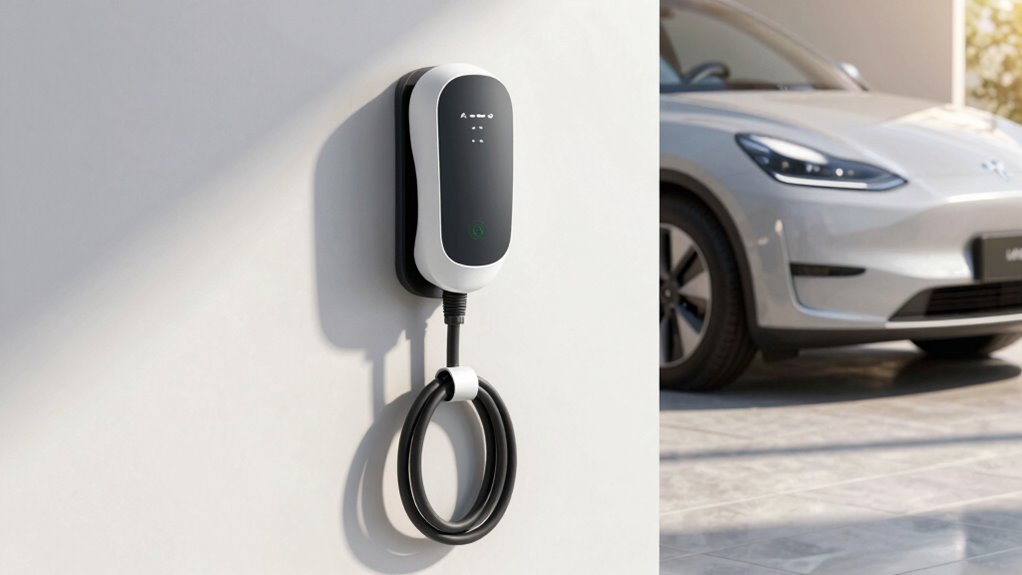

Before installing an EV charger at home, consider the type you need—Level 1 for slow, overnight charging or Level 2 for faster daily use—and check if your electrical system can support it. You’ll want to verify proper grounding and safety measures or consult a licensed electrician. Costs vary, but incentives might help offset expenses. Choosing the right charger depends on your driving habits, so understanding your options ensures a safe, efficient setup—continue exploring for detailed guidance.
Key Takeaways
- Determine your driving habits to choose between Level 1, Level 2, or fast chargers based on charging speed needs.
- Check your home’s electrical capacity and consult an electrician to ensure safe installation and possible upgrades.
- Consider the cost, available incentives, and installation requirements when selecting and budgeting for a home EV charger.
- Ensure proper grounding, safety standards, and use circuit protection to prevent overloads and fire risks.
- Match your charger type with your vehicle’s compatibility and features, and explore smart or solar-compatible options if desired.

ChargePoint HomeFlex Level 2 EV Charger J1772 – Fast Smart Battery Power Charging at Home for Electric Automobile Vehicles – Hardwired for Electric Car
Charge with Confidence: ChargePoint builds reliable, flexible EV charging stations for home, business, and fleets. Get 24/7 support…
As an affiliate, we earn on qualifying purchases.
As an affiliate, we earn on qualifying purchases.
What Types of Home EV Chargers Are Available?
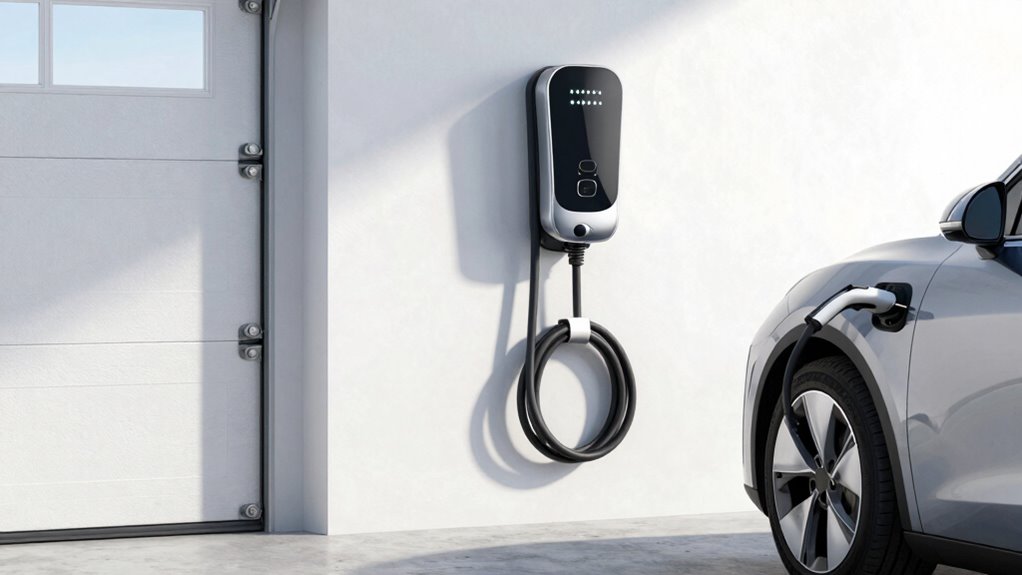
When choosing a home EV charger, it’s important to understand the different types available. Charger types vary mainly by speed and power output, including Level 1, Level 2, and DC fast chargers. Level 1 chargers use a standard household outlet, offering slow charging suitable for overnight use. Level 2 chargers require a dedicated 240-volt outlet, providing faster charging, ideal for daily use. DC fast chargers are typically found at commercial locations and aren’t common for home installation due to high power needs. Installation options depend on your electrical system’s capacity and your convenience. Some chargers are plug-in units, while others require hardwiring into your home’s electrical system. Choosing the right type and installation option depends on your daily driving habits and home setup. Additionally, understanding power management can help optimize charging efficiency and protect your electrical system. Incorporating load balancing strategies can help prevent electrical overloads and reduce energy costs. Properly integrating smart charging features can further enhance energy use and cost savings, especially when tailored to your home’s electrical capacity. Being aware of your electrical system’s limitations can also prevent costly upgrades or safety issues.
ChargePoint HomeFlex Level 2 EV Charger J1772 – Fast Smart Battery Power Charging at Home for Electric Automobile Vehicles – Hardwired for Electric Car
Charge with Confidence: ChargePoint builds reliable, flexible EV charging stations for home, business, and fleets. Get 24/7 support…
As an affiliate, we earn on qualifying purchases.
As an affiliate, we earn on qualifying purchases.
How Can I Check If My Home’s Electrical System Can Handle a Charger?
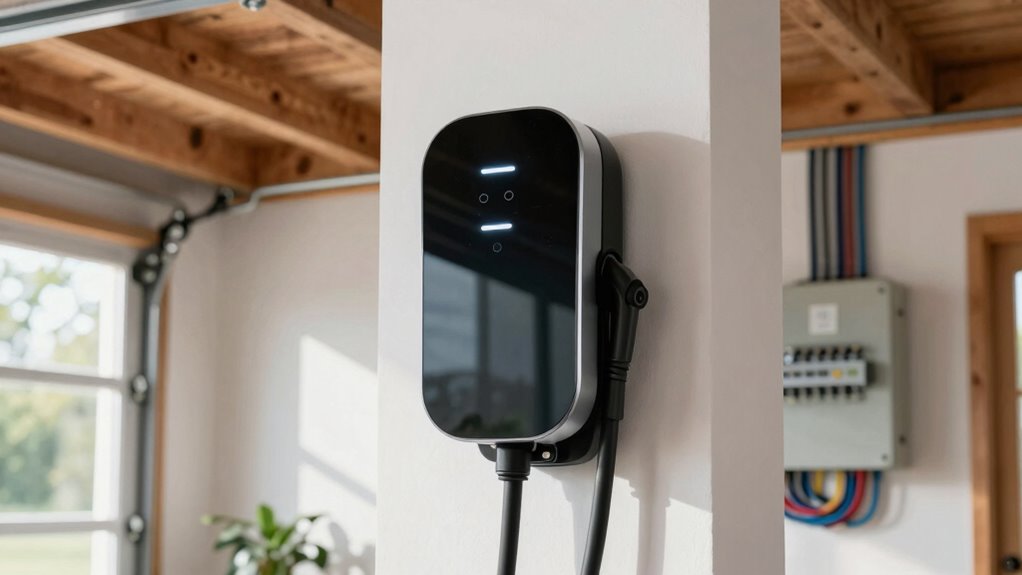
Before choosing a home EV charger, you need to make certain your electrical system can support it. Check your electrical capacity by locating your main breaker panel and noting the amperage rating, usually 100-200 amps. Most standard outlets can’t handle the high power demand of EV chargers, so you’ll likely need to evaluate whether your existing circuits can handle increased load. If your system has limited capacity, circuit upgrades might be necessary to safely accommodate the charger. This could involve installing a dedicated circuit or upgrading your panel to increase overall capacity. Consulting a licensed electrician can help you assess whether your current electrical system can handle the charger or if upgrades are required before installation. Ensuring proper piercing care and hygiene is also important if you plan to have any body modifications, as they can affect overall safety and health during electrical work. Additionally, understanding your electrical system’s capacity can prevent potential overloads and hazards, and knowing about safe wiring practices can further ensure a secure installation. Regularly inspecting your electrical components and staying informed about electrical safety standards can also help maintain a safe environment for your EV charging needs. Being aware of electrical code requirements is essential to ensure your installation complies with local regulations and safety guidelines.

AIMILER Level 2 Electric Vehicle (EV) Charger(WIFI APP/Plug-play), 32A, 25ft Cable ETL Certified, 220V-240V NEMA 14-50P Plug EVSE w/ J1772 Connector, Portable EV Car Charging Stations for Home Level 2
❤ [Equipped with Nema 14-50 plug 240V, Compatible with 110-120V Nema 5-15p to 14-50r EV Adapter(Not packaged) or…
As an affiliate, we earn on qualifying purchases.
As an affiliate, we earn on qualifying purchases.
What Safety Tips Should I Follow When Installing My EV Charger?
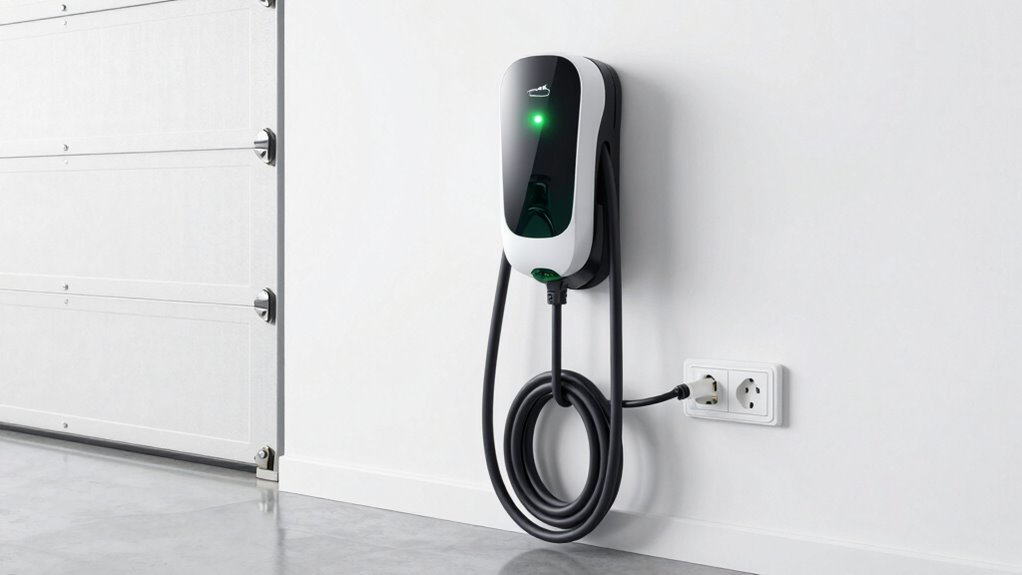
Installing an EV charger involves working with high-voltage electrical systems, so prioritizing safety is essential. Always guarantee proper grounding precautions to prevent electrical shocks and fire hazards. Use a grounded outlet or a dedicated grounding rod, and verify grounding connections before proceeding. Keep fire safety in mind by installing your charger away from flammable materials and having a fire extinguisher nearby. Additionally, regularly inspect your charging equipment for any signs of damage or wear to maintain safe operation. Ensuring heat dissipation can help prevent overheating and reduce fire risks associated with electrical components. Proper circuit protection devices further safeguard against electrical faults and surges, and considering advanced safety features can enhance overall safety during operation. Being aware of electrical codes and regulations is also crucial to ensure your installation complies with safety standards and reduces potential hazards.

MACH 1: Fast 48 Amp Level 2 EV Charger, Wall-Mount Electric Vehicle Charging Station, 200-240V Hardwire or NEMA 14-50. J1772 car Connector & Tesla NACS, Indoor/Outdoor, 30ft Cable evse Adapter
An American brand 4 all EVs in the US: ApexCharger features high end displays on all of its…
As an affiliate, we earn on qualifying purchases.
As an affiliate, we earn on qualifying purchases.
How Much Will a Home EV Charger Cost, and Are There Incentives?
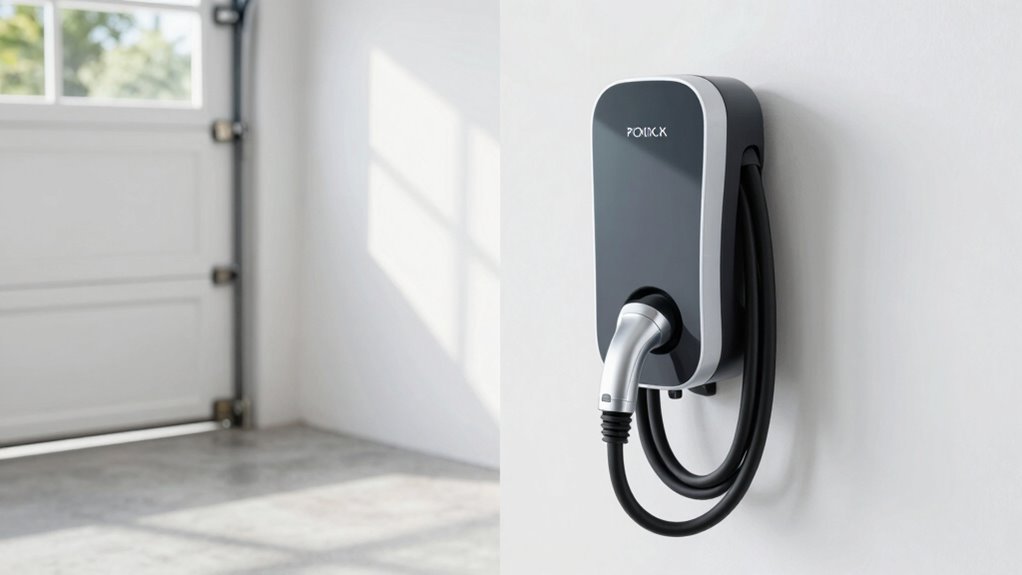
The cost of a home EV charger typically ranges from $500 to $2,500, depending on the charger’s power level, features, and installation requirements. When considering cost considerations, it’s important to factor in not just the purchase price but also installation expenses. Fortunately, many regions offer incentive programs to help offset these costs, making home charging more affordable. These incentive programs can include rebates, tax credits, or grants, which vary by location and eligibility. Before making a purchase, research available incentives in your area to maximize savings. Keep in mind that higher-powered chargers tend to cost more initially but may save you money in the long run through faster charging and increased convenience. Additionally, understanding the Free Floating concept can help you plan your outdoor space more effectively when integrating charging stations with existing backyard features.
Which Home EV Charger Is Best for Your Needs?
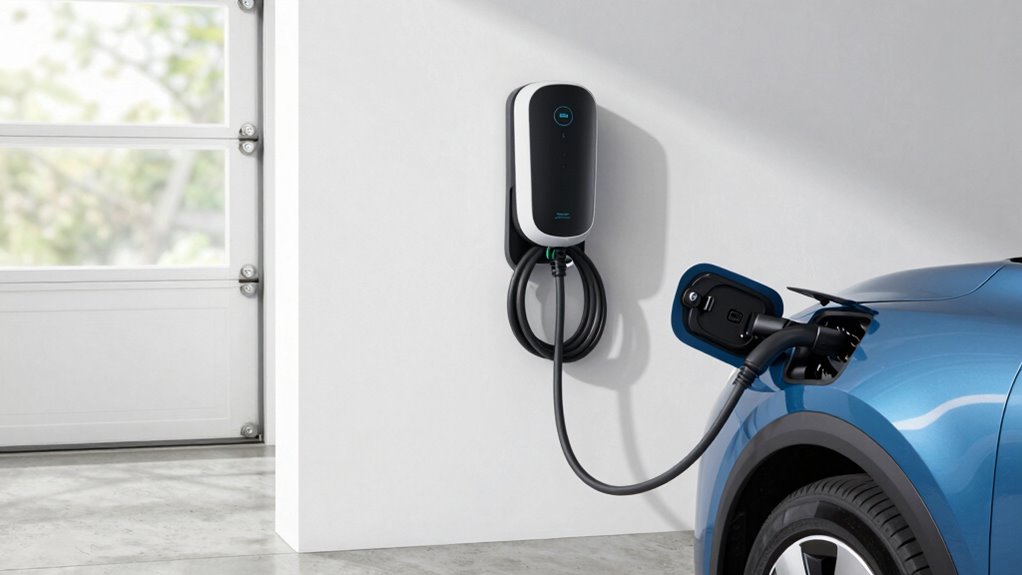
Choosing the right home EV charger depends on your driving habits, vehicle compatibility, and budget. If you drive daily, a Level 2 charger offers faster charging and convenience. Consider charger compatibility with your vehicle’s charging port and power needs. The installation process varies; some chargers require professional setup, while others are easier to install yourself. To help decide, here’s a quick overview:
| Charger Type | Compatibility | Installation Process |
|---|---|---|
| Level 1 | Universal, basic | Plug into standard outlet |
| Level 2 | Vehicle-specific | Professional recommended |
| Fast Charger | High compatibility | Complex, professional setup |
Matching your needs ensures efficient charging and a smooth installation experience. Additionally, understanding smart yard care features like multi-unit setups can help you manage your charging stations more effectively at home, especially as tax incentives for EV chargers become available under recent law updates. Being aware of the latest solar panel technology can also support your home’s energy needs if you decide to integrate renewable power sources. It’s also important to consider the charging speed that best fits your lifestyle to optimize your setup.
Frequently Asked Questions
Can I Install an EV Charger Myself or Should I Hire a Professional?
You should opt for professional installation rather than DIY. While a DIY installation might seem cost-effective, it can pose safety risks and may not meet local electrical codes. Hiring a licensed electrician guarantees the job is done correctly, safely, and efficiently. Professional installation also guarantees your EV charger is compatible with your home’s electrical system and offers peace of mind, avoiding potential hazards or costly repairs down the line.
How Long Does It Typically Take to Charge an EV at Home?
It usually takes about 4 to 12 hours to fully charge your EV at home, depending on the charging speed and your vehicle’s battery capacity. If you use a Level 1 charger, it’s slower, taking longer to fill a larger battery. A Level 2 charger speeds things up considerably, letting you recharge overnight. Your charging time varies based on your battery’s size and the charger’s power, so plan accordingly.
Are There Any Ongoing Maintenance Requirements for Home EV Chargers?
You’ll need to perform regular maintenance on your home EV charger, like charger inspections to make sure everything’s in good shape and checking for any wear or damage. Additionally, you should keep the software updated, as manufacturers often release updates to improve performance and security. These simple steps help ensure your charger remains safe, efficient, and reliable, preventing potential issues and extending its lifespan.
What Should I Do if My Home’s Electrical System Is Outdated?
If your home’s electrical system is outdated, start by consulting a licensed electrician. They can assess your electrical panel’s capacity and recommend necessary electrical panel upgrades to handle your EV charger’s power demands. You might need to upgrade your circuit breaker capacity to ensure safety and efficiency. Don’t delay—upgrading your system now prevents future issues and guarantees your EV charger operates reliably.
How Do I Determine the Appropriate Amperage for My EV Charger?
Determine the right amperage for your EV charger by calculating your home’s existing electrical demands. Start with an amperage calculation to understand your circuit’s capacity, then match it to your charger’s power needs. Always check your circuit breaker’s rating to verify safety and avoid overloads. If unsure, consulting a professional electrician guarantees you install the correct amperage, ensuring safe, efficient charging without tripping breakers or risking electrical issues.
Conclusion
Now that you know the basics of installing an EV charger at home, are you ready to make the switch and enjoy the convenience of charging overnight? With the right charger, safety precautions, and potential incentives, you can turn your home into a charging hub tailored to your needs. Don’t wait—embrace the future of driving and simplify your life. After all, isn’t it time your home kept up with your journey?