
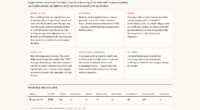
🔍 Read the full analysis: Five Points That Became Two: What’s Wrong With The Astra Vs Fable Benchmark on ThorstenMeyerAI.com

Get the latest gadgets delivered free with Prime
- Fast, free delivery on millions of items
- Prime Video, Amazon Music and more included
- Member-only deals all year
TL;DR
A recent benchmark comparing GPT-6 Astra and Fable 5.1 is flawed due to index revisions, architectural differences, and misinterpretations of token efficiency. The actual performance and economics are more nuanced than the headline figures suggest.
Recent claims that GPT-6 Astra outperforms Fable 5.1 on the Artificial Analysis Intelligence Index are based on outdated and inconsistent benchmark data, according to a detailed analysis by Thorsten Meyer. The findings challenge the narrative that Astra’s architecture offers superior intelligence per dollar, highlighting fundamental flaws in the benchmarking approach and interpretation.
Thorsten Meyer’s investigation shows that the widely circulated comparison between Astra and Fable is anchored in benchmark scores that have since been revised. The original figures claimed a five-point lead for Fable (66 vs. 61), but recent data indicates the scores are now closer—Fable at 57 and Astra at 55—due to index updates and re-scoring across different evaluation versions. This discrepancy underscores how benchmark revisions can distort perceived performance gaps.
Furthermore, the narrative that Astra ‘attacks the economics’ of AI intelligence is misleading. While Astra demonstrates efficiency in coding tasks—achieving comparable performance at less than half the cost of Fable—the same does not hold for general intelligence metrics. According to Artificial Analysis, Astra is actually less cost-effective than its predecessor, GPT-5.6 Sol, on the broader Intelligence Index, with its price increasing 2.5 times and only partial token-efficiency gains.
Adding to the confusion, Astra’s architectural design—featuring latent reasoning loops—renders token-based efficiency metrics obsolete for measuring true compute costs. The Index relies heavily on token counts, which do not accurately reflect the model’s reasoning process, especially when reasoning occurs outside of token generation. As a result, comparing token usage between Astra and Fable is misleading, conflating architectural differences with performance and efficiency.
Five points that became two: what’s wrong with the Astra vs Fable benchmark
The comparison everyone is quoting — Fable 66, Astra 61, “not a rounding error” — is built on numbers that were stale when written, measuring a quantity that no longer means what it used to, aggregated in a way that hides the reversals that matter. The benchmark isn’t broken. The way it’s being read is.
Three things happened at once: the Index was revised (five became two), the architecture changed (tokens stopped being compute), and the aggregate did what aggregates do (6–1 became +2). A leaderboard position now tells you less than it ever has — and the more advanced the architecture, the less it tells you. Latent reasoning is only the first architecture to break the token proxy. So with your Astra access: ignore the Index number. Take your ten real tasks. Run both models at the effort setting you’ll actually pay for. Measure the bill including the cache line. Measure the failure rate — the 41-point hallucination drop is the one number here I’d bet money on. The benchmark can’t decide for you anymore.
Implications of Benchmark Flaws on AI Performance Claims
This analysis highlights that the widely accepted Astra vs. Fable benchmark is fundamentally flawed, impacting how AI performance and economics are understood. Relying on outdated or misinterpreted data can lead developers and users to overestimate Astra’s efficiency and underestimate its costs, potentially skewing investment and development priorities. The findings emphasize the importance of transparent, architecture-aware benchmarking practices to accurately assess AI capabilities and value.
As an affiliate, we earn on qualifying purchases.
Background of the Astra vs Fable Benchmark Dispute
The comparison between Astra and Fable gained prominence after initial reports claimed Astra’s superior cost-efficiency and performance on the Artificial Analysis Intelligence Index. These claims were based on a benchmark score that circulated widely but was derived from an earlier version of the index. Over time, the index was revised—version 4.1.1 to 4.2—leading to recalibrated scores for all models involved. Meanwhile, Astra’s architectural innovations, such as latent reasoning loops, have complicated token-based efficiency measurements, which are central to the original benchmarking approach.
Initially, the narrative suggested Astra was a breakthrough in intelligence per dollar, driven by token efficiency. However, subsequent analysis revealed that the scoring metrics were based on different evaluation versions and architectures, making direct comparisons unreliable. Experts like Sebastian Raschka and Alan Thompson have pointed out that Astra’s architecture fundamentally changes how its performance should be measured, especially regarding compute costs and reasoning efficiency.
“The benchmark scores are not only outdated but also misrepresent the true performance of Astra and Fable, mainly because of index revisions and architectural differences.”
— Thorsten Meyer
Unresolved Questions About Astra’s True Performance
It remains unclear how Astra’s architectural features—particularly its latent reasoning loops—will impact real-world performance and cost-efficiency outside of token-based metrics. OpenAI has not publicly disclosed detailed cost data for the latent reasoning process, and external observers cannot verify the actual compute costs involved. Additionally, the long-term implications of index revisions and their influence on model rankings are still being evaluated, leaving some uncertainty about Astra’s true standing in the AI landscape.
Next Steps for Accurate Benchmarking and Model Evaluation
Developers and researchers are expected to focus on architecture-aware benchmarks that account for Astra’s latent reasoning capabilities and true compute costs. OpenAI and other organizations may update their evaluation protocols to better reflect these architectural innovations. Meanwhile, independent analysts will likely scrutinize Astra’s performance across diverse tasks, beyond token counts, to establish a clearer picture of its real-world efficiency and capabilities. Transparency from OpenAI regarding the architecture and operational costs will be crucial for an accurate assessment.
Key Questions
Why is the Astra vs Fable benchmark considered flawed?
The benchmark is flawed because it relies on outdated index versions, conflates architectural differences with performance metrics, and uses token counts that no longer accurately reflect Astra’s compute costs due to its latent reasoning loops.
Does Astra outperform Fable in terms of intelligence?
According to the latest data, Astra is not necessarily more intelligent per dollar in general tasks. It shows efficiency gains in coding but is less cost-effective on broader intelligence metrics, especially after index revisions.
What are latent reasoning loops, and why do they matter?
Latent reasoning loops are architectural features allowing Astra to reason internally without emitting tokens for every step. They make token-based efficiency metrics misleading because they externalize less of the model’s work, obscuring true compute costs.
Will the benchmark be revised to reflect Astra’s architecture?
It is likely that future benchmarks will incorporate architecture-aware metrics that better capture Astra’s latent reasoning capabilities, but current standards still rely heavily on token counts.
How should consumers interpret Astra’s performance claims?
Consumers should be cautious and consider that current performance and efficiency claims may be based on outdated or incomplete metrics. A deeper understanding of architectural differences is necessary for accurate assessment.
Source: ThorstenMeyerAI.com
Halloween Picks
halloween
As an affiliate, we earn on qualifying purchases.