
To build a quiet home office, focus on soundproofing key areas. Start by adding acoustic panels on walls and ceilings to absorb noise, and seal gaps around windows and doors with weatherstripping or sealant. Use rugs or carpets to dampen floor sound, and position your workspace away from noisy areas. Combining these ideas with thoughtful space planning creates a peaceful environment. Continue exploring for more tips to make your office truly quiet and focused.

Get the latest gadgets delivered free with Prime
- Fast, free delivery on millions of items
- Prime Video, Amazon Music and more included
- Member-only deals all year
Key Takeaways
- Use acoustic panels and sound-absorbing materials to reduce echoes and external noise.
- Seal gaps around windows, doors, and wall joints with weatherstripping or sealant.
- Choose a quiet room and optimize its layout to minimize noise exposure.
- Add mass-loaded vinyl or soundproofing layers behind drywall for enhanced sound blocking.
- Incorporate rugs, heavy curtains, and soft furnishings to dampen sound reflections.
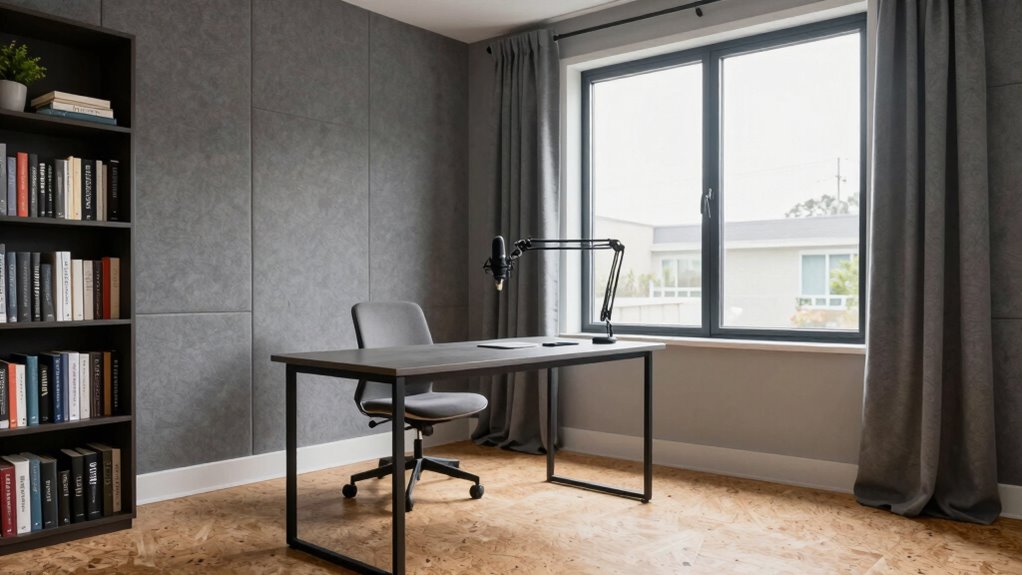
Creating a quiet home office is essential for maintaining focus and productivity, especially if you work remotely or manage frequent calls. To achieve this, soundproofing becomes a priority. One of the most effective ways to reduce noise is by installing acoustic panels. These panels absorb sound waves, preventing echoes and minimizing external noise from disturbing your work environment. Position them strategically around your space—on walls, ceilings, or behind your desk—to maximize their effectiveness. Acoustic panels come in various styles and thicknesses, so choose ones that blend with your decor while providing the noise reduction you need.
Sealing gaps is another critical step in soundproofing your home office. Even small cracks around windows, doors, or wall joints can let in unwanted noise. Use weatherstripping or sealant to close these gaps tightly. For doors, install door sweeps at the bottom to block sound leaks and ensure they fit snugly into the frame. For windows, consider adding double-pane glass or using window inserts designed to improve sound insulation. These measures prevent noise from entering through common weak points, making your office markedly quieter. Additionally, adding mass-loaded vinyl or similar soundproofing materials behind drywall can further enhance sound blocking through walls.
Beyond acoustic panels and sealing gaps, think about the overall layout of your space. If possible, position your office away from noisy areas like kitchens or living rooms. Adding rugs or carpets can dampen sound that bounces off hard floors, further reducing noise levels. You might also consider installing a door with good acoustic sealing or using a heavy curtain over the doorway for additional sound blocking. These simple modifications can make a big difference in creating a soundproof environment. Incorporating soundproofing materials with high density and mass can significantly enhance noise reduction efforts, especially when combined with other strategies. It’s also helpful to understand how the structure of your walls influences sound transmission to make more informed decisions.
It’s also worth paying attention to the walls and ceiling. If you’re working in a shared home or apartment, adding mass-loaded vinyl or other soundproofing materials behind drywall can block sound transmission through walls. For ceilings, acoustic tiles or panels can absorb overhead noise, especially if your apartment is in a noisy building. Remember, the key is to combine multiple strategies—acoustic panels, sealing gaps, and thoughtful space planning—to achieve the best results. This holistic approach ensures that external noise is minimized from all directions, creating a more tranquil workspace. Incorporating soundproofing techniques can turn your home office into a peaceful haven for work and concentration.
In the end, building a quiet home office involves a combination of sound-absorbing materials, sealing all possible gaps, and optimizing your room layout. With these steps, you’ll create a focused, calm environment where your work can thrive, free from distracting external noises.
As an affiliate, we earn on qualifying purchases.
Frequently Asked Questions
How Much Does Soundproofing Typically Cost?
Soundproofing your home office typically costs between $500 and $2,000, depending on the size and the methods you choose. You can stay within your soundproofing budget by opting for cost-effective solutions like adding weatherstripping, sealing gaps, or using acoustic panels. These DIY upgrades help reduce noise without breaking the bank. Remember, investing a little extra can markedly improve your workspace’s quietness and overall comfort.
Can DIY Soundproofing Be as Effective as Professional Installation?
DIY soundproofing can be effective, but it often faces challenges like proper material selection and precise installation. You might not get the same professional advantages, such as ideal soundproofing performance and durability. While DIY projects save money, they require patience and skill to match professional results. If you’re willing to learn and invest effort, you can improve your space; otherwise, professionals guarantee consistent, superior soundproofing.
What Are the Best Materials for Soundproofing Windows?
The best materials for soundproofing windows include heavy window treatments like thick curtains or acoustic panels, which absorb sound and reduce noise infiltration. Double-glazed windows also work well by creating a barrier against outside noise. Combining these, you can markedly improve your home office’s quietness. Use acoustic panels inside your room for extra sound absorption, making your workspace more peaceful and productive.
How Long Does It Take to Soundproof a Home Office?
It can take just a few hours or up to a weekend to soundproof your home office! If you’re installing acoustic panels and hanging soundproof curtains, expect a day or two for a thorough upgrade. The process moves faster if you prep everything beforehand, but if you want maximum silence, dedicate enough time to carefully position panels and curtains to block out noise effectively.
Are There Any Legal or Building Code Considerations?
You need to take into account building codes and legal considerations before soundproofing your home office. Check local building codes for requirements on wall insulation, fire safety, and ventilation to ensure compliance. It’s wise to consult your city’s building department or a professional contractor to avoid violations. Ignoring these regulations could lead to fines or needing costly modifications later. Always prioritize legal and safety standards to create a functional, compliant, and quiet home office space.
Conclusion
Creating a quiet home office is all about understanding soundproofing basics and applying them thoughtfully. While some believe adding heavy curtains or sealing gaps completely silences noise, the truth is, no space is perfectly soundproof. Instead, focus on reducing distractions and balancing comfort with practicality. With small adjustments—like strategic placement and acoustic treatments—you’ll find your workspace quieter and more productive, proving that even modest efforts can make a big difference in creating your ideal quiet zone.
Fall Picks
fall essentials
As an affiliate, we earn on qualifying purchases.