
TL;DR

Get the latest gadgets delivered free with Prime
- Fast, free delivery on millions of items
- Prime Video, Amazon Music and more included
- Member-only deals all year
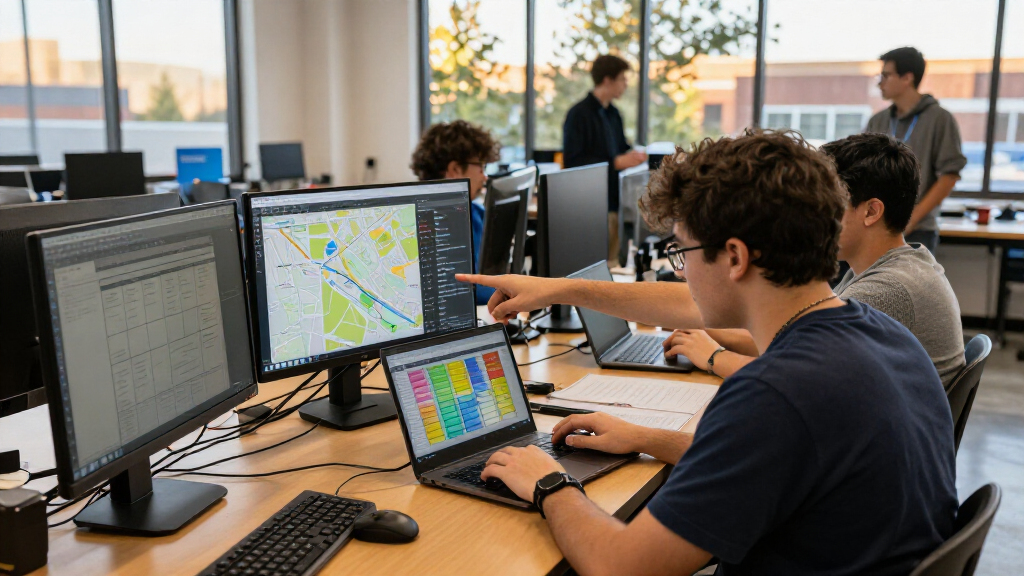
Google hosted its second annual Colorado Impact Hackathon at its Boulder offices in partnership with CU Boulder and the Colorado Energy Office. Student teams presented three winning projects focused on helping homeowners plan solar, managing batteries during wildfire shutoffs and identifying where the grid may need hardening.
Students at Google’s second annual Colorado Impact Hackathon presented technology projects aimed at problems facing the state’s electric grid, including solar planning, wildfire-related power shutoffs and grid vulnerability. Google said it held the event at its Boulder offices in partnership with the University of Colorado Boulder and the Colorado Energy Office.
Google said participants were asked how to help create a clean, secure and resilient electric grid in Colorado. The company named three projects as the event’s top finishers. First place went to SolarSnap, an AI app designed to help homeowners identify a suitable solar-panel setup using a phone camera.
Grid Watch took second place. Google described it as an AI-managed battery network intended to help keep power on during wildfire-related shutoffs while reducing electricity costs. Third-place project Grid Guard was described as providing predictive capabilities for targeted grid hardening.
Google’s account identifies the projects and their placements but does not describe how the teams built or tested them. The company also said Colorado Attorney General Phil Weiser and CU Boulder Vice Chancellor for Sustainability Andrew Mayock spoke at the event about innovation and the state’s clean-energy future.
Student Proposals Target Grid Pressures
The projects focus on issues with practical consequences for Colorado residents and energy providers. SolarSnap addresses the information homeowners may need when considering rooftop solar, while Grid Watch is framed around maintaining power during wildfire shutoffs and managing costs. Grid Guard takes a different approach, aiming to help identify where grid improvements could be targeted.
These are hackathon concepts, not reported deployments. Still, the event brought students together with Google, a university and a state agency around local energy challenges. Whether any proposal moves beyond the competition could determine whether the ideas have an impact outside the event.
Products Worth Considering

Jackery HomePower 3000 Portable Power Station with Two 200W Solar Panels

EcoFlow Smart Home Panel 2 Whole-Home Backup System Hub

LG 34GX90SA-W 34-inch Ultragear WQHD OLED Curved Gaming Monitor
As an affiliate, we earn on qualifying purchases.
A Colorado Partnership Around Energy
The hackathon was the second annual Colorado Impact Hackathon, according to Google. It took place at the company’s Boulder offices and was organized in partnership with CU Boulder and the Colorado Energy Office. The company’s report centers on student work and the three ranked projects rather than providing a detailed account of the event’s schedule or judging process.
Google connected the challenge to concerns including wildfire risks and energy backlogs. Its report does not define those backlogs or provide figures on outages, grid capacity, project costs or the number of participating students. The stated challenge—to make the grid cleaner, more secure and more resilient—provides the competition’s frame, rather than evidence that its entries have already changed energy infrastructure.
“How can we create a clean, secure, and resilient electric grid in Colorado?”
— Google, in its Oct. 29, 2026 report
Project Testing and Follow-Up Unknown
Google’s report does not say whether the winning projects were prototypes, tested with users or connected to utility systems. It provides no performance results, development plans, funding details or deployment commitments, and does not identify the teams or explain how judges selected the winners.
It is also unclear whether the Colorado Energy Office, CU Boulder, Google or any energy provider will continue working with the students. The descriptions of potential benefits—including keeping power on and reducing costs—are project aims, not verified outcomes in the information provided.
Next Steps for the Winning Teams
The next confirmed development is not specified in Google’s report. The company has not announced a timeline for further work, and it is unclear whether the student teams will receive support to refine their projects or test them beyond the hackathon.
Readers will need further information from Google, CU Boulder, the Colorado Energy Office or the teams themselves to learn whether any concept advances. Useful details would include prototype testing, engagement with homeowners or utilities, and evidence on reliability and cost. Until then, the event’s confirmed outcome is the selection of three student projects, rather than a change to Colorado’s electric grid.
Key Questions
What was the Colorado Impact Hackathon?
It was Google’s second annual event, held at its Boulder offices with CU Boulder and the Colorado Energy Office. Students worked on challenges related to building a clean, secure and resilient Colorado electric grid.
Which project won first place?
SolarSnap placed first. Google described it as an AI app that uses a phone camera to help homeowners find an ideal solar-panel setup.
What were the other winning projects?
Grid Watch placed second with a proposed battery network for wildfire shutoffs and electricity costs. Grid Guard, which Google said offers predictive capabilities for targeted grid hardening, placed third.
Are the projects being used on Colorado’s grid?
Google’s report does not say that any project has been deployed or tested with utilities. It gives no confirmed plans for further development.
Source: blog.google