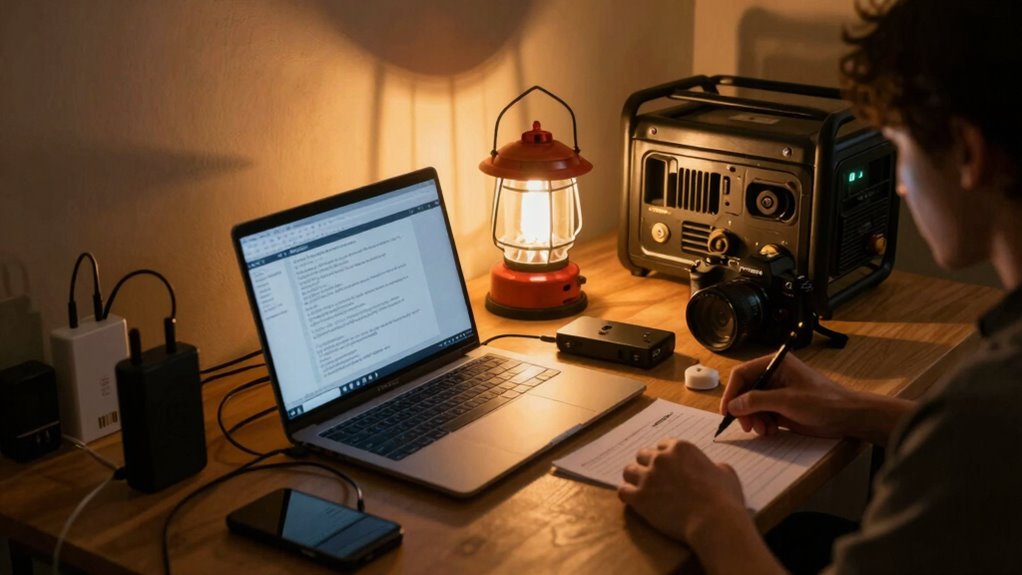

During an outage, you should first activate your generator and verify it’s running properly. Prioritize life safety systems like emergency lighting, fire alarms, and security. Then, power critical infrastructure such as data servers and communication systems. Use load management to prevent overloads and guarantee essential equipment operates smoothly. Focusing on these priorities keeps everyone safe and maintains essential functions. If you want to understand how to develop a full outage plan, keep exploring the key steps.
Key Takeaways
- Prioritize life safety systems like emergency lighting, fire alarms, and security to ensure personnel safety first.
- Activate critical infrastructure such as data servers and communication systems to maintain essential operations.
- Power non-essential systems, like office lighting, only after critical loads are stabilized.
- Use load management techniques to prevent generator overloads and ensure reliable operation.
- Verify generator function before connecting critical loads to ensure readiness and proper performance.
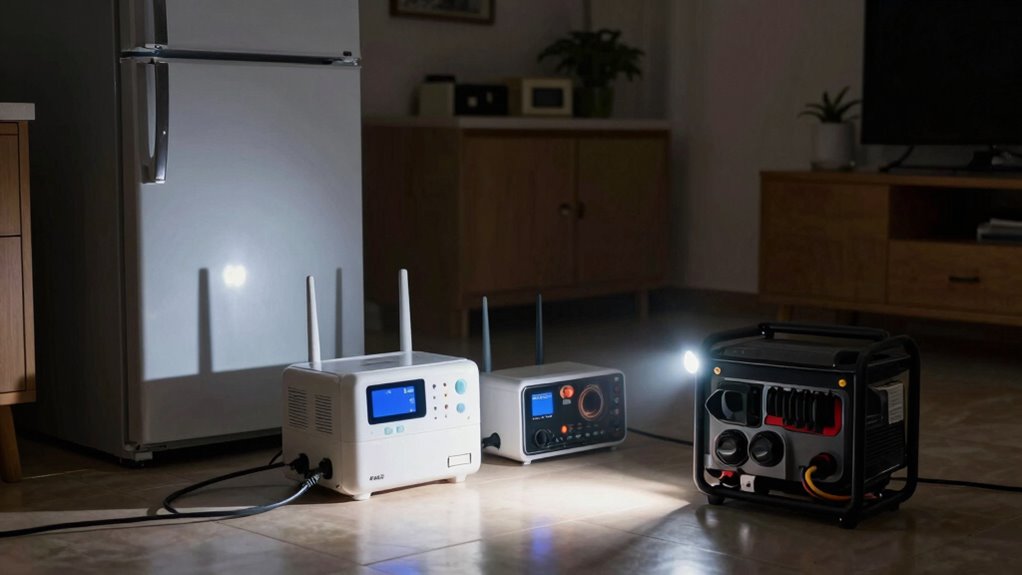
Having a solid backup power plan is essential to keep your operations running smoothly during outages. When the power goes out unexpectedly, knowing what to run first can make all the difference in maintaining safety, minimizing equipment damage, and guaranteeing critical functions continue without interruption. Proper power prioritization isn’t just about flipping switches; it’s about understanding your facility’s needs and preparing accordingly. A key part of this preparation involves regular generator maintenance. By routinely inspecting and servicing your backup generators, you guarantee they’re ready to activate instantly when needed. Well-maintained generators reduce the risk of failure, keep emissions low, and extend their lifespan, making them reliable during emergencies.
Once your generator maintenance is up to date, you should develop a clear plan for power prioritization. This means identifying which systems are essential to your operations and ensuring they receive power first. Typically, life safety systems such as emergency lighting, fire alarms, and security systems top the list. Next, critical infrastructure like data servers, communication equipment, and essential manufacturing processes should be prioritized. Non-essential systems, like office lighting or non-critical machinery, can be powered down or deferred until power is restored completely. Understanding power system resilience can help you better prepare for unexpected outages and ensure continued operations. Incorporating backup power strategies into your planning further enhances your facility’s ability to withstand outages effectively. Additionally, understanding your facility’s power load capacity can help you plan more effectively and prevent overload situations during startup.
During an outage, your focus should be on powering up essential systems immediately. Start your generator and confirm it’s operating correctly before turning on critical loads. Use load management techniques to avoid overloading the generator, which can cause failures or damage. This is where power prioritization shines — by selectively powering critical equipment first, you prevent unnecessary strain on your backup system. If your facility has a power management system, leverage it to automate this process, ensuring that the most vital systems receive power without delay. Additionally, understanding indoor air quality considerations during power outages can help maintain a safe environment for personnel, especially when ventilation systems may be affected or temporarily offline. Proper ventilation and air quality management are crucial during outages to prevent health hazards associated with poor indoor conditions.
As an affiliate, we earn on qualifying purchases.
Frequently Asked Questions
How Long Can My Backup Power Supply Last?
Your backup power supply can last anywhere from a few minutes to several hours, depending on its battery capacity and the power demand of what you’re running. If you have a larger battery capacity, you’ll enjoy longer power duration. To maximize your backup’s lifespan during an outage, prioritize essential devices, and be aware of your system’s specific power duration, which varies based on the load and battery size.
Should I Prioritize Medical Devices During an Outage?
Think of your home as a ship steering through stormy seas—medical devices are your lighthouse, guiding you safely. You should prioritize medical priorities, ensuring critical devices like ventilators and life-support systems stay powered first. This is a key aspect of power prioritization, safeguarding health and safety. By doing so, you prevent emergencies from escalating, maintaining stability until full power is restored. Always plan ahead to protect what matters most during outages.
What Safety Precautions Are Necessary With Backup Generators?
You should always prioritize safety with backup generators by ensuring proper fuel safety and correct generator placement. Keep fuel stored in approved containers away from ignition sources and never refuel while the generator runs or hot. Position the generator outdoors, on a stable, dry surface, and away from windows and vents to prevent carbon monoxide buildup. Regularly inspect for leaks, and use carbon monoxide detectors indoors for added safety.
How Often Should I Test My Backup Power System?
Have you tested your backup power system recently? You should test it at least twice a year to make certain it’s ready when needed. During these tests, focus on battery maintenance to verify batteries hold a charge and load testing to check if the system can handle full power demands. Regular testing helps identify issues early, so you’re not caught unprepared during an outage. When was your last system test?
Can Solar Power Be Used as a Backup During Outages?
Yes, solar power can be used as a backup during outages if you have a proper system with batteries. To guarantee it works efficiently, you need to perform regular battery maintenance and monitor your solar panel efficiency. Keep your batteries charged and in good condition, and clean your solar panels periodically. This way, you’ll maximize your solar power’s reliability during emergencies and get the most from your investment.
Conclusion
When planning your backup power, prioritize essential devices to keep your loved ones safe and comfortable. Did you know that over 60% of outages last less than four hours, but some can extend beyond a day? Proper planning guarantees you’re prepared for these unexpected events. By knowing what to run first, you minimize stress and protect what matters most. Stay proactive, and your backup system will serve you well when it’s needed most.