
TL;DR

Get the latest gadgets delivered free with Prime
- Fast, free delivery on millions of items
- Prime Video, Amazon Music and more included
- Member-only deals all year
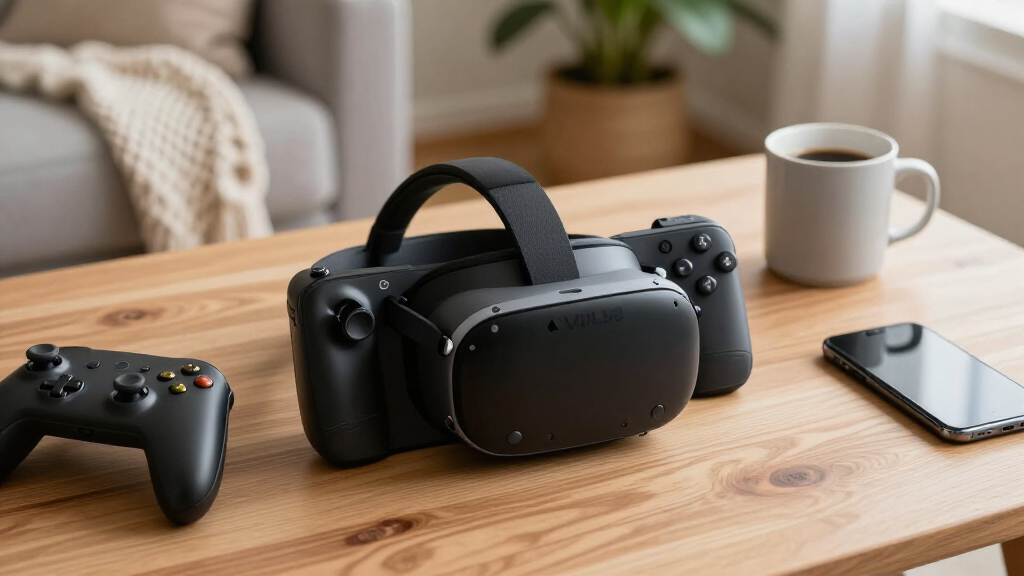
Valve has announced the Steam Frame, a new VR headset that is considered among the best in class. While it delivers high performance, it faces ongoing issues related to the economic viability of virtual reality hardware.
Valve has introduced the Steam Frame, its latest virtual reality headset, which is being hailed as one of the most capable and high-quality VR devices on the market. The announcement confirms that the device is now available for consumers, with early reviews praising its performance, display quality, and comfort. However, critics note that the device’s success may be tempered by ongoing economic challenges facing the VR industry.
The Steam Frame features a high-resolution display, improved ergonomics, and enhanced tracking capabilities, positioning it as a flagship product in Valve’s VR lineup. According to initial reviews, it offers a significant leap forward in visual fidelity and user comfort compared to previous models. Valve has emphasized that the device is compatible with existing SteamVR content, ensuring broad access to a vast library of virtual experiences.
While the performance metrics are impressive, industry analysts and some reviewers point out that the VR market remains constrained by high hardware costs and limited consumer adoption. Valve’s CEO has acknowledged these challenges, suggesting that the company’s focus on premium hardware might limit mass-market appeal in the near term. Despite this, the device is seen as a benchmark for future VR development, with some experts calling it a ‘best-in-class’ headset, according to early reviews. For more details, see the Steam Frame launch updates.
Best-in-class virtual reality meets a stubborn economic reality
Valve’s Steam Frame pairs premium display quality, improved comfort, enhanced tracking, and broad SteamVR compatibility. Its technical case is compelling; its mass-market case remains unresolved.
Why Steam Frame earns flagship status
The headset’s strongest argument is experiential: more visual clarity, better physical balance, more capable tracking, and immediate access to Valve’s established virtual-reality ecosystem.
High-resolution display
Sharper rendering is positioned as a meaningful leap over earlier Valve hardware, strengthening immersion and improving fine-detail legibility.
Improved ergonomics
Refined comfort and balance target longer sessions, addressing one of the most persistent friction points in premium VR use.
Enhanced tracking
More capable positional tracking supports responsive movement and reinforces Steam Frame’s high-performance positioning.
SteamVR compatibility
Support for existing SteamVR content gives owners access to a broad library without requiring an entirely new software catalog.
Enthusiasts first
The premium proposition is most persuasive for committed players, developers, and users who value quality over entry-level pricing.
A new reference point
Competitors may respond by raising their own standards for displays, comfort, tracking, and overall hardware refinement.
Strong product, difficult category
Steam Frame’s product strengths directly confront the structural weaknesses of VR: expensive hardware, uneven demand, content constraints, and slow mainstream adoption.
| Decision factor | Steam Frame position | Enthusiast impact | Mainstream impact |
|---|---|---|---|
| Display and visual quality | ✓Best-in-class case | ✓Highly persuasive | ~Value depends on price |
| Comfort and ergonomics | ✓Meaningfully improved | ✓Supports longer use | ✓Reduces friction |
| Tracking performance | ✓Enhanced capability | ✓Premium experience | ~May feel specialized |
| Content access | ✓SteamVR compatible | ✓Broad existing library | ~Ecosystem still evolving |
| Affordability | ✗Premium positioning | ~Possible for committed users | ✗Major adoption barrier |
| Market readiness | ~Technically ahead | ✓Clear niche demand | ✗Demand remains uncertain |
Technical confidence, commercial uncertainty
Directional assessment based on the review narrative: Steam Frame scores strongly on product quality while the category’s affordability and adoption outlook remain substantially weaker.
How one flagship could shape the market
The product’s influence will move through a chain of hardware expectations, competitive responses, pricing decisions, content investment, and ultimately consumer adoption.
Premium launch
Valve establishes a new quality benchmark.
Peer response
Meta, HTC, Sony, and others face pressure to improve.
Price pressure
Quality gains collide with cost-sensitive demand.
Content pull
Developers assess whether the installed base can grow.
Adoption test
Sales reveal whether VR can move beyond its niche.
Can superior hardware overcome a premium price?
Early praise supports the product case, but significant sales depend on consumers accepting the total cost of high-end VR.
Will SteamVR compatibility be enough?
A broad existing library lowers switching friction, although future adoption still requires a steady flow of compelling experiences.
Will competitors follow Valve’s quality standard?
Steam Frame may lift expectations across the category, but competitors could instead prioritize lower prices and wider accessibility.
When could a more affordable model arrive?
Lower-cost Valve hardware is possible, but the supplied report identifies no confirmed model or release timeline.
Watch the signals, not only the specifications
The long-term verdict will be written by sales, repeat usage, software momentum, future pricing, and Valve’s willingness to broaden the range beyond premium buyers.
Impact of Steam Frame on VR Industry Dynamics
The release of the Steam Frame underscores Valve’s commitment to maintaining its leadership in the VR space, setting a new standard for hardware quality. For consumers, it offers a high-end option that could accelerate VR adoption among enthusiasts and developers. However, the device’s high price point and ongoing market challenges highlight persistent barriers to widespread adoption, raising questions about the long-term viability of premium VR hardware in a cost-sensitive environment.
Industry insiders suggest that Valve’s focus on high-quality hardware may influence competitors to improve their offerings, but also risk limiting the market to a niche of dedicated users rather than broad consumer reach. The success of the Steam Frame could therefore shape the future trajectory of VR hardware development and pricing strategies.
Products Worth Considering

LG UltraGear 34GX90SA-W 34-inch WQHD Curved OLED Gaming Monitor

LG UltraGear 32GX850A-B 32-inch 4K UHD Glossy OLED Gaming Monitor

Samsung 49-Inch Odyssey G93SC QD-OLED Curved Gaming Monitor
As an affiliate, we earn on qualifying purchases.
Background and Industry Challenges in VR Hardware
Valve has been a key player in the VR industry since the launch of its original Index headset, which set a high bar for performance and comfort. Over the past few years, the VR market has experienced slow growth amid high hardware costs, limited content, and uncertain consumer demand. Despite technological advancements, mass-market adoption remains elusive, with many analysts citing price and content ecosystem as primary hurdles.
The industry has seen a flurry of new devices from major players like Meta, HTC, and Sony, but none have yet achieved widespread mainstream success. Valve’s recent announcement of the Steam Frame aims to bolster its position by offering a premium device designed to appeal to enthusiasts and developers, potentially setting a new industry benchmark despite ongoing market constraints.
Unresolved Market and Adoption Challenges
It remains unclear whether the Steam Frame can overcome the broader economic hurdles facing VR hardware, such as high costs and limited consumer demand. While early reviews praise its performance, it is not yet certain if the device will achieve significant sales or influence industry standards beyond niche markets. The long-term impact on VR adoption rates remains uncertain, as market conditions and content ecosystems continue to evolve.
Future Developments and Industry Impact
Valve is expected to continue refining its VR offerings, possibly introducing more affordable models in response to market pressures. The company may also focus on expanding content and ecosystem support to boost adoption. Industry observers will closely monitor sales figures, user feedback, and how competitors respond to the Steam Frame’s high-performance standards. Further updates on software, pricing, and broader market penetration are anticipated in the coming months.
Key Questions
What are the main features of the Steam Frame?
The Steam Frame offers a high-resolution display, improved ergonomics, enhanced tracking, and compatibility with existing SteamVR content, making it a top-tier device in performance and comfort.
How does the Steam Frame compare to previous Valve VR headsets?
It significantly improves visual fidelity, ergonomics, and tracking capabilities, positioning itself as a flagship device with a focus on premium quality.
What are the market challenges facing the Steam Frame?
The device faces challenges related to high costs, limited consumer demand, and the overall slow growth of the VR market, which could limit its broader adoption.
Will the Steam Frame influence the future of VR hardware?
It has the potential to set new industry standards for quality, but its success depends on broader market acceptance and ecosystem development.
When will more affordable VR options be released?
Valve may introduce more budget-friendly models in the future, but specific timelines have not been announced yet.
Source: rss