
When you use tap-to-pay, your transactions are secured with advanced encryption and generate unique, one-time tokens that make your data much harder to steal. Mobile payments also employ biometric authentication, like fingerprint or face scans, adding extra protection against unauthorized access. Unlike traditional cards, which rely on static data vulnerable to cloning, mobile systems monitor activity in real time and send instant alerts for suspicious actions. Keep going to discover more ways mobile payments keep your money safer.

Get the latest gadgets delivered free with Prime
- Fast, free delivery on millions of items
- Prime Video, Amazon Music and more included
- Member-only deals all year
Key Takeaways
- Tap-to-pay encrypts data using NFC and creates dynamic tokens, reducing theft risk compared to static card data.
- Mobile payments incorporate biometric authentication, providing stronger security than traditional magnetic or chip cards.
- Fraud detection in mobile platforms uses machine learning for real-time alerts and transaction blocking, unlike delayed card monitoring.
- Traditional cards lack advanced security features like encryption and biometric verification, making them more vulnerable.
- Mobile payment systems continuously evolve security measures, offering proactive protections against emerging cyber threats.
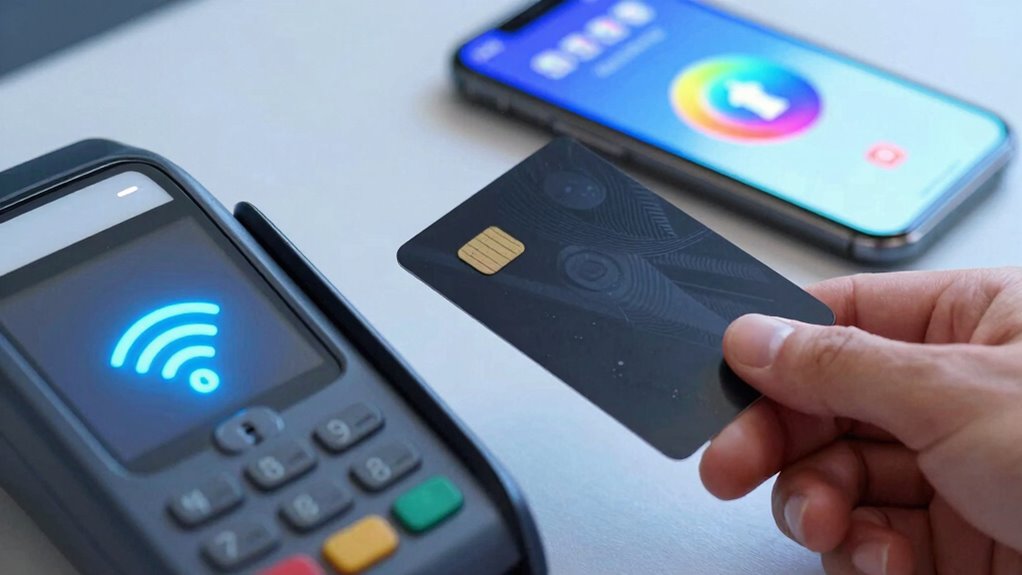
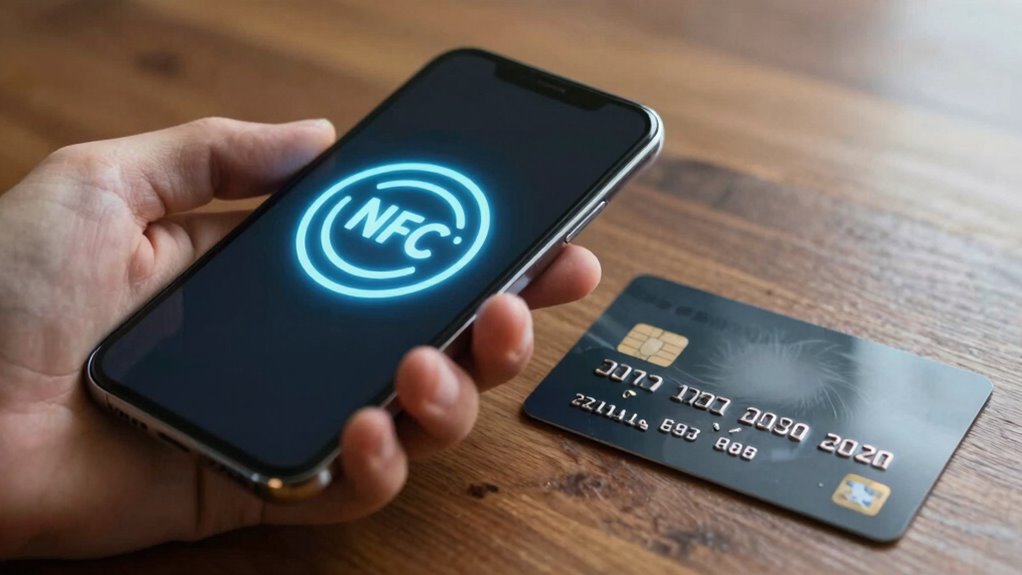
Tap-to-pay technology, often built on near-field communication (NFC), encrypts your payment data during transmission, making it extremely difficult for hackers to intercept and misuse your information. When you authorize a payment with your fingerprint or face, your device creates a one-time token instead of transmitting your actual card details. This token is useless to anyone trying to steal your information later. In contrast, traditional cards, whether chip-enabled or magnetic stripe, don’t have this dynamic security feature. They rely on static data that, if compromised, can be reused or cloned, increasing your vulnerability to fraud. While chip cards have improved security over magnetic stripe cards, they still lack the biometric authentication layer that mobile payments offer.
Furthermore, mobile payment platforms often employ advanced fraud detection techniques. These include machine learning algorithms that identify unusual spending patterns or locations, helping to prevent fraud before it occurs. If suspicious activity is detected, you’re typically notified immediately, and transactions are blocked until you verify your identity. This proactive approach notably reduces your risk. On the other hand, card-based payments can only be monitored after the fact, often leading to delays in detecting unauthorized transactions. Additionally, biometric authentication enhances security by making it more difficult for unauthorized individuals to access your payment methods. As a user, you benefit from these sophisticated security measures that continuously evolve to combat new threats. Overall, with biometric authentication and robust fraud detection, mobile payments provide a safer, more secure way to make transactions compared to traditional cards. A key benefit is the encryption of payment data, which significantly minimizes the chances of data theft during transactions. This ongoing development of security features ensures that mobile payment methods remain ahead of evolving cyber threats. Moreover, continuous advancements in encryption techniques fortify the security framework supporting mobile transactions.
Products Worth Considering

DJI Osmo Mobile 8 3-Axis Phone Gimbal Stabilizer

Anker SOLIX C300 Portable Power Station, 288Wh

Apple Watch Series 12 GPS 46mm
As an affiliate, we earn on qualifying purchases.
Frequently Asked Questions
How Do Mobile Payment Apps Protect User Data?
Mobile payment apps protect your data through encryption protocols that secure your transaction information, making it unreadable to outsiders. They also use biometric authentication, like fingerprint or facial recognition, to guarantee only you can access your payment methods. These security measures work together to keep your personal and financial data safe from theft or unauthorized use, giving you peace of mind when making transactions.
Are Tap-To-Pay Transactions More Private Than Card Payments?
Tap-to-pay transactions generally offer more privacy than card payments because they reduce contact, lowering contactless fraud risks. When you use tap-to-pay, your transaction often remains more anonymous, as it doesn’t require sharing detailed card information each time. This way, your data is better protected, and your transaction stays more private, making tap-to-pay a safer option for maintaining your privacy during payments.
What Are Common Security Breaches in Mobile Payments?
You should be aware that common security breaches in mobile payments often involve weak encryption protocols or compromised biometric authentication systems. Hackers may exploit vulnerabilities to intercept data during transmission or steal biometric data, risking unauthorized access. It’s essential to use secure networks, keep your apps updated, and enable strong biometric authentication. These measures help protect your transactions from breaches, ensuring your mobile payments stay safe and private.
Can Mobile Payments Be Hacked Remotely?
Yes, mobile payments can be hacked remotely, but strong security measures help protect you. Hackers might try to intercept data during transmission, but encryption protocols secure your information. Biometric verification adds an extra layer of security by confirming your identity, making unauthorized access harder. Always keep your device updated and use secure networks to minimize risks, ensuring your mobile payments stay safe from remote hacking attempts.
How Do I Recover My Account After a Security Breach?
Coincidences happen, but don’t ignore them—if your account’s compromised, act fast. You should immediately change your passwords and enable multi-factor authentication. Contact your payment provider for fraud prevention support and verify your identity to confirm your account’s security. Keep an eye on your transactions, and report any suspicious activity. Taking these steps helps restore your account’s safety and prevents further unauthorized access.
Conclusion
Just as Robin Hood trusted his bow over the sword, you should trust your mobile payments with the right security. Whether tapping your phone or swiping a card, remember that technology’s promise is safety wrapped in innovation. Stay vigilant, use strong authentication, and keep your defenses up—like guarding Sherwood’s treasure. In this digital age, your wallet’s security is your own legendary tale, one where you’re the hero wielding the shield of smart choices.