TL;DR

Get the latest gadgets delivered free with Prime
- Fast, free delivery on millions of items
- Prime Video, Amazon Music and more included
- Member-only deals all year
A recent study investigates a virtual reality headset designed to induce defocus, which could slow the progression of myopia in children. While initial findings are promising, further research is needed to confirm effectiveness and safety.
A new study has explored the potential of a defocus-inducing virtual reality headset to slow the progression of pediatric myopia. The research, conducted by a team of scientists and announced recently, suggests that this innovative approach may offer a non-invasive method to combat increasing rates of myopia among children. While these initial findings are promising, experts emphasize that further research is necessary to confirm efficacy and safety.
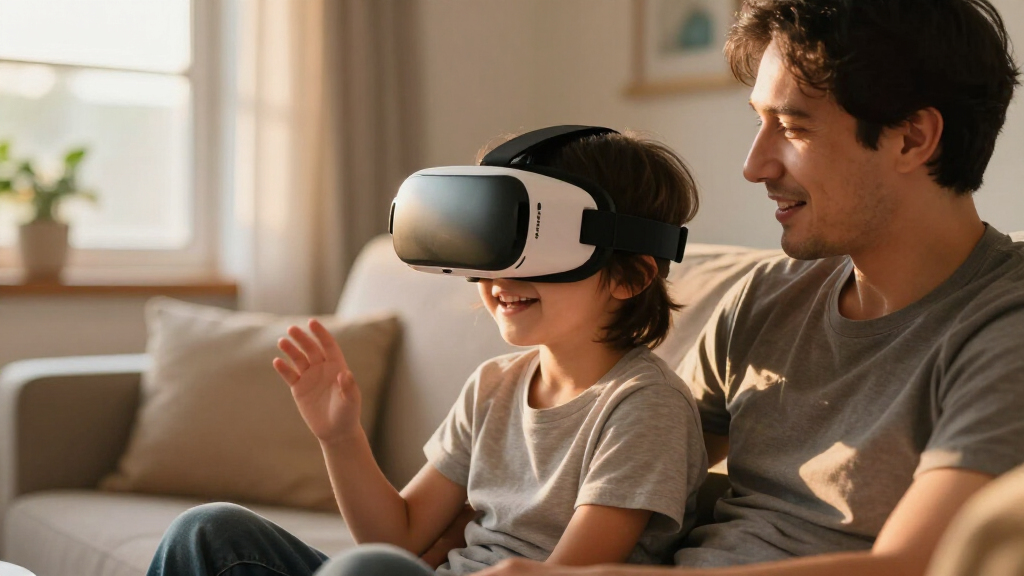
The study involved a small cohort of children aged 8 to 14 who used a specially designed VR headset that creates controlled defocus in the visual field. Over a period of three months, researchers observed a reduction in the rate of myopia progression compared to a control group not using the device. The headset employs optical techniques to induce myopic defocus, which has been theorized to signal the eye to slow its elongation, a key factor in myopia development.
According to the researchers, the device’s design aims to provide a safe, engaging alternative to current myopia control methods, such as atropine eye drops or specialized contact lenses. The study’s lead author stated that the preliminary results indicate a potential for the technology to be integrated into routine eye care, pending further validation. However, the sample size was small, and the study duration was limited, so long-term effects and safety profiles remain unestablished.
Experts in ophthalmology noted that the concept of using defocus to control eye growth is supported by prior animal studies and some human trials, but applying it through VR technology is novel. The researchers emphasized that the VR headset was designed with safety features to prevent eye strain and discomfort, which are common concerns with prolonged VR use.
Can controlled defocus slow childhood myopia?
A small, short-term study explored a virtual reality headset designed to deliver controlled myopic defocus. Researchers observed a slower rate of myopia progression, but effectiveness and long-term safety remain unconfirmed.
Promising as a concept. Preliminary as clinical evidence.
The central takeawayWhat the researchers tested
The headset applies an established optical idea through a novel delivery system: immersive hardware intended to make repeated treatment more engaging and non-invasive for children.
Children with myopia
A small cohort of children aged 8 to 14 participated, limiting how confidently the findings can be generalized to wider populations.
Specially designed VR optics
The headset created controlled myopic defocus in the visual field and included design features intended to reduce discomfort and eye strain.
Three-month observation
Researchers reported a reduced rate of progression compared with a control group that did not use the experimental device.
From optical signal to eye growth
The biological chain is plausible, but the headset’s clinical impact has not yet been established. The mechanism should be read as a research hypothesis, not a guaranteed treatment effect.
Headset optics
The device alters selected visual input in a controlled virtual environment.
Myopic defocus
Light is focused in a way intended to create a growth-modulating retinal signal.
Slower elongation
The proposed signal may tell the developing eye to reduce axial lengthening.
Slower progression
Reduced elongation could limit worsening nearsightedness over time.
Myopia commonly progresses as the eye grows too long from front to back. Greater myopia is associated with higher lifetime risks of complications including retinal detachment and glaucoma.
Potential is not the same as proof
The experimental headset enters a field that already includes eye drops, specialized lenses and behavioral guidance. It cannot yet be considered a replacement for established care.
| Approach | Current position | Delivery | Key uncertainty |
|---|---|---|---|
| Atropine eye drops | ✓Used in clinical practice | Regular eye drops | Dose, side effects and individual response |
| Specialized contact lenses | ✓Established option | Daily lens wear | Fit, hygiene and adherence |
| More outdoor time | ✓Common guidance | Behavioral routine | Effect on existing progression varies |
| Defocus-inducing VR | ~Early research | Headset sessions | Long-term efficacy, safety and usability |
What must happen next
Commercial availability would require more than a promising pilot. Researchers must show durable benefit, acceptable safety and practical use across diverse groups of children.
Larger trials
Recruit broader, more diverse pediatric populations.
Longer follow-up
Measure whether any effect persists beyond three months.
Design refinement
Improve optics, ergonomics, comfort and adherence.
Clinical review
Complete regulatory evaluation and develop guidance.
Can it replace current treatments?
Not yet. The evidence is too limited to support replacement of existing myopia-management options.
What risks remain uncertain?
Eye strain, discomfort and possible effects on visual development require more systematic study.
Will it work for every child?
That is unknown. Age, myopia severity and individual biology may influence response.
When could it become available?
No reliable timeline exists. Validation and regulatory review could take several years.
Parents and clinicians should wait for stronger evidence. The headset is an experimental concept, and decisions about pediatric myopia should remain guided by qualified eye-care professionals.
Potential Breakthrough in Myopia Management
If confirmed in larger, longer-term studies, this technology could revolutionize myopia management by offering a non-invasive, engaging method for children to control their eye growth. Given the rising prevalence of myopia worldwide—especially among school-age children—such innovations could reduce the risk of severe eye complications later in life, including retinal detachment and glaucoma. The approach also promises easier compliance compared to traditional treatments, potentially leading to broader adoption and better health outcomes.
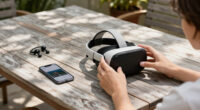
children's virtual reality headset for myopia control
As an affiliate, we earn on qualifying purchases.
As an affiliate, we earn on qualifying purchases.
Background on Myopia and Defocus Therapy
Myopia, or nearsightedness, has become a global health concern, with prevalence rates increasing rapidly in many countries. Traditional control methods include atropine eye drops, specialized contact lenses, and behavioral modifications like increased outdoor activity. Recent research has shown that optical defocus—specifically myopic defocus—can inhibit eye elongation in animal models and some human trials. However, delivering this defocus consistently and safely remains a challenge. The use of virtual reality devices to induce controlled defocus is a new approach that builds on this scientific foundation, aiming to integrate myopia control into engaging, everyday technology.
The current study is among the first to test the feasibility of using a VR headset for this purpose, marking a step forward in applying optical science to consumer electronics for health benefits.
Unconfirmed Long-Term Safety and Effectiveness
It is not yet clear whether the observed effects will persist over longer periods or translate into meaningful clinical benefits. The small sample size and short duration limit conclusions about long-term safety, potential side effects, or the impact on different age groups. Researchers emphasize that comprehensive trials are required to determine whether the device can be widely recommended.
Next Steps in Research and Development
Future research will involve larger, randomized controlled trials over extended periods to assess the long-term safety and efficacy of the VR headset. Developers plan to refine the device’s optical and ergonomic design and explore integration with routine eye care. Regulatory approval processes and clinical guidelines will follow if subsequent studies confirm initial promising results. Meanwhile, experts advise parents and clinicians to await more definitive evidence before adopting such technology broadly.
Key Questions
Can this VR headset replace current myopia treatments?
Not yet. The study shows potential, but larger, long-term trials are needed before it can be recommended as a replacement for existing treatments.
Are there any risks associated with using a VR headset for myopia control?
Potential risks include eye strain, discomfort, and possible effects on visual development, but these are not yet fully understood. The current device was designed with safety features, but more research is needed.
How soon could this technology become available to the public?
It is too early to say. After further validation and regulatory approval, it could take several years before commercial availability.
Will this work for all children with myopia?
It is uncertain. The initial study involved a small group, and effectiveness across diverse populations and severity levels remains to be tested.
How does the defocus in the VR headset work to slow myopia?
The headset creates controlled optical defocus that signals the eye to slow its elongation, which is the main cause of myopia progression.
Source: rss
Halloween Picks
halloween
As an affiliate, we earn on qualifying purchases.