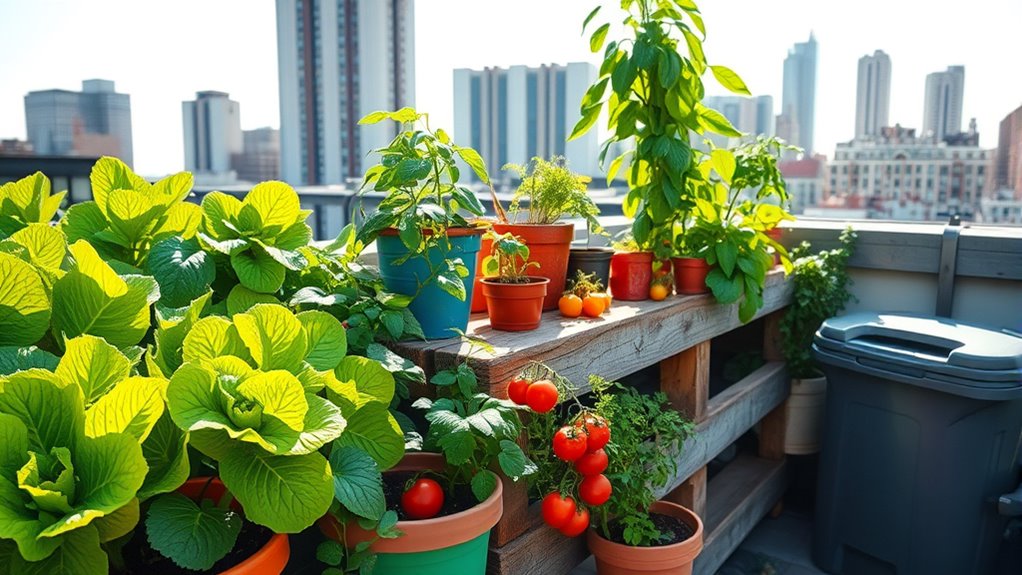

Urban gardening lets you grow food in small spaces using vertical planting and container gardening. By growing upward with wall planters, hanging containers, or trellises, you can save space and add visual appeal. Using pots or buckets for vegetables and herbs makes maintenance easier and allows flexible placement. These methods brighten your living area and connect you with nature. To discover simple tips and ideas for starting your urban garden, keep exploring this guide.
Key Takeaways
- Vertical planting maximizes limited space by growing plants upward with wall-mounted planters or trellises.
- Container gardening allows flexible, portable setups ideal for small urban areas or balconies.
- Using high-quality soil and proper drainage ensures healthy growth in small containers and vertical systems.
- Combining vertical and container gardening creates lush, accessible green spaces in compact urban environments.
- Regular care like watering, fertilizing, and pruning is essential for successful urban food cultivation.

Have you ever wondered how to bring greenery into a bustling cityscape? Even in small spaces, you can transform your balcony, rooftop, or apartment into a thriving garden with some clever techniques. One of the most effective methods is vertical planting, which allows you to maximize limited space by growing plants upward rather than outward. Using wall-mounted planters, hanging containers, or trellises, you can create lush green walls filled with herbs, flowers, or even vegetables. Vertical planting not only saves space but also adds a striking visual element to your urban environment. It’s perfect for small yards or limited balconies where ground space is at a premium. Plus, it makes maintenance easier since you can access your plants at eye level or from a standing position, reducing the need to bend down or reach awkwardly.
Container gardening is another fantastic way to grow food in tight quarters. You can use pots, buckets, or specialized containers to cultivate everything from tomatoes and peppers to lettuce and herbs. The beauty of container gardening is its flexibility—you can move your containers around to catch the best sunlight or protect plants from harsh weather. It also makes it easier to control soil quality, watering, and pest management. You don’t need a traditional garden plot; all you need is a sunny spot and some suitable containers. Many urban gardeners find that container gardening allows for more experimentation with plant varieties, and it’s ideal for renters who might not be able to make permanent alterations to their outdoor space.
To get started, choose containers with good drainage and fill them with high-quality soil suited for edible plants. Consider stacking or grouping containers to create mini gardens that look beautiful and are functional. Combine vertical planting with container gardening by placing tall, narrow planters along walls or fences, while using larger pots on patios or balconies for broader crops. Regular watering, fertilizing, and pruning will keep your urban garden thriving, and you’ll enjoy the satisfaction of harvesting fresh herbs, greens, or even small fruits right at your doorstep.
In essence, even in a city, your gardening possibilities are endless with vertical planting and container gardening. These methods make it possible to grow your own food, brighten your living space, and reconnect with nature—all without needing a sprawling yard. So, don’t let limited space hold you back. With a little creativity and effort, you’ll be surprised how much greenery you can fit into your urban life.
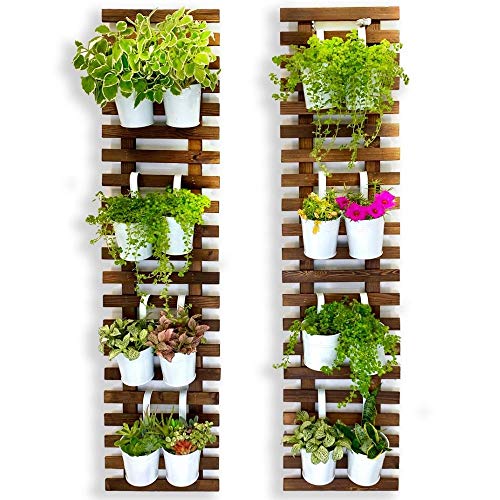
ShopLaLa Wall Planter – 2 Pack, Wooden Hanging Large Planters for Indoor Outdoor Plants, Live Vertical Garden, Plant Wall Mount Flower Pot Holder Hanger Stand Green Herb Wall Decor 47.2" (120cm)
29x120cm (11.4" x 47.2") x 2 pcs. Plants, flowers, pots, decorations are NOT included
As an affiliate, we earn on qualifying purchases.
As an affiliate, we earn on qualifying purchases.
Frequently Asked Questions
What Are the Best Plants for Limited Sunlight Spaces?
You should choose plants like herbs, lettuce, spinach, or radishes for limited sunlight spaces. These thrive in partial shade and benefit from companion planting to boost growth. To improve soil quality, consider soil improvisation with compost or organic matter. This helps your plants stay healthy even with less sunlight. With proper plant selection and soil care, you can enjoy fresh produce even in the tightest urban spots.
How Can I Prevent Pests in Small Urban Gardens?
You can prevent pests in your small urban garden by practicing companion planting, which naturally repels pests and attracts beneficial insects. Use organic pest control methods like neem oil or insecticidal soap to target pests without chemicals. Keep your garden tidy, remove diseased plants promptly, and encourage biodiversity. These strategies work together to create a healthy, pest-resistant environment, giving your plants the best chance to thrive in limited space.
What Containers Are Suitable for Rooftop Gardening?
Thinking about rooftop gardening? You’ll want containers made from durable materials like plastic, terra cotta, or recycled composites—they’re practically begging to withstand wind and sun. Don’t forget drainage solutions; holes or inserts guarantee excess water escapes, preventing root rot. Choose lightweight options to avoid crushing your rooftop dreams, and consider stacking or modular designs for space efficiency. Now, go conquer that rooftop garden—your plants will thank you, and so will your city skyline!
How Do I Water Efficiently in Small Urban Plots?
To water efficiently in your small urban plot, you should use drip irrigation systems, which deliver water directly to plant roots, reducing waste. Combine this with rainwater harvesting to gather and reuse natural rain, saving on your water bills. Regularly check soil moisture levels with a sensor or finger test to avoid overwatering. This approach keeps your plants healthy while conserving water in limited spaces.
Are There Any Legal Restrictions for Urban Gardening?
You might be surprised, but yes, there are legal restrictions you should know. Zoning laws can limit where you plant, build, or even keep certain plants. Before starting your urban garden, check local regulations—some areas require permits or restrict certain types of cultivation. Ignoring these rules could lead to fines or having your garden removed. Stay informed, and your urban gardening dreams can thrive without legal trouble.
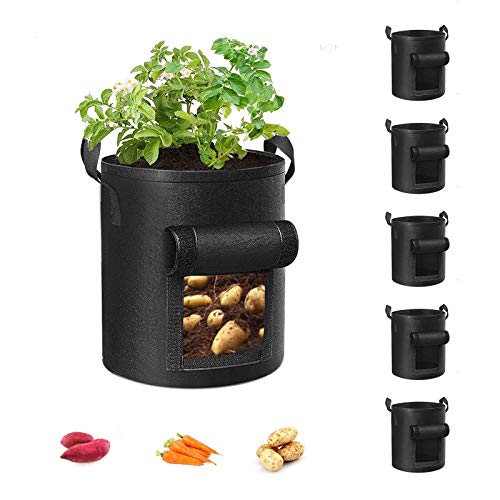
Cavisoo 5-Pack 10 Gallon Potato Grow Bags, Garden Planting Bag with Reinforced Handle, Thickened Nonwoven Fabric Pots for Tomato, Vegetable and Fruits
Durable Material: Made of 300g thick non-woven fabric that can be reused for more than 3 years.
As an affiliate, we earn on qualifying purchases.
As an affiliate, we earn on qualifying purchases.
Conclusion
Now that you know how to start urban gardening, remember that even small spaces can yield big results. Did you know that over 70% of the world’s population will live in cities by 2050? That means your tiny balcony or windowsill can make a real difference. So go ahead, get planting, and enjoy fresh, homegrown food right where you are. Your green thumb can turn any small spot into a thriving garden!

Tactiko Survival 15 Vegetable Seed Kit Varieties for Small Urban Garden, Balconies & Patios – Non-GMO, Heirloom – Popular USA-Grown Dwarf Seeds for Planting Vegetables – Indoor, Outdoor
SMALL SPACE FRIENDLY DWARF VARIETIES: Grow these dwarf vegetables and herbs on your apartment balcony, outdoor patio, or…
As an affiliate, we earn on qualifying purchases.
As an affiliate, we earn on qualifying purchases.

FUIJOL 4/5/6/7 Inch Clear Nursery Pots for Plants with Sacuers 20 Pack, Plastic Flower Pots with Drainage Holes, Variety Pack Seedlings Garden Pot for Indoor Outdoor (4+5+6+7 inch)
Garden Planting Container: 20 Pack flower pots, including 5 pieces each of 4 inch;5 inch;6 inch and 7…
As an affiliate, we earn on qualifying purchases.
As an affiliate, we earn on qualifying purchases.