

If your standing desk is too high, you might experience shoulder tension and misalignment, which can actually cause discomfort rather than relief. When the desk lifts your arms above elbow level or forces your shoulders to lift or hunch forward, it puts unnecessary strain on your neck and upper back. To prevent this, set your desk at elbow height and use ergonomic accessories, like monitor stands and footrests. Keep exploring to discover how proper setup can transform your standing work experience.
Key Takeaways
- Raising the desk too high forces shoulders to lift, causing tension and misalignment.
- Proper desk height should be around elbow level with relaxed arms to prevent shoulder strain.
- Using ergonomic accessories like monitor stands and footrests promotes correct posture at a high desk.
- Regularly monitor and adjust your setup to avoid long-term shoulder discomfort.
- Maintaining awareness of posture and taking breaks helps prevent pain caused by a overly high standing desk.

Many people assume that raising their desk to a standing height automatically reduces strain, but if the desk is too high, it can actually lead to shoulder pain. When your desk is elevated beyond the proper level, your shoulders tend to lift or hunch forward, creating unnecessary tension. This misalignment puts strain on your neck, shoulders, and upper back, defeating the purpose of switching to a standing desk in the first place. To avoid this, it’s essential to set your desk at the correct height—roughly at elbow level when you’re standing naturally, with your arms relaxed at your sides and bent at about a 90-degree angle.
Raising your desk too high can cause shoulder tension and misalignment, increasing discomfort instead of reducing strain.
Achieving the right height isn’t always straightforward, especially if your desk isn’t adjustable or if you’re using a fixed-height surface. That’s where ergonomic accessories come into play. Adjustable monitor stands or monitor arms allow you to position your screen at eye level, preventing you from craning your neck or hunching your shoulders. A footrest can help maintain proper posture by providing stability and encouraging you to stand upright rather than slouching. These accessories support posture correction by promoting alignment, reducing fatigue, and preventing discomfort that can develop from improper desk setup. Additionally, understanding the importance of ergonomic principles can guide you in creating a healthier workspace. Incorporating proper ergonomic setup into your workspace design ensures sustained comfort and reduces the risk of musculoskeletal issues. It’s also beneficial to stay aware of your body’s signals and adjust your setup as needed throughout the day. Regularly practicing posture awareness can greatly improve your overall comfort and prevent long-term pain.
You also need to pay close attention to your arm and hand positioning. Your keyboard and mouse should be positioned so that your wrists are straight, and your elbows stay close to your sides. If your desk is too high, you might find yourself reaching upward or outward, which increases shoulder strain. Using ergonomic accessories like wrist rests or adjustable keyboard trays can help keep your arms in a neutral position, minimizing tension in your shoulders and neck. Proper arm and hand positioning is crucial for preventing repetitive strain injuries and maintaining comfort during extended periods of standing or working at a desk. Moreover, mindful adjustments to your workspace can help you avoid musculoskeletal issues that develop from poor ergonomic practices.
It’s important to remember that even with a standing desk, maintaining good posture requires ongoing awareness. Take regular breaks to stretch and move around, and adjust your setup as needed. Proper posture correction isn’t just about setting the right height once; it’s about creating a workspace that encourages healthy movement and minimizes strain over long periods. When you pay attention to these details, you’ll find that standing desks can be a great tool for reducing discomfort—if set up correctly—and not a cause of pain. Proper ergonomic accessories and mindful posture adjustments are key to making your standing desk work for you, not against you.
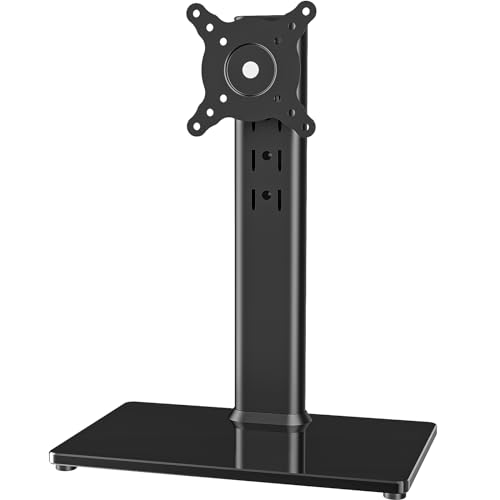
Single LCD Computer Monitor Free-Standing Desk Stand Mount Riser for 13 inch to 32 inch screen with Swivel, Height Adjustable, Rotation, Vesa Base Stand Holds One (1) Screen up to 77Lbs(HT05B-001))
- Compatibility: Fits 13-32 inch screens with VESA mounts
- Cable Management: Includes cord organization system
- Ergonomic Design: Elevates monitor for better posture
As an affiliate, we earn on qualifying purchases.
As an affiliate, we earn on qualifying purchases.
Frequently Asked Questions
How Do I Determine the Correct Desk Height for My Body?
To determine the correct desk height, focus on your posture alignment and adjust your desk accordingly. Your elbows should be at a 90-degree angle when your hands rest on the surface. Keep your shoulders relaxed and avoid hunching. Adjust your desk so it supports proper posture, not too high or too low. Regularly check your posture and make desk adjustments to stay comfortable and reduce shoulder strain.
Can Standing Desks Cause Other Types of Pain Besides Shoulder Pain?
Standing desks can cause alternative pain sources like lower back, neck, or leg discomfort if you have ergonomic misconceptions. Poor posture, incorrect desk height, or standing too long without breaks contribute to these issues. To prevent this, guarantee your desk is at the right height, your posture remains neutral, and you take regular breaks. Staying mindful of ergonomic principles helps you avoid pain and stay comfortable during your workday.
Are There Ergonomic Accessories That Can Improve Standing Desk Comfort?
Did you know that 80% of users find ergonomic accessories improve standing desk comfort? Adjustable accessories like monitor arms, footrests, and keyboard trays help you maintain proper posture. These ergonomic enhancements reduce strain, prevent discomfort, and boost productivity. By customizing your setup, you can create a healthier workspace that adapts to your needs, making standing desks not only more comfortable but also more beneficial for your overall well-being.
How Long Should I Stand Versus Sit When Using a Standing Desk?
You should aim to stand for about 15-30 minutes every hour, balancing it with sitting periods of 30-60 minutes. During standing, maintain good posture correction by keeping your shoulders relaxed and your feet supported with proper foot support. This approach helps prevent strain and shoulder pain, ensuring comfort. Adjust your desk height if needed, and take short breaks to move and stretch, promoting overall ergonomic health.
What Are Signs My Standing Desk Setup Is Causing Strain?
You might notice neck or shoulder pain, headaches, or tingling if your standing desk setup is causing strain — ironic, right? These signs point to poor posture correction or improper desk height. To fix this, adjust your desk so your elbows are at a 90-degree angle, and use desk accessories like ergonomic mats or supportive footrests. Staying aware of these signs helps prevent discomfort and keeps you comfortable all day long.
Conclusion
Remember, a standing desk set too high is like a mountain you can’t climb comfortably — it strains your shoulders and steals your comfort. Adjust it to a level where your elbows rest at about a 90-degree angle, and your shoulders stay relaxed. Think of your workspace as a well-tuned instrument; when everything’s aligned, your posture plays a harmonious tune, freeing you from pain and keeping you productive. Balance is the key to standing tall without the ache.