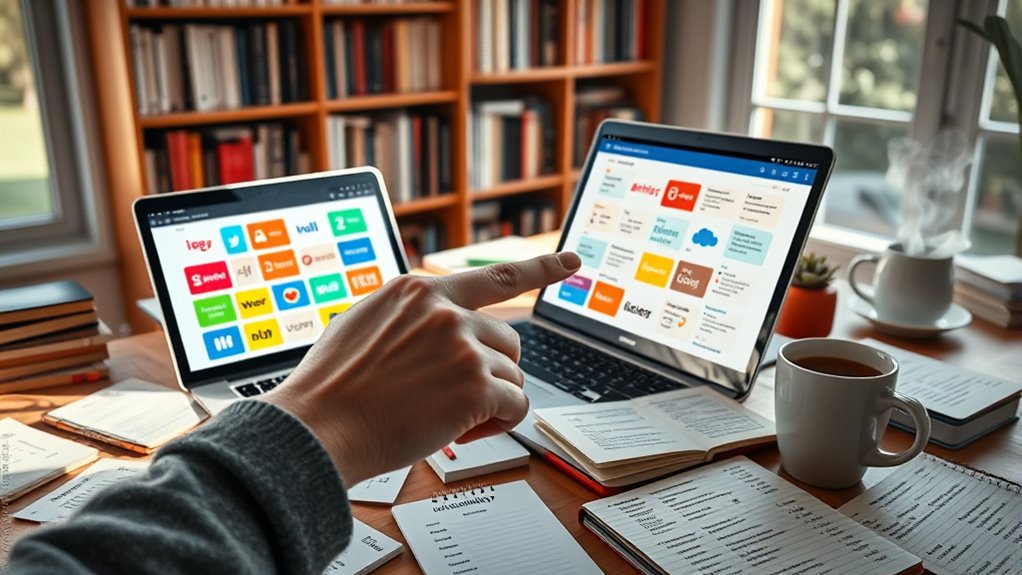

To learn a new language quickly, immerse yourself fully by surrounding yourself with authentic materials like podcasts, movies, and conversations with native speakers. Build your vocabulary daily using flashcards and real-life examples, and practice listening, speaking, reading, and writing regularly. Incorporate sound frequencies or therapies to boost focus and mental clarity. Stay patient, celebrate small wins, and keep a consistent routine—if you follow these steps, you’ll discover more effective strategies as you continue on your language journey.
Key Takeaways
- Immerse yourself daily with authentic content like podcasts, movies, and conversations with native speakers.
- Use sound healing frequencies to enhance focus, memory, and mental clarity during study sessions.
- Incorporate new vocabulary into real-life contexts and review regularly to reinforce retention.
- Practice consistently with short, varied sessions across listening, speaking, reading, and writing.
- Maintain motivation by tracking progress, celebrating small wins, and staying persistent.
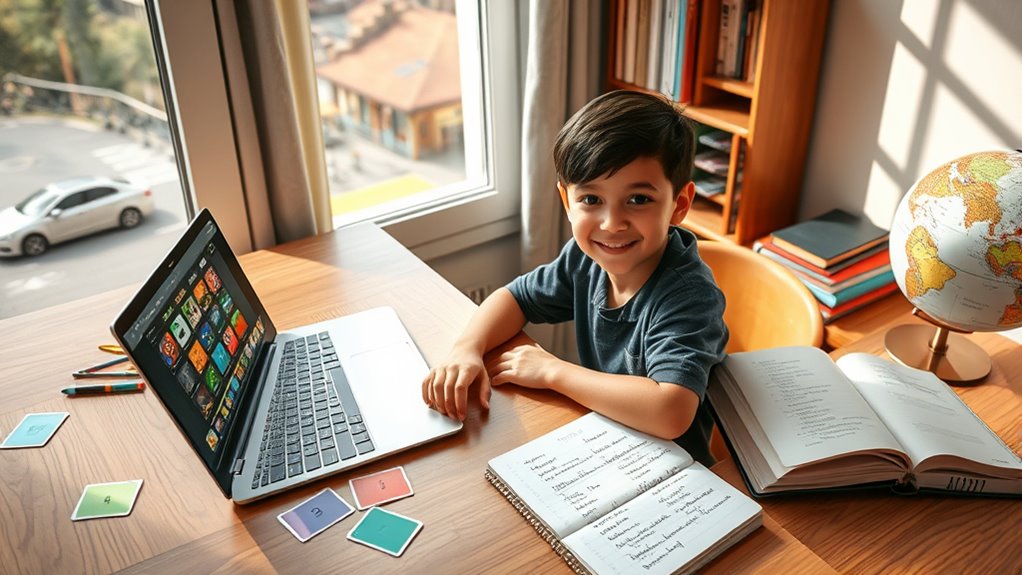
Learning a new language quickly requires focus and strategic effort. One of the most effective ways to accelerate your progress is through language immersion. Surround yourself with the language as much as possible. Listen to podcasts, watch movies, or follow social media accounts in the target language. The more you expose yourself to authentic conversations and native speakers, the faster you’ll pick up the natural flow and pronunciation. Immersion helps your brain adapt to the sounds, rhythms, and cultural nuances, making learning feel more intuitive rather than abstract. It’s not just about passive listening; actively engage by repeating phrases, mimicking pronunciation, and trying to understand context. This constant exposure creates a rich environment where language becomes part of your daily routine, speeding up your learning curve. Additionally, engaging with sound healing science techniques, such as listening to specific frequencies, can enhance your focus and retention during study sessions.
Immerse yourself daily in the language through podcasts, movies, and conversations to accelerate learning naturally.
Parallel to immersion, focus heavily on vocabulary building. Expanding your word bank is essential because it forms the foundation for everything else—speaking, listening, reading, and writing. Instead of memorizing long lists of isolated words, integrate new vocabulary into your daily life. Use flashcards with images, or better yet, learn words in context by reading short articles or stories. The goal is to connect words to real-life situations, making recall easier and more meaningful. Incorporate new words into sentences and conversations immediately; this practice reinforces your memory and helps you internalize usage. Regular review is crucial. Revisit words after a day, then after a week, to ensure they stick. Incorporate vocabulary into your speaking practice, as actively using new words cements them in your memory and boosts your confidence.
Consistency is key when learning a language rapidly. Dedicate a specific time each day to immersion activities and vocabulary exercises. Short, frequent sessions tend to be more effective than sporadic, lengthy ones because they keep your brain engaged without overwhelming it. Mix different methods—listening, speaking, reading, and writing—to develop well-rounded skills. As you progress, challenge yourself with more complex materials like podcasts with transcripts or articles on topics you enjoy. This diversification prevents boredom and broadens your understanding of language usage in various contexts.
Finally, be patient and persistent. Rapid learning is achievable, but it requires ongoing effort. Celebrate small victories, such as understanding a conversation or recalling a new word, to stay motivated. Remember, language immersion and focused vocabulary building create a powerful synergy—each reinforces the other—bringing you closer to fluency faster than you might expect. With dedication and strategic planning, you’ll be speaking confidently in your new language before you know it.
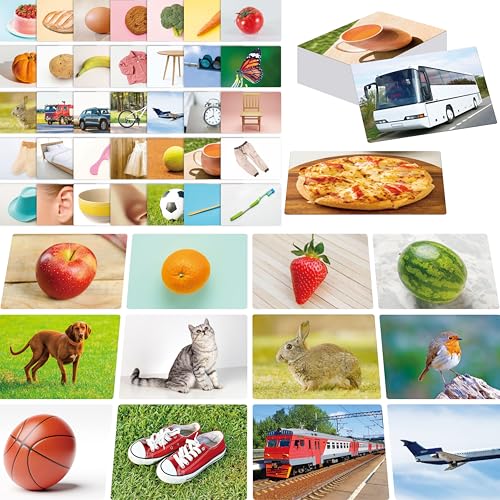
50 Noun Flashcards, Picture & Word Photo Cards Language Builder Visual Aid Language Learning Tool for Autism, ESL Teaching Materials for Adults, Non-Verbal Children Vocabulary Builder for Kids
Value Pack: It comes with 50 double-sided noun flash cards, to support language development and vocabulary building. Each…
As an affiliate, we earn on qualifying purchases.
As an affiliate, we earn on qualifying purchases.
Frequently Asked Questions
What Are the Best Apps for Language Learning?
You should try apps like Duolingo, Babbel, and Memrise, as they offer interactive exercises and pronunciation guides that keep you engaged. These apps make learning fun and efficient, helping you practice speaking, listening, and reading skills daily. They adapt to your progress, ensuring you stay motivated. By using these tools consistently, you’ll improve your language skills faster and build confidence in real conversations.
How Long Does Fluency Typically Take?
Fluency varies based on your dedication and study routines, but generally, expect it to take about 6 months to 2 years. To speed up progress, immerse yourself in the language through daily language immersion practices and consistent study routines. Practice speaking, listening, and reading regularly, and surround yourself with native speakers whenever possible. Staying committed and actively engaging will help you reach fluency faster and confidently communicate in your new language.
Can I Learn a Language Without Speaking Practice?
They say, “Practice makes perfect,” and that’s especially true when learning a language. While speaking practice helps, you can still improve through listening immersion and vocabulary memorization. By actively listening to podcasts, music, or movies in your target language, you develop understanding and pronunciation. Although speaking boosts fluency, focusing on listening and memorization allows you to build a solid foundation and progress even without regular speaking practice.
What Are Common Mistakes Beginners Make?
You often make overconfidence pitfalls, thinking you know enough after a few lessons, which hampers progress. Neglecting pronunciation is another common mistake; focusing only on vocabulary and grammar can leave you sounding unnatural. To avoid these errors, stay humble about your skills, practice pronunciation regularly, and seek feedback. Remember, consistent effort and humility help you grow faster and speak more confidently in your new language.
How Do I Stay Motivated During Learning?
Think of learning a language as climbing a mountain—staying motivated keeps you moving upward. Use motivational strategies like rewarding yourself for milestones, and set clear, achievable goals to maintain focus. When I struggled, visualizing my progress as reaching a peak helped me push through tough days. Remember, consistent effort and celebrating small wins turn the journey into an exciting adventure rather than an intimidating task.
audio language learning podcasts
As an affiliate, we earn on qualifying purchases.
As an affiliate, we earn on qualifying purchases.
Conclusion
Learning a new language quickly is possible when you stay dedicated and use effective strategies. Did you know that immersive methods can boost retention by up to 60%? By practicing daily, engaging with native speakers, and embracing mistakes, you’ll accelerate your progress. Remember, consistency is key—every little effort adds up. With the right mindset and tools, you’ll be speaking confidently in no time. Keep pushing forward, and you’ll reach your language goals faster than you think!
language immersion movies for learners
As an affiliate, we earn on qualifying purchases.
As an affiliate, we earn on qualifying purchases.

TŌNEM Sound Therapy Device | 10 Pure Frequencies Including Every Solfeggio Frequency & 432 Hz Miracle Tone | 10 Frequency-Tuned Music Tracks | Meditation, Sleep & Focus | No Phone Required
ALL-IN-ONE SOUND THERAPY — JUST PRESS PLAY TŌNEM is a standalone sound therapy machine designed for distraction-free listening….
As an affiliate, we earn on qualifying purchases.
As an affiliate, we earn on qualifying purchases.