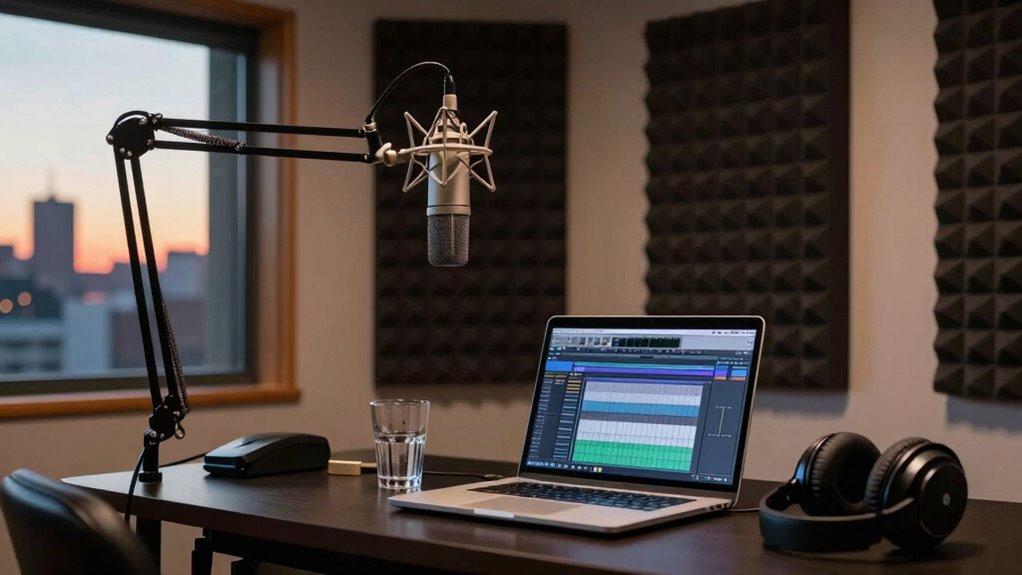

To start a podcast, begin by defining your niche and target audience to create relatable content. Plan your episodes in advance and reach out early to schedule guest interviews. Invest in good audio equipment and record in a quiet space to guarantee clear sound. Edit your episodes to remove mistakes, add music, and enhance quality. Upload your episodes to a hosting platform and distribute them to popular directories. Keep promoting and engaging with listeners to grow your show—continue exploring to learn more details.

Get the latest gadgets delivered free with Prime
- Fast, free delivery on millions of items
- Prime Video, Amazon Music and more included
- Member-only deals all year
Key Takeaways
- Define your niche and target audience to create focused, engaging content.
- Invest in quality microphone and recording in a quiet space for clear audio.
- Record and edit episodes thoroughly, adding intro/outro for a professional touch.
- Upload episodes to a reliable hosting platform and distribute to major directories.
- Promote your podcast on social media and engage with listeners to grow your audience.
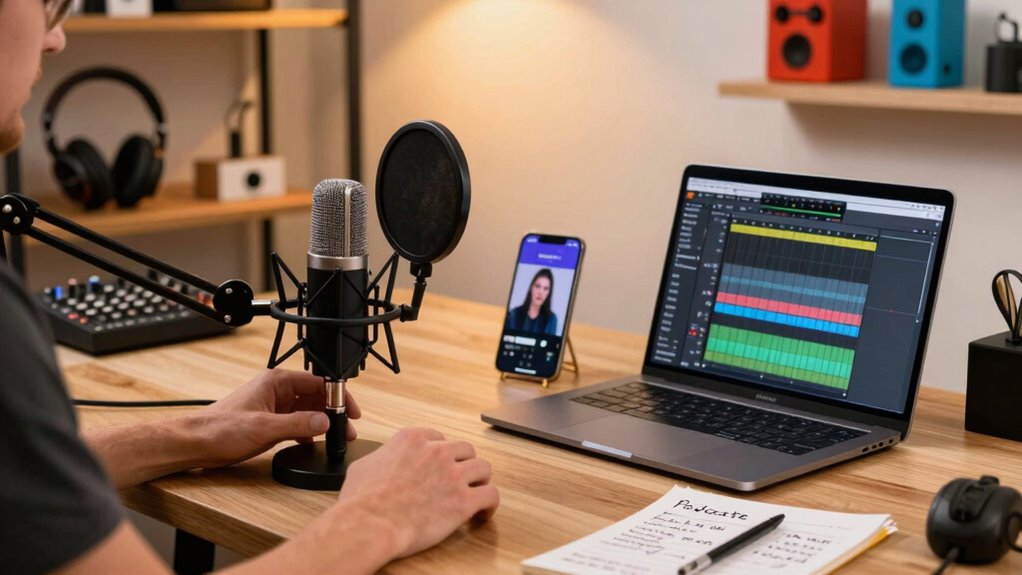
Starting a podcast might seem intimidating at first, but with a clear plan, you can turn your ideas into a compelling show. The first step is to define your niche and target audience. What topics excite you? Who do you want listening? Once you know your focus, you can craft content that resonates. Planning your episodes ahead of time helps keep your content organized and engaging. If you plan to feature guest interviews, reach out early to schedule and prepare your guests. Good preparation guarantees smooth conversations and adds variety to your episodes, making your podcast more appealing.
Define your niche and target audience to create engaging, resonant podcast content.
When it comes to recording, invest in decent audio equipment. Clear sound quality is essential; poor audio can turn listeners away. Use a quality microphone and record in a quiet environment. After recording, the next step is audio editing. This process involves trimming out mistakes, background noise, and awkward pauses. It also allows you to add intro and outro music, sound effects, or other enhancements that give your podcast a professional feel. Mastering good audio editing skills makes a significant difference, especially when dealing with guest interviews, where you want to highlight their insights without distracting noise or interruptions. Paying attention to audio quality standards helps ensure your episodes meet listener expectations and stand out in crowded directories.
Once your episode sounds polished, it’s time to upload. Choose a reliable podcast hosting platform that distributes your episodes to directories like Apple Podcasts, Spotify, and Google Podcasts. Creating an eye-catching cover art and writing a compelling episode description attract new listeners. Consistency is vital—release new episodes on a regular schedule to build a loyal audience. Understanding content planning and scheduling can help streamline this process and keep your content fresh.
Promotion is equally important. Share your episodes on social media, embed them on your website, and ask your guests to promote their interviews. Engaging with your listeners through comments or feedback encourages community growth. As your show develops, pay attention to what resonates most—adjust your content, format, or guest lineup accordingly.
Starting a podcast is a rewarding journey that combines planning, technical skills, and outreach. Focusing on quality audio editing and leveraging guest interviews can elevate your show and draw in a dedicated audience. Keep learning and refining your craft, and soon, your podcast will become a valuable platform for your voice and ideas. Remember, every successful podcaster started exactly where you are now—just take it step by step, and you’ll find your rhythm.
best podcast microphone for beginners
As an affiliate, we earn on qualifying purchases.
As an affiliate, we earn on qualifying purchases.
Frequently Asked Questions
What Equipment Do I Need to Start a Podcast?
To start your podcast, you need essential equipment like a good microphone to guarantee clear audio quality. Choose from microphone types such as dynamic or condenser, depending on your environment and budget. You’ll also need headphones for monitoring, a computer or recording device, and reliable editing software. With the right gear, you’ll deliver professional-sounding episodes that engage your audience and stand out in the crowded podcast space.
How Do I Choose a Podcast Hosting Platform?
Did you know that over 70% of podcasts are hosted on just a handful of platforms? When choosing a hosting platform, prioritize audience engagement tools and reliable analytics. Look for platforms with solid content planning features so you can organize episodes effectively. Consider ease of use, storage limits, and distribution options to maximize your reach. Picking the right platform helps you connect with your audience and grow your podcast successfully.
How Long Should Each Episode Be?
You should aim for episodes between 20 to 60 minutes, depending on your content and audience engagement. Longer episodes work well for detailed discussions or guest interviews, but keep editing concise and engaging through effective audio editing. Shorter episodes are great for quick insights. Focus on maintaining quality over length, ensuring your audio editing enhances clarity, and your guest interviews stay interesting and relevant to keep listeners hooked throughout.
How Can I Promote My Podcast Effectively?
Imagine you’re a modern-day bard, spreading tales far and wide. You can promote your podcast effectively by leveraging social media strategies and guest collaboration. Share clips on platforms like Instagram and Twitter, engage with your audience, and invite guests with their own followers to join. This cross-promotion expands your reach, attracts new listeners, and builds a loyal community. Consistent, authentic engagement is your key to podcast success.
What Are Common Mistakes to Avoid When Starting a Podcast?
You should avoid neglecting audio quality; poor sound can turn listeners away. Also, don’t overlook content consistency—irregular uploads can lose your audience’s interest. Stay committed to high-quality recordings and create a schedule to keep your episodes regular. Don’t rush or skip editing, as it impacts overall professionalism. By focusing on clear audio and consistent content, you’ll build trust and grow your podcast audience over time.
Conclusion
Starting your podcast might seem overwhelming, but remember, nearly 55% of the US population has listened to a podcast, showing how enthusiastic audiences are for fresh voices. By following these simple steps, you can share your unique story or expertise with the world. Just stay consistent, keep learning, and don’t be afraid to experiment. Your voice has the power to inspire, entertain, or educate—so go ahead and take that first step today!
Halloween Picks
halloween
As an affiliate, we earn on qualifying purchases.