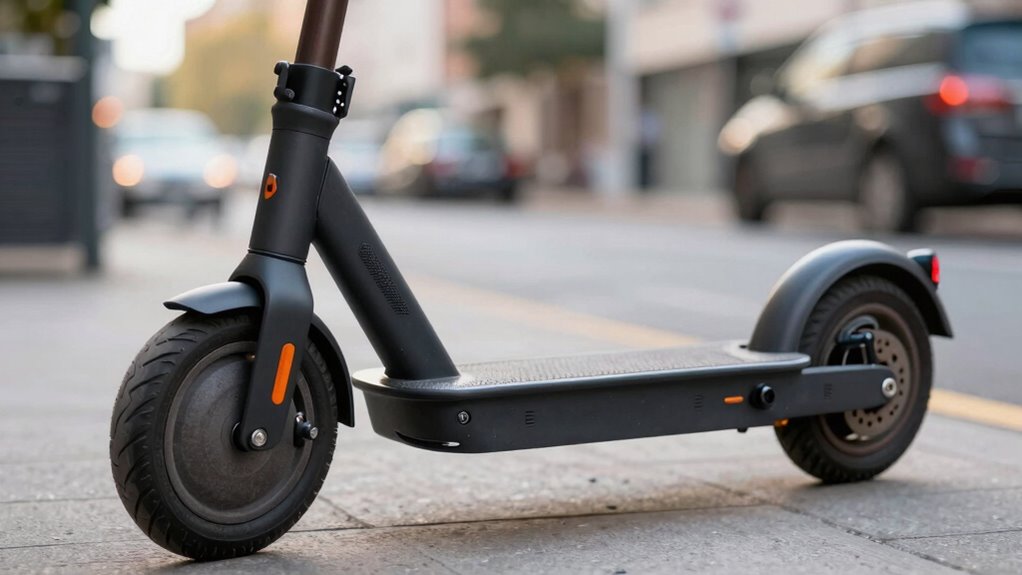

To stay safe on an e-scooter, focus on high-quality brakes like hydraulic or disc types that respond quickly. Choose tires that are puncture-resistant and have good tread to prevent slips and absorb shocks from uneven surfaces. Also, consider specs like motor power and suspension that match your riding needs for better control and comfort. Keep these elements in mind, and you’ll ride confidently—if you keep exploring, you’ll find out even more tips for safe, reliable scooting.

Get the latest gadgets delivered free with Prime
- Fast, free delivery on millions of items
- Prime Video, Amazon Music and more included
- Member-only deals all year
Key Takeaways
- Hydraulic or disc brakes provide stronger, more reliable stopping power essential for urban safety.
- Inflated, puncture-resistant tires with good tread improve grip, shock absorption, and ride stability.
- Motor power, speed limits, and suspension systems should match rider needs for safe handling on varied terrains.
- Long-lasting batteries ensure extended ride time, reducing the risk of mid-ride power loss.
- Combining quality brakes, tires, and specifications enhances overall safety and confidence during city commuting.
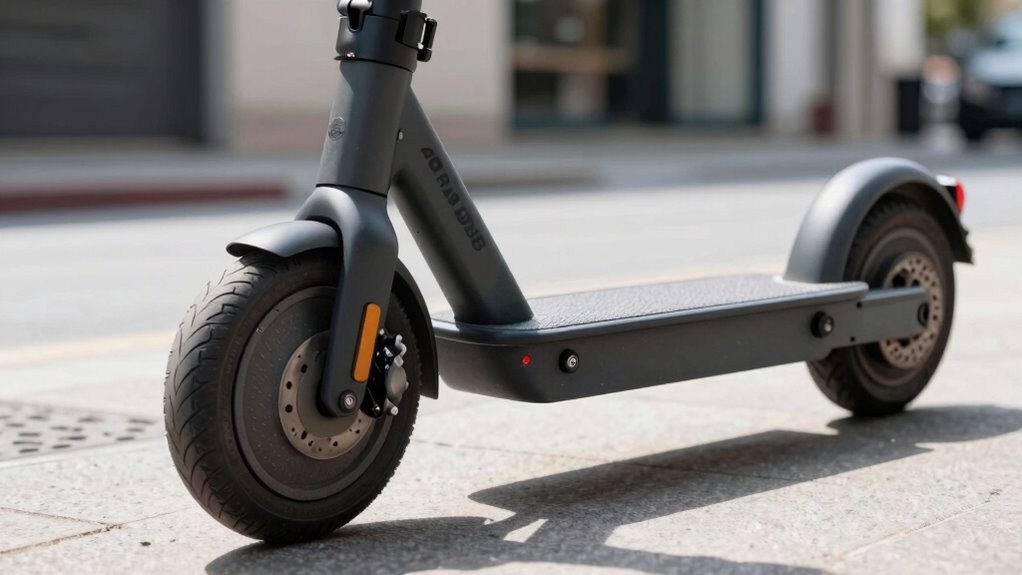
E-scooters have become a popular way to navigate city streets, but their safety depends heavily on the quality of their brakes, tires, and key specifications. As an urban commuter, you rely on these machines to get you where you need to go quickly and efficiently. One of the most critical aspects is battery life, which directly impacts your urban mobility. A scooter with a long-lasting battery allows you to travel farther without the worry of running out of power mid-ride. You want a scooter that can handle your daily commute, whether it’s a short trip to the store or a longer journey across town. A robust battery ensures you won’t have to constantly recharge, giving you more confidence and flexibility in your travels.
A long-lasting battery boosts your confidence and flexibility on daily urban commutes.
The efficiency of your e-scooter isn’t just about battery capacity—it also depends on the quality of its brakes and tires. Good brakes are essential for safety, especially in busy city environments where quick stops might be necessary. Hydraulic or disc brakes tend to provide better stopping power and reliability than simpler drum or foot brakes. You need to feel secure knowing that when you apply the brake, your scooter will respond promptly. Tires also play a vital role in safety and comfort. Inflated, puncture-resistant tires with good tread give you better grip on different surfaces, reducing the risk of slips or falls. Proper tires also absorb shocks from bumps and uneven pavement, making your ride smoother and safer. Additionally, tire quality significantly influences the overall safety and ride comfort of your scooter. Recognizing brake types and their advantages can help you choose a model that ensures quick and reliable stopping power. A comprehensive understanding of safety features can further enhance your confidence while riding. Paying attention to how tires are maintained can extend their lifespan and performance, ensuring consistent safety.
Key specifications, like motor power, maximum speed, and suspension, shape your overall riding experience. A powerful motor can handle inclines and rough terrain, helping you maintain steady urban mobility. However, higher speeds demand more effective brakes and tires that can handle the increased stress. Suspension systems further improve safety and comfort by absorbing shocks, especially on uneven city streets. When selecting an e-scooter, you should pay close attention to these specifications, ensuring they match your riding needs and urban environment. Understanding these specifications can help you make a more informed decision and choose the right model for your daily rides.
Ultimately, your safety on an e-scooter hinges on well-designed brakes, durable tires, and thoughtful specifications that align with your daily routes. Investing in a model with a long battery life and reliable safety features pays off, making your trips safer and more enjoyable. The right combination of these elements allows you to navigate city streets confidently, knowing your scooter is equipped to keep you moving smoothly and securely.
As an affiliate, we earn on qualifying purchases.
Frequently Asked Questions
How Often Should E-Scooter Brakes Be Serviced?
You should service your e-scooter brakes every 1 to 3 months, depending on usage. Regular maintenance guarantees peak brake performance, which directly impacts your safety. When servicing, check for wear and tear, and ensure the brake components don’t affect the motor’s efficiency or battery lifespan. Proper brake care keeps your scooter running smoothly, extends its lifespan, and maintains safe stopping power during your rides.
Are There Different Tire Types for Various Terrains?
Yes, there are different tire types for various terrains. Imagine tires with super-aggressive tread patterns designed for rugged trails or smooth, slick tires for city streets. You ought to check your tire tread and tire pressure regularly to match your riding surface. For off-road adventures, opt for knobby tires with deep tread. For urban commutes, smooth tires with proper pressure ensure a smoother, safer ride.
What Safety Features Are Included Beyond Brakes and Tires?
Beyond brakes and tires, safety features include helmet compliance, ensuring your helmet meets safety standards, and lighting features like front and rear lights for visibility. Some e-scooters also have reflective decals and horns to alert others of your presence. These additions help protect you during night rides or in crowded areas, making your ride safer and more secure. Always check your scooter’s safety features before heading out.
How Do Weather Conditions Affect Scooter Safety?
Weather conditions are like unpredictable villains, dramatically impacting your scooter safety. Rain creates weather hazards, making roads slick and reducing tire grip, while fog and darkness pose visibility challenges. You must adjust your riding, slow down, and stay alert to avoid accidents. Remember, bad weather doesn’t just challenge your ride—it tests your awareness and preparedness. Always check the forecast, and ride cautiously during adverse conditions to stay safe.
What Are the Recommended Maintenance Intervals?
You should check your scooter’s maintenance intervals regularly, ideally every 1-3 months. Keep an eye on battery longevity and follow proper charging protocols to prevent battery degradation. Regularly inspect brakes, tires, and electrical components, and clean the scooter to guarantee safety. Replacing worn parts promptly helps maintain performance and extends the lifespan. Staying proactive with maintenance ensures your scooter remains safe and reliable for every ride.
Conclusion
So, when you’re zipping around on an e-scooter, are you truly aware of how essential those brakes, tires, and specs are to your safety? Remember, a quick check before each ride can make all the difference. Don’t just focus on getting to your destination—prioritize your safety every step of the way. After all, isn’t it worth knowing that your ride is as secure as it is fun? Stay cautious, stay safe.
Halloween Picks
halloween
As an affiliate, we earn on qualifying purchases.