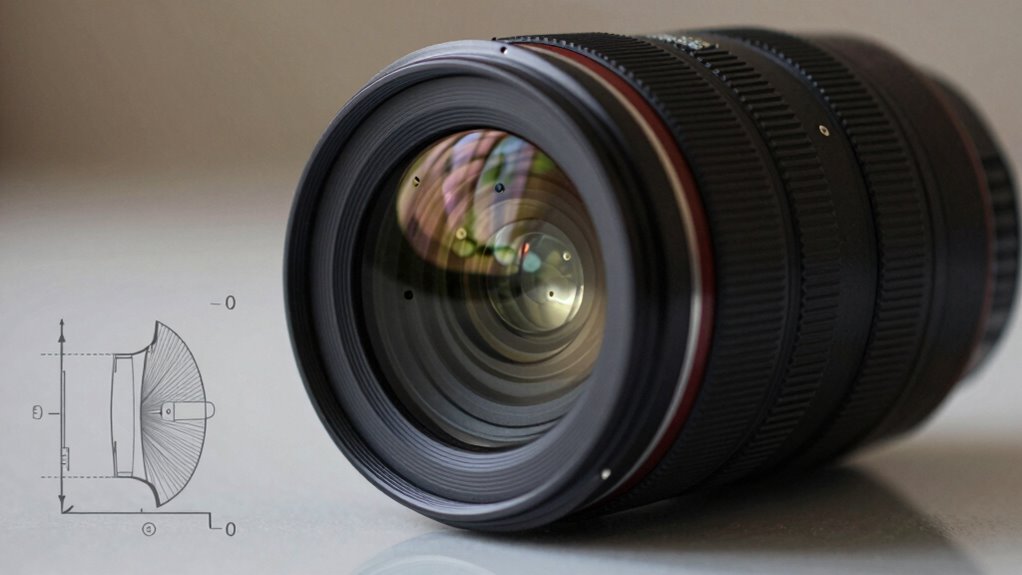
Understanding camera lenses involves knowing how focal length and aperture shape your photos. Focal length determines your scene’s composition, with wide angles capturing more and telephotos bringing distant subjects closer. Aperture controls light and depth of field, from blurry backgrounds to sharp everything. By mastering these concepts and how they work together, you can capture better images. Keep exploring, and you’ll discover more tips to improve your photography skills.
Key Takeaways
- Focal length determines your lens’s field of view and magnification, affecting how much of the scene is captured.
- Shorter focal lengths (wide-angle) capture broader scenes, while longer focal lengths (telephoto) focus on distant subjects.
- Aperture controls how much light enters the lens, with wider openings (smaller f-numbers) creating brighter images and shallower depth of field.
- Smaller apertures (larger f-numbers) increase depth of field, keeping more of the scene in focus, ideal for landscapes.
- Combining focal length and aperture settings allows creative control over composition, background blur, and overall image sharpness.

Canon EOS Rebel T7 DSLR Camera|2 Lens Kit with EF18-55mm + EF 75-300mm Lens, Black
Improved Dual Pixel CMOS AF and eye detection AF 24.1 Megapixel CMOS (APS-C) sensor with is 100–6400 (H:…
As an affiliate, we earn on qualifying purchases.
As an affiliate, we earn on qualifying purchases.
What Are Camera Lenses and Why Are They Important?
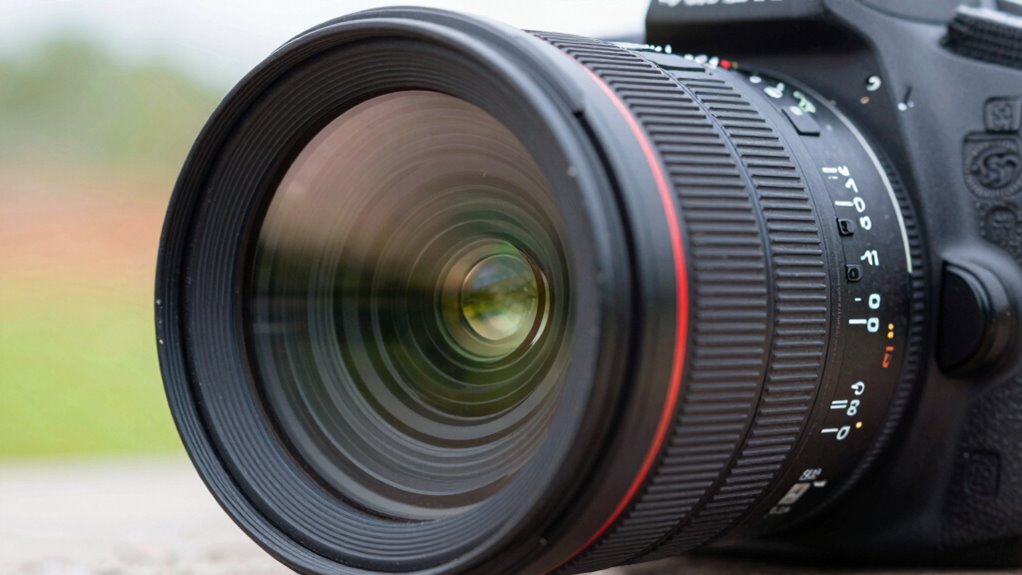
A camera lens is a vital component that controls how much light enters your camera and how your image is captured. The quality of lens coatings plays a significant role in reducing glare and lens flare, ensuring clearer images. These coatings also improve contrast and color accuracy. Additionally, filter accessories, such as UV filters or polarizers, attach to your lens to protect it and enhance image quality. They can help manage reflections or block harmful ultraviolet light. Your choice of lens and accessories influences the sharpness, clarity, and overall aesthetic of your photos. Without a well-designed lens, capturing high-quality images becomes challenging. Understanding how lens coatings and filter accessories work together helps you make better decisions about equipment to achieve your desired results. Proper lens maintenance is also essential to preserve image quality over time.

Altura Photo 58MM 0.43x HD Wide Angle Lens with Macro – Attaches to 58MM Filter Thread (Not Camera Body) – DSLR Accessories for Canon Rebel T7, T7i, T8i, T6i, T6s, T6, SL2, SL3, EOS 70D, 77D, 80D, 90D
LENS ATTACHMENT: Easily screws on to the front of your lens, and instantly expands the field of view…
As an affiliate, we earn on qualifying purchases.
As an affiliate, we earn on qualifying purchases.
How Focal Length Affects Composition and Perspective
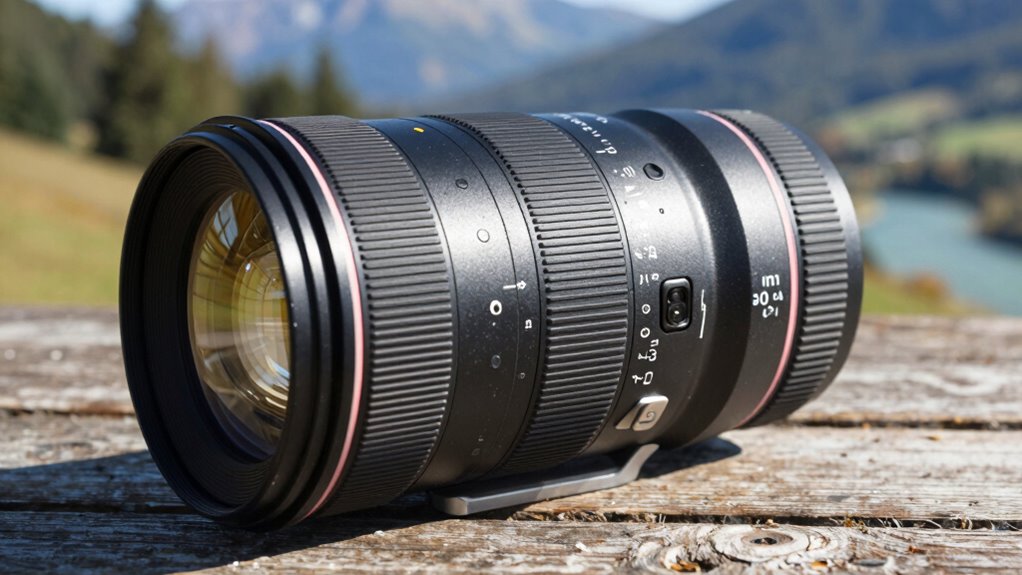
Focal length plays an essential role in shaping your photos’ composition and perspective. Longer focal lengths compress the scene, making distant objects appear closer together, which enhances depth perception and creates a sense of intimacy. Shorter focal lengths, on the other hand, expand the scene, exaggerating distances and adding a dynamic feel. Be aware that wide-angle lenses can introduce distortion effects, stretching edges and emphasizing foreground elements. This can be useful for creative shots or to exaggerate perspective, but it can also distort your subject if not careful. Additionally, understanding how focal length influences lens distortion can help you achieve more natural-looking images. Recognizing how camera sensor size impacts your focal length choices can further refine your understanding of perspective and image quality. By understanding how focal length influences depth perception and distortion effects, you can better control the mood and spatial relationships in your images, making your photos more compelling and accurately composed.

High-Power 420-1600mm f/8.3 HD Manual Telephoto Zoom Lens for Canon EOS 70D, 80D, 90D, Rebel T3, T3i, T5, T5i, T6i, T6s, T7, T7I, T8I, SL3, EOS 5D, EOS5D IV, 6D II, 7D II SLR Cameras
High Power Telephoto Lens – This 420mm-1600mm lens, a must-have Canon long range lens, is designed for capturing…
As an affiliate, we earn on qualifying purchases.
As an affiliate, we earn on qualifying purchases.
Choosing the Best Focal Length for Your Photography Style
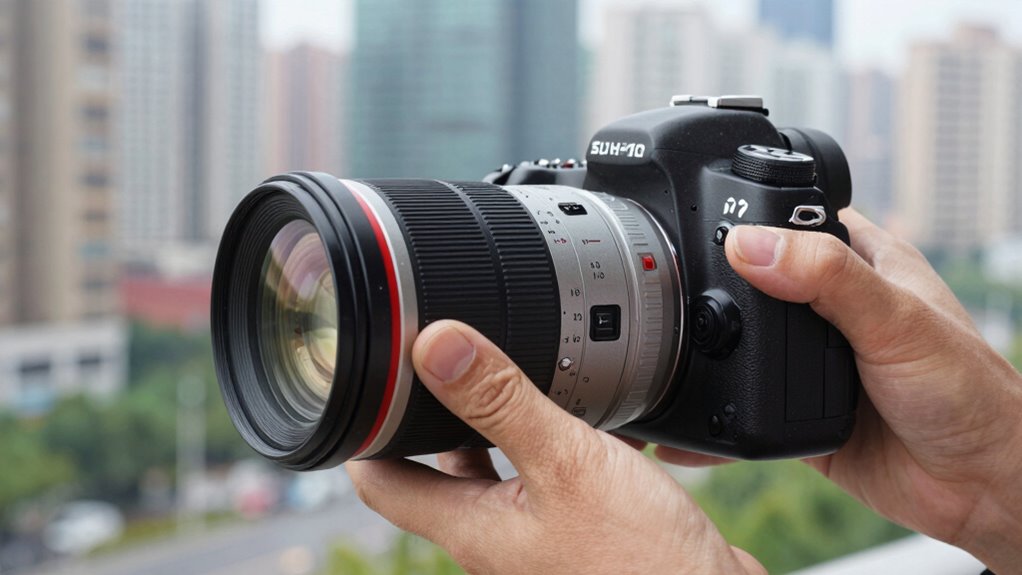
Choosing the right focal length depends on your photography style and the subjects you shoot. For portraits and close-ups, you’ll want lenses that create flattering compression and background blur. If you prefer landscapes or wide shots, wider focal lengths help capture expansive scenes, while action and sports photography often call for telephoto lenses to zoom in on fast-moving subjects.
Portraits and Close-Ups
When capturing portraits and close-ups, selecting the right focal length can dramatically influence the final image. A longer lens, like 85mm, creates flattering proportions and beautiful background blur, ideal for portraits. A shorter lens, such as 50mm, offers versatility and a natural perspective. Your choice impacts lighting techniques and camera settings, as different focal lengths may require adjustments for ideal sharpness and depth of field. For close-ups, macro lenses (100mm or more) reveal fine details with precision. Consider your style: if you prefer intimacy and background separation, go longer. For versatility, a 50mm works well. Use the table below to compare focal lengths:
| Focal Length | Best Use | Effect on Image |
|---|---|---|
| 50mm | General portraits | Natural perspective |
| 85mm | Close-up portraits | Flattering, blurred background |
| 100mm | Macro, details | Sharp, detailed images |
| 24-70mm | Versatile, zoom shots | Flexible framing |
| 70-200mm | Full-body, candid | Compression and depth |
Landscape and Wide Shots
To capture expansive landscapes and wide scenes effectively, selecting the right focal length is essential. For mountain views and sweeping vistas, a wide-angle lens between 14mm and 35mm gives you the ability to include more of the scene, emphasizing the grandeur and depth. This focal length helps you capture the vastness of mountain ranges or sprawling cityscapes, making viewers feel immersed in the scene. If you want to highlight the scale of distant features or emphasize the foreground, choose a lens with a shorter focal length. Conversely, a slightly longer wide-angle lens can provide a more compressed perspective, keeping elements closer together. Picking the right focal length depends on your style and the story you want to tell through your landscape shots. Natural light can also significantly impact the mood and clarity of your images, enhancing the overall scene. Additionally, understanding focal length allows you to better control perspective and composition, which are crucial for compelling landscape photography, especially when considering survival gear that might be useful for outdoor adventures.
Action and Sports Photography
Selecting the right focal length is essential for capturing fast-paced action and sports scenes effectively. A longer lens, like a 70-200mm, helps you get close-up shots from a distance, emphasizing motion and emotion. Shorter lenses, like a 24-70mm, offer versatility for wider shots and dynamic compositions. To freeze fast motion, set a fast shutter speed, typically 1/1000s or higher. Adjust your ISO settings to maintain proper exposure, especially in low-light conditions or indoor venues. Using the correct focal length combined with an appropriate shutter speed ensures sharp images free of motion blur. Remember, choosing the right lens depends on your sport and style, but always prioritize shutter speed and ISO to capture decisive moments crisply. Additionally, understanding focal length and aperture can help you achieve the desired depth of field and clarity in sports photography. Mastering lens selection allows you to adapt quickly to changing scenes and capture more compelling images.

NEEWER 9PCS Full Color Lens Filter Set, 58mm Resin Lens Filters with Red, Orange, Blue, Yellow, Green, Brown, Purple, Pink, Gray Color Available with 2 Pouches, Camera Lens Accessories
【58mm Color Filter Kit】 This kit includes 9 pieces 58mm color filters (red, orange, blue, yellow, green, brown,…
As an affiliate, we earn on qualifying purchases.
As an affiliate, we earn on qualifying purchases.
What Is Aperture and How Does It Control Light?

Have you ever wondered how photographers control the brightness and focus of their images? That’s where aperture comes in. Aperture is the opening inside your lens that determines how much light hits the camera sensor. A wider aperture (smaller f-number) allows more light, brightening your photo, and creates a shallow depth of field, making your subject stand out. Conversely, a narrower aperture (larger f-number) lets in less light and results in a deeper depth of field. It also influences the bokeh effect, affecting the background’s blur quality. Here’s a quick comparison:
| F-Number | Light Amount | Effect on Depth of Field | Bokeh Quality | Suitable Scenes |
|---|---|---|---|---|
| f/1.4 | Lots | Shallow | Soft, creamy | Portraits |
| f/4 | Moderate | Moderate | Defined | General shots |
| f/11 | Less | Deep | Less pronounced | Landscapes |
| f/16 | Very little | Very deep | Minimal | Group photos |
| f/22 | Minimal | Very deep | Harsh edges | Studio photos |
Additionally, understanding how aperture affects exposure can help you better control your camera settings in various lighting conditions. Recognizing the f-stop sizes and their impact on exposure control can also assist in selecting the appropriate aperture for different creative effects. Mastering aperture settings is essential for creative photography, enabling you to express your artistic vision more effectively.
How to Set the Right Aperture for Different Scenes
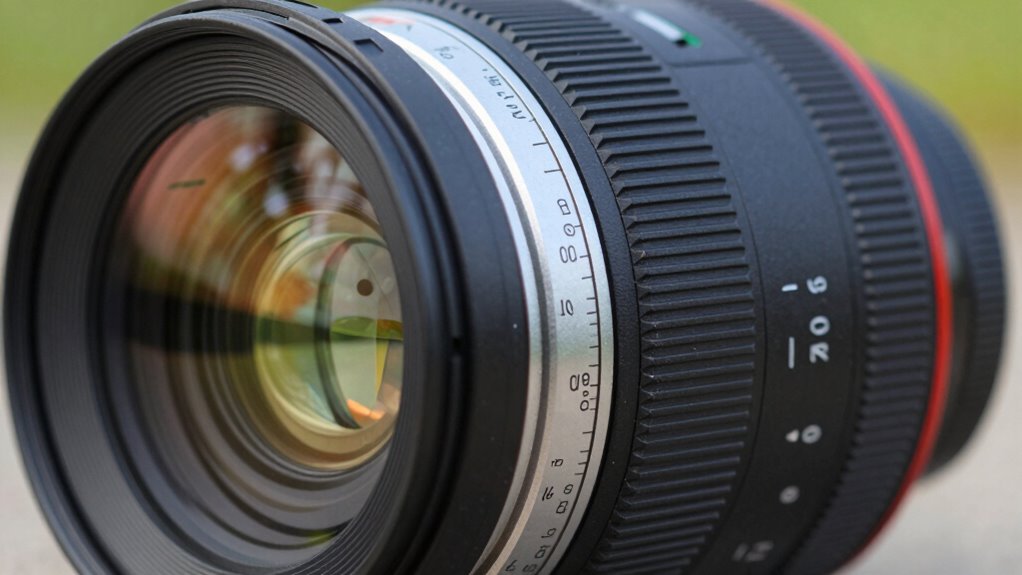
Choosing the right aperture depends on the scene you’re capturing. If you want a sharp background and foreground, use a smaller aperture (higher f-number) to increase the depth of field. This is ideal for landscapes or scenes where everything should be in focus. For portraits or close-up shots where you want to isolate your subject, open the aperture wider (lower f-number) to create a shallow depth of field. This blurs the background and emphasizes your subject. Adjusting the aperture also influences bokeh effects—the aesthetic quality of out-of-focus areas—making your images more visually appealing. Keep in mind that larger apertures produce more pronounced bokeh, adding a beautiful, dreamy quality to your photos. Selecting your aperture based on the scene’s needs and the desired visual impact can help you achieve professional-looking results, much like the nuanced regional flavors and pairings celebrated in coffee and tea culture. Understanding how aperture size impacts exposure and depth of field allows for greater creative control in your photography. Additionally, being aware of how exposure settings work together can help prevent overexposure or underexposure in your images.
How Focal Length and Aperture Work Together to Shape Your Photos
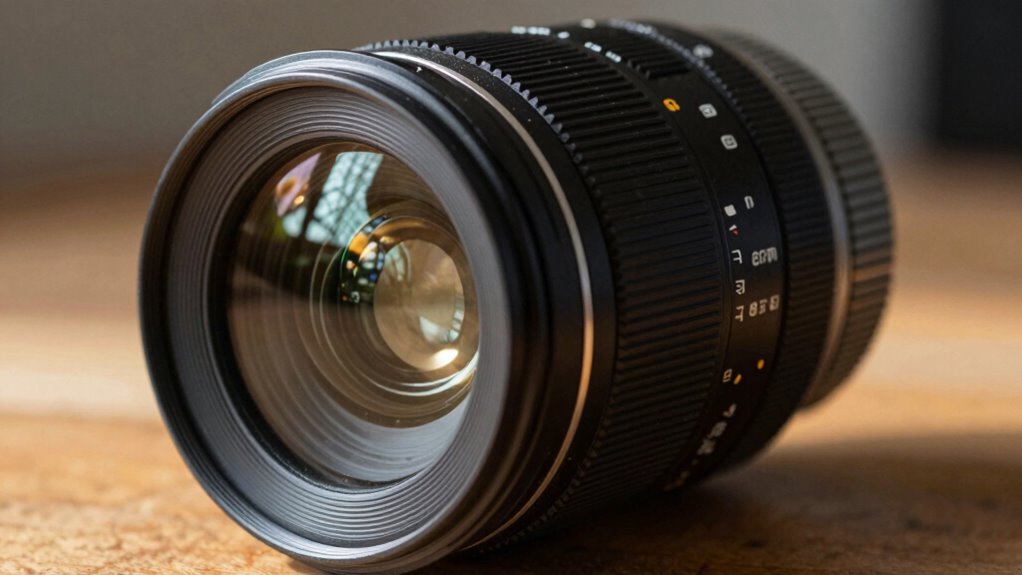
Focal length and aperture work hand in hand to determine the overall look of your photos. Your choice affects depth of field, focal length, and how much of the scene is in focus. Longer focal lengths compress the background, creating a shallow depth of field, ideal for portraits. Smaller apertures increase depth of field, keeping more of the scene in focus, perfect for landscapes. When you combine a telephoto lens with a wide aperture, you get a beautifully blurred background. Conversely, a wide-angle lens with a small aperture offers sharpness from foreground to background. To deepen your understanding: 1. Longer focal lengths reduce depth of field, isolating subjects. 2. Wider apertures (smaller f-numbers) create a shallower depth of field. 3. The interplay of focal length and aperture controls how much of your scene is sharp or blurred. Additionally, understanding the depth of field concept can help you choose the right lenses and settings for outdoor or beach photography, ensuring your images are both clear and visually appealing.
The Types of Camera Lenses and When to Use Them
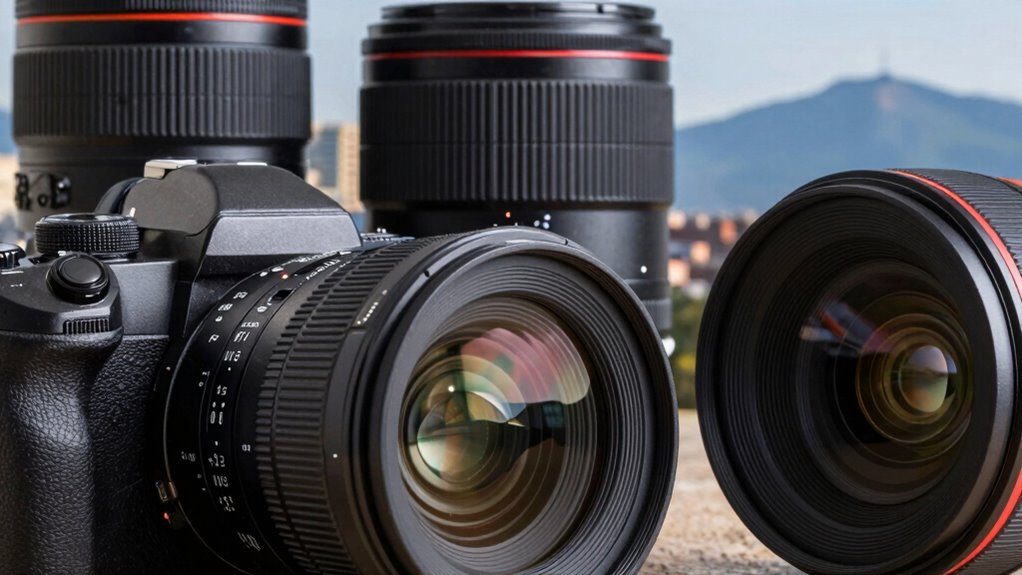
Understanding the different types of camera lenses helps you capture images more effectively by selecting the right tool for each situation. Wide-angle lenses are perfect for landscapes and architecture, offering a broad view that emphasizes depth. Telephoto lenses excel in wildlife or sports photography, bringing distant subjects closer without disturbing them. Standard lenses mimic what the human eye sees, making them versatile for everyday shooting. Prime lenses provide sharp images with wide apertures, ideal for low-light conditions. When using lens filters, you can enhance colors or reduce glare, all while protecting your camera sensor from damage. Choosing the right lens depends on your subject and style, ensuring your camera setup is optimized for the shot you want to capture.
Tips for Picking the Perfect Lens for Your Goals
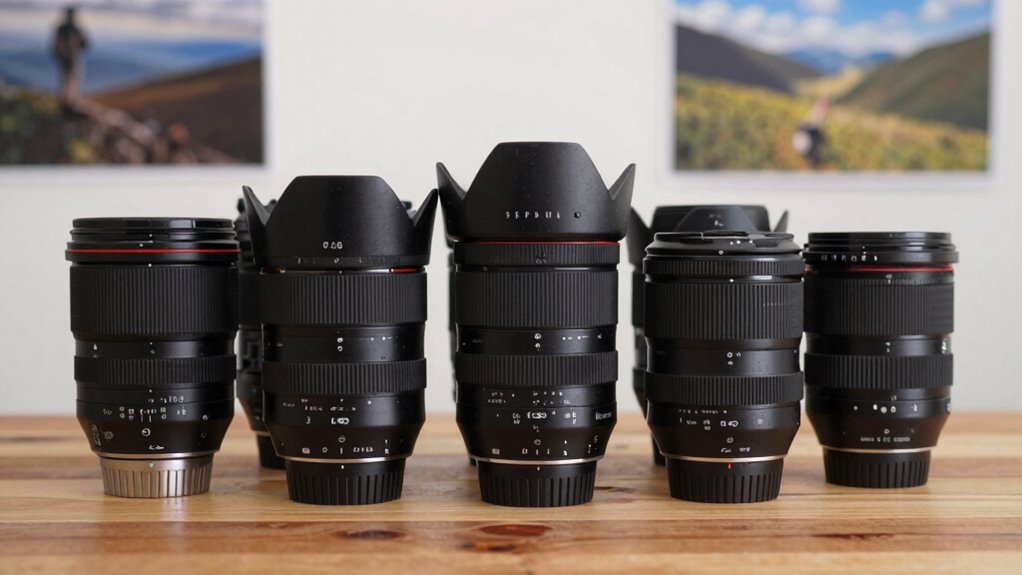
To choose the right lens, start by defining your photography style and what you want to capture. Then, match lens focal lengths to your subjects and consider how flexible the aperture needs to be for different lighting conditions. Making these choices helps guarantee your gear aligns perfectly with your goals. Additionally, understanding smart lifestyle tips can help you optimize your photography setup for better results in everyday situations. Recognizing the Twin Flame vs Soul Tie differences can also inspire more meaningful personal projects and deepen your creative perspective.
Define Your Photography Style
Your photography style shapes the lenses you choose, so aligning your gear with your creative goals is essential. Consider how your approach influences your lens selection. For example, if you favor capturing natural lighting, a versatile zoom lens can adapt to changing conditions. If you focus on fine detail, prime lenses with wide apertures enhance sharpness and depth. Additionally, your style impacts post-processing choices; knowing whether you’ll do extensive photo editing helps determine if you need lenses that produce high-contrast images or softer tones. To deepen your understanding:
- Think about your preferred lighting techniques and how they affect lens choice.
- Match your editing style—whether vibrant or muted—to lens characteristics.
- Choose lenses that support your overall vision, ensuring your gear complements your unique creative expression.
- Understanding the focal length of your lenses can further refine your camera setup to match your artistic intentions and support your photography style. Being aware of camera sensor size can also influence your lens selection, as it affects the effective focal length and field of view.
Match Lens Focal Lengths
Choosing the right lens focal length is essential because it directly influences how your subject appears and how much of the scene you capture. When doing a lens comparison, consider the focal length ranges suited to your goals. Wide-angle lenses (generally 14-35mm) are great for landscapes and architecture, offering expansive views. Standard lenses (around 50mm) mimic natural vision, ideal for street and everyday photography. Telephoto lenses (70mm and above) are perfect for isolating subjects and capturing distant details, such as wildlife or sports. Match your lens choice to your style and subjects. Understanding focal length ranges helps you select lenses that enhance your creative vision while ensuring you get the framing and perspective you want for each shot.
Consider Aperture Flexibility
A lens’s aperture flexibility plays a crucial role in achieving the desired depth of field and controlling light. Choosing a lens with versatile aperture options allows you to adapt to different shooting conditions and creative goals. Consider these factors:
- Range of aperture sizes: A wider maximum aperture (like f/1.4) offers more creative depth and low-light capability.
- Constant aperture: Lenses with a fixed aperture maintain exposure settings throughout zoom, providing consistent control.
- Aperture blades: More blades create smoother, more pleasing bokeh, enhancing your creative depth.
How to Avoid Common Confusions About Lens Terms
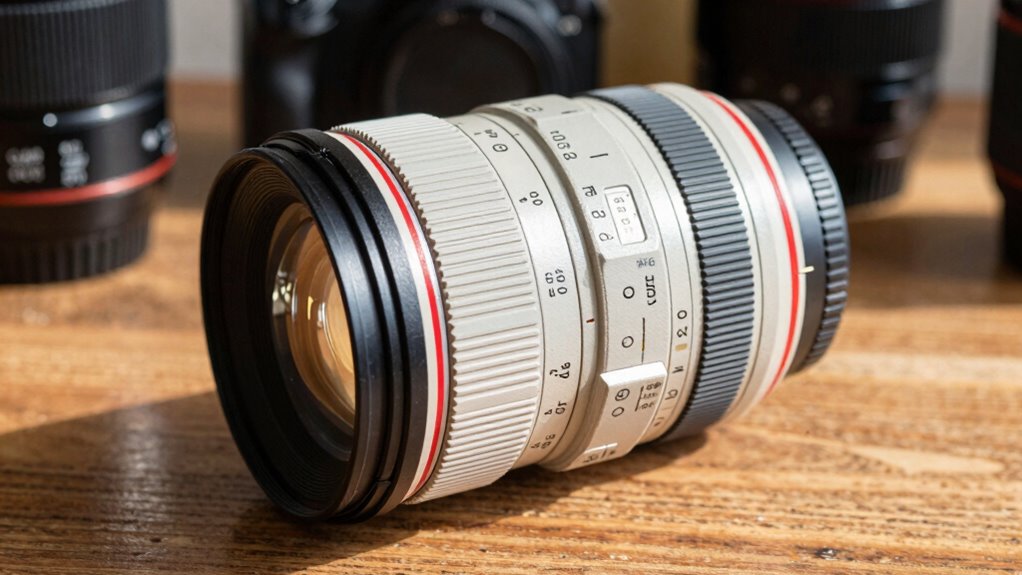
Understanding lens terminology can be confusing, especially with so many similar terms and specifications. To avoid common misconceptions, focus on learning the basics first. Recognize that lens terminology often includes technical camera jargon that can seem intimidating. For example, familiarize yourself with terms like “focal length,” “aperture,” and “zoom.” Don’t get overwhelmed by specifications; instead, relate them to real-world use. When reading reviews or specs, ask yourself what each term means for your photography style. Keep a reference handy, like a glossary, to clarify unfamiliar terms. Remember, most confusing camera jargon can be simplified with a little practice. Staying patient and curious helps you distinguish between similar terms and makes choosing the right lens much easier.
A Quick Guide to Mastering Camera Lenses for Better Photos
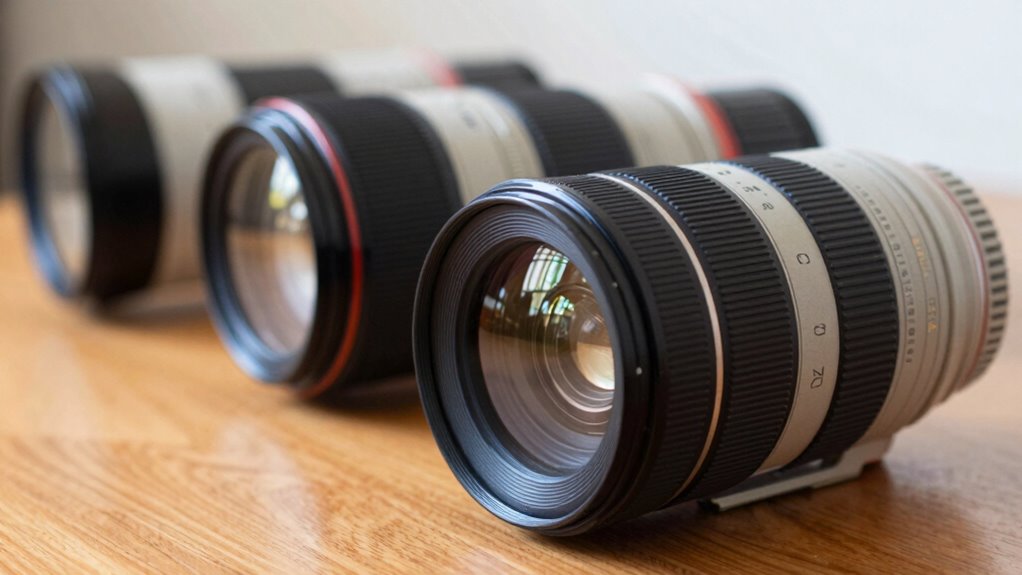
Mastering camera lenses can considerably improve your photography by helping you capture sharper, more compelling images. To do this, focus on key practices:
- Regular lens maintenance keeps your lens clean and free of dust, ensuring clarity and preventing spots on your photos.
- Protect your camera sensor by avoiding touching or exposing it to dust, which can affect image quality.
- Get familiar with different lens types and their uses, so you choose the right lens for each shot, reducing the need for heavy editing later.
Frequently Asked Questions
How Do Lens Coatings Affect Image Quality and Color Accuracy?
Lens coatings improve image quality and color accuracy by reducing reflections, flare, and ghosting, so your photos stay clear and vibrant. They also enhance lens durability by protecting against scratches and dust, which maintains coating durability over time. As a result, your lens performs consistently, delivering sharp, true-to-life images with accurate colors, even in challenging lighting conditions. This guarantees your photos are both visually stunning and reliably sharp.
What Is the Difference Between Prime and Zoom Lenses?
Imagine you’re a photographer in a vintage film studio—prime lenses are like your trusty single-serve espresso, fixed focal length, offering sharpness and excellent aperture control. Zoom lenses, however, are more like a Swiss Army knife, providing lens versatility with adjustable focal lengths. You can quickly switch between wide-angle and telephoto shots without changing your lens, making zooms ideal for dynamic situations. Both serve different creative needs perfectly.
How Does Sensor Size Influence Lens Choice and Focal Length?
Sensor size considerably influences your lens choice due to sensor compatibility and crop factor. A larger sensor needs lenses designed for full-frame cameras, while smaller sensors like APS-C or micro four-thirds have a crop factor that effectively multiplies focal length, making your lens appear longer. This means you should consider crop factor when selecting lenses, ensuring they match your camera’s sensor size for ideal image quality and framing.
Can You Use Different Lenses for Video Versus Still Photography?
Did you know that many photographers and videographers switch lenses depending on their project? Yes, you can use different lenses for video versus still photography, but lens compatibility and features matter. For smooth footage, look for a video lens with stabilization. Still lenses focus on sharpness and detail, while video lenses prioritize smooth focus and stabilization. Selecting the right lens guarantees you get the best quality, no matter your shoot type.
What Are the Advantages of Using Manual Focus Over Autofocus?
Manual focus benefits include precise control, allowing you to fine-tune focus exactly where you want, especially in tricky lighting or complex scenes. Autofocus limitations can cause missed shots or focus hunting, which can be frustrating. By using manual focus, you avoid these issues, ensuring sharper images or videos. It’s especially helpful for macro, low-light, or artistic shots where you need full control over focus points.
Conclusion
Now that you’ve got the scoop on focal lengths and apertures, you’re ready to conquer your photography like a true Renaissance artist. Remember, choosing the right lens and settings is all about experimenting and learning from each shot—no need to summon Da Vinci himself! Keep exploring, stay curious, and soon you’ll be capturing images that even the most discerning of art critics would admire. Happy shooting!