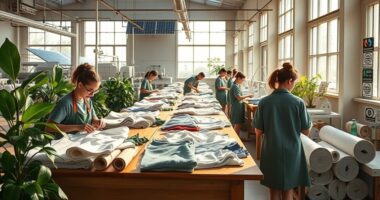
Circular economy models in fashion focus on using sustainable materials, recycling technologies, and thoughtful design to extend the life of garments and reduce waste. You can support this by choosing products made from eco-friendly fabrics, participating in take-back programs, and buying from brands committed to recycling and durability. These models encourage collaboration across the industry, creating a system where resources are reused continuously. Exploring further will show you how your choices can help shape a more sustainable fashion future.
Key Takeaways
- Designing garments for recyclability and longevity to facilitate reuse and reduce waste.
- Implementing take-back programs and closed-loop systems to reclaim and repurpose textiles.
- Utilizing innovative recycling technologies, such as chemical and mechanical recycling, to produce new fibers from old garments.
- Promoting the use of sustainable materials like organic cotton, hemp, and recycled fibers to minimize environmental impact.
- Fostering industry collaboration among brands, recyclers, and consumers to support a circular fashion ecosystem.

Have you ever wondered how the fashion industry can reduce waste and become more sustainable? The answer lies in adopting circular economy models that emphasize reuse, recycling, and responsible sourcing. One of the key elements in this shift is the use of sustainable materials. Instead of relying on virgin fabrics, brands are increasingly turning to eco-friendly options like organic cotton, hemp, Tencel, or recycled fibers. These materials not only lessen the environmental impact during production but also support a closed-loop system where waste is minimized. By choosing sustainable materials, you help promote a cycle where resources are kept in use longer, reducing landfill waste. Additionally, advancements in recycling technologies are making it easier to reclaim and repurpose textiles, further supporting circularity.
Recycling technologies play a pivotal role in these models. Advanced recycling methods enable textiles to be broken down and transformed into new fibers, creating a continuous loop that keeps clothing out of landfills. Mechanical recycling, which involves shredding old garments into fibers, is becoming more efficient, while chemical recycling allows for breaking down fabrics at the molecular level to produce high-quality, virgin-like fibers. These innovations make it possible for brands to incorporate more recycled content into their products, fostering a truly circular supply chain. When you buy clothing made from recycled materials or produced using cutting-edge recycling technologies, you actively support the reduction of waste and the conservation of resources.
Implementing circular economy models also involves designing products with longevity and recyclability in mind. Brands are adopting strategies like modular designs or using durable, repairable fabrics so that garments can be worn longer and easier to refurbish. This approach minimizes the need for frequent replacements, which often contribute to excessive waste. As a consumer, you can contribute by choosing products designed for durability or by participating in take-back programs that facilitate recycling and reuse. These initiatives ensure that garments stay within the loop instead of ending up in landfills, reducing environmental harm.
Ultimately, the shift toward circular models in fashion hinges on collaboration across the entire supply chain—manufacturers, designers, consumers, and recyclers. When you support brands that prioritize sustainable materials and utilize advanced recycling technologies, you’re helping to create a more sustainable future for fashion. Every choice you make can drive demand for eco-conscious products and encourage more companies to innovate toward circularity. By embracing these practices, you’re not just buying clothes; you’re contributing to a system where resources are preserved, waste is minimized, and the fashion industry moves closer to true sustainability.

Roadmap to Sustainable Textiles and Clothing: Eco-friendly Raw Materials, Technologies, and Processing Methods (Textile Science and Clothing Technology)
As an affiliate, we earn on qualifying purchases.
As an affiliate, we earn on qualifying purchases.
Frequently Asked Questions
How Do Circular Economy Models Impact Global Fashion Supply Chains?
By adopting circular economy models, you boost your supply chain resilience and reduce dependency on finite resources. You’ll see increased material innovation, allowing you to reuse, recycle, and design for longevity. This approach minimizes waste, cuts costs, and makes your supply chain more adaptable to disruptions. As a result, you stay competitive, respond faster to market changes, and contribute to sustainability while maintaining steady product flow.
What Are the Main Challenges in Implementing Circular Practices in Fashion?
Ever wondered why adopting circular practices feels so tough? You face supply chain complexities, making coordination and transparency hard. Material innovation is essential but often costly and slow to develop. These challenges hinder progress, requiring brands to rethink sourcing, production, and recycling methods. Are you ready to navigate these hurdles? Embracing collaboration and investing in new technologies can help overcome them, transforming fashion into a more sustainable industry.
How Do Consumer Behaviors Influence Circular Fashion Initiatives?
Your consumer attitudes and buying habits greatly influence circular fashion initiatives. When you prioritize sustainability and choose to buy less, repair, or recycle, you support circular models. Your demand for eco-friendly products encourages brands to adopt sustainable practices. Conversely, if you focus on fast fashion and disposable trends, it hampers progress. By making conscious choices, you help shift the industry toward more sustainable, circular practices that benefit everyone.
What Role Do Policymakers Play in Promoting Circular Economy in Fashion?
Policymakers play a vital role by creating policy incentives and establishing regulatory frameworks that encourage circular fashion practices. You’ll find that supportive policies, such as tax breaks or grants, motivate brands to adopt sustainable models. Regulatory frameworks set standards for recyclable materials and waste reduction, guiding industry behavior. When policymakers take action, they help foster innovation, reduce environmental impact, and create a more sustainable fashion ecosystem for everyone involved.
Can Circular Models Be Scaled Sustainably Across Diverse Fashion Markets?
Yes, circular models can be scaled sustainably across diverse fashion markets if you focus on supply chain innovation and material reuse. By adopting new technologies and practices, you can reduce waste and environmental impact while maintaining profitability. Emphasize local sourcing and adaptable approaches to fit different market needs. This way, your efforts promote sustainability without compromising growth, ensuring circular models thrive globally across various fashion sectors.

Pact Men's Organic Softspun Crew Neck T-Shirt, 5 Pack, Maritime Navy
ORGANIC COTTON: The crew neck t-shirts for men pack of 5 is the perfect choice for men who…
As an affiliate, we earn on qualifying purchases.
As an affiliate, we earn on qualifying purchases.
Conclusion
By embracing circular economy models in fashion, you can keep the wheels turning and prevent waste from piling up. It’s about thinking long-term, reusing, and recycling instead of chasing quick fixes. When you adopt these practices, you’re planting seeds for a sustainable future, proving that doing right by the planet isn’t just a pipe dream. Remember, a chain is only as strong as its weakest link—so let’s strengthen ours by making smarter choices today.
I Love Recycling – Cute and Funny Recycling T-Shirt
Funny design for recycling lovers says, "I just really love recycling, OK?"
As an affiliate, we earn on qualifying purchases.
As an affiliate, we earn on qualifying purchases.

MORVELL Elegant Fabric Clothes Storage Wardrobe, Fashion Home Garment Organizer with Hanging Rod and 8 Shelves, 71 Inch Blue Dustproof Portable Closet for Women Bedroom Dorm Room
Spacious Multi-Level Storage
As an affiliate, we earn on qualifying purchases.
As an affiliate, we earn on qualifying purchases.